Liver Disease Lab, Center for Cooperative Research in Biosciences (CIC bioGUNE), Basque Research and Technology Alliance (BRTA), Derio, Spain.
Centro de Investigación Biomédica en Red de Enfermedades Hepáticas y Digestivas (CIBERehd), Carlos III National Health Institute, Madrid, Spain.
Hepatology. 2023 Sep 1;78(3):878-895. doi: 10.1097/HEP.0000000000000303. Epub 2023 Feb 9.
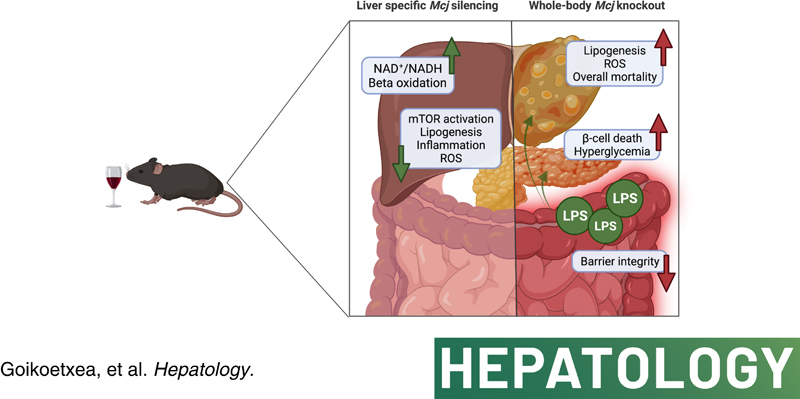
Alcohol-associated liver disease (ALD) accounts for 70% of liver-related deaths in Europe, with no effective approved therapies. Although mitochondrial dysfunction is one of the earliest manifestations of alcohol-induced injury, restoring mitochondrial activity remains a problematic strategy due to oxidative stress. Here, we identify methylation-controlled J protein (MCJ) as a mediator for ALD progression and hypothesize that targeting MCJ may help in recovering mitochondrial fitness without collateral oxidative damage.
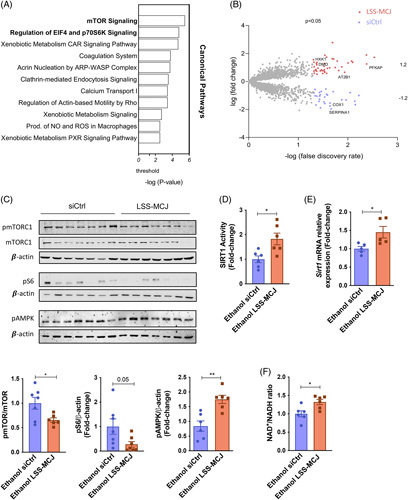
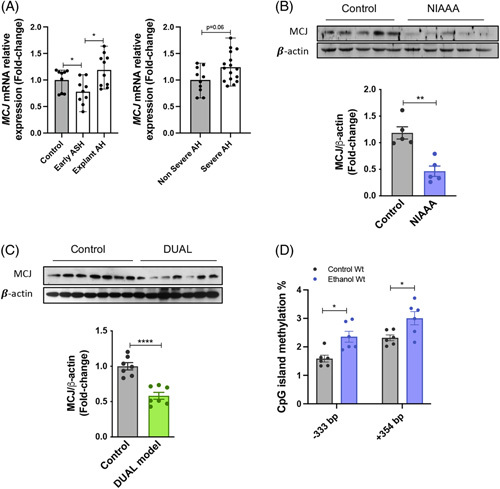
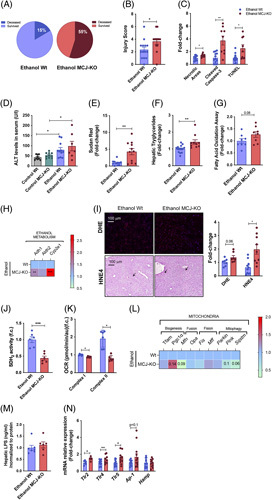
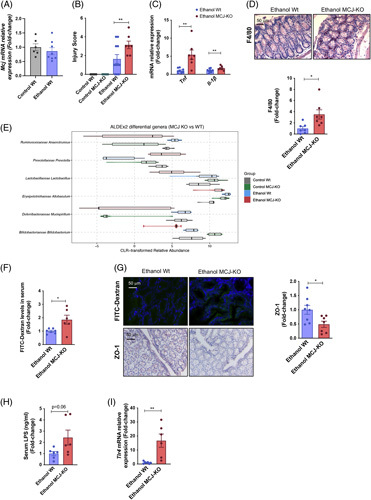
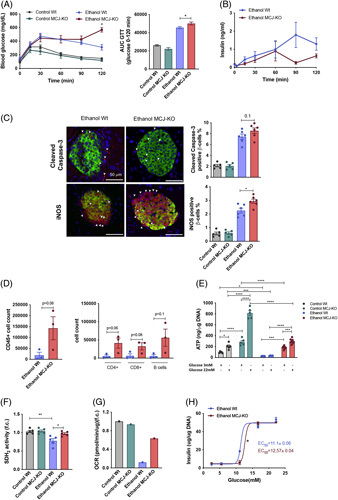
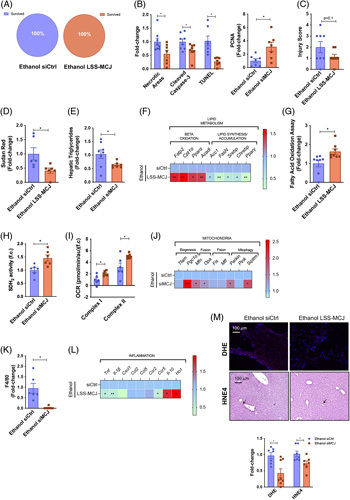
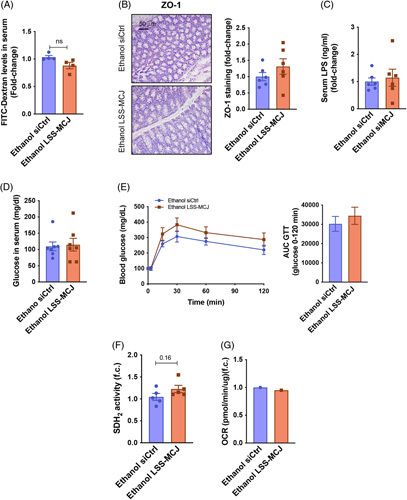
C57BL/6 mice [wild-type (Wt)] Mcj knockout and Mcj liver-specific silencing (MCJ-LSS) underwent the NIAAA dietary protocol (Lieber-DeCarli diet containing 5% (vol/vol) ethanol for 10 days, plus a single binge ethanol feeding at day 11). To evaluate the impact of a restored mitochondrial activity in ALD, the liver, gut, and pancreas were characterized, focusing on lipid metabolism, glucose homeostasis, intestinal permeability, and microbiota composition. MCJ, a protein acting as an endogenous negative regulator of mitochondrial respiration, is downregulated in the early stages of ALD and increases with the severity of the disease. Whole-body deficiency of MCJ is detrimental during ALD because it exacerbates the systemic effects of alcohol abuse through altered intestinal permeability, increased endotoxemia, and dysregulation of pancreatic function, which overall worsens liver injury. On the other hand, liver-specific Mcj silencing prevents main ALD hallmarks, that is, mitochondrial dysfunction, steatosis, inflammation, and oxidative stress, as it restores the NAD + /NADH ratio and SIRT1 function, hence preventing de novo lipogenesis and improving lipid oxidation.
Improving mitochondrial respiration by liver-specific Mcj silencing might become a novel therapeutic approach for treating ALD.
在欧洲,酒精相关性肝病(ALD)占肝脏相关死亡的 70%,但尚无有效的批准疗法。尽管线粒体功能障碍是酒精诱导损伤的最早表现之一,但由于氧化应激,恢复线粒体活性仍然是一个有问题的策略。在这里,我们确定甲基化控制 J 蛋白(MCJ)为 ALD 进展的介质,并假设靶向 MCJ 可能有助于在不产生氧化损伤的情况下恢复线粒体适应性。
C57BL/6 小鼠[野生型(WT)]Mcj 基因敲除和 Mcj 肝特异性沉默(MCJ-LSS)接受了 NIAAA 饮食方案(含 5%(体积/体积)乙醇的 Lieber-DeCarli 饮食 10 天,加上第 11 天单次 binge 乙醇喂养)。为了评估在 ALD 中恢复线粒体活性的影响,对肝脏、肠道和胰腺进行了特征分析,重点关注脂质代谢、葡萄糖稳态、肠道通透性和微生物群组成。MCJ 是一种作为线粒体呼吸内源性负调节剂的蛋白质,在 ALD 的早期阶段下调,随着疾病的严重程度增加而增加。MCJ 全身缺乏在 ALD 期间是有害的,因为它通过改变肠道通透性、增加内毒素血症和胰腺功能失调,加剧了酒精滥用的全身影响,从而总体上加重了肝损伤。另一方面,肝特异性 Mcj 沉默可防止主要的 ALD 特征,即线粒体功能障碍、脂肪变性、炎症和氧化应激,因为它恢复了 NAD+/NADH 比和 SIRT1 功能,从而防止从头脂肪生成并改善脂质氧化。
通过肝特异性 Mcj 沉默改善线粒体呼吸可能成为治疗 ALD 的一种新的治疗方法。