
在颅内动脉瘤介入治疗中,光传输聚集测定和 CYP2C19 基因型在预测缺血性并发症中的作用。
Roles of light transmission aggregometry and CYP2C19 genotype in predicting ischaemic complications during interventional therapy for intracranial aneurysms.
机构信息
Department of Interventional Neuroradiology, Beijing Neurosurgical Institute and Beijing Tiantan Hospital, Capital Medical University, Beijing, China.
Department of Neurosurgery, The First Affiliated Hospital of Zhengzhou University, Zhengzhou, Henan, China.
出版信息
Stroke Vasc Neurol. 2023 Aug;8(4):327-334. doi: 10.1136/svn-2022-001720. Epub 2023 Feb 6.
BACKGROUND AND PURPOSE
Light transmission aggregometry (LTA) and CYP2C19 genotype analysis are commonly used to evaluate the antiplatelet effects of clopidogrel during the interventional treatment of intracranial aneurysms. The aim of this study was to determine which test can predict ischaemic events during these treatments.
METHODS
Patient demographic information, imaging data, laboratory data and ischaemic complications were recorded. LTA and CYP2C19 genotype results were compared, and multiple linear regression was performed to examine factors related to platelet reactivity. Multivariate regression analysis was performed to determine whether LTA and CYP2C19 could predict ischaemic complications and to identify other clinical risk factors. Receiver operating characteristic curve analysis was conducted to calculate the cut-off value for predicting ischaemic complications. A subgroup analysis was also performed for different CYP2C19 genotype metabolisers, as well as for patients with flow diverters and traditional stents.
RESULTS
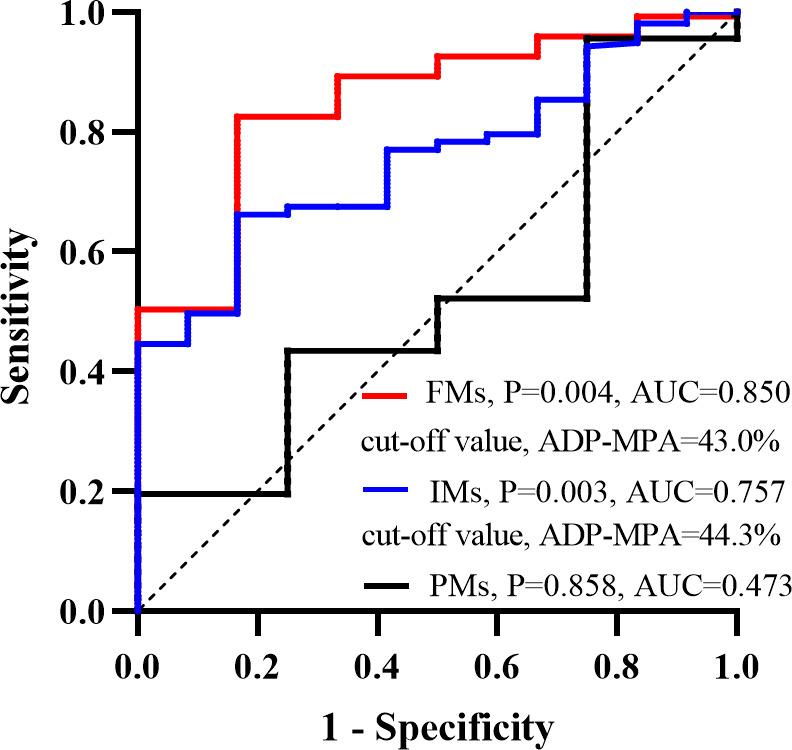
A total of 379 patients were included, of which 22 developed ischaemic events. Maximum platelet aggregation induced by ADP (ADP-MPA) could predict ischaemic events (p<0.001; area under the curve, 0.752 (95% CI 0.663 to 0.842)), and its cut-off value was 41.5%. ADP-MPA (p=0.001) and hypertension duration >10 years (p=0.022) were independent risk factors for ischaemic events, while the CYP2C19 genotype was not associated with ischaemic events. In the subgroup analysis, ADP-MPA could predict ischaemic events in fast metabolisers (p=0.004) and intermediate metabolisers (p=0.003). The cut-off value for ischaemic events was lower in patients with flow diverters (ADP-MPA=36.4%) than in patients with traditional stents (ADP-MPA=42.9%).
CONCLUSIONS
ADP-MPA can predict ischaemic complications during endovascular treatment of intracranial aneurysms. Patients with flow diverters require stronger antiplatelet medication than patients with traditional stents.
背景与目的
在颅内动脉瘤的介入治疗中,通常采用光透射聚集测定(LTA)和 CYP2C19 基因型分析来评估氯吡格雷的抗血小板作用。本研究旨在确定哪种检测方法可以预测这些治疗中的缺血事件。
方法
记录患者的人口统计学信息、影像学数据、实验室数据和缺血性并发症。比较 LTA 和 CYP2C19 基因型结果,并进行多元线性回归分析以检查与血小板反应性相关的因素。进行多变量回归分析以确定 LTA 和 CYP2C19 是否可以预测缺血性并发症,并确定其他临床危险因素。进行受试者工作特征曲线分析以计算预测缺血性并发症的截断值。还对不同 CYP2C19 基因型代谢物以及使用血流导向装置和传统支架的患者进行了亚组分析。
结果
共纳入 379 例患者,其中 22 例发生缺血事件。ADP 诱导的最大血小板聚集(ADP-MPA)可预测缺血事件(p<0.001;曲线下面积,0.752(95%CI 0.663 至 0.842)),其截断值为 41.5%。ADP-MPA(p=0.001)和高血压持续时间>10 年(p=0.022)是缺血事件的独立危险因素,而 CYP2C19 基因型与缺血事件无关。在亚组分析中,ADP-MPA 可预测快代谢者(p=0.004)和中间代谢者(p=0.003)的缺血事件。血流导向装置患者的缺血事件截断值低于传统支架患者(ADP-MPA=36.4%比 ADP-MPA=42.9%)。
结论
ADP-MPA 可预测颅内动脉瘤血管内治疗中的缺血性并发症。与使用传统支架的患者相比,使用血流导向装置的患者需要更强的抗血小板药物。


 Zotero 插件