Matsuo Natsuki, Ohki Takeshi, Aoyama Shota, Yamaguchi Shigeki, Itabashi Michio, Egawa Hiroto, Yamamoto Masakazu
Department of Surgery, Institute of Gastroenterology, Tokyo Women's Medical University, 8-1 Kawada-Cho Shinjuku-ku Tokyo, 162-8666, Japan.
Department of Advanced Biomedical Engineering and Science, Tokyo Women's Medical University, 8-1 Kawada-Cho Shinjuku-ku Tokyo, 162-8666, Japan.
Heliyon. 2023 Jan 14;9(2):e12992. doi: 10.1016/j.heliyon.2023.e12992. eCollection 2023 Feb.
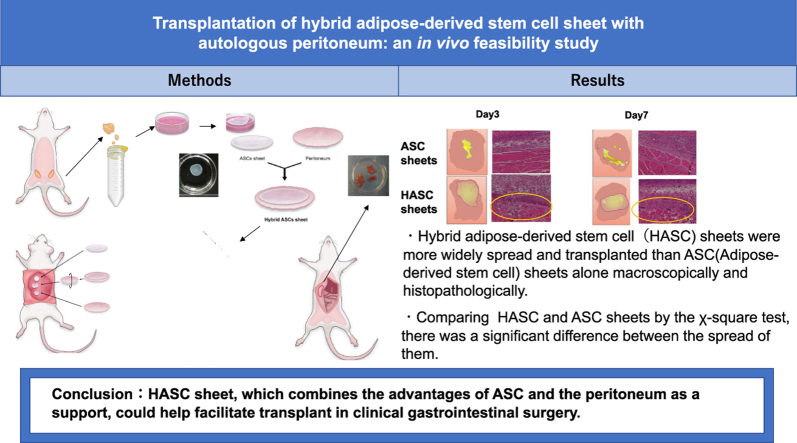
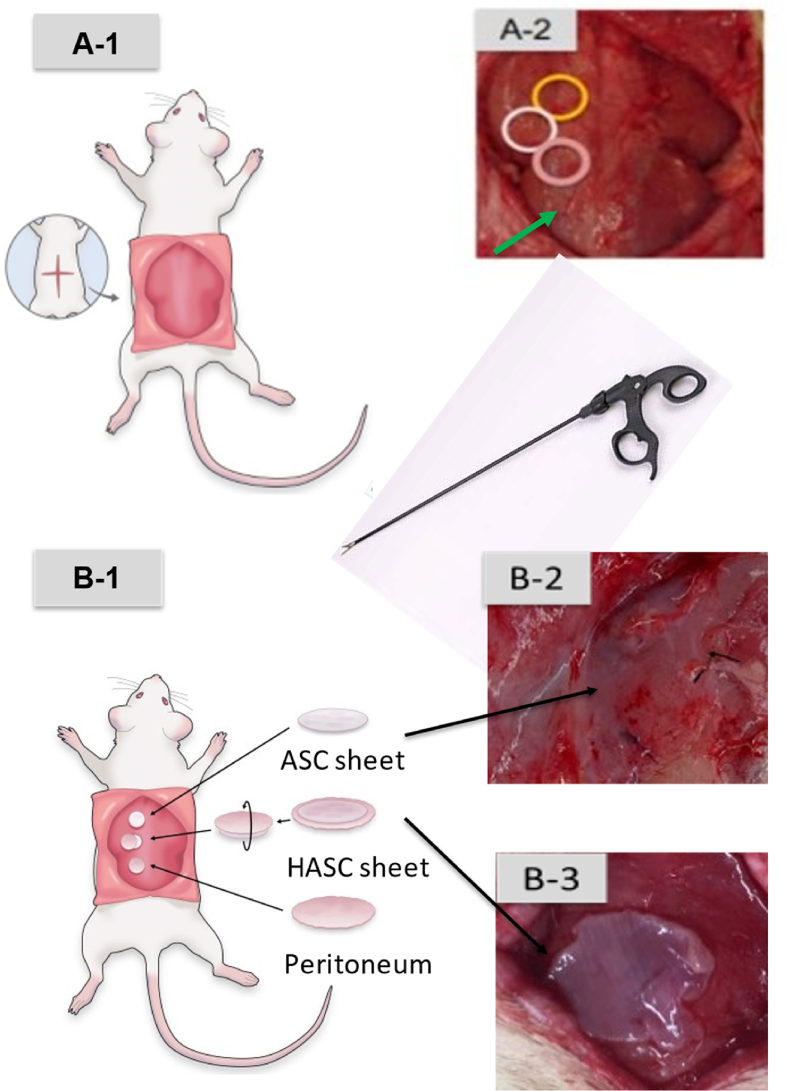
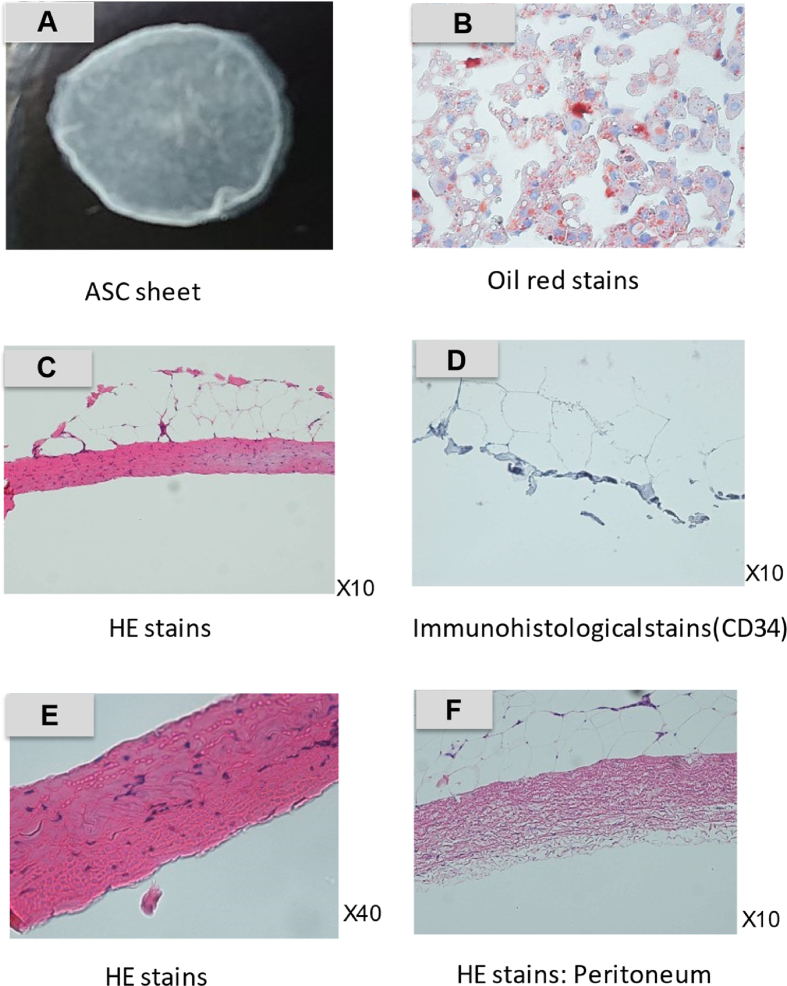
In regenerative medicine, cell sheet engineering has various advantages, including the retention of cells at the transplantation site for a longer period and the local delivery of growth factors and cytokines. Adipose-derived stem cell (ASC) is widely used owing to their various functions such as wound healing, immunomodulation, and nerve regeneration, in addition to their ability to differentiate into adipocytes, chondrocytes, and osteoblasts. ASC sheet generated using cell sheet engineering is considered effective in preventing anastomotic leakage, a serious postoperative complication in gastrointestinal surgery. However, the ASC sheet is too soft, thin, and brittle to handle with laparoscopic forceps during the operation. Therefore, we considered using the peritoneum, which is stiff and easy to collect while operating, as an alternative support. In this study, we explored the feasibility of using the peritoneum as a support for the precise transplantation of ASC sheets during surgery.
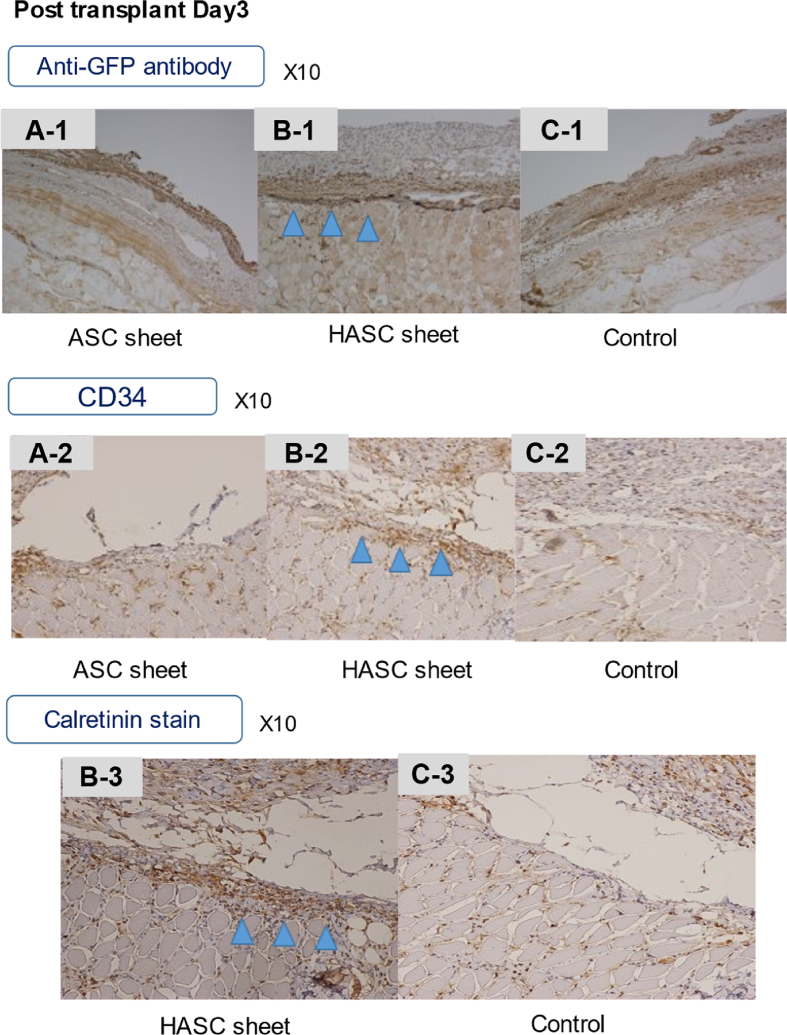
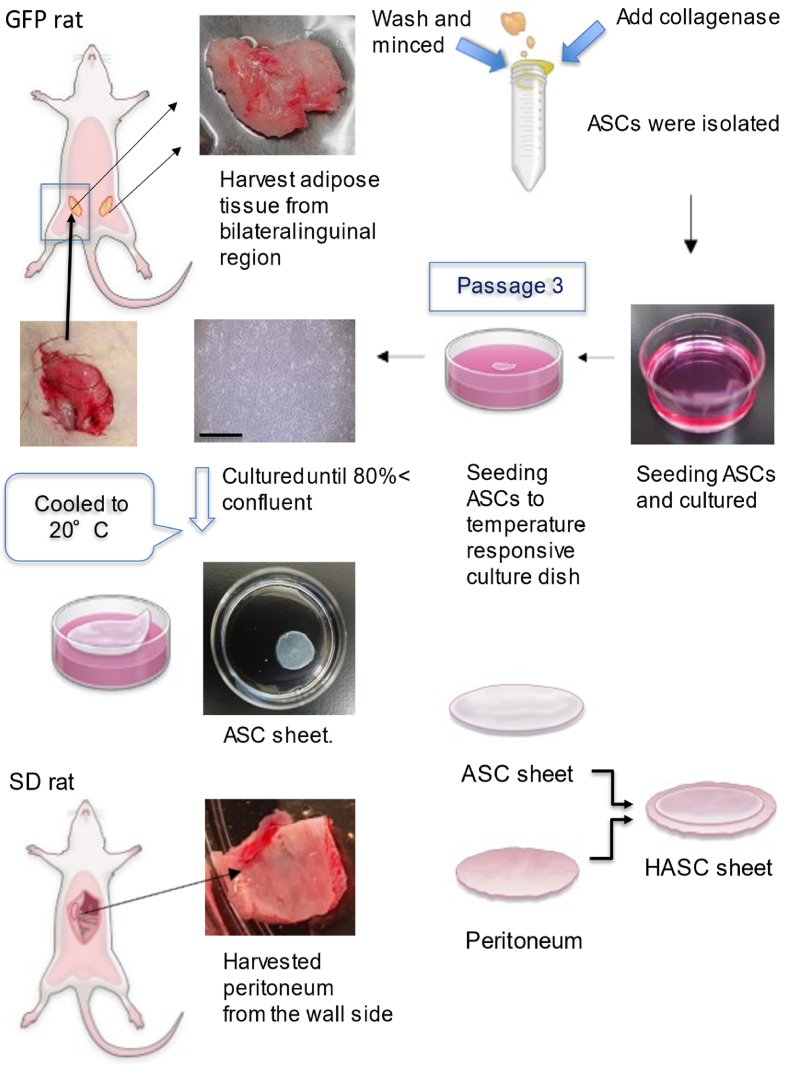
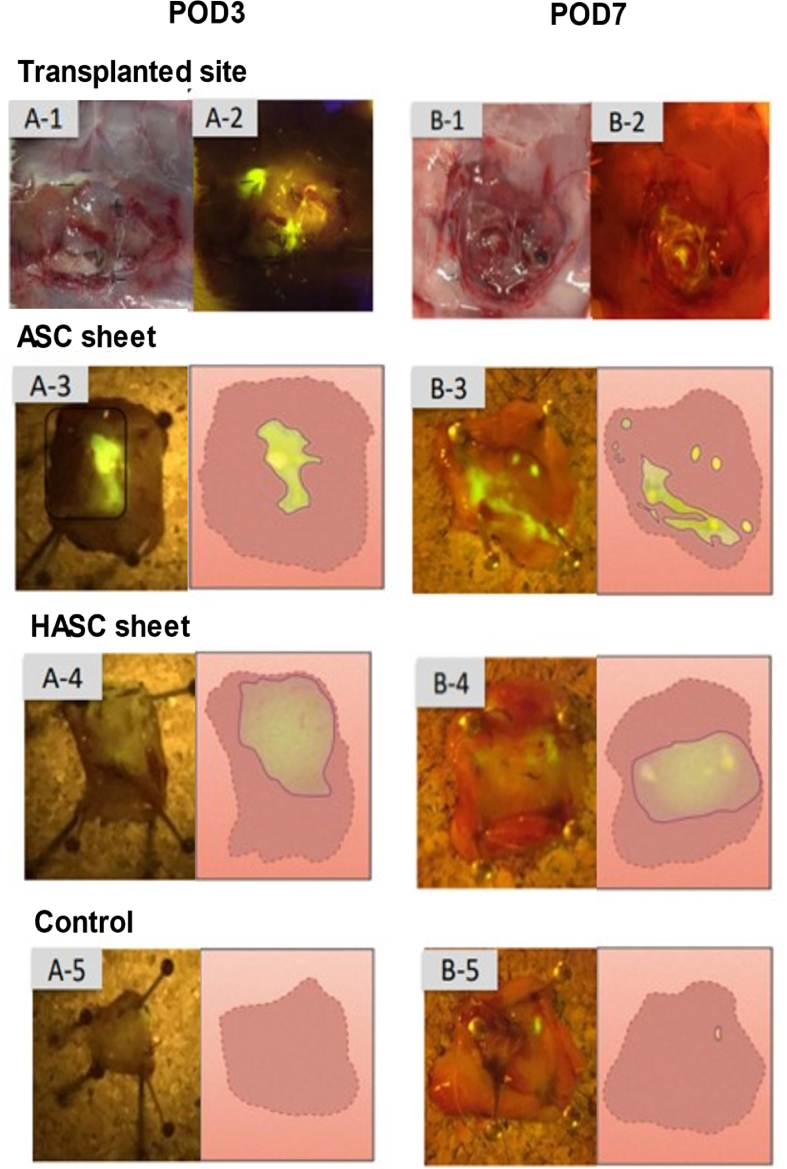
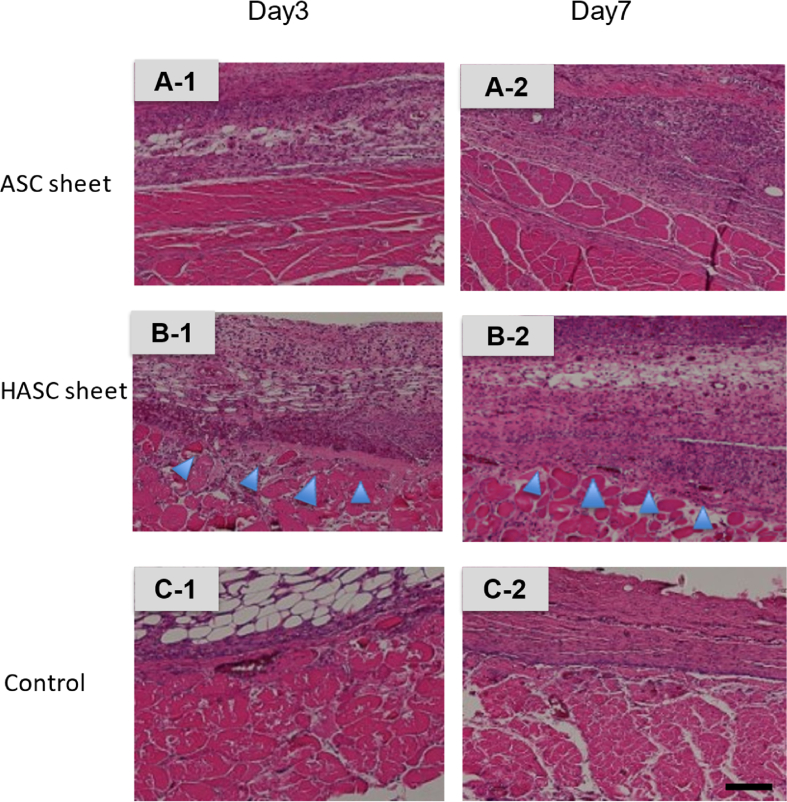
ASCs were isolated from the subcutaneous fat of the inguinal region of Sprague-Dawley (SD) transgenic rats expressing green fluorescent protein. ASCs were cultured until passage 3, seeded in temperature-responsive culture dishes, and the resulting ASC sheet was harvested at more than 80% confluency. Non-transgenic SD rats were used for transplant experiments. The wall peritoneum was harvested from SD rats following laparotomy, and hybrid adipose-derived stem cell (HASC) sheet was prepared by laminating the peritoneum with ASC sheet. The cell sheets were transplanted on the backs of SD rats following the incision. On post-transplantation days 3 and 7, the specimens were extracted. ASC and HASC sheets were then compared macroscopically and histopathologically.
HASC sheet transplantation was macroscopically and histopathologically more effective than ASC sheet transplantation. The peritoneum provided sufficient stiffness as a support for precise transplantation.
The newly developed HASC sheet, which combine the advantages of ASC sheet with those of the peritoneum, could be more useful for clinical application than the ASC sheet alone.
在再生医学中,细胞片工程具有多种优势,包括细胞在移植部位的较长时间留存以及生长因子和细胞因子的局部递送。脂肪来源干细胞(ASC)因其具有多种功能,如伤口愈合、免疫调节和神经再生,此外还具有分化为脂肪细胞、软骨细胞和成骨细胞的能力,而被广泛应用。利用细胞片工程生成的ASC片被认为在预防吻合口漏方面有效,吻合口漏是胃肠手术中一种严重的术后并发症。然而,ASC片过于柔软、单薄且易碎,在手术过程中难以用腹腔镜镊子操作。因此,我们考虑使用在手术时坚硬且易于采集的腹膜作为替代支撑物。在本研究中,我们探讨了在手术期间使用腹膜作为ASC片精确移植支撑物的可行性。
从表达绿色荧光蛋白的Sprague-Dawley(SD)转基因大鼠腹股沟区域的皮下脂肪中分离ASC。将ASC培养至第3代,接种于温度响应培养皿中,当汇合度超过80%时收获所得的ASC片。非转基因SD大鼠用于移植实验。剖腹术后从SD大鼠获取壁腹膜,通过将腹膜与ASC片层压制备混合脂肪来源干细胞(HASC)片。将细胞片在切开后移植到SD大鼠背部。在移植后第3天和第7天提取标本。然后对ASC片和HASC片进行大体和组织病理学比较。
HASC片移植在大体和组织病理学上比ASC片移植更有效。腹膜作为精确移植的支撑物提供了足够的硬度。
新开发的HASC片结合了ASC片和腹膜的优点,可能比单独的ASC片在临床应用中更有用。