O'Brien Jennifer, Niehaus Peter, Chang Koping, Remark Juliana, Barrett Joy, Dasgupta Abhishikta, Adenegan Morayo, Salimian Mohammad, Kevas Yanni, Chandrasekaran Krish, Kristian Tibor, Chellappan Rajeshwari, Rubin Samuel, Kiemen Ashley, Lu Catherine Pei-Ju, Russell James W, Ho Cheng-Ying
Department of Pathology, Johns Hopkins University School of Medicine, Baltimore, MD, 21231, USA.
Department of Pathology, University of Maryland School of Medicine, Baltimore, MD, 21201, USA.
bioRxiv. 2024 Mar 2:2023.01.24.523981. doi: 10.1101/2023.01.24.523981.
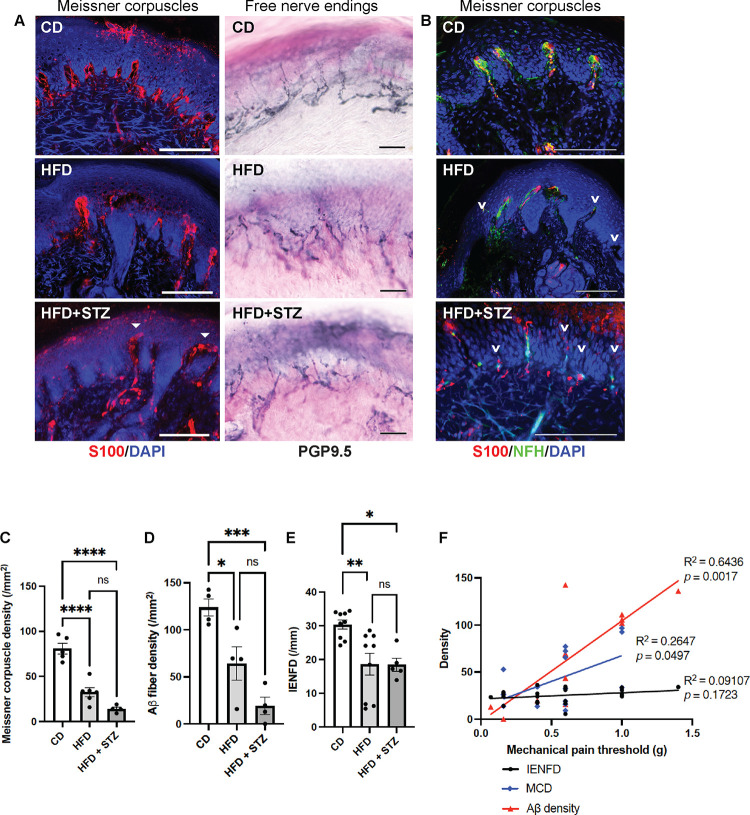
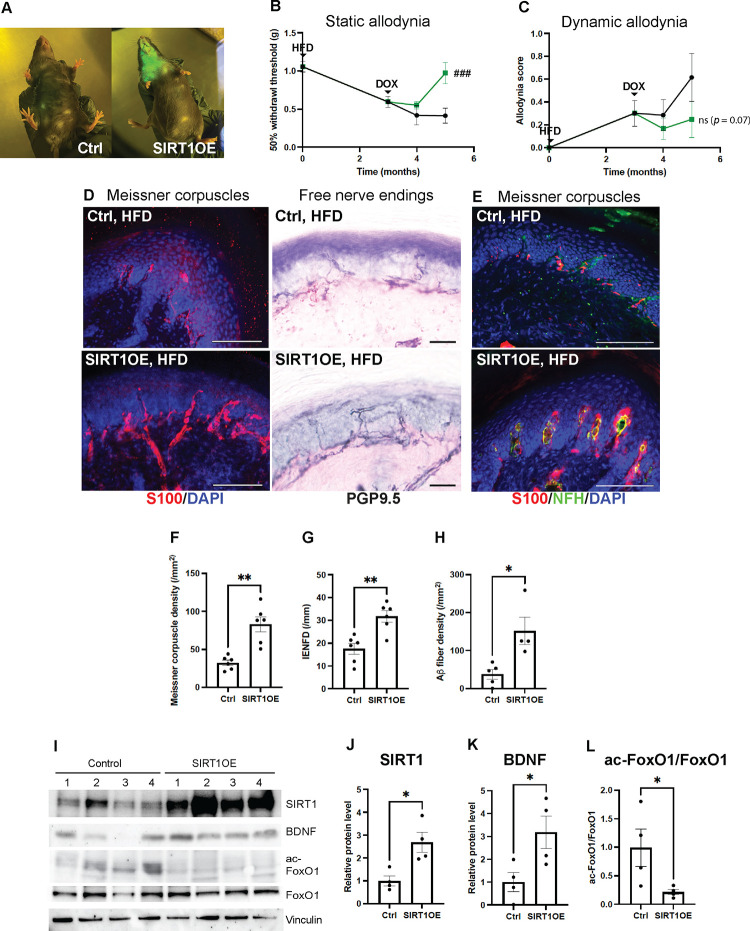
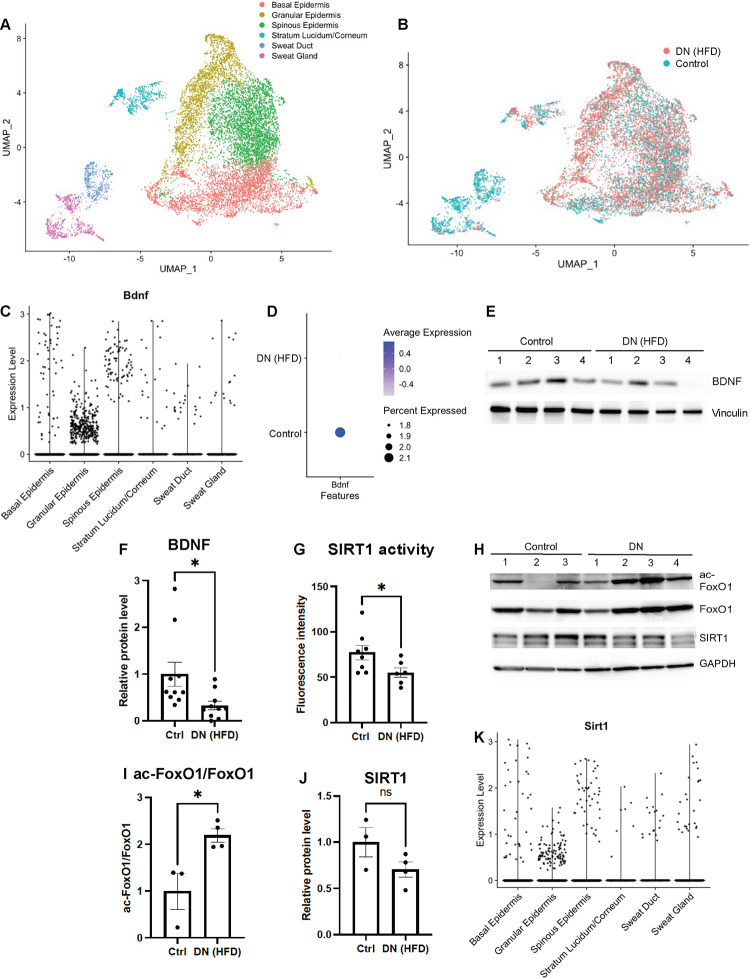
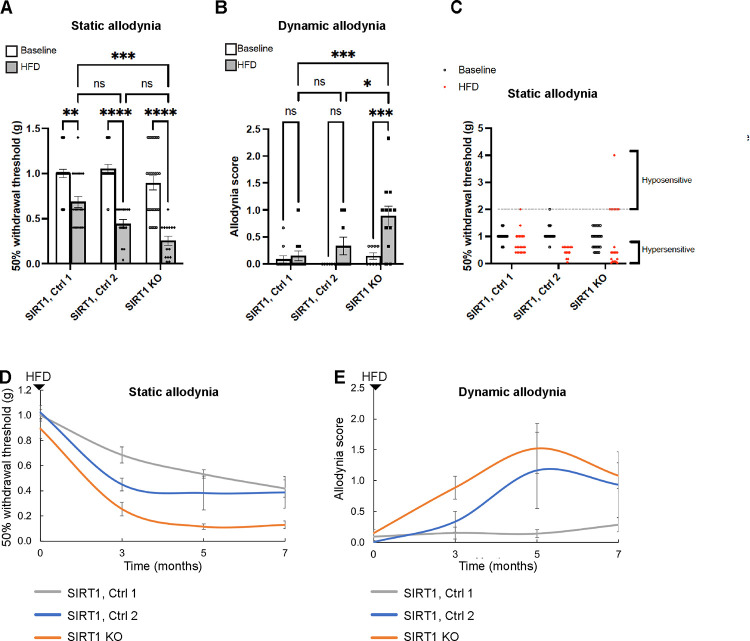
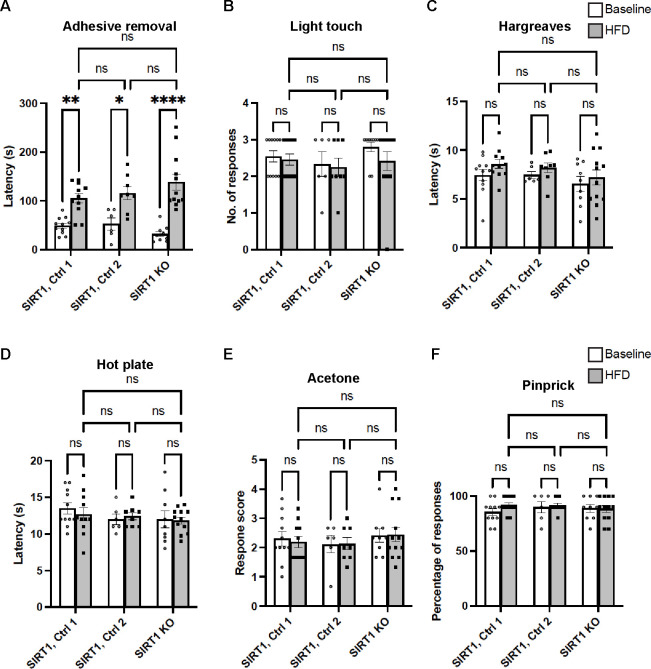
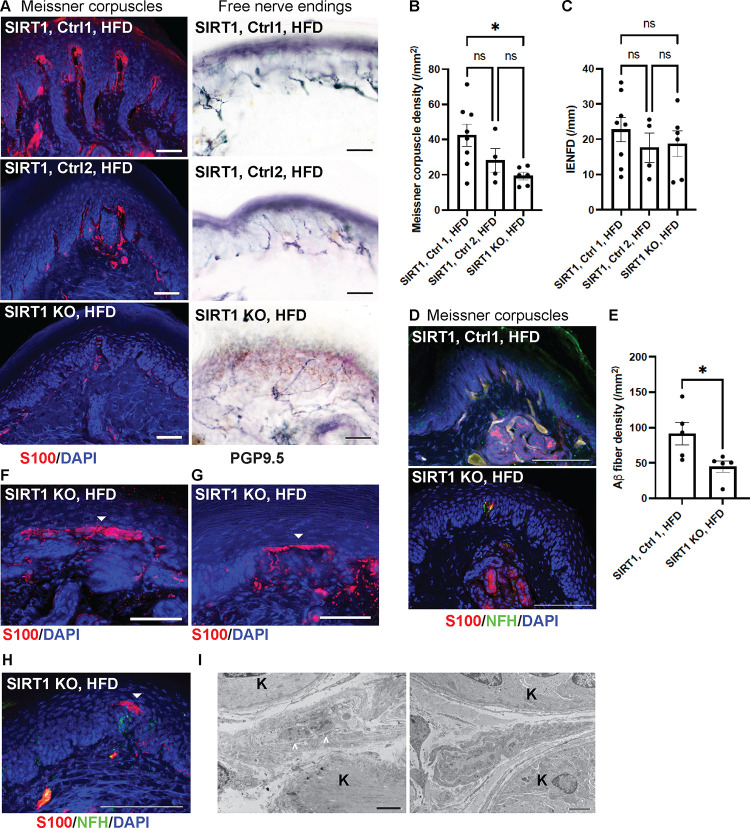
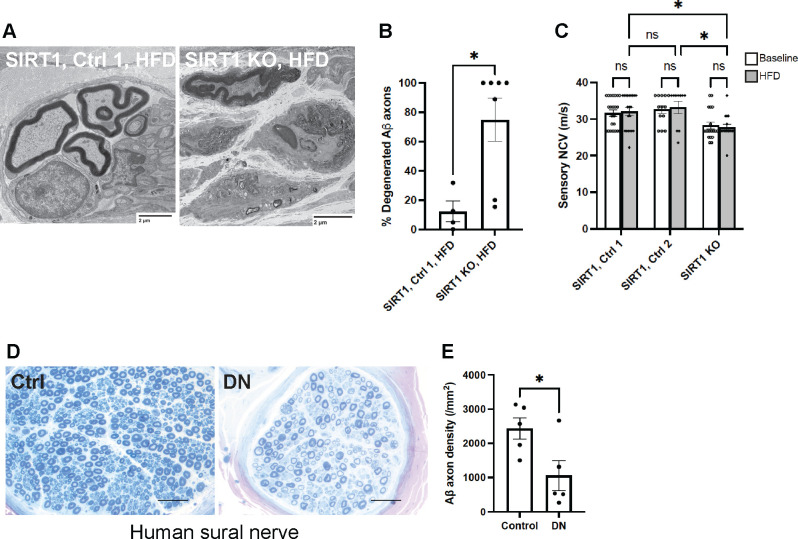
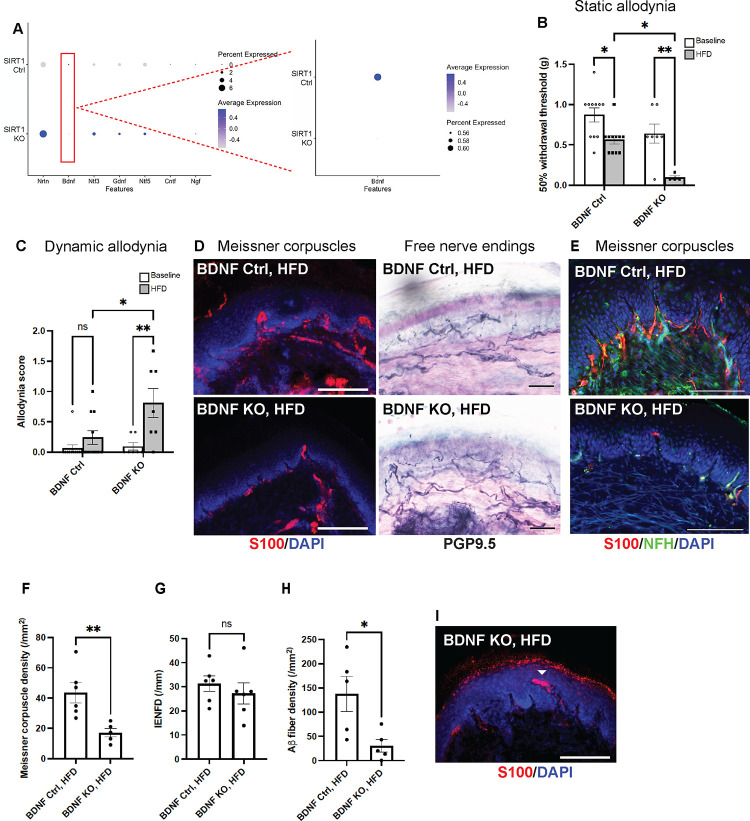
Diabetic neuropathy is a debilitating disorder characterized by spontaneous and mechanical pain. The role of skin mechanoreceptors in the development of mechanical pain (allodynia) is unclear. We discovered that mice with diabetic neuropathy had decreased sirtuin 1 (SIRT1) deacetylase activity in foot skin, leading to reduced expression of brain-derived neurotrophic factor (BDNF) and subsequent loss of innervation in Meissner corpuscles, a mechanoreceptor expressing the BDNF receptor TrkB. When SIRT1 was depleted from skin, the mechanical allodynia worsened in diabetic neuropathy mice, likely due to retrograde degeneration of the Meissner-corpuscle innervating Aβ axons and aberrant formation of Meissner corpuscles which may have increased the mechanosensitivity. The same phenomenon was also noted in skin BDNF knockout mice. Furthermore, overexpression of SIRT1 in skin induced Meissner corpuscle reinnervation and regeneration, resulting in significant improvement of diabetic mechanical allodynia. Overall, the findings suggested that skin-derived SIRT1 and BDNF function in the same pathway in skin sensory apparatus regeneration and highlighted the potential of developing topical SIRT1-activating compounds as a novel treatment for diabetic mechanical allodynia.
糖尿病性神经病变是一种以自发性疼痛和机械性疼痛为特征的使人衰弱的疾病。皮肤机械感受器在机械性疼痛(痛觉过敏)发生过程中的作用尚不清楚。我们发现,患有糖尿病性神经病变的小鼠足部皮肤中沉默调节蛋白1(SIRT1)脱乙酰酶活性降低,导致脑源性神经营养因子(BDNF)表达减少,随后表达BDNF受体TrkB的机械感受器——迈斯纳小体的神经支配丧失。当皮肤中的SIRT1被耗尽时,糖尿病性神经病变小鼠的机械性痛觉过敏会加重,这可能是由于支配迈斯纳小体的Aβ轴突逆行变性以及迈斯纳小体异常形成,而这可能增加了机械敏感性。在皮肤BDNF基因敲除小鼠中也观察到了同样的现象。此外,皮肤中SIRT1的过表达诱导了迈斯纳小体的神经再支配和再生,从而显著改善了糖尿病性机械性痛觉过敏。总体而言,这些发现表明,皮肤来源的SIRT1和BDNF在皮肤感觉器官再生的同一途径中发挥作用,并突出了开发局部激活SIRT1的化合物作为糖尿病性机械性痛觉过敏新疗法的潜力。