Seddighi Sahba, Qi Yue A, Brown Anna-Leigh, Wilkins Oscar G, Bereda Colleen, Belair Cedric, Zhang Yongjie, Prudencio Mercedes, Keuss Matthew J, Khandeshi Aditya, Pickles Sarah, Hill Sarah E, Hawrot James, Ramos Daniel M, Yuan Hebao, Roberts Jessica, Kelmer Sacramento Erika, Shah Syed I, Nalls Mike A, Colon-Mercado Jenn, Reyes Joel F, Ryan Veronica H, Nelson Matthew P, Cook Casey, Li Ziyi, Screven Laurel, Kwan Justin Y, Shantaraman Anantharaman, Ping Lingyan, Koike Yuka, Oskarsson Björn, Staff Nathan, Duong Duc M, Ahmed Aisha, Secrier Maria, Ule Jerneg, Jacobson Steven, Rohrer Jonathan, Malaspina Andrea, Glass Jonathan D, Ori Alessandro, Seyfried Nicholas T, Maragkakis Manolis, Petrucelli Leonard, Fratta Pietro, Ward Michael E
National Institute of Neurological Disorders and Stroke, NIH, Bethesda, MD, USA.
Medical Scientist Training Program, Johns Hopkins University School of Medicine, Baltimore, MD, USA.
bioRxiv. 2023 Jan 23:2023.01.23.525149. doi: 10.1101/2023.01.23.525149.
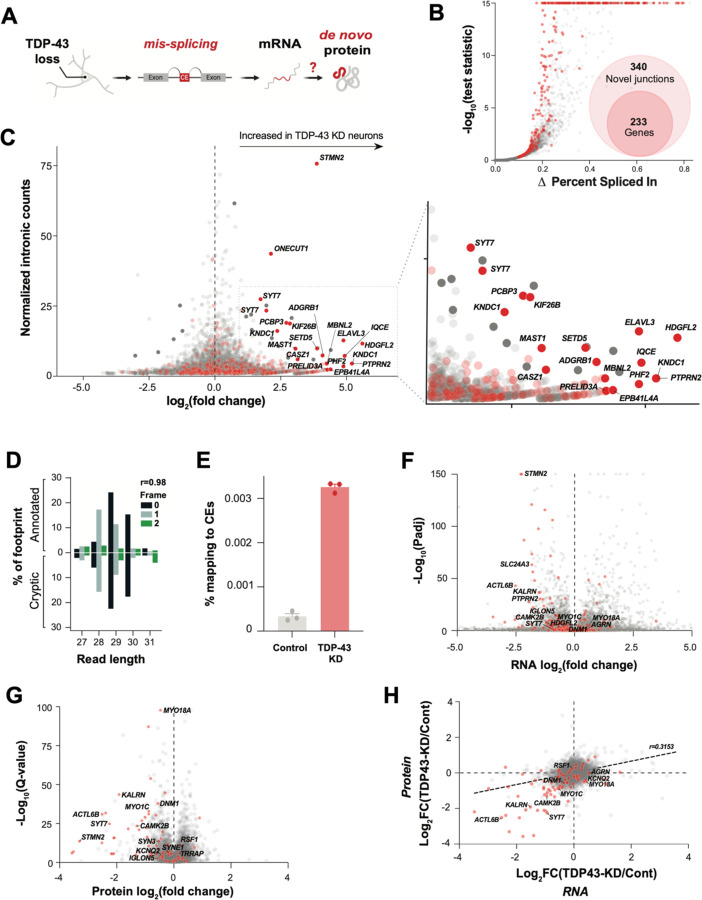
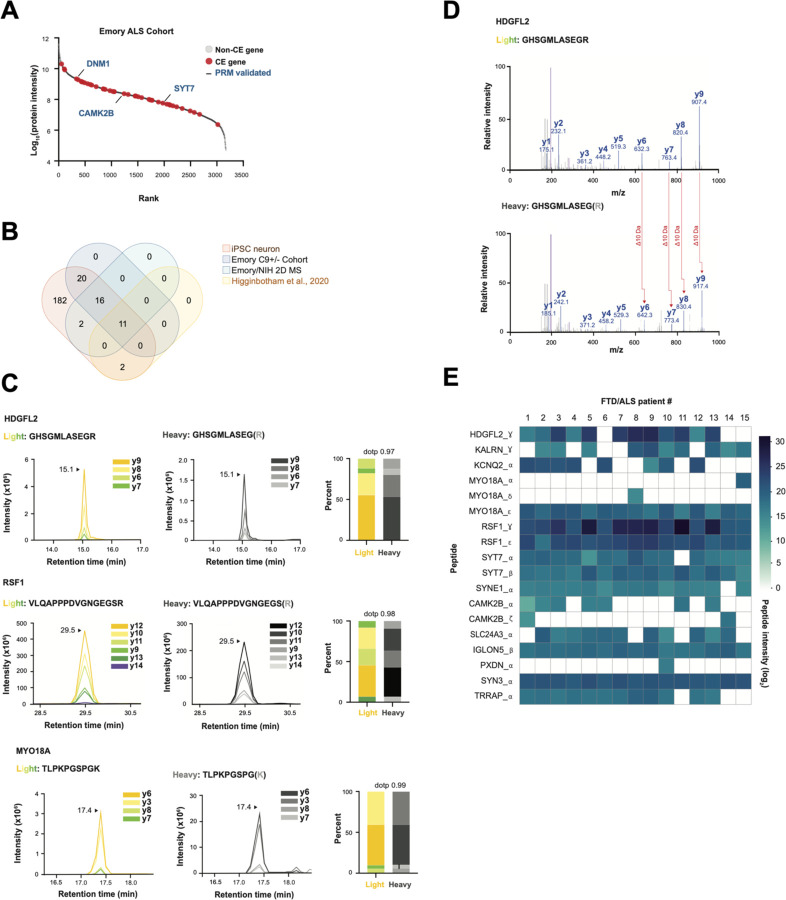
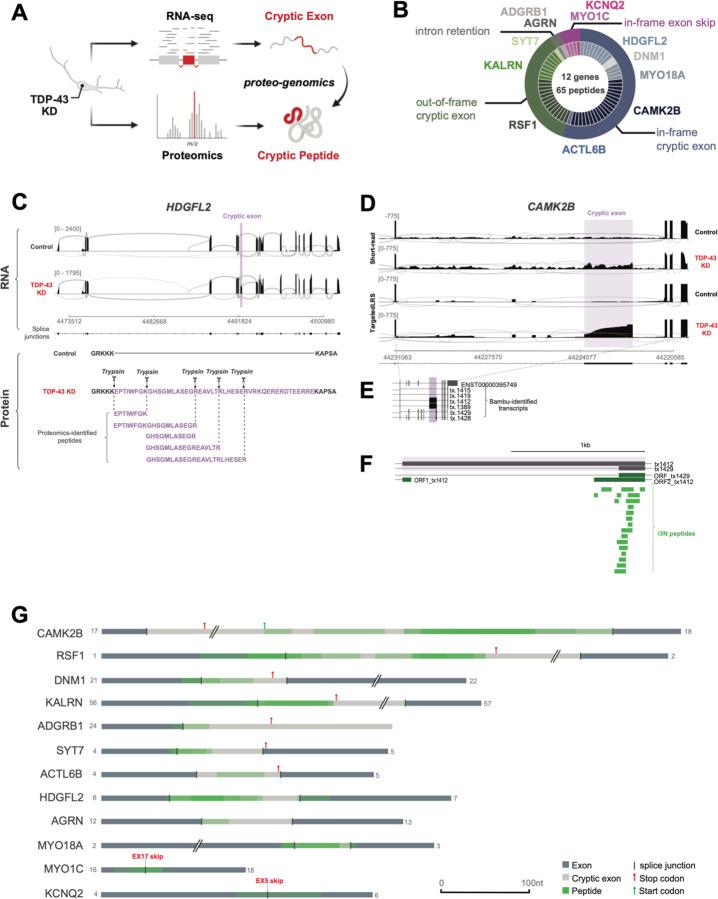
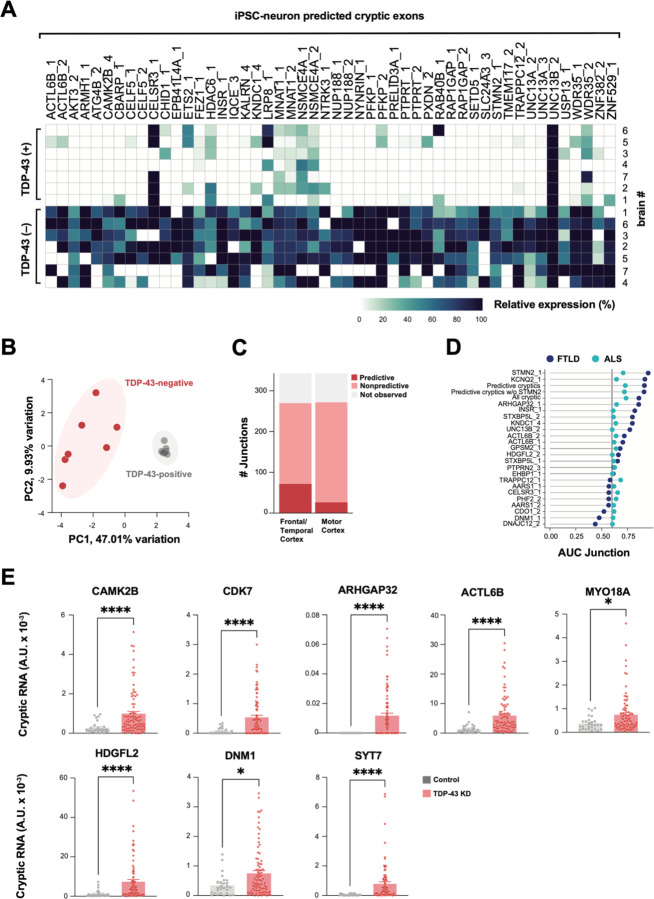
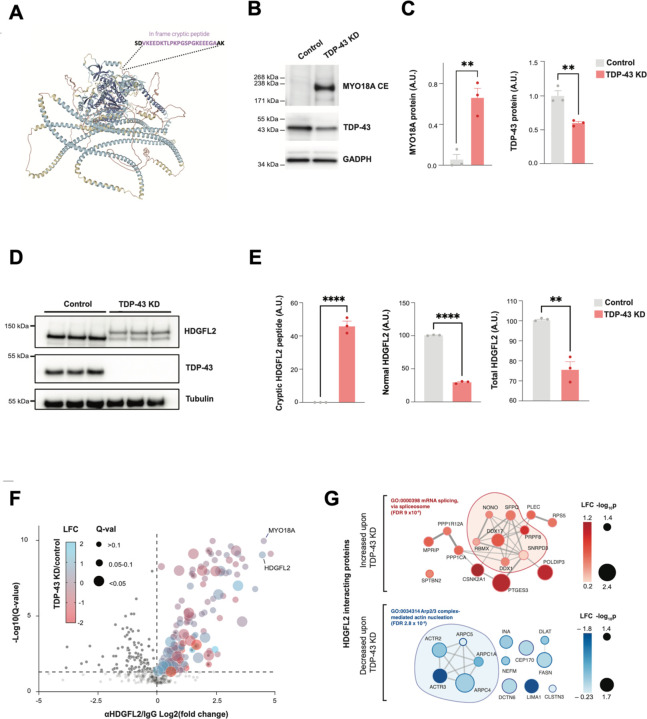
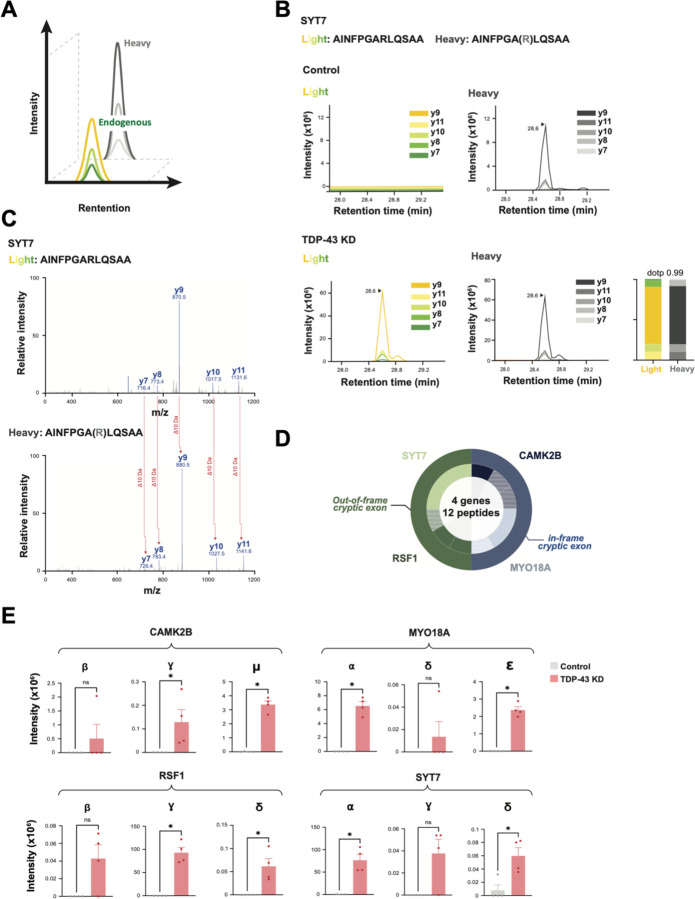
Functional loss of TDP-43, an RNA-binding protein genetically and pathologically linked to ALS and FTD, leads to inclusion of cryptic exons in hundreds of transcripts during disease. Cryptic exons can promote degradation of affected transcripts, deleteriously altering cellular function through loss-of-function mechanisms. However, the possibility of protein synthesis from cryptic exon transcripts has not been explored. Here, we show that mRNA transcripts harboring cryptic exons generate proteins both in TDP-43 deficient cellular models and in disease. Using coordinated transcriptomic and proteomic studies of TDP-43 depleted iPSC-derived neurons, we identified numerous peptides that mapped to cryptic exons. Cryptic exons identified in iPSC models were highly predictive of cryptic exons expressed in brains of patients with TDP-43 proteinopathy, including cryptic transcripts that generated proteins. We discovered that inclusion of cryptic peptide sequences in proteins altered their interactions with other proteins, thereby likely altering their function. Finally, we showed that these peptides were present in CSF from patients with ALS. The demonstration of cryptic exon translation suggests new mechanisms for ALS pathophysiology downstream of TDP-43 dysfunction and may provide a strategy for novel biomarker development.
TDP-43是一种与肌萎缩侧索硬化症(ALS)和额颞叶痴呆(FTD)在基因和病理上相关的RNA结合蛋白,其功能丧失会导致疾病期间数百种转录本中出现隐蔽外显子。隐蔽外显子可促进受影响转录本的降解,通过功能丧失机制有害地改变细胞功能。然而,尚未探索从隐蔽外显子转录本进行蛋白质合成的可能性。在此,我们表明,携带隐蔽外显子的mRNA转录本在TDP-43缺陷细胞模型和疾病中均能产生蛋白质。通过对TDP-43缺失的诱导多能干细胞(iPSC)衍生神经元进行协调的转录组学和蛋白质组学研究,我们鉴定出许多映射到隐蔽外显子的肽段。在iPSC模型中鉴定出的隐蔽外显子对TDP-43蛋白病患者大脑中表达的隐蔽外显子具有高度预测性,包括产生蛋白质的隐蔽转录本。我们发现,蛋白质中包含隐蔽肽序列会改变它们与其他蛋白质的相互作用,从而可能改变它们的功能。最后,我们表明这些肽段存在于ALS患者的脑脊液中。隐蔽外显子翻译的证明揭示了TDP-43功能障碍下游ALS病理生理学的新机制,并可能为新型生物标志物的开发提供策略。