Eggert Joel, Zinzow-Kramer Wendy M, Hu Yuesong, Tsai Yuan-Li, Weiss Arthur, Salaita Khalid, Scharer Christopher D, Au-Yeung Byron B
Division of Immunology, Lowance Center for Human Immunology, Department of Medicine, Emory University.
Department of Chemistry, Emory University.
bioRxiv. 2023 Jan 28:2023.01.27.525946. doi: 10.1101/2023.01.27.525946.
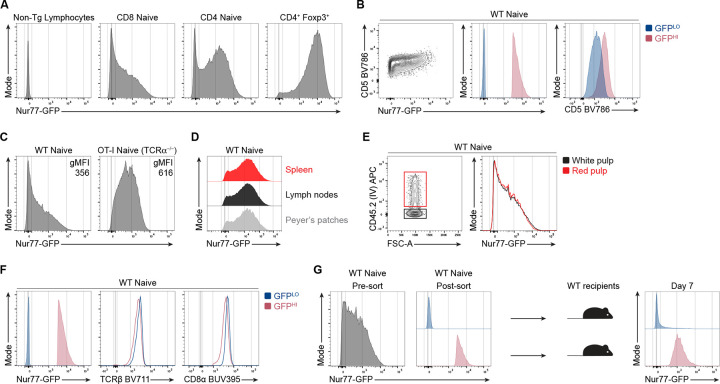
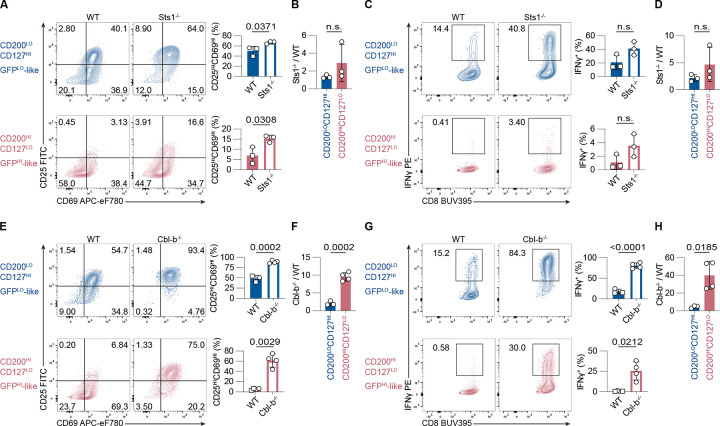
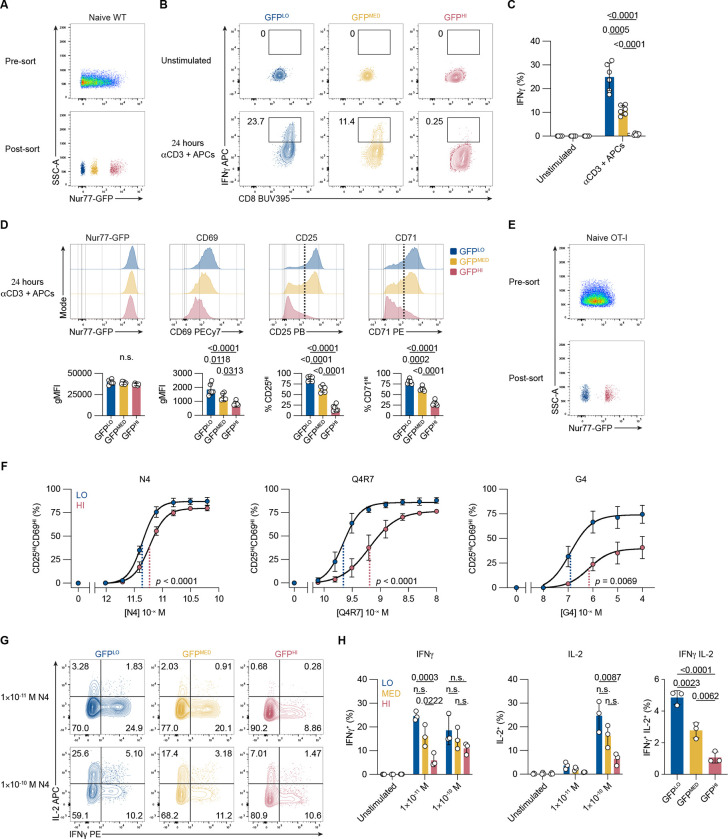
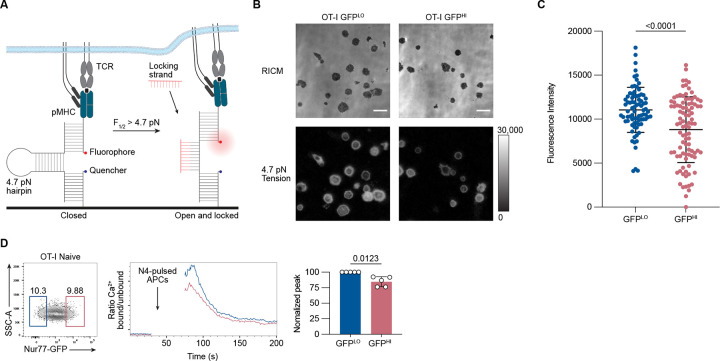
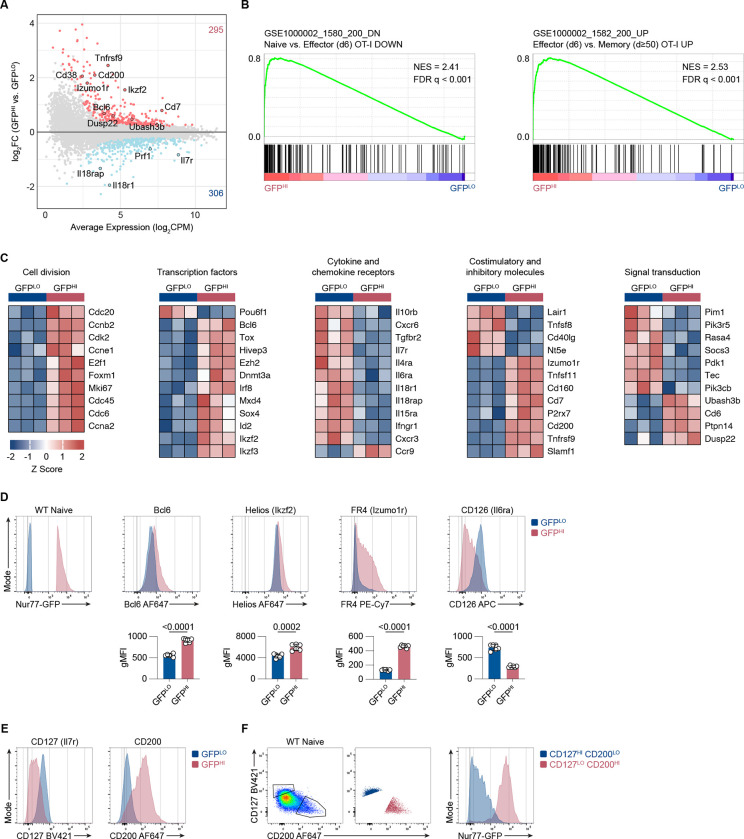
The cumulative effects of T cell receptor (TCR) signal transduction over extended periods of time influences T cell biology, such as the positive selection of immature thymocytes or the proliferative responses of naive T cells. Naive T cells experience recurrent TCR signaling in response to self-antigens in the steady state. However, how these signals influence the responsiveness of naive CD8 T cells to subsequent agonist TCR stimulation remains incompletely understood. We investigated how naive CD8 T cells that experienced relatively low or high levels of TCR signaling in response to self-antigens respond to stimulation with foreign antigens. A transcriptional reporter of (Nur77-GFP) revealed substantial heterogeneity of the amount of TCR signaling naive CD8 T cells accumulate in the steady state. Nur77-GFP cells exhibited diminished T cell activation and secretion of IFNγ and IL-2 relative to Nur77-GFP cells in response to agonist TCR stimulation. Differential gene expression analyses revealed upregulation of genes associated with acutely stimulated T cells in Nur77-GFP cells but also increased expression of negative regulators such as the phosphatase Sts1. Responsiveness of Nur77-GFP cells to TCR stimulation was partially restored at the level of IFNγ secretion by deficiency of Sts1 or the ubiquitin ligase Cbl-b. Our data suggest that extensive accumulation of TCR signaling during steady state conditions induces a recalibration of the responsiveness of naive CD8 T cells through gene expression changes and negative regulation, at least in part, dependent on Sts1 and Cbl-b. This cell-intrinsic negative feedback loop may allow the immune system to limit the autoreactive potential of highly self-reactive naive CD8 T cells.
长时间内T细胞受体(TCR)信号转导的累积效应会影响T细胞生物学特性,例如未成熟胸腺细胞的阳性选择或初始T细胞的增殖反应。在稳态下,初始T细胞会因自身抗原而经历反复的TCR信号传导。然而,这些信号如何影响初始CD8 T细胞对后续激动剂TCR刺激的反应性仍未完全了解。我们研究了在对自身抗原的反应中经历相对低水平或高水平TCR信号传导的初始CD8 T细胞如何对外源抗原刺激做出反应。一种转录报告基因(Nur77-GFP)揭示了初始CD8 T细胞在稳态下积累的TCR信号量存在显著异质性。与Nur77-GFP⁺细胞相比,Nur77-GFP⁻细胞在激动剂TCR刺激下表现出T细胞活化以及IFNγ和IL-2分泌减少。差异基因表达分析显示,Nur77-GFP⁻细胞中与急性刺激T细胞相关的基因上调,但负调节因子如磷酸酶Sts1的表达也增加。通过缺失Sts1或泛素连接酶Cbl-b,Nur77-GFP⁻细胞对TCR刺激的反应性在IFNγ分泌水平上部分恢复。我们的数据表明,在稳态条件下TCR信号的广泛积累通过基因表达变化和负调节诱导初始CD8 T细胞反应性的重新校准,至少部分依赖于Sts1和Cbl-b。这种细胞内在的负反馈回路可能使免疫系统限制高度自身反应性初始CD8 T细胞的自身反应潜力。