University of Coimbra, Center for Research in Neuropsychology and Cognitive Behavioral Intervention (CINEICC), 3004-531 Coimbra, Portugal.
Centre for Compassion Research and Training, College of Health, Psychology and Social Care, University of Derby, Derby DE22 1G, UK.
Int J Environ Res Public Health. 2023 Jan 19;20(3):1845. doi: 10.3390/ijerph20031845.
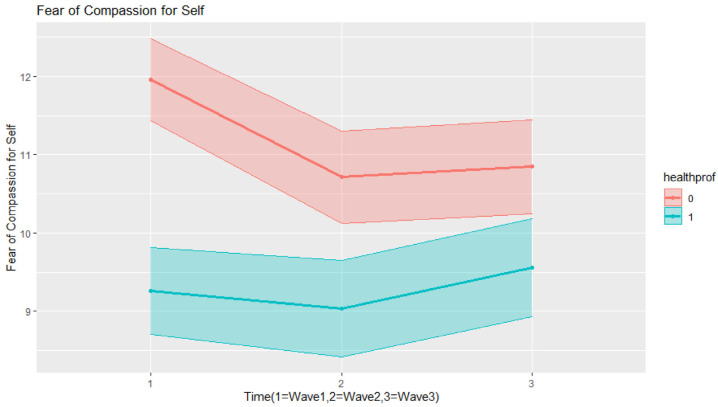
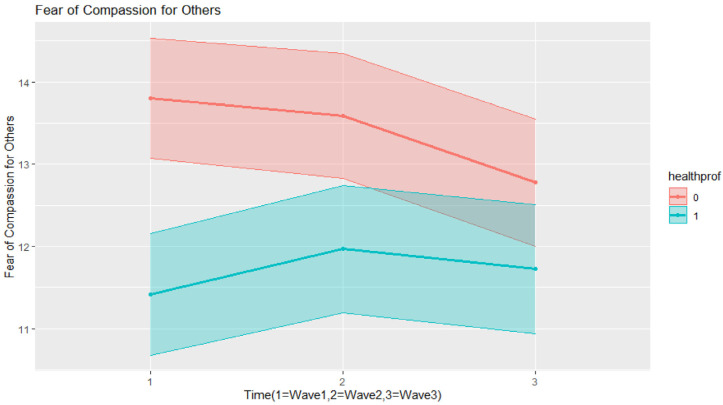
During large-scale disasters, social support, caring behaviours, and compassion are shown to protect against poor mental health outcomes. This multi-national study aimed to assess the fluctuations in compassion over time during the COVID-19 pandemic. Respondents (Time 1 = 4156, Time 2 = 980, Time 3 = 825) from 23 countries completed online self-report questionnaires measuring the flows of compassion (i.e., Compassionate Engagement and Action Scales) and fears of compassion toward self and others and from others (i.e., Fears of Compassion Scales) and mental health at three time-points during a 10-month period. The results for the flows of compassion showed that self-compassion increased at Time 3. Compassion for others increased at Time 2 and 3 for the general population, but in contrast, it decreased in health professionals, possibly linked to burnout. Compassion from others did not change in Time 2, but it did increase significantly in Time 3. For fears of compassion, fears of self-compassion reduced over time, fears of compassion for others showed more variation, reducing for the general public but increasing for health professionals, whilst fears of compassion from others did not change over time. Health professionals, those with compassion training, older adults, and women showed greater flows of compassion and lower fears of compassion compared with the general population, those without compassion training, younger adults, and men. These findings highlight that, in a period of shared suffering, people from multiple countries and nationalities show a cumulative improvement in compassion and reduction in fears of compassion, suggesting that, when there is intense suffering, people become more compassionate to self and others and less afraid of, and resistant to, compassion.
在大规模灾害中,社会支持、关爱行为和同情心被证明可以预防心理健康不良的后果。这项多国家研究旨在评估 COVID-19 大流行期间同情心随时间的波动。来自 23 个国家的受访者(时间 1 = 4156,时间 2 = 980,时间 3 = 825)在 10 个月的时间内分三个时间点完成了在线自我报告问卷,测量同情心的流动(即同情参与和行动量表)以及对自己和他人以及他人的同情心恐惧(即同情心恐惧量表)和心理健康。同情心流动的结果表明,自我同情在时间 3 增加。对他人的同情在时间 2 和 3 增加了,但与健康专业人员相反,它减少了,可能与倦怠有关。他人的同情在时间 2 没有变化,但在时间 3 显著增加。对于同情心恐惧,对自我同情的恐惧随着时间的推移而减少,对他人的同情心恐惧表现出更多的变化,对公众的恐惧减少,但对健康专业人员的恐惧增加,而对他人的同情心恐惧随着时间的推移没有变化。与一般人群相比,健康专业人员、接受过同情心培训的人、老年人和女性表现出更大的同情心流动和更低的同情心恐惧,而没有接受过同情心培训的人、年轻人和男性则相反。这些发现表明,在共同受苦的时期,来自多个国家和民族的人们表现出同情心的累积改善和对同情心的恐惧减少,这表明,当有强烈的痛苦时,人们会对自己和他人更加同情,对同情的恐惧和抵抗力也会降低。