Kaufmann Florian, Strugulea Mihail, Höltgen Christian, Roth Stephan, Schmidt Michael
Bayerisches Laserzentrum GmbH (blz), Konrad-Zuse-Str. 2-6, 91052 Erlangen, Germany.
Institute of Photonic Technologies (LPT), Friedrich-Alexander Universität Erlangen-Nürnberg, Konrad Zuse-Str. 3-5, 91052 Erlangen, Germany.
Materials (Basel). 2023 Jan 25;16(3):1069. doi: 10.3390/ma16031069.
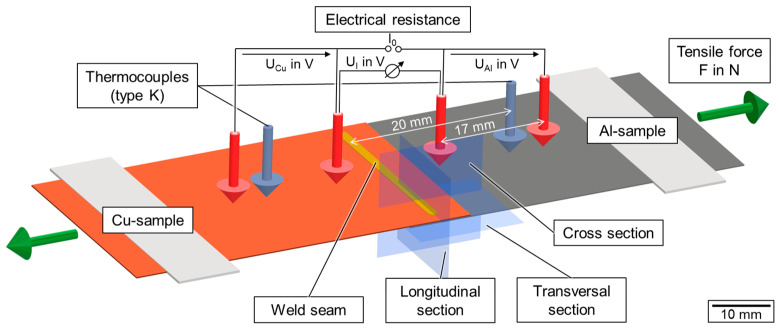
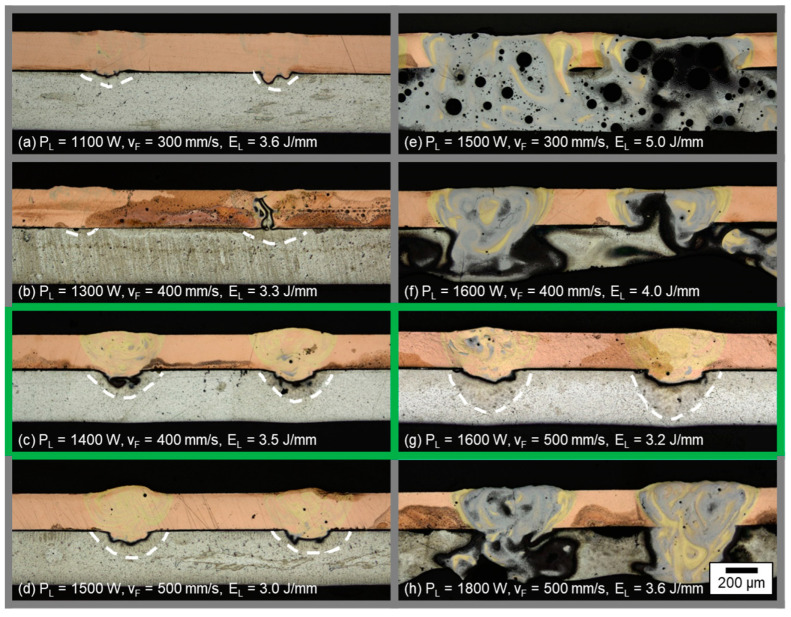
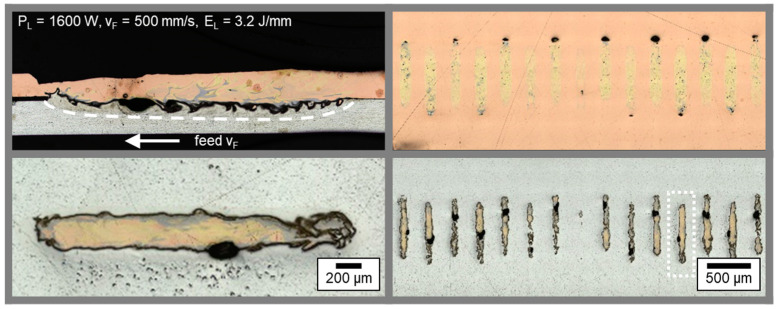
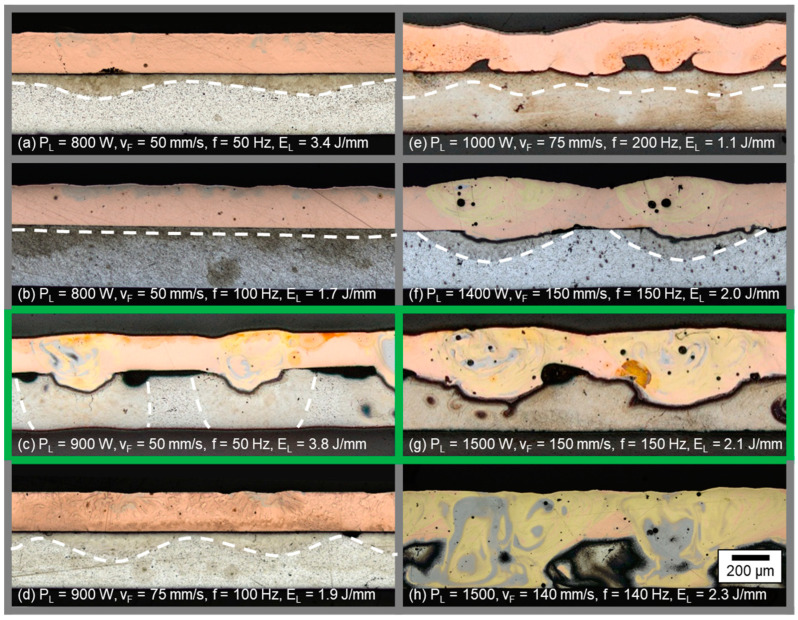
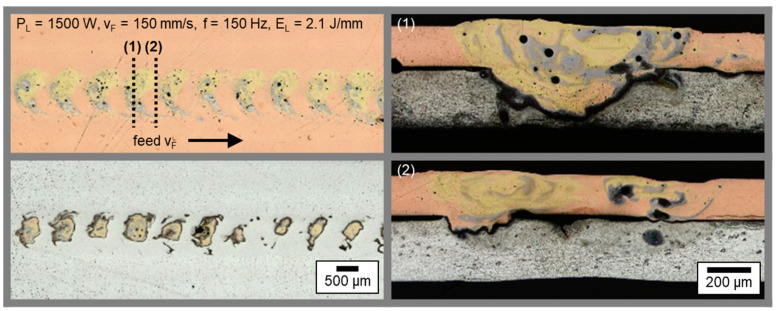
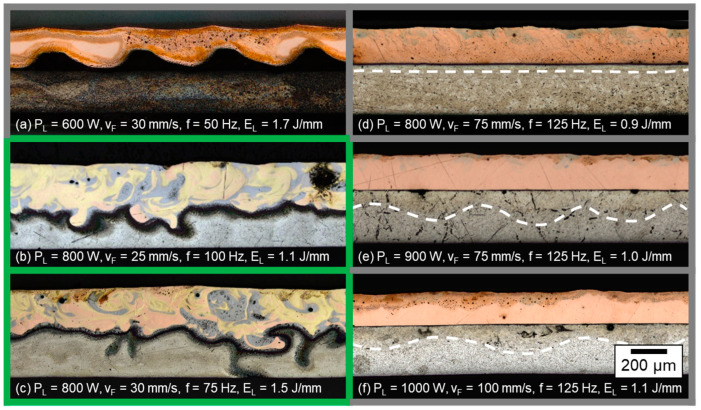
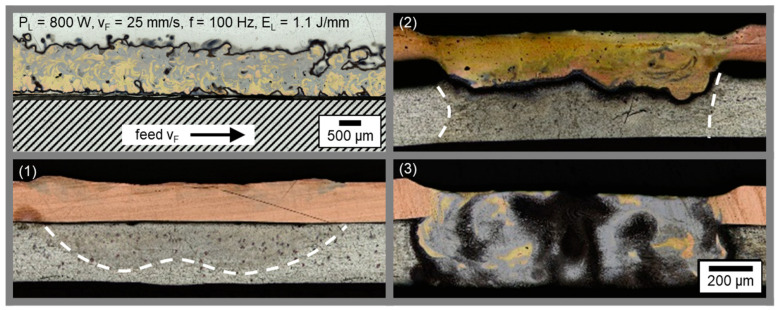
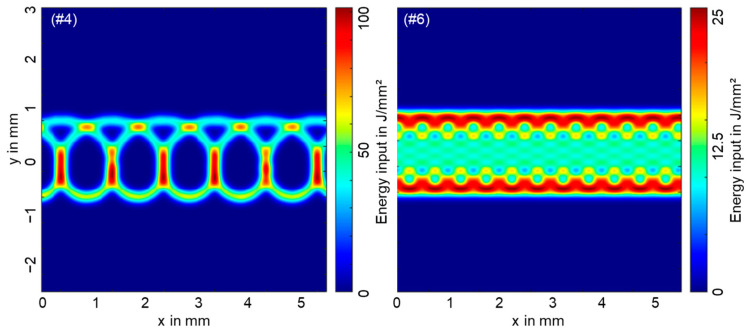
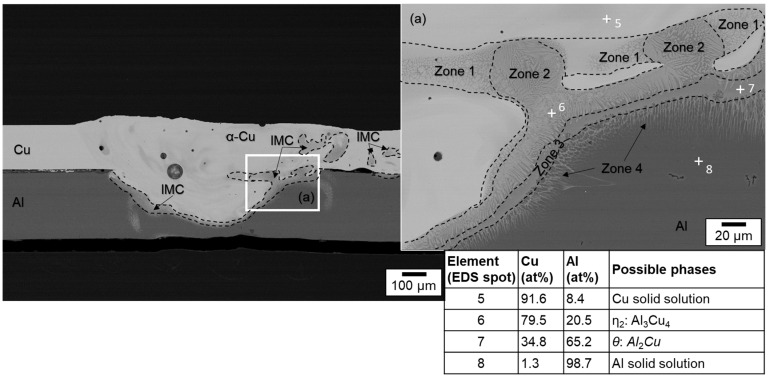
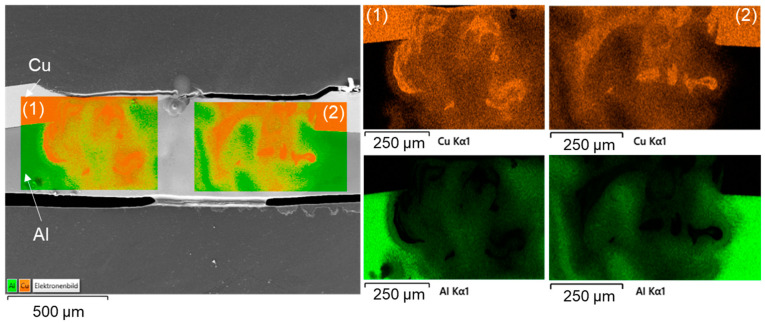
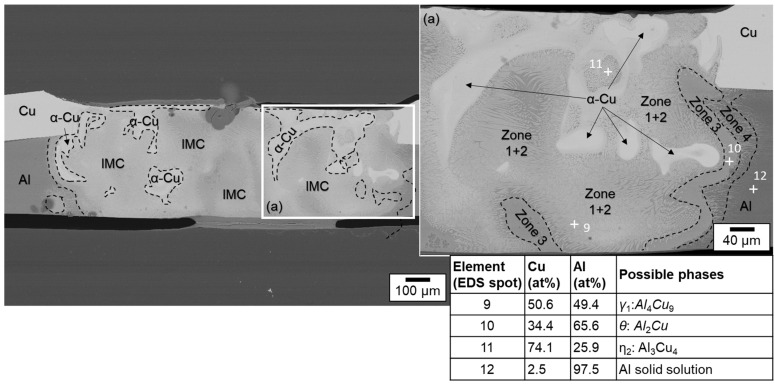
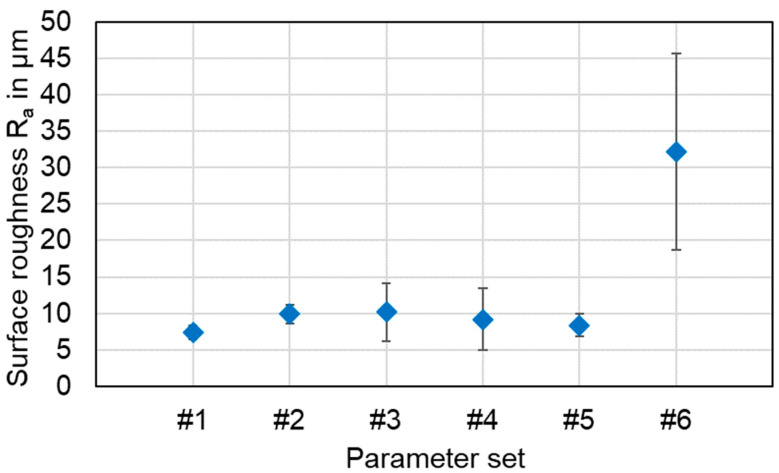
Laser beam welding of metals has progressed dramatically over the last years mainly arising from joining applications in the field of electromobility. Allowing the flexible, automated manufacturing of mechanically, electrically, and thermally stressed components, the process is more frequently applied for joining highly reflective materials, for example for battery tab and busbar connections. The local, non-contact energy input favors this welding technology; however, joining of copper and aluminum sheets still poses a challenge due to the physical properties of the joining partners and intermetallic phases from dissimilar metal interaction, which reduce seam performance. The use of green laser radiation compared to infrared laser radiation offers the advantage of a significantly increased absorptivity for copper materials. A changed incoupling behavior is observed, and a lower deep penetration threshold has been already proven for 515 nm wavelength. When copper and aluminum are welded with the former as top sheet, this welding mode is essential to overcome limited aspect ratios from heat conduction welding. However, the opportunities of applying these beam sources in combination with spatial power modulation to influence the interconnection area of copper-aluminum joints have not yet been studied. The aim of this work is therefore to investigate the seam properties and process stability of different overlap welding strategies using green laser radiation for dissimilar metal welding. A microstructural analysis of the different fusion zones and mechanical strength of the joints are presented. In addition, the experimental parameter sets were analyzed regarding their application in battery module busbars by examining the electrical resistance and temperature distribution after welding. A parameter window was identified for all investigated welding strategies, with the stitched seam achieving the most stable results.
在过去几年中,金属激光束焊接取得了显著进展,这主要源于电动出行领域的连接应用。该工艺允许对承受机械、电气和热应力的部件进行灵活、自动化制造,越来越多地用于连接高反射材料,例如电池极耳和母线连接。局部、非接触式能量输入有利于这种焊接技术;然而,由于连接部件的物理特性以及异种金属相互作用产生的金属间相,铜和铝板的连接仍然是一个挑战,这会降低焊缝性能。与红外激光辐射相比,使用绿色激光辐射具有对铜材料吸收率显著提高的优势。观察到了不同的耦合行为,并且已经证明515 nm波长具有更低的深熔阈值。当铜和铝焊接时,将铜作为上层板材,这种焊接模式对于克服热传导焊接中有限的焊缝成形比至关重要。然而,尚未研究将这些光束源与空间功率调制相结合来影响铜铝接头互连区域的可能性。因此,这项工作的目的是研究使用绿色激光辐射进行异种金属焊接的不同搭接焊接策略的焊缝性能和工艺稳定性。对不同熔合区进行了微观结构分析,并给出了接头的机械强度。此外,通过检查焊接后的电阻和温度分布,分析了实验参数集在电池模块母线中的应用情况。为所有研究的焊接策略确定了一个参数窗口,其中缝合焊缝获得了最稳定的结果。