Training & Simulation, Thales AVS France SAS, Osny, France.
Centre Borelli, Université de Paris, ENS Paris-Saclay, CNRS, SSA, Paris, France.
Physiol Rep. 2023 Feb;11(3):e15374. doi: 10.14814/phy2.15374.
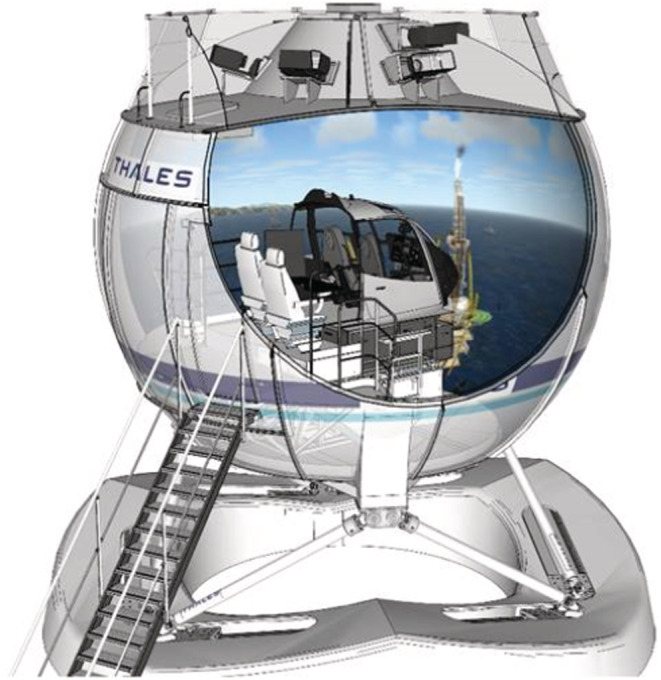
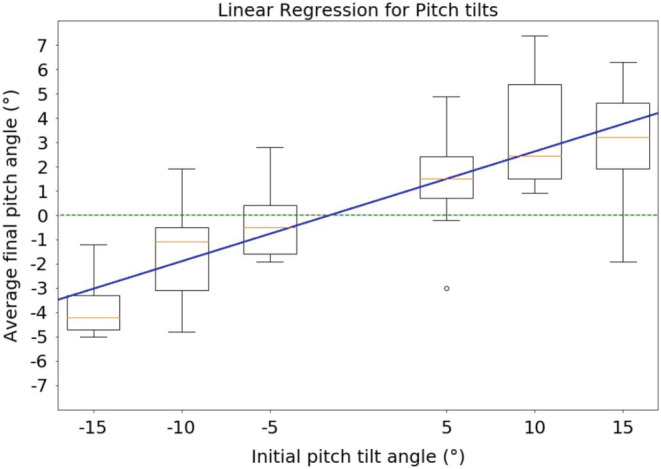
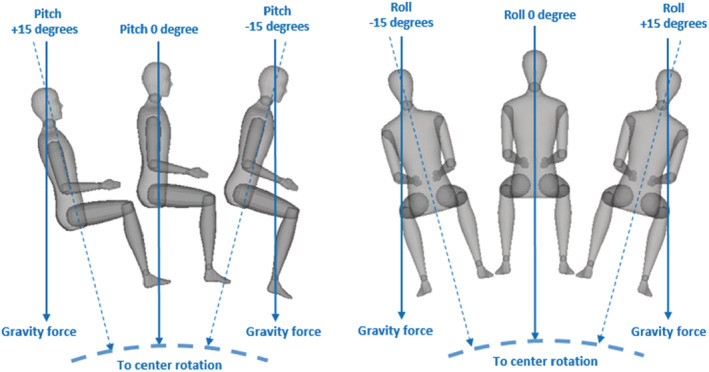
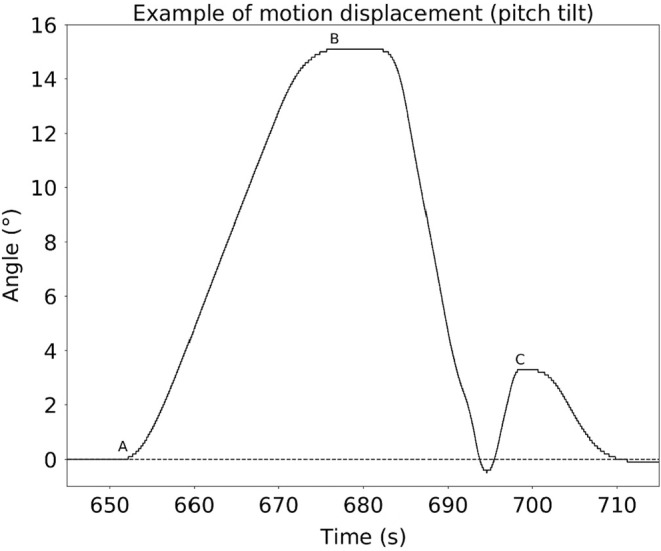
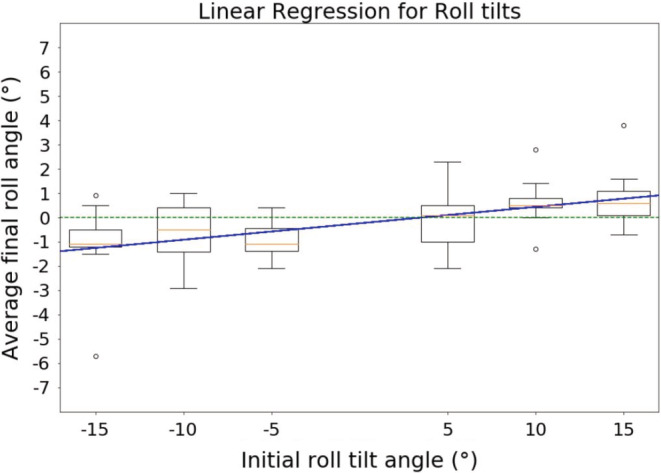
Neurophysiological tests probing the vestibulo-ocular, colic and spinal pathways are the gold standard to evaluate the vestibular system in clinics. In contrast, vestibular perception is rarely tested despite its potential usefulness in professional training and for the longitudinal follow-up of professionals dealing with complex man-machine interfaces, such as aircraft pilots. This is explored here using a helicopter flight simulator to probe the vestibular perception of pilots. The vestibular perception of nine professional helicopter pilots was tested using a full flight helicopter simulator. The cabin was tilted six times in roll and six times in pitch (-15°, -10°, -5°, 5°, 10° and 15°) while the pilots had no visual cue. The velocities of the outbound displacement of the cabin were kept below the threshold of the semicircular canal perception. After the completion of each movement, the pilots were asked to put the cabin back in the horizontal plane (still without visual cues). The order of the 12 trials was randomized with two additional control trials where the cabin stayed in the horizontal plane but rotated in yaw (-10° and +10°). Pilots were significantly more precise in roll (average error in roll: 1.15 ± 0.67°) than in pitch (average error in pitch: 2.89 ± 1.06°) (Wilcoxon signed-rank test: p < 0.01). However, we did not find a significant difference either between left and right roll tilts (p = 0.51) or between forward and backward pitch tilts (p = 0.59). Furthermore, we found that the accuracies were significantly biased with respect to the initial tilt. The greater the initial tilt was, the less precise the pilots were, although maintaining the direction of the tilt, meaning that the error can be expressed as a vestibular error gain in the ability to perceive the modification in the orientation. This significant result was found in both roll (Friedman test: p < 0.01) and pitch (p < 0.001). However, the pitch trend error was more prominent (gain = 0.77 vs gain = 0.93) than roll. This study is a first step in the determination of the perceptive-motor profile of pilots, which could be of major use for their training and their longitudinal follow-up. A similar protocol may also be useful in clinics to monitor the aging process of the otolith system with a simplified testing device.
神经生理学测试探测前庭眼动、肠迷路和脊髓通路,是评估临床前庭系统的金标准。相比之下,尽管前庭知觉在专业训练和对处理复杂人机界面的专业人员的纵向随访中具有潜在的用途,但很少对其进行测试,例如直升机飞行员。本研究使用直升机飞行模拟器来探测飞行员的前庭知觉。使用全飞行直升机模拟器测试了 9 名职业直升机飞行员的前庭知觉。当飞行员没有视觉线索时,机舱在横滚方向倾斜了六次,在俯仰方向倾斜了六次(-15°、-10°、-5°、5°、10°和 15°)。舱外位移的速度保持在半规管知觉的阈值以下。完成每次运动后,飞行员被要求将机舱恢复到水平平面(仍然没有视觉线索)。12 次试验的顺序是随机的,另外还有两次控制试验,其中机舱保持在水平平面,但在偏航方向旋转(-10°和+10°)。飞行员在横滚方向(平均横滚误差:1.15±0.67°)明显比在俯仰方向(平均俯仰误差:2.89±1.06°)更精确(Wilcoxon 符号秩检验:p<0.01)。然而,我们在左右横滚倾斜(p=0.51)或前后俯仰倾斜(p=0.59)之间也没有发现显著差异。此外,我们发现准确性与初始倾斜有显著偏差。初始倾斜越大,飞行员的精度越低,但保持倾斜方向,这意味着误差可以表示为感知方向变化的前庭误差增益。在横滚(Friedman 检验:p<0.01)和俯仰(p<0.001)中都发现了这一显著结果。然而,俯仰趋势误差更为明显(增益=0.77 与增益=0.93)。本研究是确定飞行员感知运动特征的第一步,这对于他们的训练和纵向随访可能非常有用。类似的方案也可能在诊所中有用,使用简化的测试设备监测耳石系统的老化过程。