Catalysis and Peptide Research Unit, University of KwaZulu Natal, Durban 4001, South Africa.
School of Physiology, Faculty of Health Sciences, University of the Witwatersrand, Johannesburg, Gauteng 2193, South Africa.
ACS Infect Dis. 2023 Mar 10;9(3):486-496. doi: 10.1021/acsinfecdis.2c00485. Epub 2023 Feb 14.
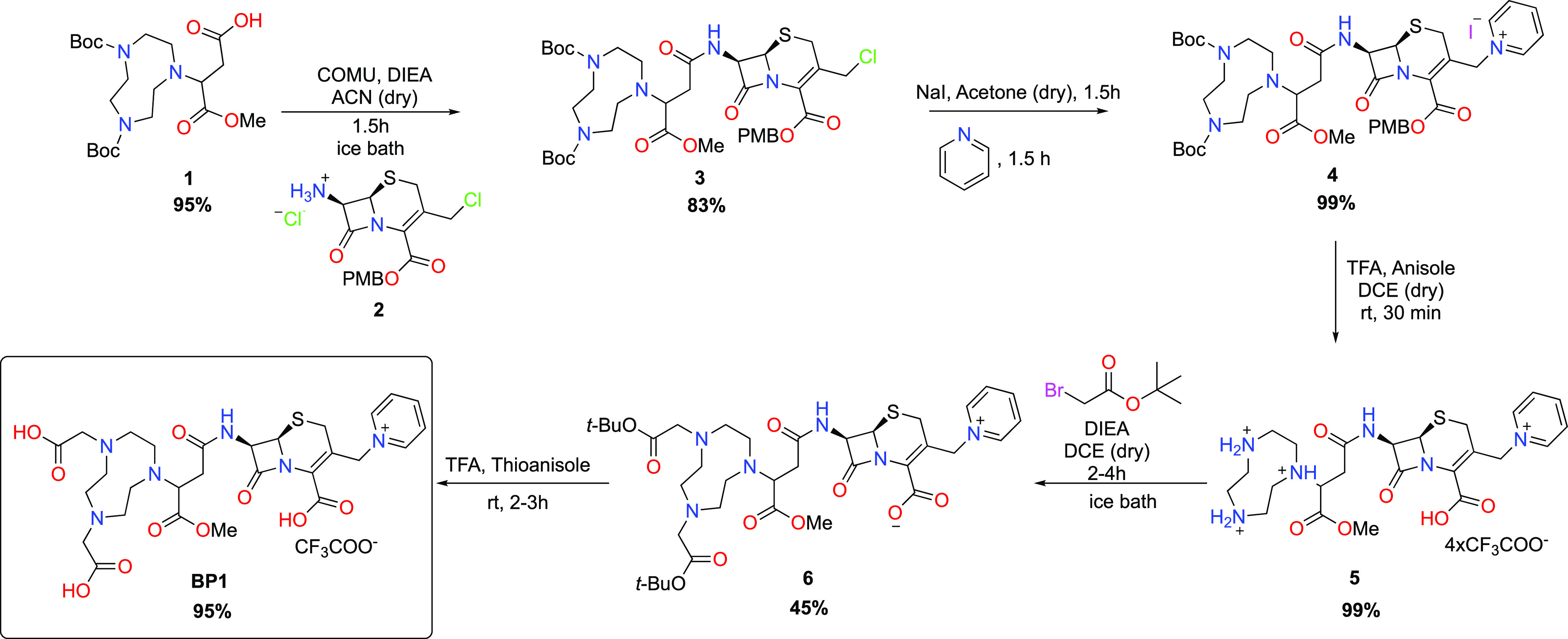
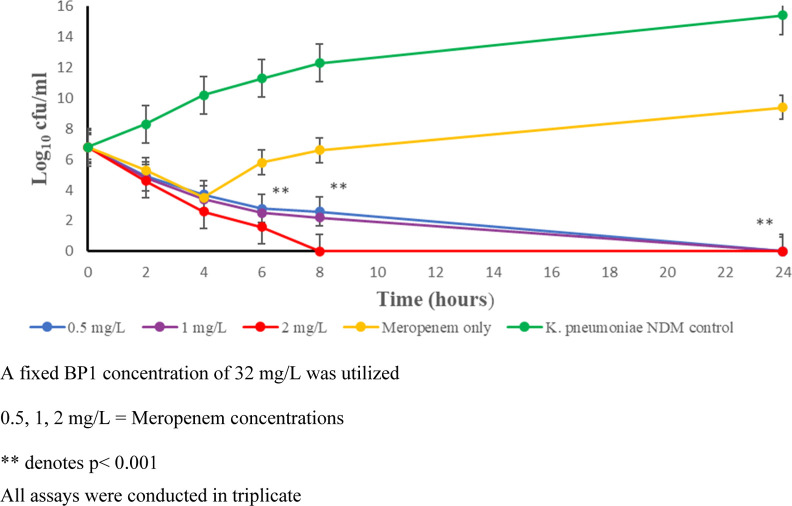
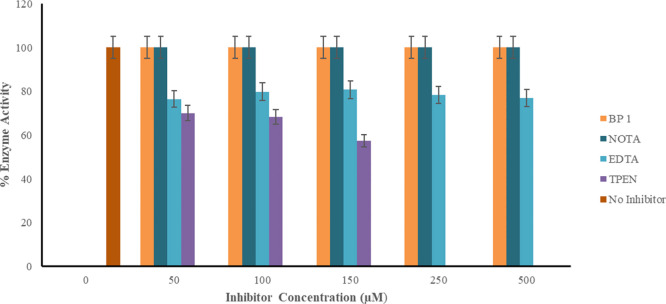
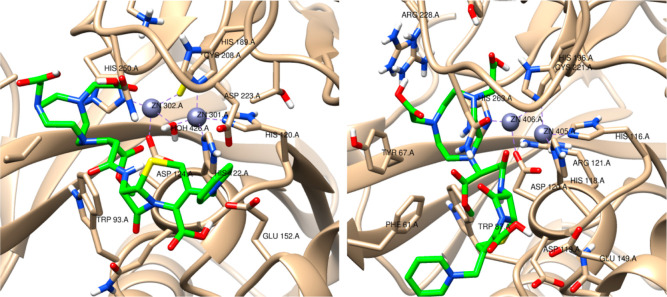
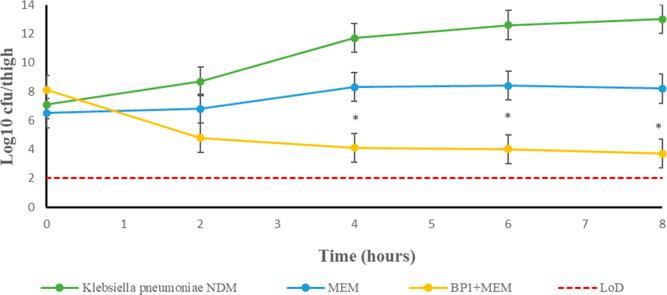
β-lactams are the most prescribed class of antibiotics due to their potent, broad-spectrum antimicrobial activities. However, alarming rates of antimicrobial resistance now threaten the clinical relevance of these drugs, especially for the carbapenem-resistant expressing metallo-β-lactamases (MBLs). Antimicrobial agents that specifically target these enzymes to restore the efficacy of last resort β-lactam drugs, that is, carbapenems, are therefore desperately needed. Herein, we present a cyclic zinc chelator covalently attached to a β-lactam scaffold (cephalosporin), that is, BP1. Observations from in vitro assays (with seven MBL expressing bacteria from different geographies) have indicated that BP1 restored the efficacy of meropenem to ≤ 0.5 mg/L, with sterilizing activity occurring from 8 h postinoculation. Furthermore, BP1 was nontoxic against human hepatocarcinoma cells (IC > 1000 mg/L) and exhibited a potency of (K) 24.8 and 97.4 μM against Verona integron-encoded MBL (VIM-2) and New Delhi metallo β-lactamase (NDM-1), respectively. There was no inhibition observed from BP1 with the human zinc-containing enzyme glyoxylase II up to 500 μM. Preliminary molecular docking of BP1 with NDM-1 and VIM-2 sheds light on BP1's mode of action. In NDM infected mice, BP1 coadministered with meropenem was efficacious in reducing the bacterial load by >3 log units' postinfection. The findings herein propose a favorable therapeutic combination strategy that restores the activity of the carbapenem antibiotic class and complements the few MBL inhibitors under development, with the ultimate goal of curbing antimicrobial resistance.
β-内酰胺类抗生素因其具有强大的广谱抗菌活性而成为应用最广泛的抗生素类别。然而,令人震惊的抗菌药物耐药率现在威胁着这些药物的临床相关性,尤其是对表达金属β-内酰胺酶(MBL)的碳青霉烯类耐药的药物。因此,非常需要专门针对这些酶的抗菌药物来恢复最后一线β-内酰胺类药物(即碳青霉烯类)的疗效。本文中,我们提出了一种将锌络合剂共价连接到β-内酰胺支架(头孢菌素)上的化合物 BP1。来自不同地理位置的 7 种表达 MBL 的细菌的体外检测结果表明,BP1 将美罗培南的疗效恢复至 ≤0.5mg/L,接种后 8 小时即可产生杀菌作用。此外,BP1 对人肝癌细胞无毒性(IC > 1000mg/L),对 Verona 整合子编码的 MBL(VIM-2)和新德里金属β-内酰胺酶(NDM-1)的效力分别为(K)24.8 和 97.4μM。BP1 对人含锌酶糖氧酶 II 的抑制作用在 500μM 以内未被观察到。BP1 与 NDM-1 和 VIM-2 的初步分子对接阐明了 BP1 的作用模式。在 NDM 感染的小鼠中,BP1 与美罗培南联合使用可在感染后将细菌负荷减少 >3 个对数单位,具有疗效。本研究提出了一种有利的治疗联合策略,可恢复碳青霉烯类抗生素的活性,并补充正在开发的少数 MBL 抑制剂,最终目标是抑制抗菌药物耐药性。