Zdenek Christina N, Staples Timothy, Hay Chris, Bourke Lachlan N, Candusso Damian
Venom Evolution Lab, School of Biological Sciences, The University of Queensland, St. Lucia, Queensland, Australia.
Marine PaleoEcology Lab, The University of Queensland, St. Lucia, Queensland, Australia.
PLoS One. 2023 Feb 14;18(2):e0281285. doi: 10.1371/journal.pone.0281285. eCollection 2023.
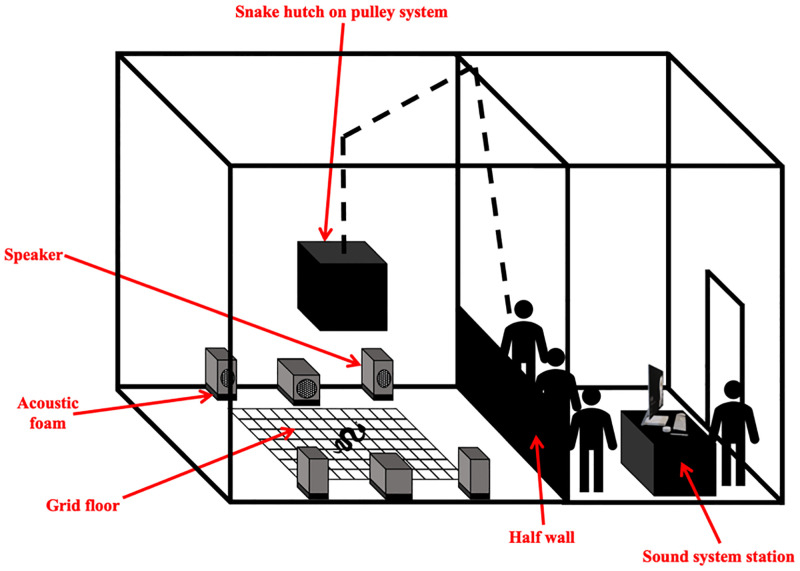
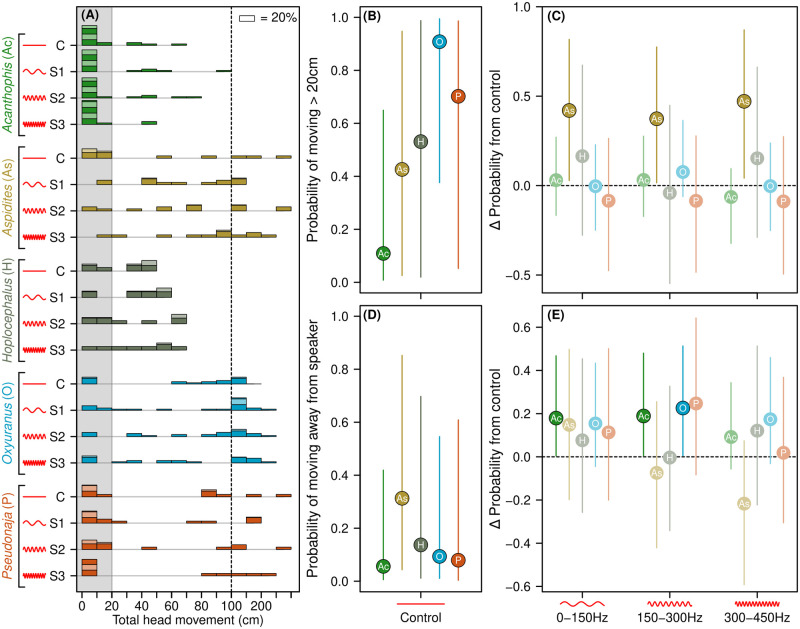
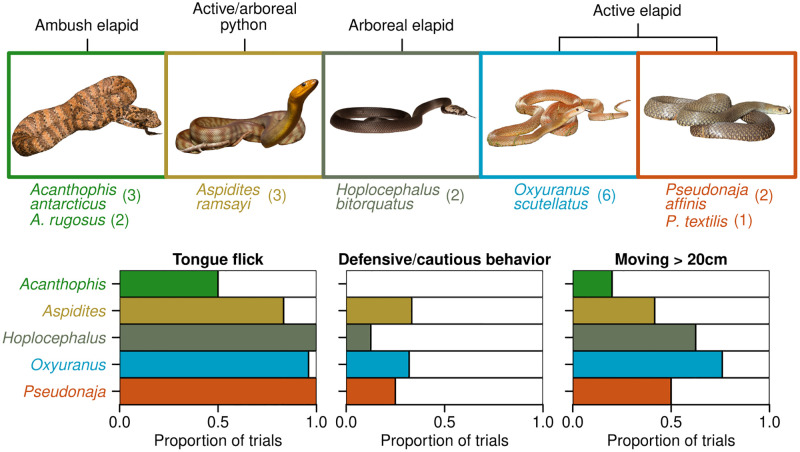
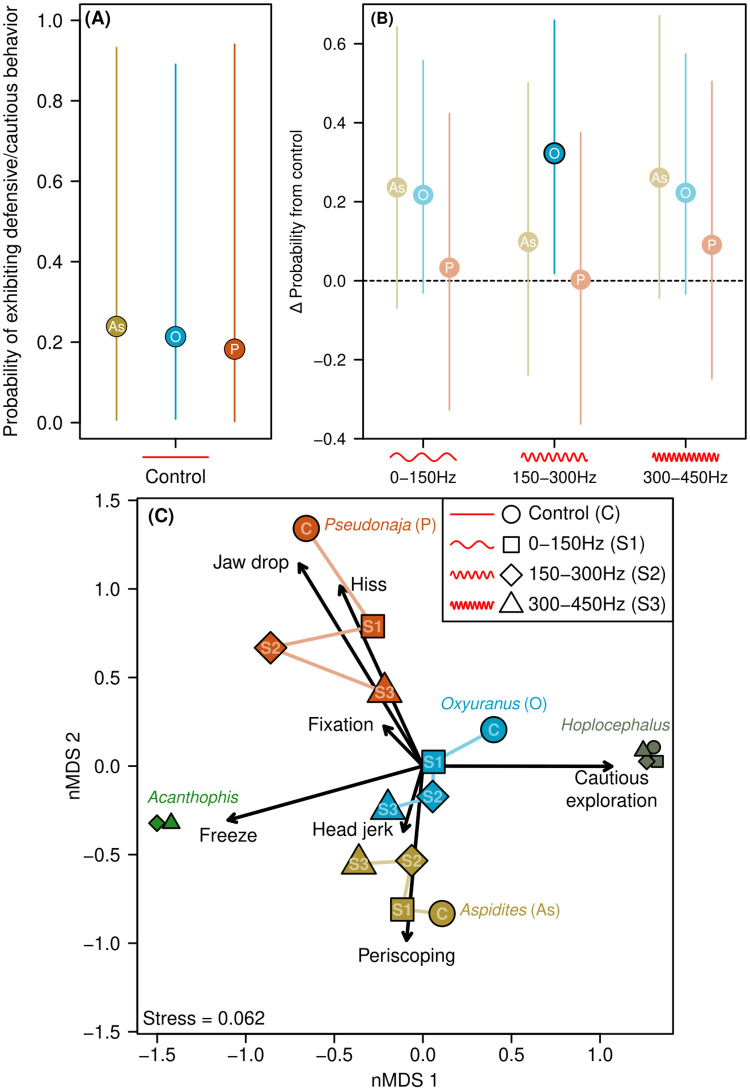
Evidence suggests that snakes can hear, but how snakes naturally respond to sound is still unclear. We conducted 304 controlled experiment trials on 19 snakes across five genera in a sound-proof room (4.9 x 4.9 m) at 27ºC, observing the effects of three sounds on individual snake behavior, compared to controls. We quantified eight snake behaviors (body movement, body freezing, head-flicks, tongue-flicks, hissing, periscoping, head fixation, lower jaw drop) in response to three sounds, which were filtered pink-noise within the following frequency ranges: 0-150Hz (sound 1, which produced ground vibrations, as measured by an accelerometer), 150-300Hz (sound 2, which did not produced ground vibrations), 300-450Hz (sound 3, which did not produced ground vibrations). All snake responses were strongly genus dependent. Only one genus (Aspidites, Woma Pythons) significantly increased their probability of movement in response to sound, but three other genera (Acanthophis (Death Adders), Oxyuranus (Taipans), and Pseudonaja (Brown Snakes)) were more likely to move away from sound, signaling potential avoidance behavior. Taipans significantly increased their likelihood of displaying defensive and cautious behaviors in response to sound, but three of the five genera exhibited significantly different types of behaviors in sound trials compared to the control. Our results highlight potential heritable behavioral responses of snakes to sound, clustered within genera. Our study illustrates the behavioral variability among different snake genera, and across sound frequencies, which contributes to our limited understanding of hearing and behavior in snakes.
有证据表明蛇能够听见声音,但蛇对声音的自然反应方式仍不清楚。我们在一个27摄氏度、隔音的房间(4.9×4.9米)里,对19条分属五个属的蛇进行了304次对照实验,观察三种声音对蛇个体行为的影响,并与对照组进行比较。我们对蛇在听到三种声音后的八种行为(身体移动、身体静止、头部轻弹、舌头轻弹、嘶嘶声、潜望、头部固定、下颌下垂)进行了量化,这三种声音是经过滤波的粉红噪声,频率范围如下:0 - 150赫兹(声音1,通过加速度计测量,会产生地面振动)、150 - 300赫兹(声音2,不会产生地面振动)、300 - 450赫兹(声音3,不会产生地面振动)。所有蛇的反应都强烈依赖于所属的属。只有一个属(澳蟒属,沃玛蟒)对声音做出反应时显著增加了移动的概率,但其他三个属(棘蛇属(死亡蝰蛇)、太攀蛇属(太攀蛇)和伪眼镜蛇属(棕蛇))更倾向于远离声音,这表明可能存在回避行为。太攀蛇对声音做出反应时显著增加了表现出防御和谨慎行为的可能性,但五个属中的三个在声音试验中表现出与对照组显著不同的行为类型。我们的结果突出了蛇对声音潜在的可遗传行为反应,这些反应在属内聚集。我们的研究说明了不同蛇属之间以及不同声音频率下的行为变异性,这导致我们对蛇的听觉和行为的理解有限。