Chaiprasittikul Natkritta, Thanathornwong Bhornsawan, Pornprasertsuk-Damrongsri Suchaya, Raocharernporn Somchart, Maponthong Somporn, Manopatanakul Somchai
Department of Advanced General Dentistry, Faculty of Dentistry, Mahidol University, Bangkok, Thailand.
Department of General Dentistry, Faculty of Dentistry, Srinakharinwirot University, Bangkok, Thailand.
Healthc Inform Res. 2023 Jan;29(1):16-22. doi: 10.4258/hir.2023.29.1.16. Epub 2023 Jan 31.
Orthognathic surgery is used to treat moderate to severe occlusal discrepancies. Examinations and measurements for preoperative screening are essential procedures. A careful analysis is needed to decide whether cases require orthognathic surgery. This study developed screening software using a multi-layer perceptron to determine whether orthognathic surgery is required.
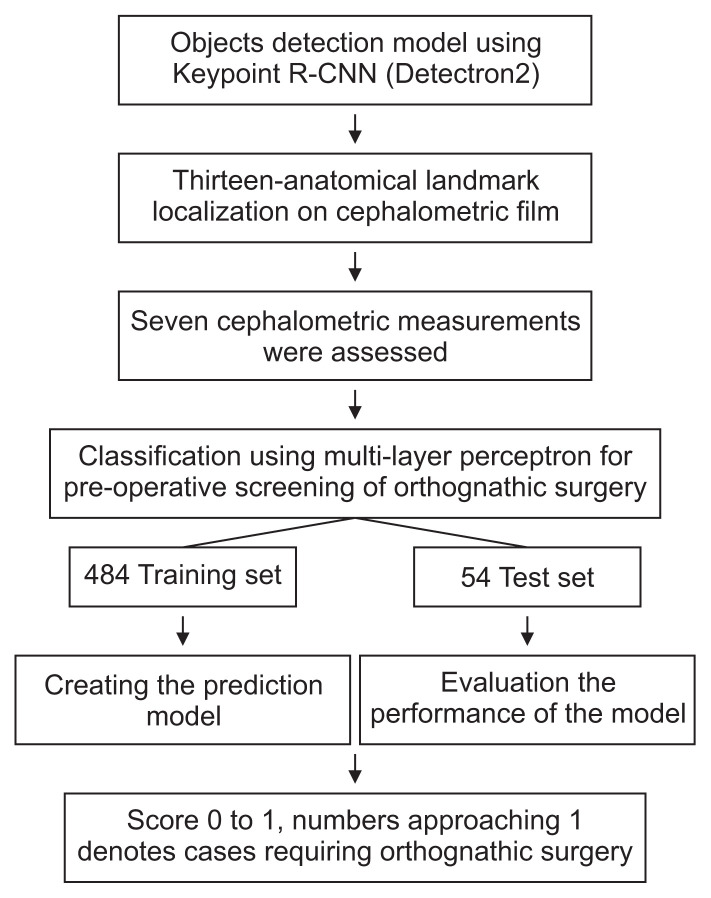
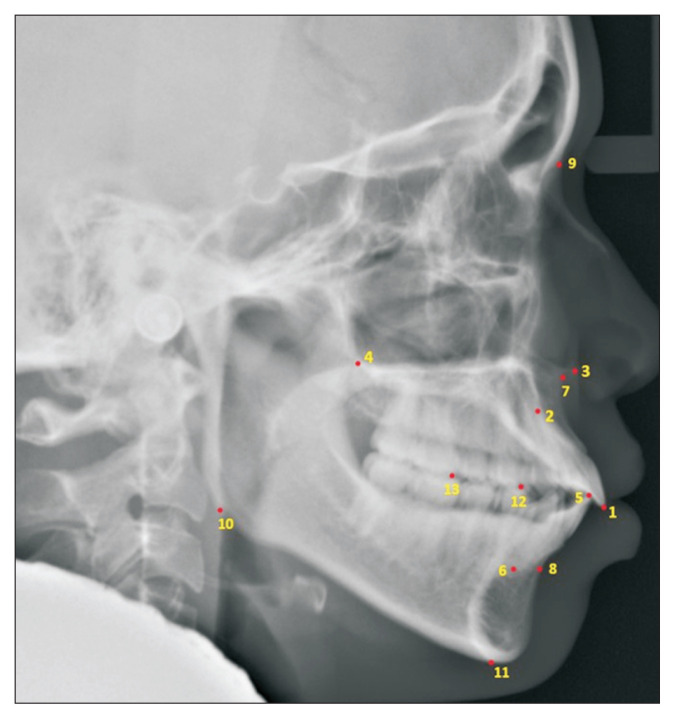
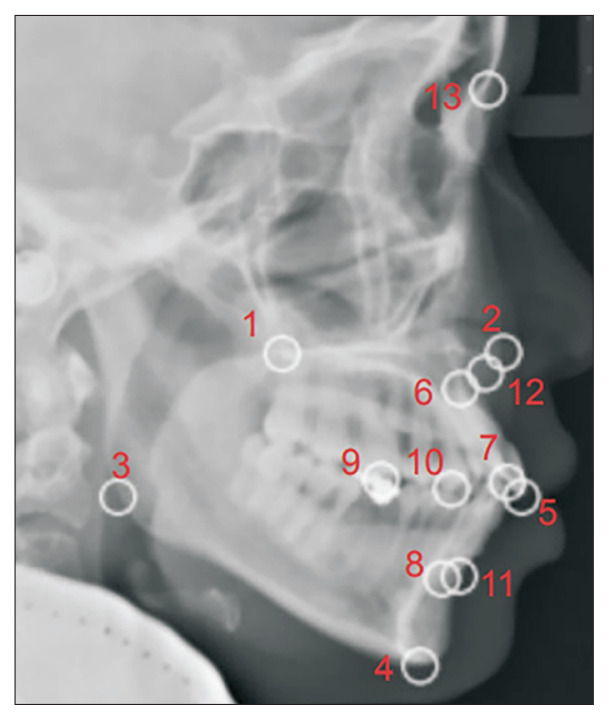
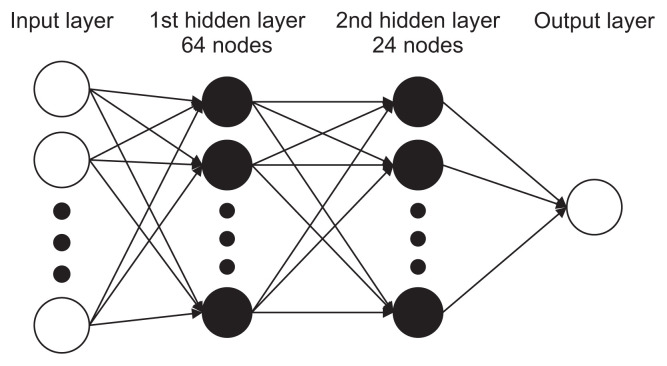
In total, 538 digital lateral cephalometric radiographs were retrospectively collected from a hospital data system. The input data consisted of seven cephalometric variables. All cephalograms were analyzed by the Detectron2 detection and segmentation algorithms. A keypoint region-based convolutional neural network (R-CNN) was used for object detection, and an artificial neural network (ANN) was used for classification. This novel neural network decision support system was created and validated using Keras software. The output data are shown as a number from 0 to 1, with cases requiring orthognathic surgery being indicated by a number approaching 1.
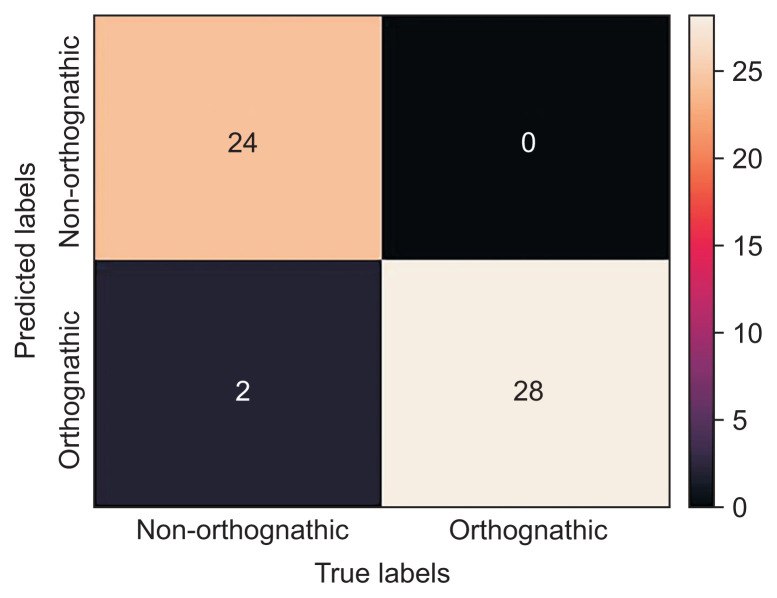
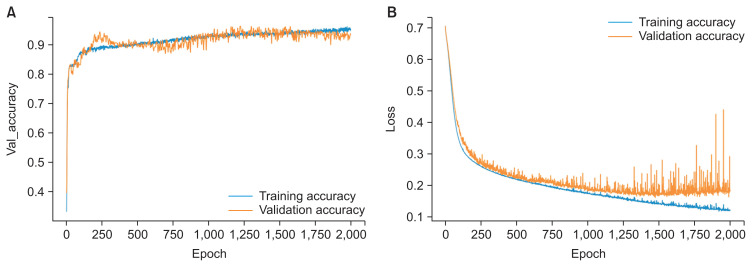
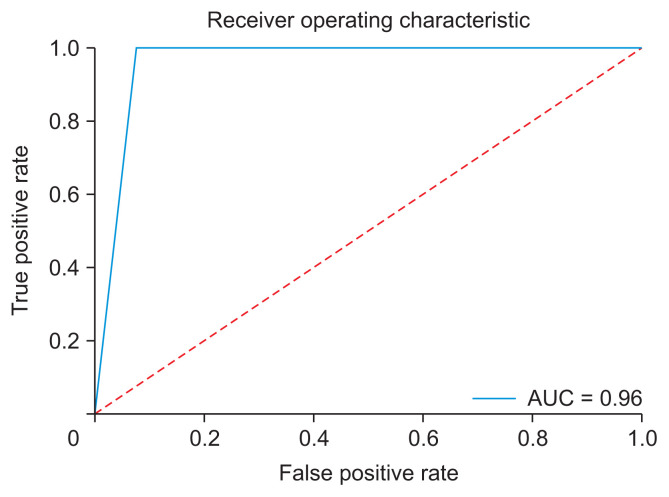
The screening software demonstrated a diagnostic agreement of 96.3% with specialists regarding the requirement for orthognathic surgery. A confusion matrix showed that only 2 out of 54 cases were misdiagnosed (accuracy = 0.963, sensitivity = 1, precision = 0.93, F-value = 0.963, area under the curve = 0.96).
Orthognathic surgery screening with a keypoint R-CNN for object detection and an ANN for classification showed 96.3% diagnostic agreement in this study.
正颌外科手术用于治疗中度至重度咬合紊乱。术前筛查的检查和测量是必不可少的程序。需要进行仔细分析以确定病例是否需要正颌外科手术。本研究开发了一种使用多层感知器的筛查软件,以确定是否需要正颌外科手术。
总共从一家医院数据系统中回顾性收集了538张数字化头颅侧位X线片。输入数据由七个头颅测量变量组成。所有头颅侧位片均通过Detectron2检测和分割算法进行分析。基于关键点区域的卷积神经网络(R-CNN)用于目标检测,人工神经网络(ANN)用于分类。使用Keras软件创建并验证了这种新型神经网络决策支持系统。输出数据显示为0到1之间的数字,数字越接近1表示需要正颌外科手术的病例。
筛查软件在正颌外科手术需求方面与专家的诊断一致性为96.3%。混淆矩阵显示,54例病例中只有2例被误诊(准确率=0.963,灵敏度=1,精确率=0.93,F值=0.963,曲线下面积=0.96)。
本研究中,使用基于关键点的R-CNN进行目标检测和ANN进行分类的正颌外科手术筛查显示出96.3%的诊断一致性。