Phengsaart Theerayut, Srichonphaisan Palot, Kertbundit Chinawich, Soonthornwiphat Natatsawas, Sinthugoot Somthida, Phumkokrux Nutthakarn, Juntarasakul Onchanok, Maneeintr Kreangkrai, Numprasanthai Apisit, Park Ilhwan, Tabelin Carlito Baltazar, Hiroyoshi Naoki, Ito Mayumi
Department of Mining and Petroleum Engineering, Faculty of Engineering, Chulalongkorn University, Bangkok 10330, Thailand.
Division of Sustainable Resources Engineering, Faculty of Engineering, Hokkaido University, Sapporo 060-8628, Japan.
Heliyon. 2023 Jan 21;9(2):e13083. doi: 10.1016/j.heliyon.2023.e13083. eCollection 2023 Feb.
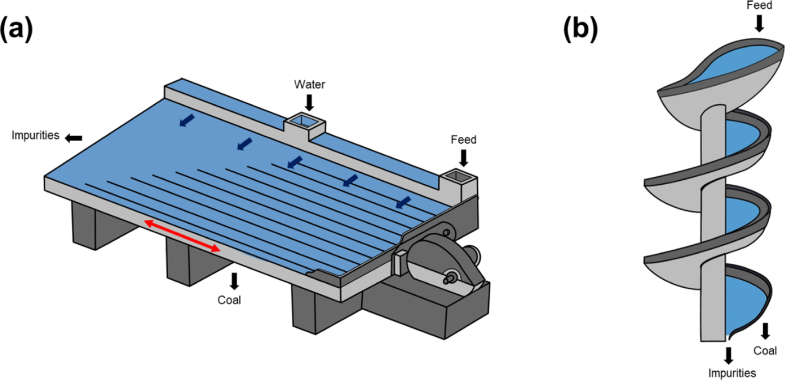
"Affordable and clean energy" is enshrined in the UN Sustainable Development Goals (SDGs; #7) because of its importance in supporting the sustainable development of society. As an energy source, coal is widely used because it is abundant and its utilization for electricity and heat generation do not require complex infrastructures and technologies, which makes it ideal for the energy needs of low-income and developing countries. Coal is also essential in steel making (as coke) and cement production and will continue to be on high demand for the foreseeable future. However, coal is naturally found with impurities or gangue minerals like pyrite and quartz that could create by-products (e.g., ash) and various pollutants (e.g., CO, NO, SO). To reduce the environmental impacts of coal during combustion, coal cleaning-a kind of pre-combustion clean coal technology-is essential. Gravity separation, a technique that separates particles based on their differences in density, is widely used in coal cleaning due to the simplicity of its operation, low cost, and high efficiency. In this paper, recent studies (from 2011 to 2020) related to gravity separation for coal cleaning were systematically reviewed using the Preferred Reporting Items for Systematic Reviews and Meta-Analyses (PRISMA) guidelines. A total of 1864 articles were screened after removing duplicates, and after a thorough evaluation 189 articles were reviewed and summarized. Among of conventional separation techniques, dense medium separator (DMS), particularly dense medium cyclone (DMC), is the most popular technologies studied, which could be attributed to the growing challenges of cleaning/processing fine coal-bearing materials. In recent years, most of works focused on the development of dry-type gravity technologies for coal cleaning. Finally, gravity separation challenges and future applications to address problems in environmental pollution and mitigation, waste recycling and reprocessing, circular economy, and mineral processing are discussed.
“负担得起的清洁能源”被载入联合国可持续发展目标(SDGs;目标7),因为它对支持社会可持续发展至关重要。作为一种能源,煤炭被广泛使用,因为它储量丰富,用于发电和供热不需要复杂的基础设施和技术,这使其成为低收入国家和发展中国家能源需求的理想选择。煤炭在炼钢(作为焦炭)和水泥生产中也至关重要,并且在可预见的未来需求仍将居高不下。然而,煤炭中天然含有杂质或脉石矿物,如黄铁矿和石英,它们会产生副产品(如灰分)和各种污染物(如一氧化碳、一氧化氮、二氧化硫)。为了减少煤炭燃烧过程中的环境影响,煤炭洗选——一种燃烧前的清洁煤技术——至关重要。重选是一种基于颗粒密度差异分离颗粒的技术,因其操作简单、成本低、效率高而被广泛应用于煤炭洗选。本文使用系统评价和Meta分析的首选报告项目(PRISMA)指南,对2011年至2020年期间与煤炭洗选重选相关的最新研究进行了系统评价。去除重复项后共筛选出1864篇文章,经过全面评估,对189篇文章进行了综述和总结。在传统分离技术中,重介质分选机(DMS),特别是重介质旋流器(DMC),是研究最多的技术,这可能归因于清洗/加工细粒含煤物料面临的挑战日益增加。近年来,大多数工作集中在开发用于煤炭洗选的干式重力技术。最后,讨论了重选面临的挑战以及在解决环境污染与缓解、废物回收与再加工、循环经济和矿物加工等问题方面的未来应用。