Institute of Drug Discovery & Development, School of Pharmaceutical Sciences, Zhengzhou University, Zhengzhou, 450001, China.
Signal Transduct Target Ther. 2023 Feb 17;8(1):69. doi: 10.1038/s41392-023-01341-7.
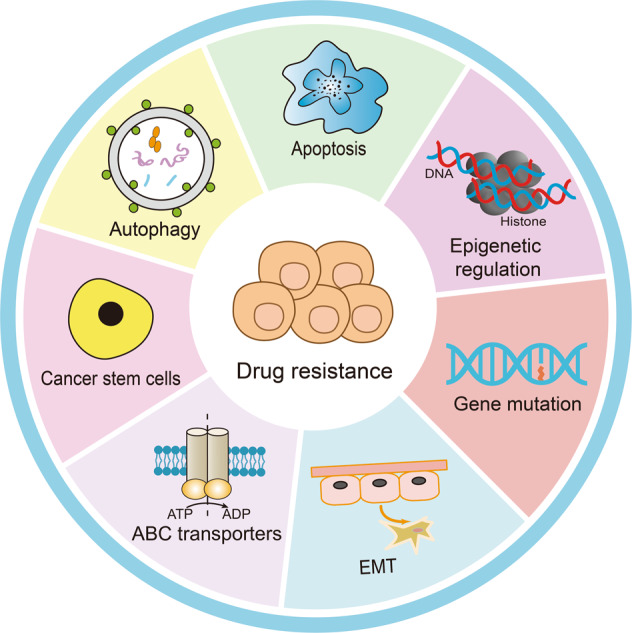
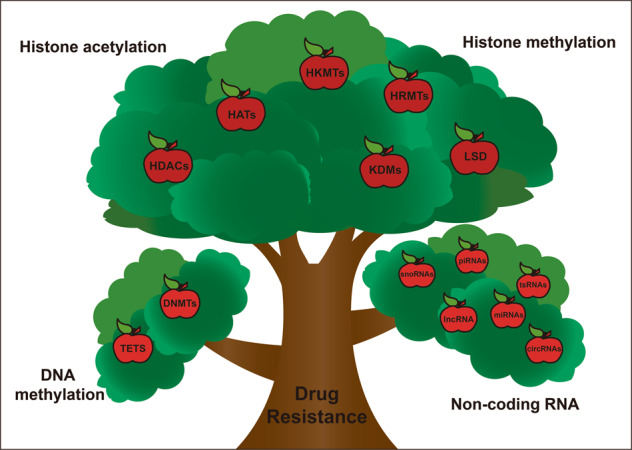
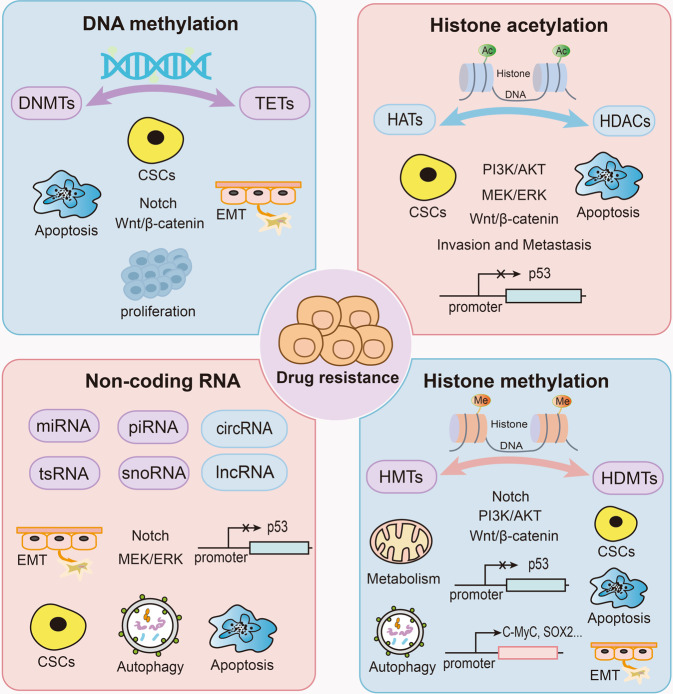
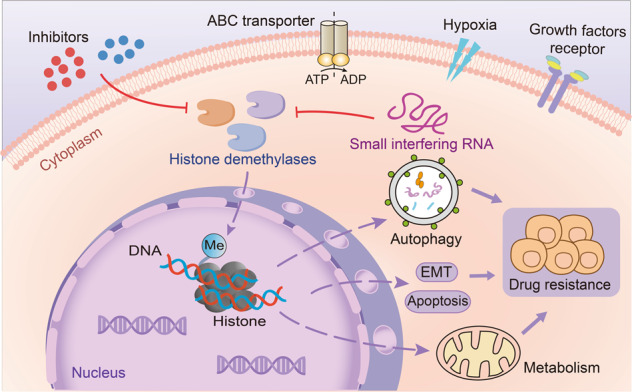
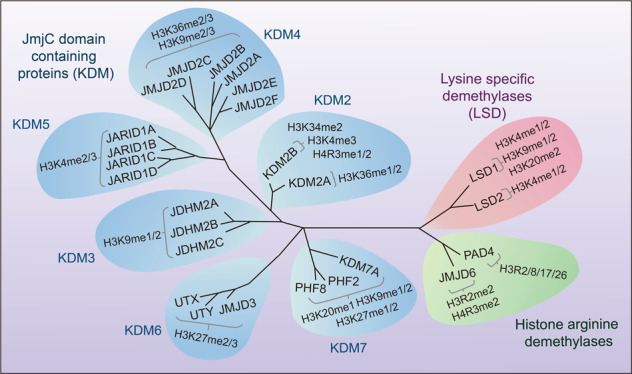
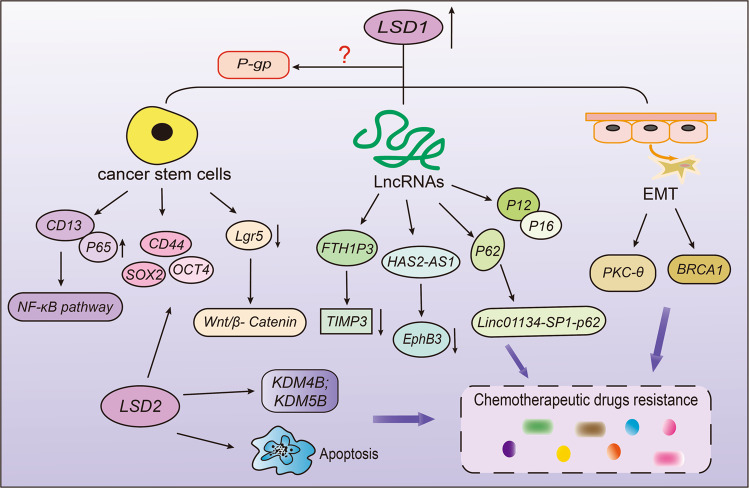
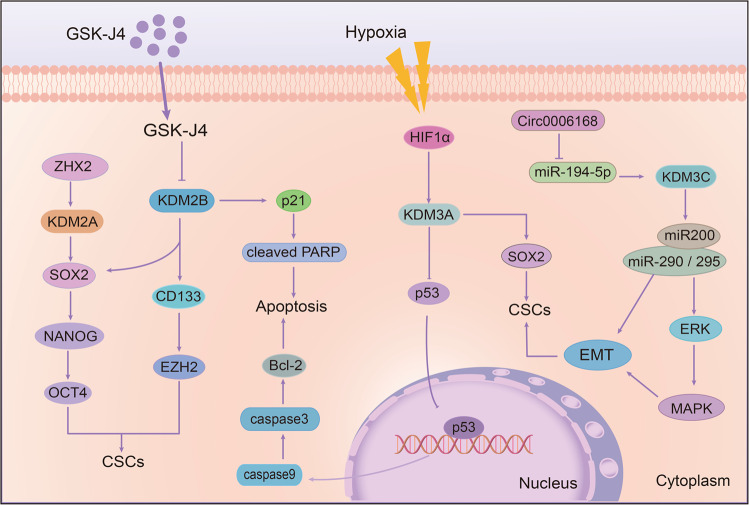
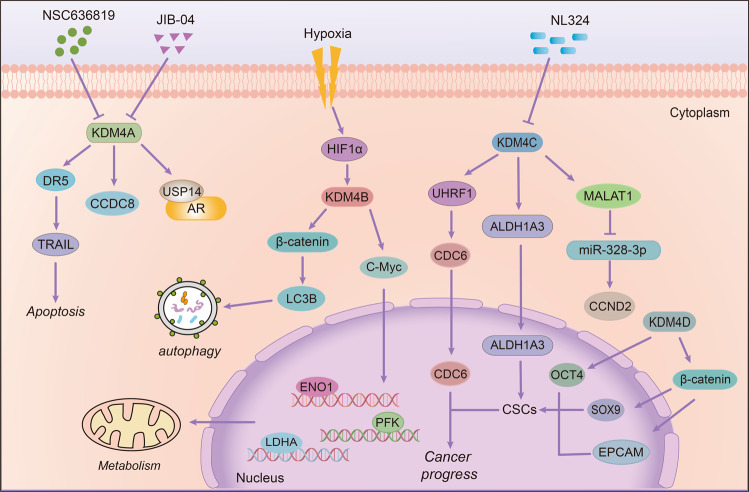
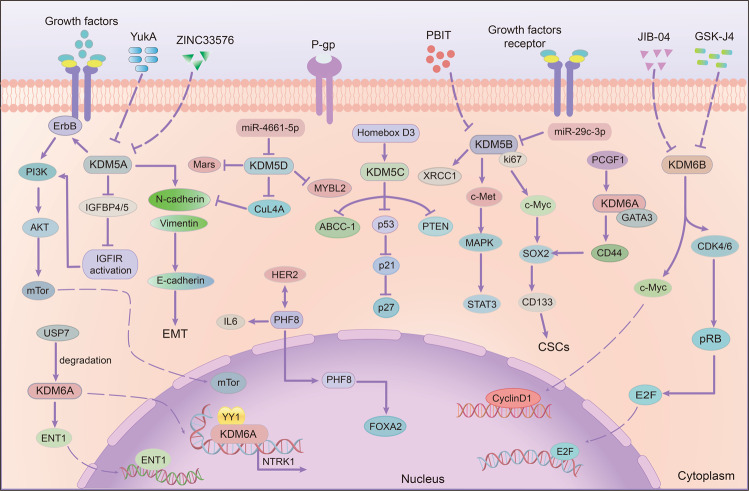
Drug resistance is mainly responsible for cancer recurrence and poor prognosis. Epigenetic regulation is a heritable change in gene expressions independent of nucleotide sequence changes. As the common epigenetic regulation mechanisms, DNA methylation, histone modification, and non-coding RNA regulation have been well studied. Increasing evidence has shown that aberrant epigenetic regulations contribute to tumor resistance. Therefore, targeting epigenetic regulators represents an effective strategy to reverse drug resistance. In this review, we mainly summarize the roles of epigenetic regulation in tumor resistance. In addition, as the essential factors for epigenetic modifications, histone demethylases mediate the histone or genomic DNA modifications. Herein, we comprehensively describe the functions of the histone demethylase family including the lysine-specific demethylase family, the Jumonji C-domain-containing demethylase family, and the histone arginine demethylase family, and fully discuss their regulatory mechanisms related to cancer drug resistance. In addition, therapeutic strategies, including small-molecule inhibitors and small interfering RNA targeting histone demethylases to overcome drug resistance, are also described.
耐药性主要导致癌症复发和预后不良。表观遗传调控是一种不依赖于核苷酸序列变化的基因表达可遗传变化。作为常见的表观遗传调控机制,DNA 甲基化、组蛋白修饰和非编码 RNA 调控已得到深入研究。越来越多的证据表明,异常的表观遗传调控导致肿瘤耐药。因此,靶向表观遗传调节剂代表了逆转耐药性的有效策略。在这篇综述中,我们主要总结了表观遗传调控在肿瘤耐药中的作用。此外,作为表观遗传修饰的必需因素,组蛋白去甲基酶介导组蛋白或基因组 DNA 的修饰。在此,我们全面描述了组蛋白去甲基酶家族的功能,包括赖氨酸特异性去甲基酶家族、Jumonji C 结构域包含的去甲基酶家族和组蛋白精氨酸去甲基酶家族,并充分讨论了它们与癌症耐药性相关的调控机制。此外,还描述了治疗策略,包括针对组蛋白去甲基酶的小分子抑制剂和小干扰 RNA,以克服耐药性。