Bai Qingquan, He Xiao, Hu Tianhui
Department of Hepatology and Gastroenterology, Campus Virchow Clinic and Campus Charité Mitte, Charité University Medicine, D-13353 Berlin, Germany.
Cancer Research Center, School of Medicine, Xiamen University, Xiamen, Fujian 361102, P.R. China.
Mol Clin Oncol. 2023 Feb 2;18(3):19. doi: 10.3892/mco.2023.2615. eCollection 2023 Mar.
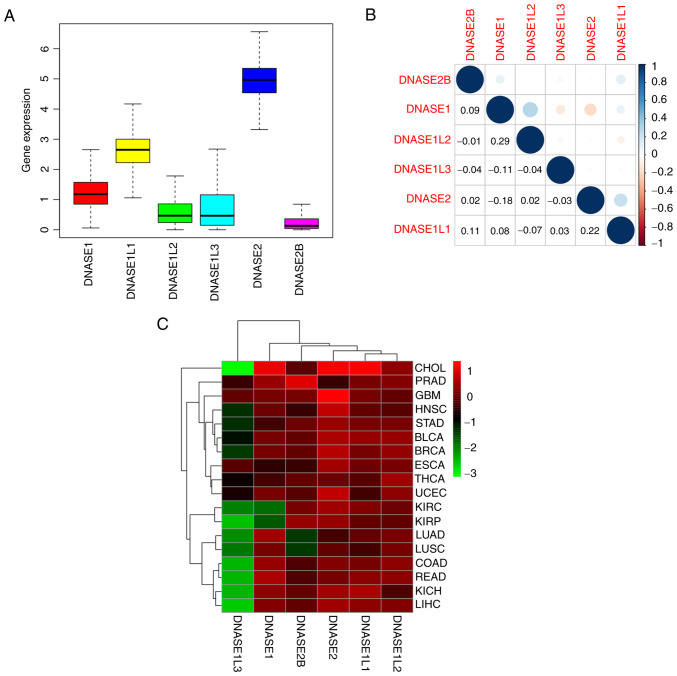
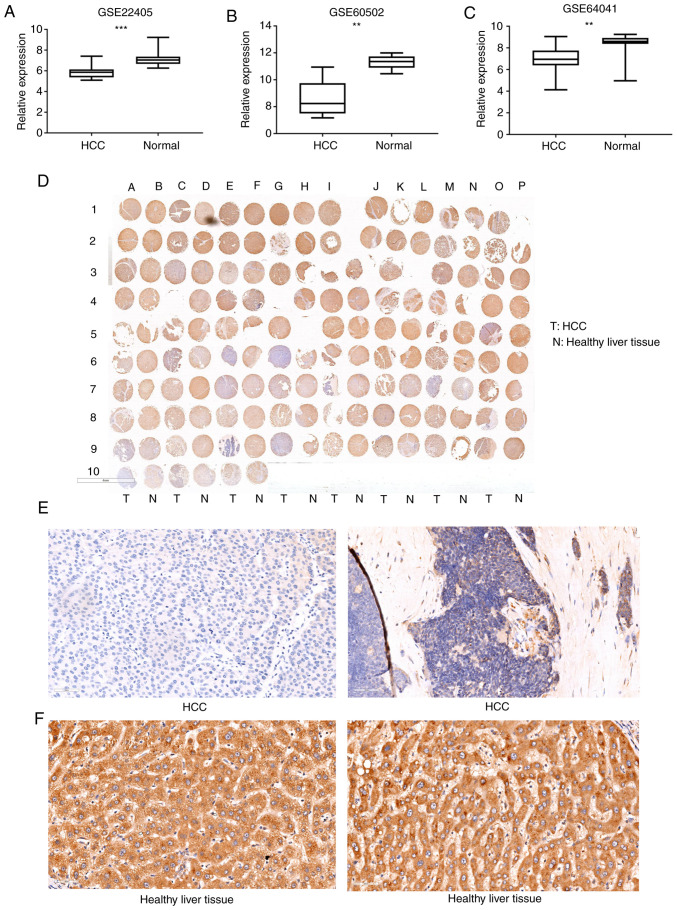
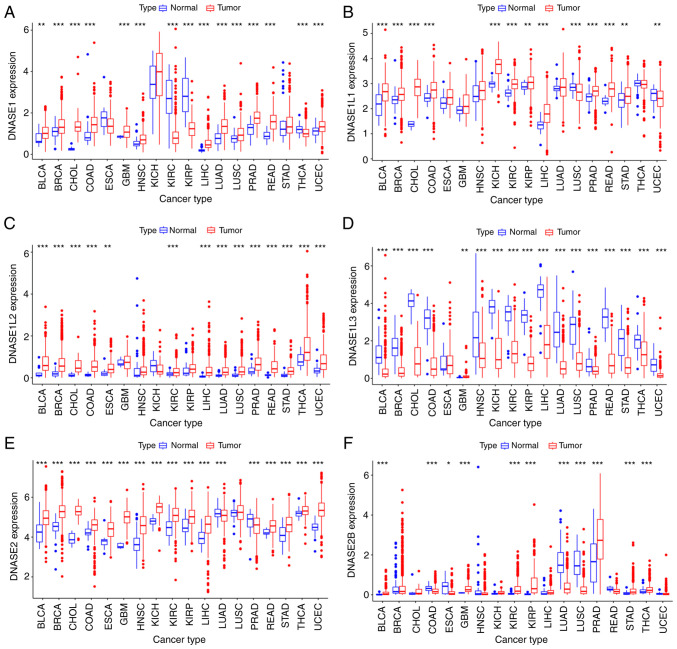
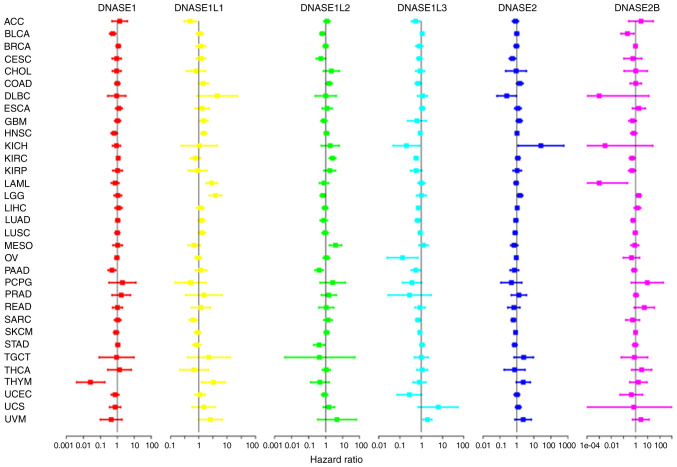
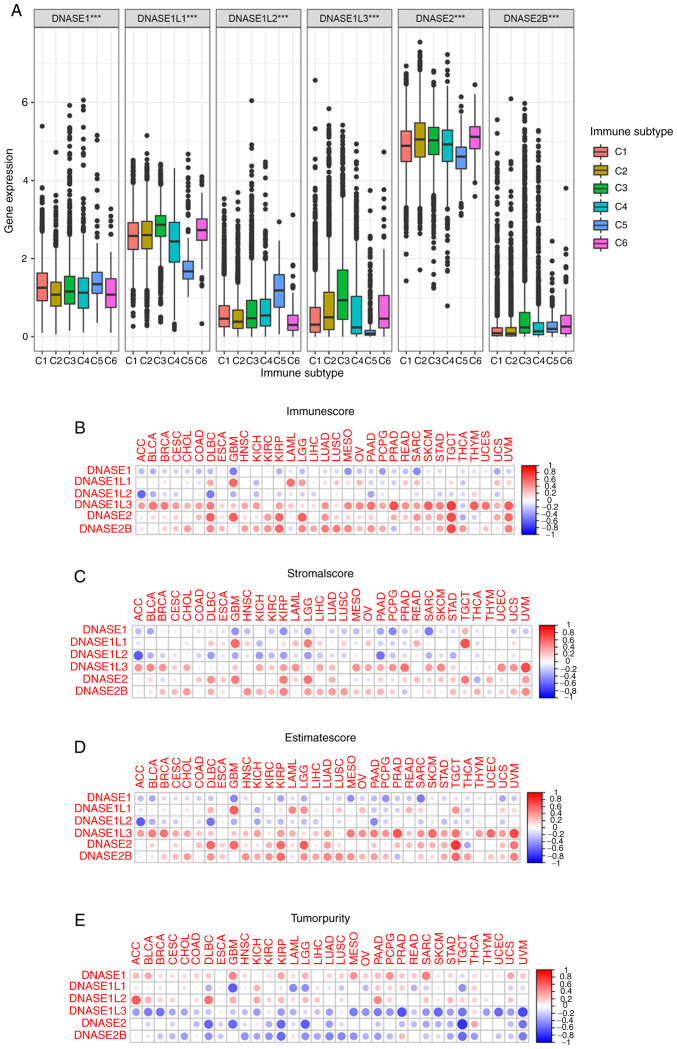
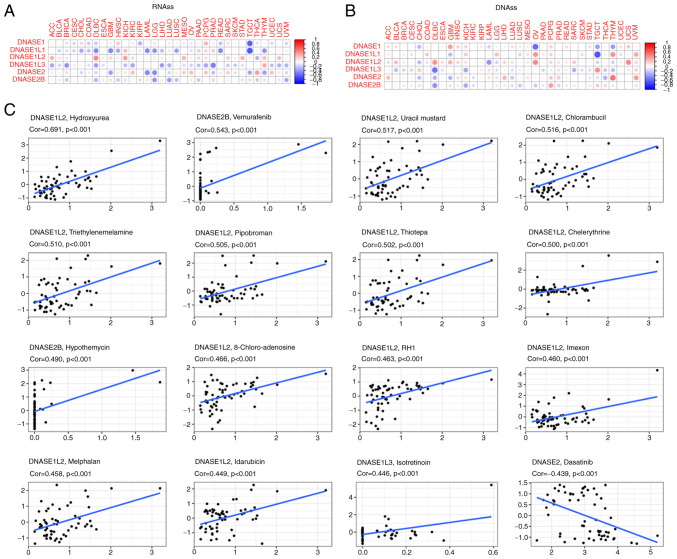
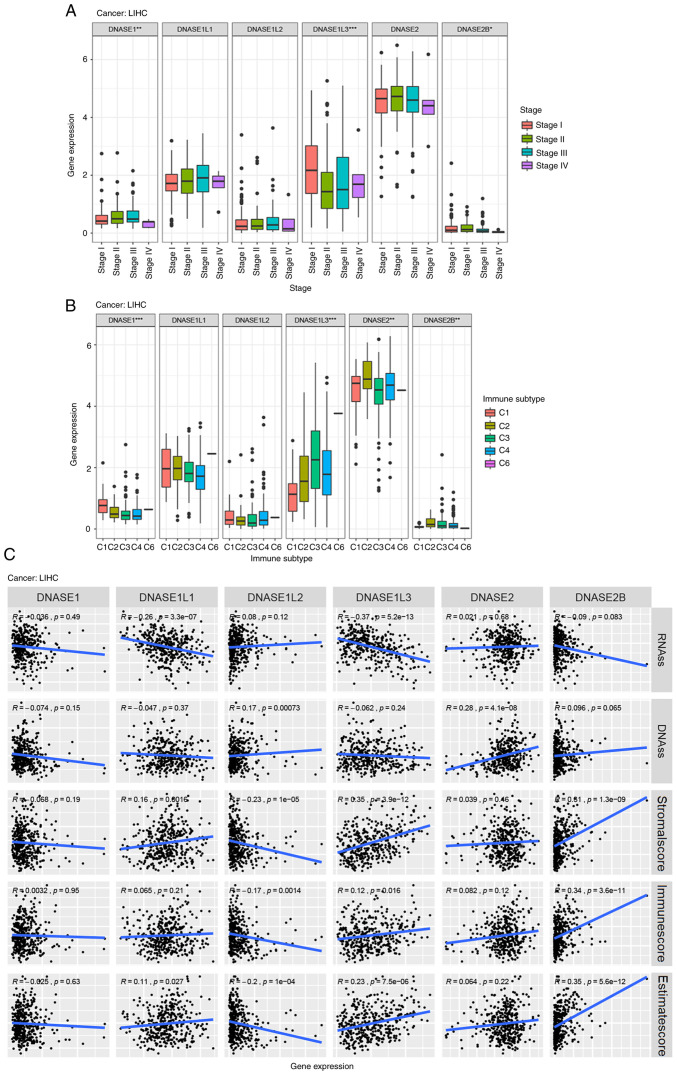
Deoxyribonuclease (DNase) is an enzyme that catalyzes the cleavage of phosphodiester bonds in the main chain of DNA to degrade DNA. DNase serves a vital role in several immune-related diseases. The present study linked the expression of DNase with overall survival (OS), performed pan-cancer co-expression analysis, and assessed the association between DNase and immune infiltration subtypes, tumor microenvironment and drug sensitivity through pan-cancer studies. Furthermore, gene expression data and clinical data were downloaded from The Cancer Genome Atlas. Next, through a series of bioinformatics analyses, DNase expression and survival, immune subtypes, tumor microenvironment and drug sensitivity in 33 tumor types were systematically studied. The expression of the DNase gene family was shown to have an apparent intratumoral heterogeneity. The expression of DNase 2, lysosomal (DNASE2) was the highest in tumors, whereas that of DNASE2 β was the lowest. DNase 1-like 3 (DNASE1L3) was mainly downregulated in tumors, whereas the rest of the DNases were mainly upregulated in tumors. The expression of DNase family members was also found to be associated with the OS rate of patients. DNase family genes may serve an essential role in the tumor microenvironment. DNase family gene expression was related to the content of cytotoxic cells, Immunescore, Stromalscore, Estimatescore and Tumorpurity. The present study also revealed that the DNase genes may be involved in the drug resistance of cancer cells. Finally, the correlation between DNase, and clinical stage and tumor microenvironment in hepatocellular carcinoma (HCC) was studied. In addition, the difference in DNASE1L3 expression between HCC and adjacent normal tissues, and the relationship between DNASE1L3 expression and clinical stage was verified by analyzing three groups in a Gene Expression Omnibus dataset and by performing immunohistochemistry. In conclusion, the present study assessed DNase gene expression, analyzed its relationship with patient OS, performed pan-cancer co-expression analysis, and assessed the association between DNase and immune infiltration subtypes, tumor microenvironment and drug sensitivity. The present study also confirmed the value of further laboratory research on DNases and their prospects in clinical cancer treatment.
脱氧核糖核酸酶(DNase)是一种催化DNA主链中磷酸二酯键断裂以降解DNA的酶。DNase在几种免疫相关疾病中起着至关重要的作用。本研究将DNase的表达与总生存期(OS)相关联,进行了泛癌共表达分析,并通过泛癌研究评估了DNase与免疫浸润亚型、肿瘤微环境和药物敏感性之间的关联。此外,从癌症基因组图谱下载了基因表达数据和临床数据。接下来,通过一系列生物信息学分析,系统地研究了33种肿瘤类型中DNase的表达与生存、免疫亚型、肿瘤微环境和药物敏感性。DNase基因家族的表达显示出明显的肿瘤内异质性。溶酶体脱氧核糖核酸酶2(DNASE2)在肿瘤中的表达最高,而DNASE2β的表达最低。DNase 1样3(DNASE1L3)在肿瘤中主要下调,而其余的DNase在肿瘤中主要上调。还发现DNase家族成员的表达与患者的OS率相关。DNase家族基因可能在肿瘤微环境中起重要作用。DNase家族基因表达与细胞毒性细胞含量、免疫评分、基质评分、估计评分和肿瘤纯度有关。本研究还表明,DNase基因可能参与癌细胞的耐药性。最后,研究了DNase与肝细胞癌(HCC)临床分期和肿瘤微环境之间的相关性。此外,通过分析基因表达综合数据库中的三组数据并进行免疫组织化学,验证了HCC与癌旁正常组织中DNASE1L3表达的差异以及DNASE1L3表达与临床分期的关系。总之,本研究评估了DNase基因表达,分析了其与患者OS的关系,进行了泛癌共表达分析,并评估了DNase与免疫浸润亚型、肿瘤微环境和药物敏感性之间的关联。本研究还证实了对DNase进行进一步实验室研究的价值及其在临床癌症治疗中的前景。