Abu Hejleh A P, Huck K, Jähne K, Tan C L, Lanz T V, Epping L, Sonner J K, Meuth S G, Henneberg A, Opitz C A, Herold-Mende C, Sahm F, Platten M, Sahm K
Department of Neurology, Mannheim Medical Center, University of Heidelberg, Germany.
DKTK Clinical Cooperation Unit Neuroimmunology and Brain Tumor Immunology, German Cancer Research Center, Heidelberg, Germany.
Int J Tryptophan Res. 2023 Feb 9;16:11786469231153111. doi: 10.1177/11786469231153111. eCollection 2023.
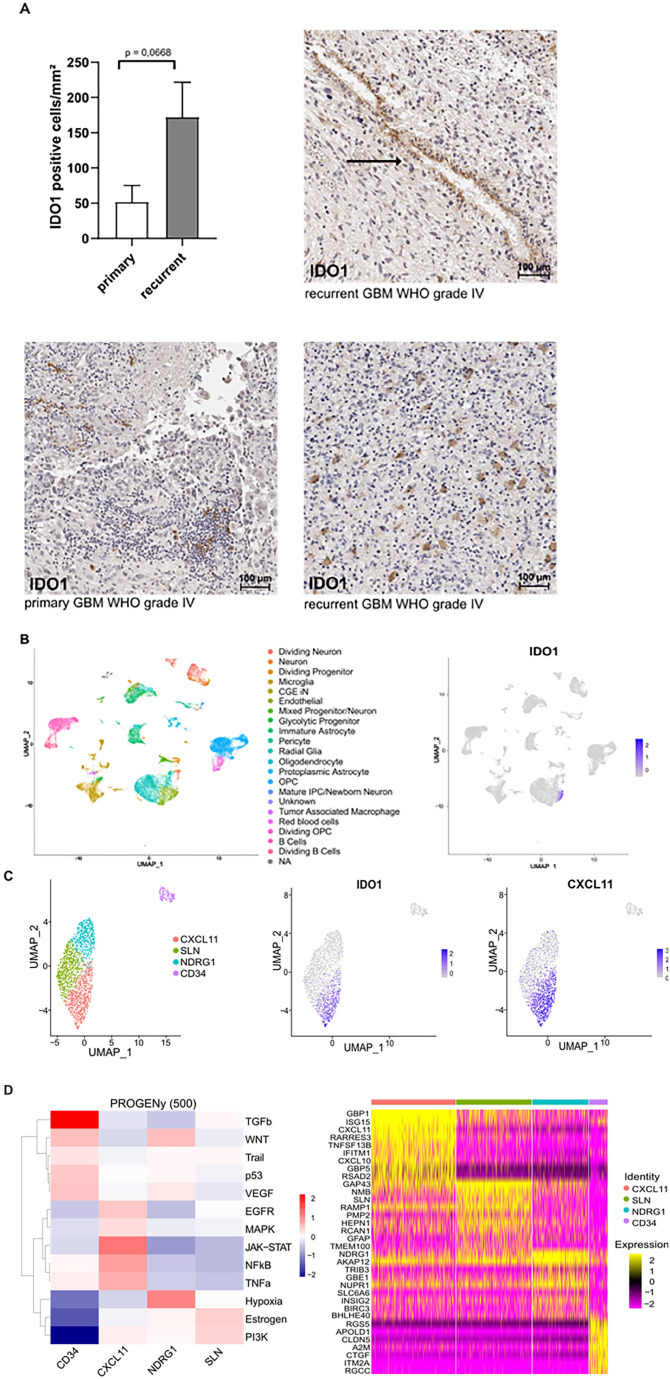
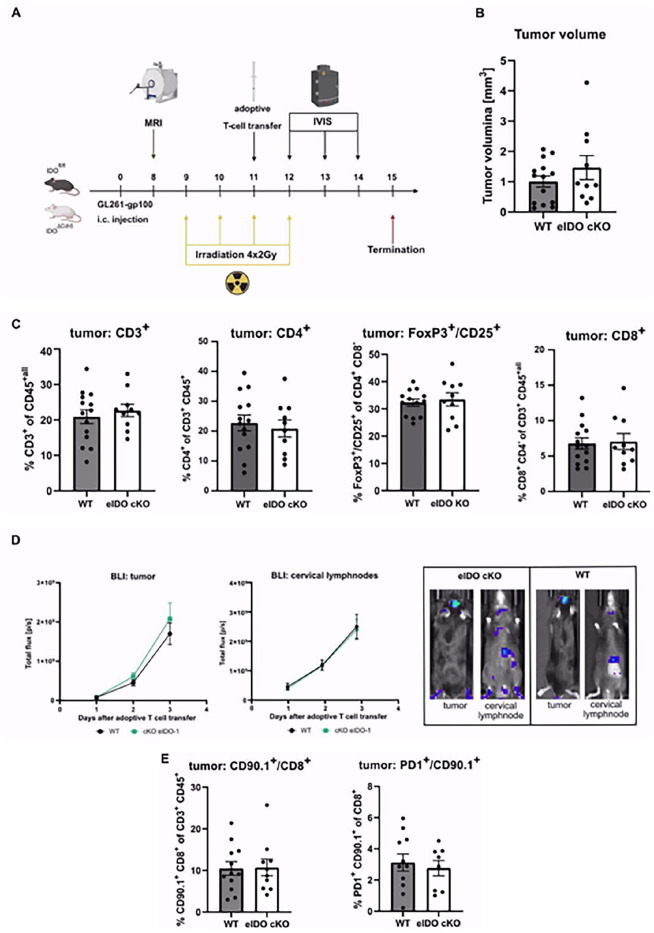
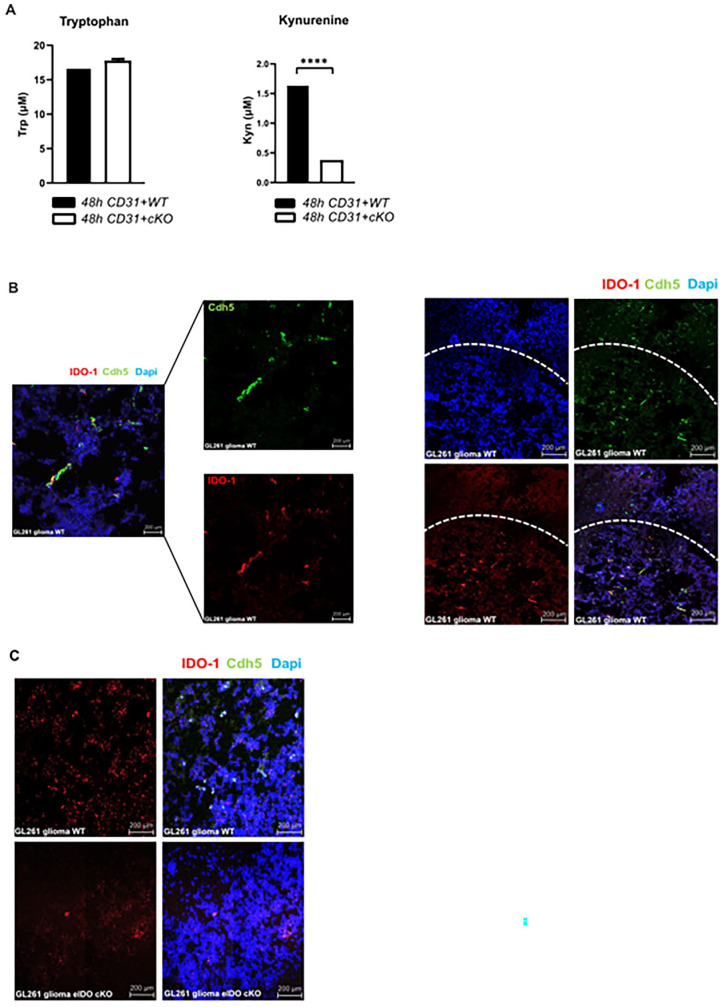
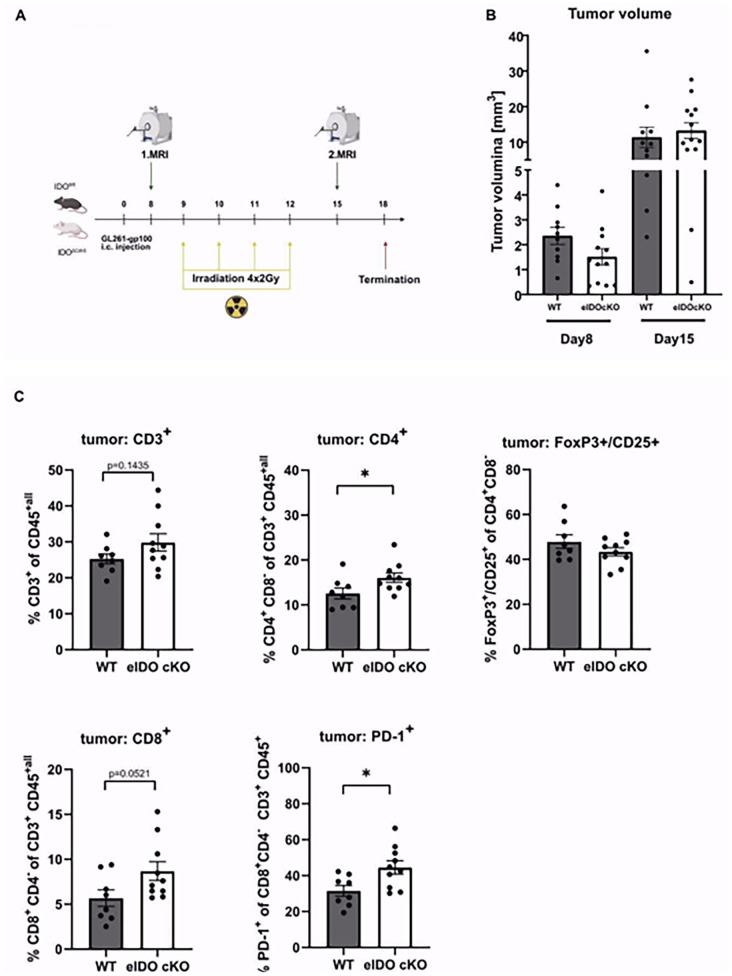
The vascular niche of malignant gliomas is a key compartment that shapes the immunosuppressive brain tumor microenvironment (TME). The blood-brain-barrier (BBB) consisting of specialized endothelial cells (ECs) and perivascular cells forms a tight anatomical and functional barrier critically controlling transmigration and effector function of immune cells. During neuroinflammation and tumor progression, the metabolism of the essential amino acid tryptophan (Trp) to metabolites such as kynurenine has long been identified as an important metabolic pathway suppressing immune responses. Previous studies have demonstrated that indoleamine-2,3-dioxygenase-1 (IDO1), a key rate-limiting enzyme in tryptophan catabolism, is expressed within the TME of high-grade gliomas. Here, we investigate the role of endothelial IDO1 (eIDO1) expression for brain tumor immunity. Single-cell RNA sequencing data revealed that in human glioma tissue, IDO1 is predominantly expressed by activated ECs showing a JAK/STAT signaling pathway-related CXCL11 gene expression signature. In a syngeneic experimental glioma model, eIDO1 is induced by low-dose tumor irradiation. However, cell type-specific ablation of eIDO1 in experimental gliomas did not alter frequency and phenotype of tumor-infiltrating T cells nor tumor growth. Taken together these data argue against a dominant role of eIDO1 for brain tumor immunity.
恶性胶质瘤的血管微环境是塑造免疫抑制性脑肿瘤微环境(TME)的关键部分。由特殊内皮细胞(ECs)和血管周细胞组成的血脑屏障(BBB)形成了一个紧密的解剖和功能屏障,严格控制免疫细胞的迁移和效应功能。在神经炎症和肿瘤进展过程中,必需氨基酸色氨酸(Trp)代谢为犬尿氨酸等代谢产物的过程长期以来一直被认为是抑制免疫反应的重要代谢途径。先前的研究表明,吲哚胺-2,3-双加氧酶-1(IDO1)是色氨酸分解代谢中的关键限速酶,在高级别胶质瘤的TME中表达。在此,我们研究内皮IDO1(eIDO1)表达对脑肿瘤免疫的作用。单细胞RNA测序数据显示,在人类胶质瘤组织中,IDO1主要由显示JAK/STAT信号通路相关CXCL11基因表达特征的活化ECs表达。在同基因实验性胶质瘤模型中,低剂量肿瘤照射可诱导eIDO1表达。然而,实验性胶质瘤中eIDO1的细胞类型特异性消融并未改变肿瘤浸润T细胞的频率和表型,也未改变肿瘤生长。综上所述,这些数据表明eIDO1在脑肿瘤免疫中不具有主导作用。