Shafaghi Mona, Bahadori Zohreh, Madanchi Hamid, Ranjbar Mohammad Mehdi, Shabani Ali Akbar, Mousavi Seyed Fazlollah
Department of Medical Biotechnology, Faculty of Medicine, Semnan University of Medical Sciences, Semnan, Iran.
Research Center of Biotechnology, Semnan University of Medical Sciences, Semnan, Iran.
BMC Bioinformatics. 2023 Feb 24;24(1):67. doi: 10.1186/s12859-023-05175-6.
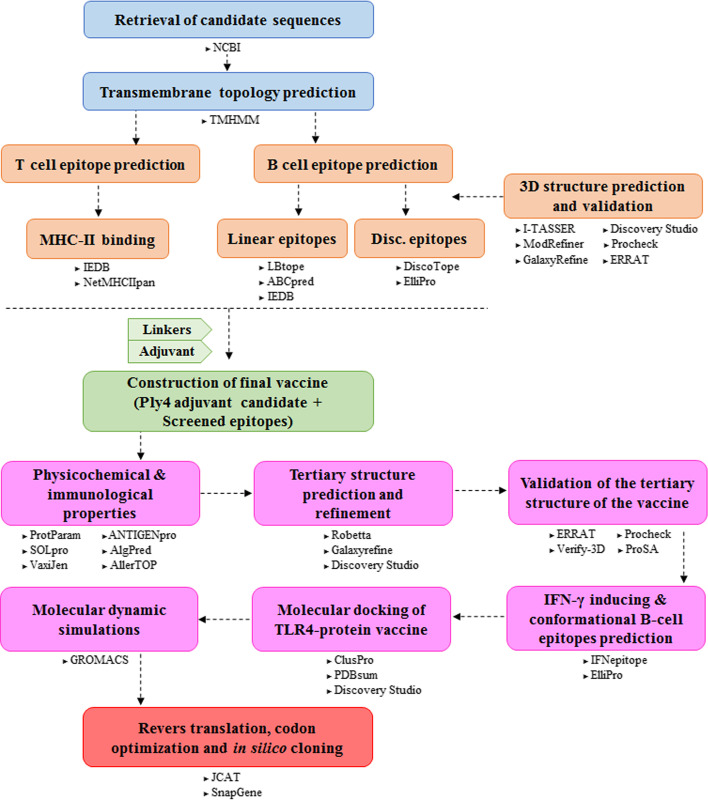
Streptococcus pneumoniae (Pneumococcus) has remained a leading cause of fatal infections such as pneumonia, meningitis, and sepsis. Moreover, this pathogen plays a major role in bacterial co-infection in patients with life-threatening respiratory virus diseases such as influenza and COVID-19. High morbidity and mortality in over one million cases, especially in very young children and the elderly, are the main motivations for pneumococcal vaccine development. Due to the limitations of the currently marketed polysaccharide-based vaccines, non-serotype-specific protein-based vaccines have received wide research interest in recent years. One step further is to identify high antigenic regions within multiple highly-conserved proteins in order to develop peptide vaccines that can affect various stages of pneumococcal infection, providing broader serotype coverage and more effective protection. In this study, immunoinformatics tools were used to design an effective multi-epitope vaccine in order to elicit neutralizing antibodies against multiple strains of pneumococcus.
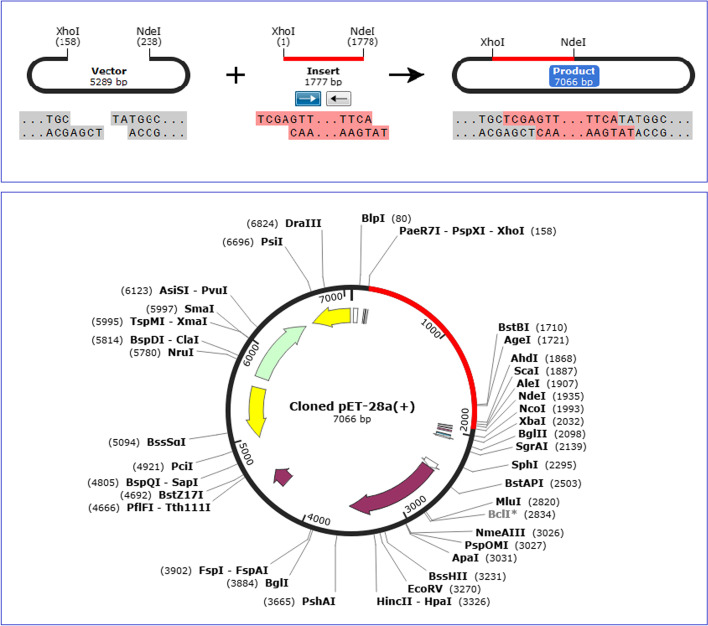
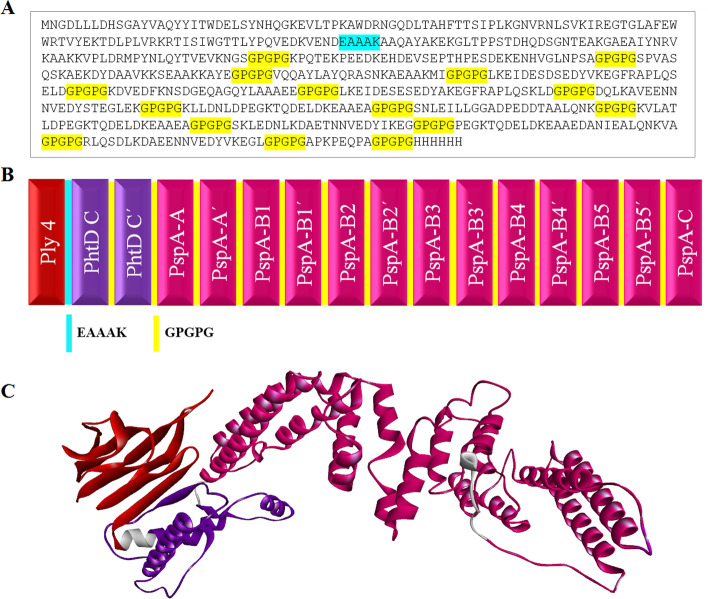
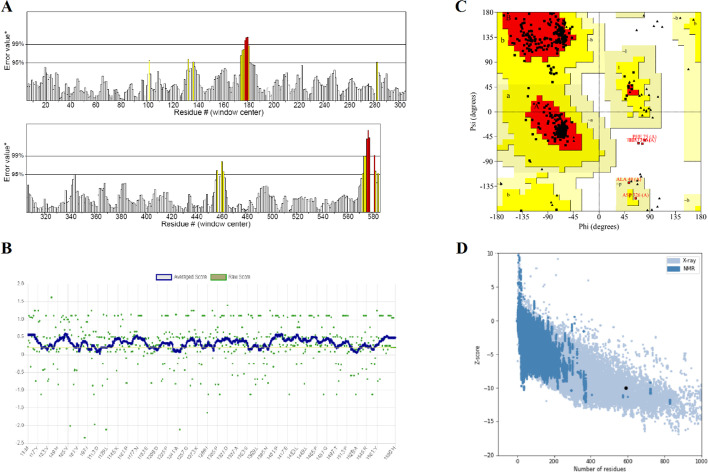
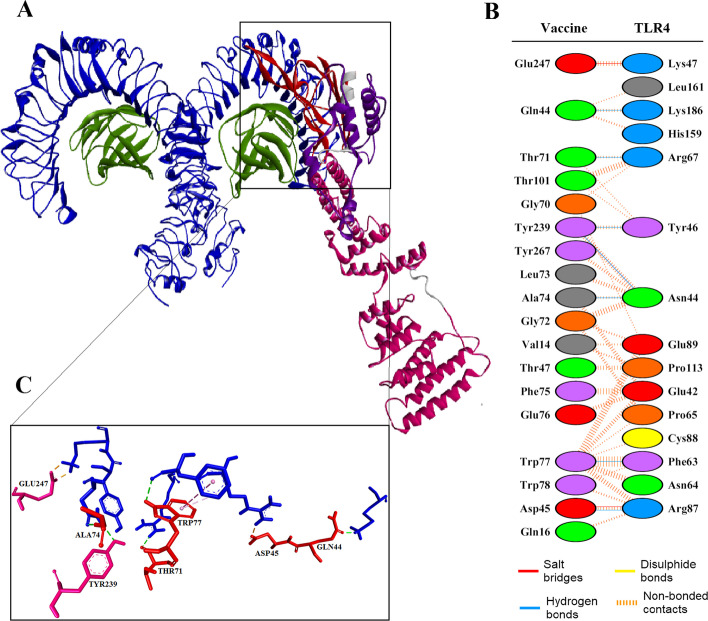
The B- and T-cell epitopes from highly protective antigens PspA (clades 1-5) and PhtD were predicted and immunodominant peptides were linked to each other with proper linkers. The domain 4 of Ply, as a potential TLR4 agonist adjuvant candidate, was attached to the end of the construct to enhance the immunogenicity of the epitope vaccine. The evaluation of the physicochemical and immunological properties showed that the final construct was stable, soluble, antigenic, and non-allergenic. Furthermore, the protein was found to be acidic and hydrophilic in nature. The protein 3D-structure was built and refined, and the Ramachandran plot, ProSA-web, ERRAT, and Verify3D validated the quality of the final model. Molecular docking analysis showed that the designed construct via Ply domain 4 had a strong interaction with TLR4. The structural stability of the docked complex was confirmed by molecular dynamics. Finally, codon optimization was performed for gene expression in E. coli, followed by in silico cloning in the pET28a(+) vector.
The computational analysis of the construct showed acceptable results, however, the suggested vaccine needs to be experimentally verified in laboratory to ensure its safety and immunogenicity.
肺炎链球菌(肺炎球菌)仍然是肺炎、脑膜炎和败血症等致命感染的主要病因。此外,这种病原体在流感和新冠肺炎等危及生命的呼吸道病毒疾病患者的细菌合并感染中起主要作用。超过一百万病例中的高发病率和死亡率,尤其是在幼儿和老年人中,是肺炎球菌疫苗研发的主要动力。由于目前市售的基于多糖的疫苗存在局限性,近年来基于非血清型特异性蛋白质的疫苗受到了广泛的研究关注。更进一步的是在多种高度保守的蛋白质中识别高抗原区域,以开发能够影响肺炎球菌感染各个阶段的肽疫苗,提供更广泛的血清型覆盖和更有效的保护。在本研究中,使用免疫信息学工具设计一种有效的多表位疫苗,以引发针对多种肺炎球菌菌株的中和抗体。
预测了高度保护性抗原PspA(1-5分支)和PhtD的B细胞和T细胞表位,并使用合适的接头将免疫显性肽相互连接。作为潜在的TLR4激动剂佐剂候选物的Ply结构域4连接到构建体的末端,以增强表位疫苗的免疫原性。对物理化学和免疫学性质的评估表明,最终构建体是稳定的、可溶的、抗原性的且无致敏性的。此外,发现该蛋白质在性质上呈酸性且亲水。构建并优化了蛋白质的3D结构,Ramachandran图、ProSA-web、ERRAT和Verify3D验证了最终模型的质量。分子对接分析表明,通过Ply结构域4设计的构建体与TLR4有强烈的相互作用。通过分子动力学证实了对接复合物的结构稳定性。最后,对大肠杆菌中的基因表达进行密码子优化,随后在pET28a(+)载体中进行电子克隆。
对构建体的计算分析显示出可接受的结果,然而,建议的疫苗需要在实验室中进行实验验证,以确保其安全性和免疫原性。