Salmond Robert J
Leeds Institute of Medical Research at St. James's, School of Medicine, University of Leeds, Leeds LS2 9JT, UK.
Biology (Basel). 2023 Feb 13;12(2):297. doi: 10.3390/biology12020297.
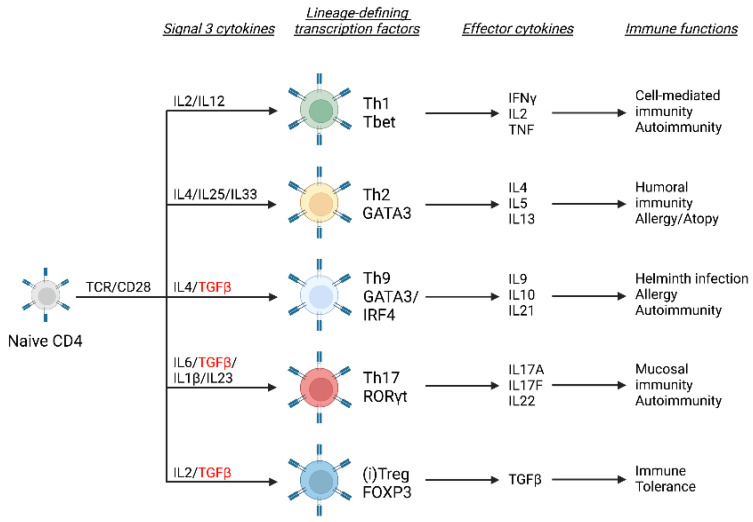
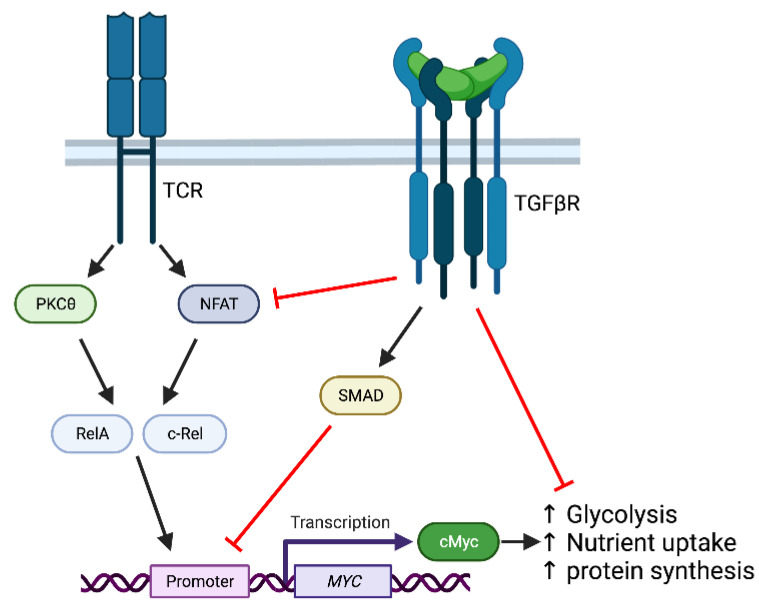
Transforming growth factor beta (TGFβ) receptor signalling regulates T cell development, differentiation and effector function. Expression of the immune-associated isoform of this cytokine, TGFβ1, is absolutely required for the maintenance of immunological tolerance in both mice and humans, whilst context-dependent TGFβ1 signalling regulates the differentiation of both anti- and pro-inflammatory T cell effector populations. Thus, distinct TGFβ-dependent T cell responses are implicated in the suppression or initiation of inflammatory and autoimmune diseases. In cancer settings, TGFβ signals contribute to the blockade of anti-tumour immune responses and disease progression. Given the key functions of TGFβ in the regulation of immune responses and the potential for therapeutic targeting of TGFβ-dependent pathways, the mechanisms underpinning these pleiotropic effects have been the subject of much investigation. This review focuses on accumulating evidence suggesting that modulation of T cell metabolism represents a major mechanism by which TGFβ influences T cell immunity.
转化生长因子β(TGFβ)受体信号传导调节T细胞的发育、分化和效应功能。这种细胞因子的免疫相关异构体TGFβ1的表达,对于维持小鼠和人类的免疫耐受绝对必要,而依赖于环境的TGFβ1信号传导调节抗炎和促炎T细胞效应群体的分化。因此,不同的TGFβ依赖性T细胞反应与炎症和自身免疫性疾病的抑制或引发有关。在癌症环境中,TGFβ信号有助于阻断抗肿瘤免疫反应和疾病进展。鉴于TGFβ在调节免疫反应中的关键作用以及靶向TGFβ依赖性途径的治疗潜力,这些多效性作用的潜在机制一直是大量研究的主题。本综述重点关注越来越多的证据,这些证据表明T细胞代谢的调节是TGFβ影响T细胞免疫的主要机制。