Castagneto-Gissey Lidia, Russo Maria Francesca, Casella-Mariolo James, Serao Angelo, Marcellinaro Rosa, D'Andrea Vito, Carlini Massimo, Casella Giovanni
Department of Surgery, Sapienza University of Rome, Viale Regina Elena, 324, 00161 Rome, Italy.
Department of General and Emergency Surgery, Ospedale dei Castelli (NOC), ASL Roma 6, 00072 Rome, Italy.
Antibiotics (Basel). 2023 Feb 16;12(2):397. doi: 10.3390/antibiotics12020397.
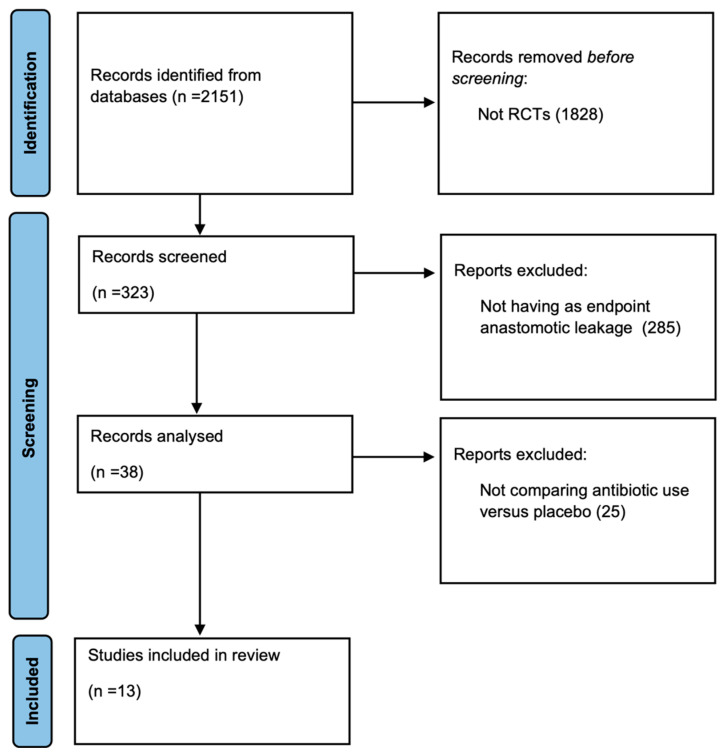
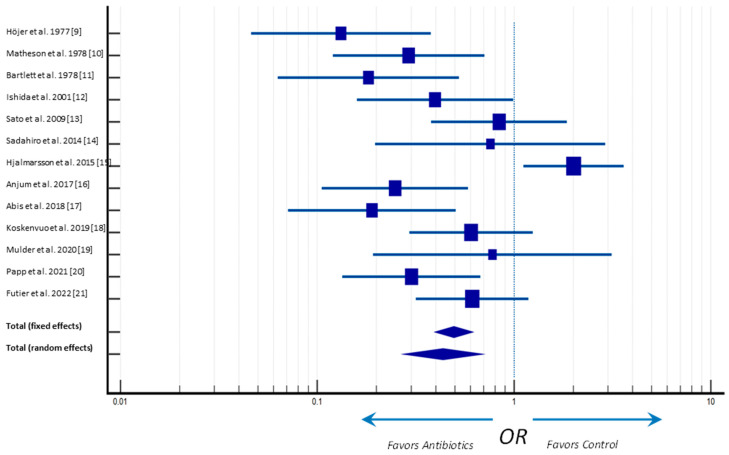
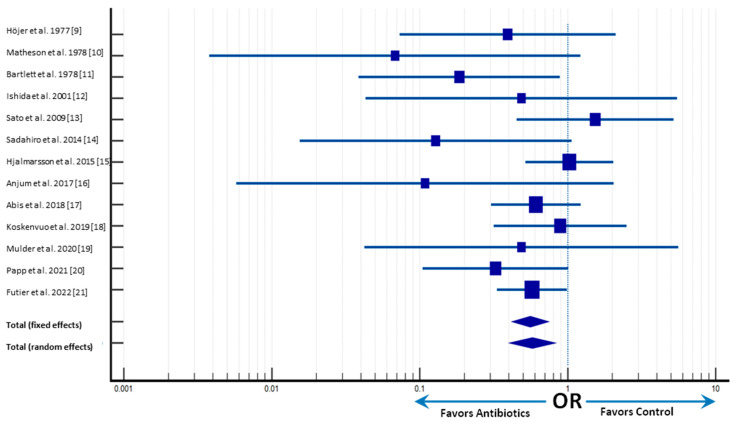
: Despite several perioperative care advancements and innovations in surgical procedures and technologies, the incidence rate of anastomotic leaks (ALs) after colorectal surgery has not substantially decreased. Gut microbiota can play a critical role in the healing process of anastomotic tissue and alterations in its composition may be largely to blame for anastomotic insufficiency. The use of specific antibiotics for preoperative large bowel decontamination could significantly influence the rate of ALs. The aim of this study was to systematically assess the various antibiotic prophylactic regimen strategies for primary prevention of ALs during colorectal surgery, in view of the available evidence. : A systematic review of the literature was conducted, and randomized clinical trials (RCTs) analyzing prophylactic antibiotic bowel preparation in colorectal surgery were included. PubMed, Embase, the Web of Science Core Collection, and the Cochrane Central Register of Controlled Trials were searched from inception through to 30 November 2022. The methodological quality of the included trials was evaluated. The primary outcome was AL rate; secondary outcomes were superficial/deep surgical site infections (SSIs). The PRISMA guidelines were used to carry out the present systematic review. Thirteen RCTs published between 1977 and 2022, with a total of 4334 patients were included in the meta-analysis. Antibiotic prophylaxis was administered orally in 11/13 studies and intravenously in 2 studies. Patients randomly assigned to antibiotic prophylaxis, regardless of the regimen, had a reduced risk of ALs ( = 0.003) compared to mechanical bowel preparation (MBP) alone. The use of antibiotic prophylaxis was also more effective in significantly reducing SSIs ( < 0.001). The evidence points to an advantage of oral antibiotic prophylaxis in terms of AL rate, a significant contributor to perioperative morbidity, mortality, and rising healthcare expenditures. In light of such results, the use of antibiotic prophylaxis should be strongly encouraged prior to colorectal surgery.
尽管围手术期护理取得了多项进展,手术操作和技术也有所创新,但结直肠手术后吻合口漏(ALs)的发生率并未显著下降。肠道微生物群在吻合口组织的愈合过程中可能起关键作用,其组成的改变可能是吻合口功能不全的主要原因。术前使用特定抗生素进行大肠去污可能会显著影响ALs的发生率。鉴于现有证据,本研究的目的是系统评估结直肠手术期间预防ALs的各种抗生素预防方案策略。:进行了一项系统的文献综述,并纳入了分析结直肠手术中预防性抗生素肠道准备的随机临床试验(RCTs)。从创刊至2022年11月30日,检索了PubMed、Embase、科学网核心合集和Cochrane对照试验中央注册库。评估了纳入试验的方法学质量。主要结局是AL发生率;次要结局是浅表/深部手术部位感染(SSIs)。采用PRISMA指南进行本系统综述。荟萃分析纳入了1977年至2022年发表的13项RCTs,共4334例患者。13项研究中有11项采用口服抗生素预防,2项采用静脉注射。与单纯机械肠道准备(MBP)相比,随机分配接受抗生素预防的患者,无论采用何种方案,发生ALs的风险均降低(P = 0.003)。使用抗生素预防在显著降低SSIs方面也更有效(P < 0.001)。证据表明,口服抗生素预防在AL发生率方面具有优势,而AL发生率是围手术期发病率、死亡率和医疗费用上升的重要因素。鉴于这些结果,应强烈鼓励在结直肠手术前使用抗生素预防。