Department of Medicine, Albert Einstein College of Medicine, Bronx, NY 10461, USA.
Division of Experimental Pathology, Department of Pathology, University of Pittsburgh, Pittsburgh, PA 15213, USA.
Cells. 2023 Feb 6;12(4):529. doi: 10.3390/cells12040529.
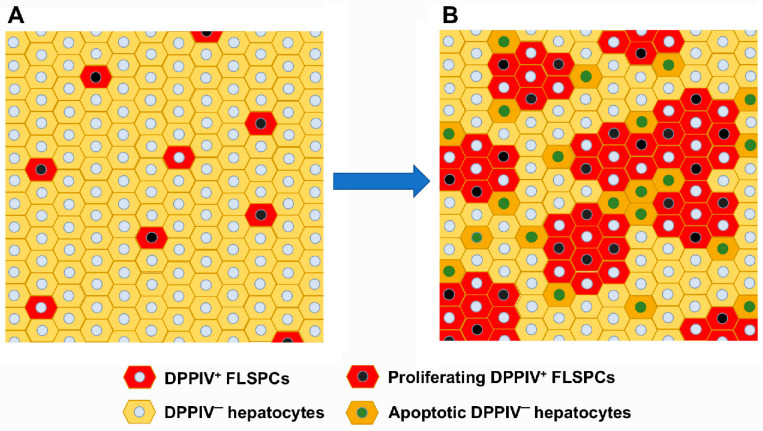
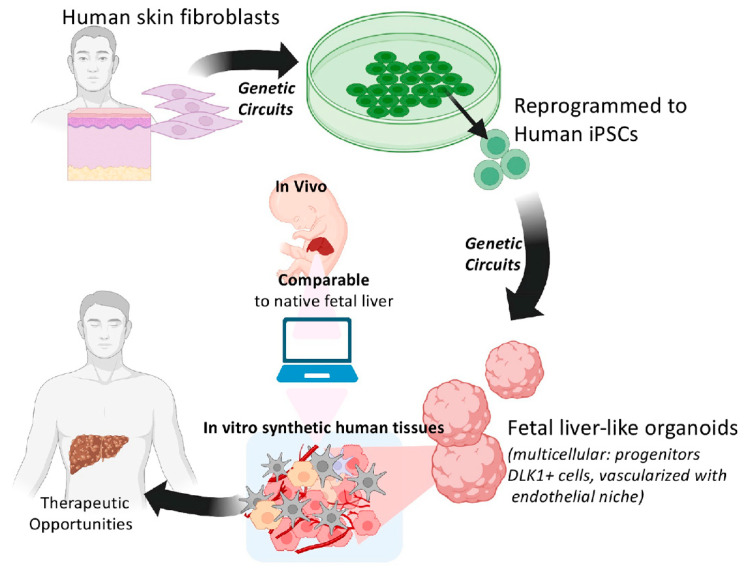
Progenitor cells isolated from the fetal liver can provide a unique cell source to generate new healthy tissue mass. Almost 20 years ago, it was demonstrated that rat fetal liver cells repopulate the normal host liver environment via a mechanism akin to cell competition. Activin A, which is produced by hepatocytes, was identified as an important player during cell competition. Because of reduced activin receptor expression, highly proliferative fetal liver stem/progenitor cells are resistant to activin A and therefore exhibit a growth advantage compared to hepatocytes. As a result, transplanted fetal liver cells are capable of repopulating normal livers. Important for cell-based therapies, hepatic stem/progenitor cells containing repopulation potential can be separated from fetal hematopoietic cells using the cell surface marker δ-like 1 (Dlk-1). In livers with advanced fibrosis, fetal epithelial stem/progenitor cells differentiate into functional hepatic cells and out-compete injured endogenous hepatocytes, which cause anti-fibrotic effects. Although fetal liver cells efficiently repopulate the liver, they will likely not be used for human cell transplantation. Thus, utilizing the underlying mechanism of repopulation and developed methods to produce similar growth-advantaged cells in vitro, e.g., human induced pluripotent stem cells (iPSCs), this approach has great potential for developing novel cell-based therapies in patients with liver disease. The present review gives a brief overview of the classic cell transplantation models and various cell sources studied as donor cell candidates. The advantages of fetal liver-derived stem/progenitor cells are discussed, as well as the mechanism of liver repopulation. Moreover, this article reviews the potential of in vitro developed synthetic human fetal livers from iPSCs and their therapeutic benefits.
从胎肝中分离出的祖细胞可以提供独特的细胞来源,用于生成新的健康组织。大约 20 年前,人们证明大鼠胎肝细胞通过类似于细胞竞争的机制重新填充正常宿主的肝脏环境。激活素 A 是由肝细胞产生的,它被鉴定为细胞竞争过程中的一个重要参与者。由于激活素受体表达减少,高度增殖的胎肝干细胞对激活素 A 具有抗性,因此与肝细胞相比具有生长优势。结果,移植的胎肝细胞能够重新填充正常的肝脏。对于细胞疗法来说很重要的是,具有再殖潜力的肝干细胞/祖细胞可以使用细胞表面标记物δ样 1(Dlk-1)从胎血造血细胞中分离出来。在纤维化程度较高的肝脏中,胎肝上皮干细胞/祖细胞分化为功能性肝细胞,并与受损的内源性肝细胞竞争,从而产生抗纤维化作用。尽管胎肝细胞有效地重新填充肝脏,但它们可能不会用于人类细胞移植。因此,利用再殖的基本机制和开发的在体外产生类似生长优势细胞的方法,例如人类诱导多能干细胞(iPSC),这一方法在开发肝病患者的新型细胞疗法方面具有巨大的潜力。本文简要概述了经典的细胞移植模型和作为供体细胞候选物的各种细胞来源。讨论了胎肝来源的干细胞/祖细胞的优势,以及肝脏再殖的机制。此外,本文还综述了 iPSC 体外开发的合成人类胎肝的潜力及其治疗益处。