Candela Egidio, Zagariello Michele, Di Natale Valeria, Ortolano Rita, Righetti Francesca, Assirelli Valentina, Biasucci Giacomo, Cassio Alessandra, Pession Andrea, Baronio Federico
Pediatric Unit, IRCCS Azienda Ospedaliero-Universitaria di Bologna, 40138 Bologna, Italy.
Specialty School of Pediatrics, Alma Mater Studiorum, University of Bologna, 40126 Bologna, Italy.
Children (Basel). 2023 Feb 17;10(2):396. doi: 10.3390/children10020396.
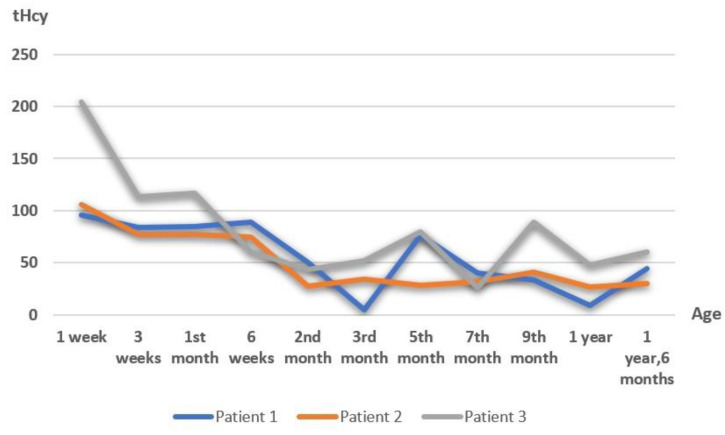
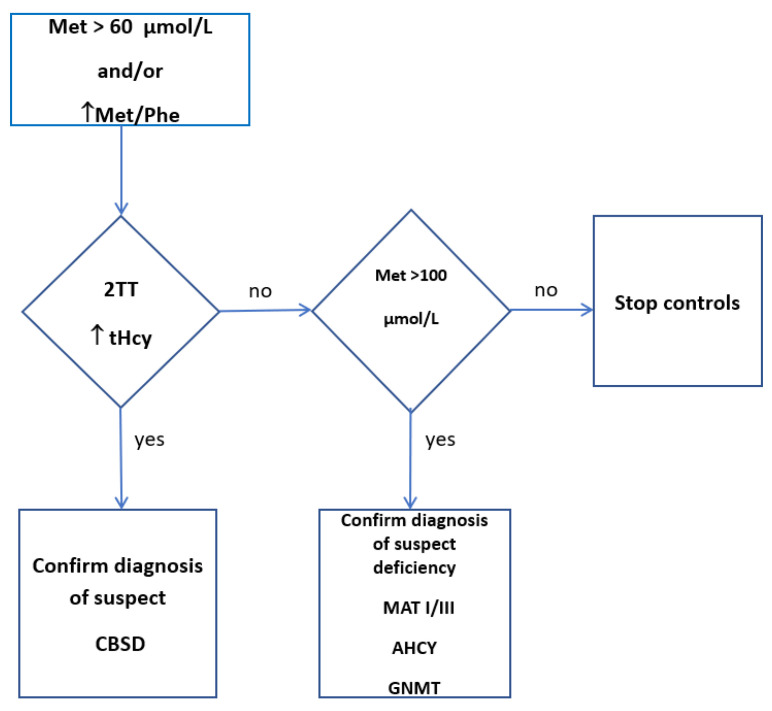
Cysthiatonine beta-synthase (CBS) deficiency (CBSD) is an autosomal recessive rare disorder caused by variations on that leads to impaired conversion of homocysteine (Hcy) to cystathionine. Marked hyperhomocysteinemia is the hallmark of the disease. The administration of pyridoxine, the natural cofactor of CBS, may reduce total plasma Hcy. Patient phenotype is classified on pyridoxine responsivity in two groups: pyridoxine-responsive and non-responsive patients. Ectopia lentis, bone deformities, developmental delay, and thromboembolism are the classic signs and symptoms of the disease. Early diagnosis and treatment impact patients' natural history. Therapy aims to lower promptly and maintain Hcy concentrations below 100 μmol/L. Depending on the patient's phenotype, the treatment goals could be obtained by the administration of pyridoxine and/or betaine associated with a methionine-restricted diet. CBSD could be diagnosed in the early days of life by expanded newborn screening (ENS), however, the risk of false negative results is not negligible. In Emilia-Romagna (Italy), during the first 10 years of screening experience, only three cases of CBSD identified have been diagnosed, all in the last two years (incidence 1:118,000 live births). We present the cases and a comprehensive review of the literature to emphasize the role of ENS for early diagnosis of CBSD and its potential pitfalls, reiterating the need for a more effective method to screen for CBSD.
胱硫醚β-合酶(CBS)缺乏症(CBSD)是一种常染色体隐性罕见疾病,由[基因名称]变异引起,导致同型半胱氨酸(Hcy)向胱硫醚的转化受损。显著的高同型半胱氨酸血症是该疾病的标志。CBS的天然辅因子吡哆醇的给药可能会降低血浆总Hcy水平。根据对吡哆醇的反应性,患者表型可分为两组:吡哆醇反应型和无反应型患者。晶状体异位、骨骼畸形、发育迟缓以及血栓栓塞是该疾病的典型体征和症状。早期诊断和治疗会影响患者的自然病程。治疗旨在迅速降低并维持Hcy浓度低于100μmol/L。根据患者的表型,可通过给予吡哆醇和/或甜菜碱并搭配限制蛋氨酸饮食来实现治疗目标。CBSD可通过扩大新生儿筛查(ENS)在生命早期进行诊断,然而,假阴性结果的风险并非可以忽略不计。在意大利艾米利亚 - 罗马涅地区,在筛查的前10年经验中,仅确诊了3例CBSD病例,均在过去两年(发病率为1:118,000活产)。我们展示这些病例并对文献进行全面综述,以强调ENS在CBSD早期诊断中的作用及其潜在陷阱,重申需要一种更有效的方法来筛查CBSD。