Kicińska Aleksandra M, Stachowska Aneta, Kajdy Anna, Wierzba Tomasz H, Maksym Radosław B
Department of Physiology, Faculty of Medicine, Medical University of Gdańsk, ul. Debinki 1, 80-210 Gdańsk, Poland.
1st Department of Obstetrics and Gynecology, Centre of Postgraduate Medical Education, ul. Żelazna 90, 02-004 Warszawa, Poland.
Healthcare (Basel). 2023 Feb 18;11(4):616. doi: 10.3390/healthcare11040616.
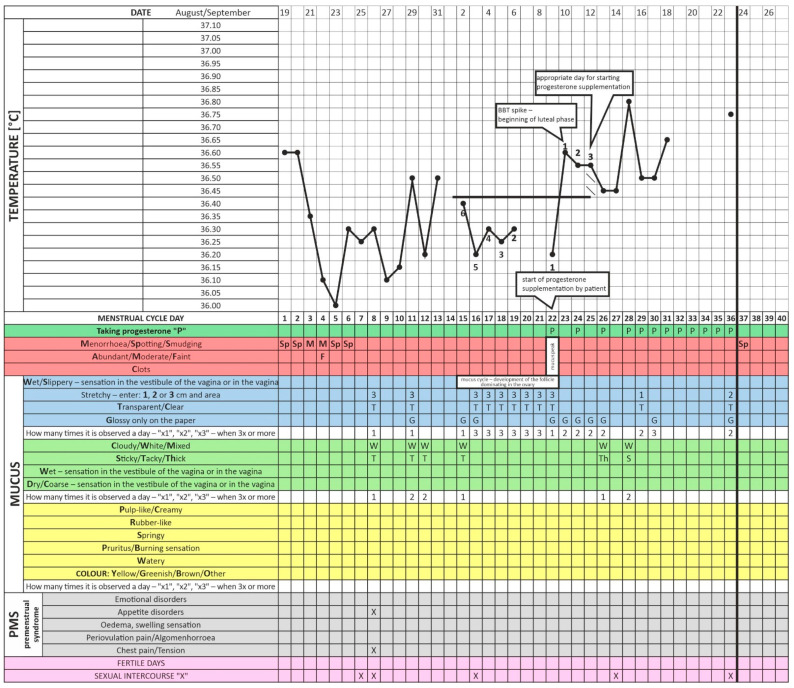
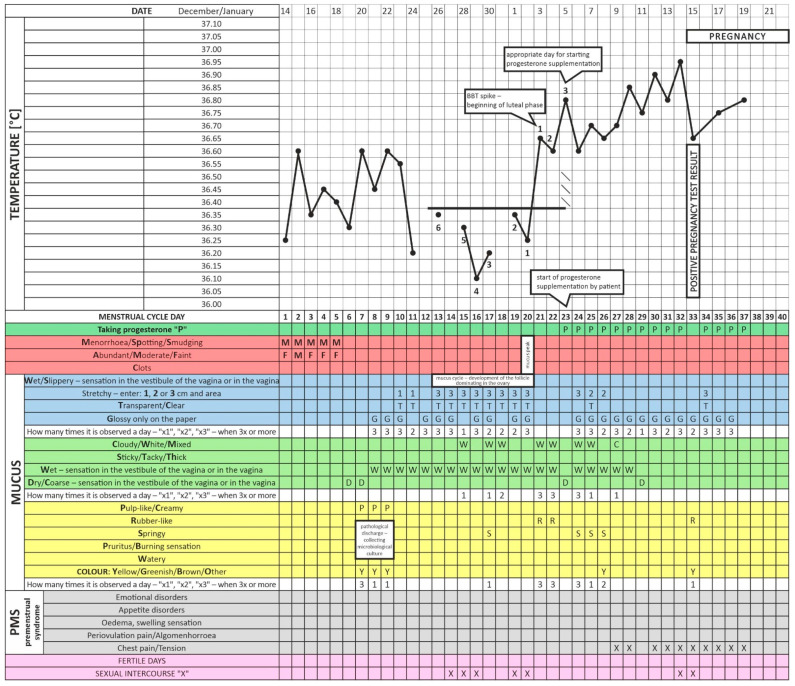
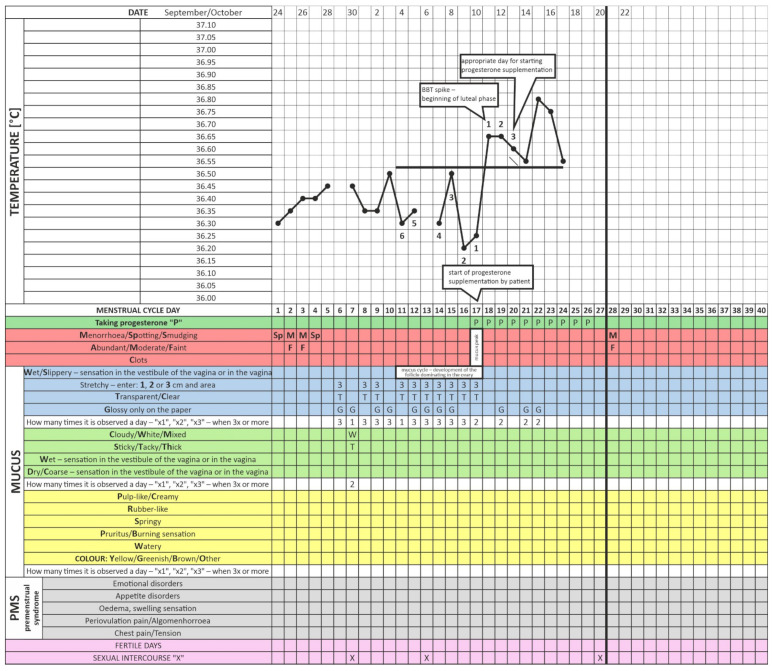
Polycystic ovary syndrome (PCOS) is the most common cause of anovulatory infertility. Absent, impaired, or rare ovulation induces progesterone deficiency in the luteal phase, which is a critical problem in PCOS. A usual pattern of progesterone administration from a fixed and arbitrary pre-determined day of a menstrual cycle may preserve infertility but can easily be avoided. We present the case of a 29-year-old infertile woman who had been ineffectively treated for over two years. We introduced a line of therapy that was suited to her individual menstrual cycle by implementing biomarker recording. Supplementation based on a standardized observation of the basal body temperature (BBT) and cervical mucus stopped the vicious circle of absent ovulation and hyperandrogenism, restoring regular bleeding, ovulation cycles, and fertility. The implementation of a reliable fertility awareness method (FAM), accompanied by a standardized teaching methodology and periodic review of the observations recorded by the patient, validated through an ultrasound examination and plasma gonadotropins, estrogens, and progesterone concentrations, is key to achieving therapeutic success. The presented case is an example of a clinical vignette for many patients who have successfully managed to improve their fertility and pregnancy outcomes by applying the principles of a personalized treatment approach together with gestagens by recording their fertility biomarkers.
多囊卵巢综合征(PCOS)是无排卵性不孕症最常见的病因。黄体期无排卵、排卵功能受损或排卵稀少会导致孕酮缺乏,这是PCOS中的一个关键问题。在月经周期中从固定且随意预先确定的日期开始进行常规的孕酮给药模式可能会持续导致不孕,但这很容易避免。我们介绍了一位29岁不孕女性的病例,她接受了两年多的无效治疗。我们通过实施生物标志物记录引入了一种适合她个人月经周期的治疗方法。基于对基础体温(BBT)和宫颈黏液的标准化观察进行补充治疗,打破了无排卵和高雄激素血症的恶性循环,恢复了规律出血、排卵周期和生育能力。实施可靠的生育力意识方法(FAM),并辅以标准化的教学方法以及对患者记录的观察结果进行定期复查,通过超声检查以及血浆促性腺激素、雌激素和孕酮浓度进行验证,是取得治疗成功的关键。本病例是一个临床案例,许多患者通过记录其生育生物标志物,应用个性化治疗方法的原则并联合使用孕激素,成功改善了生育能力和妊娠结局。