College of Medicine and Public Health, Flinders University, Bedford Park, SA 5042, Australia.
Precision Medicine Theme, South Australian Health & Medical Research Institute, Adelaide, SA 5000, Australia.
Int J Mol Sci. 2023 Feb 7;24(4):3304. doi: 10.3390/ijms24043304.
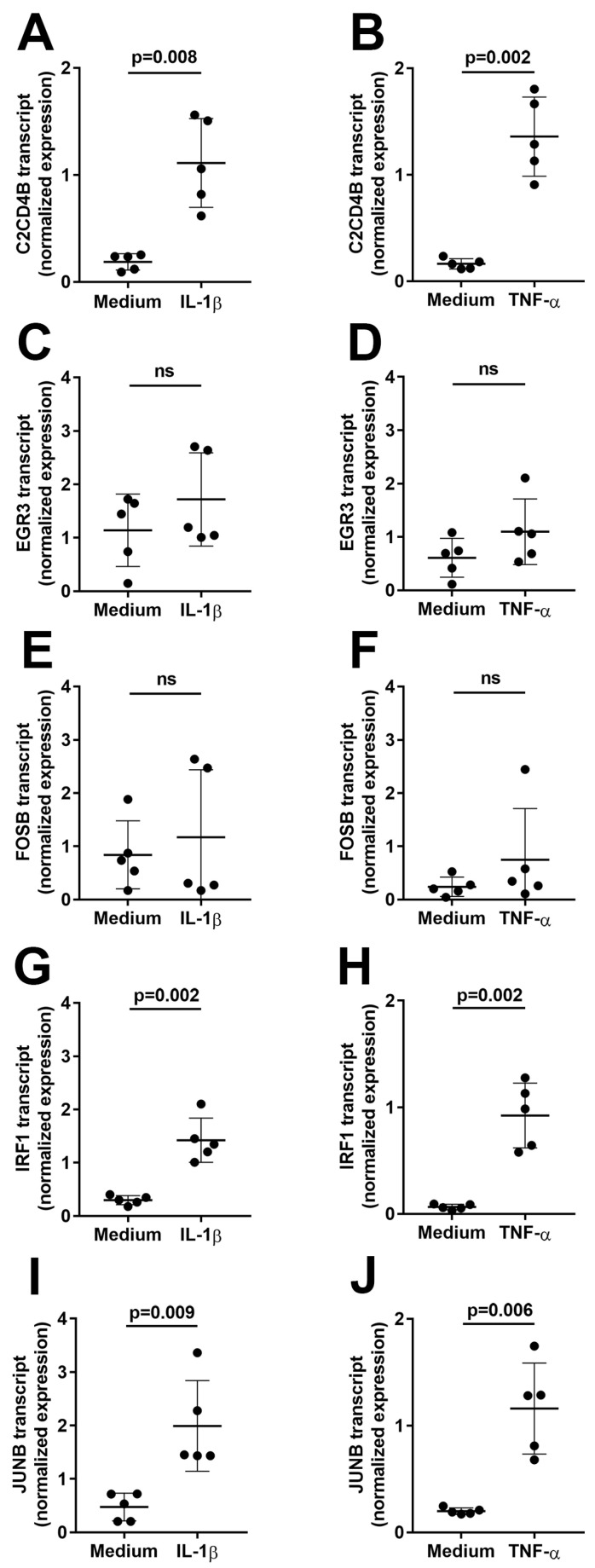
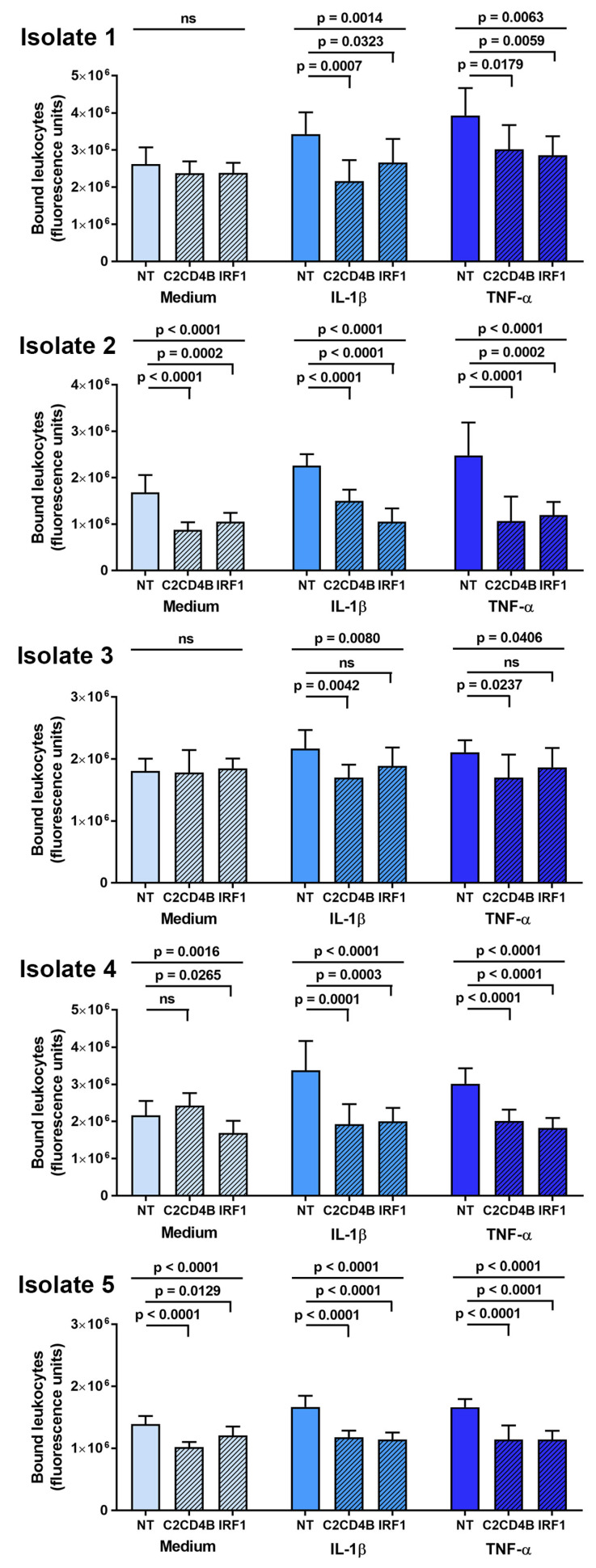
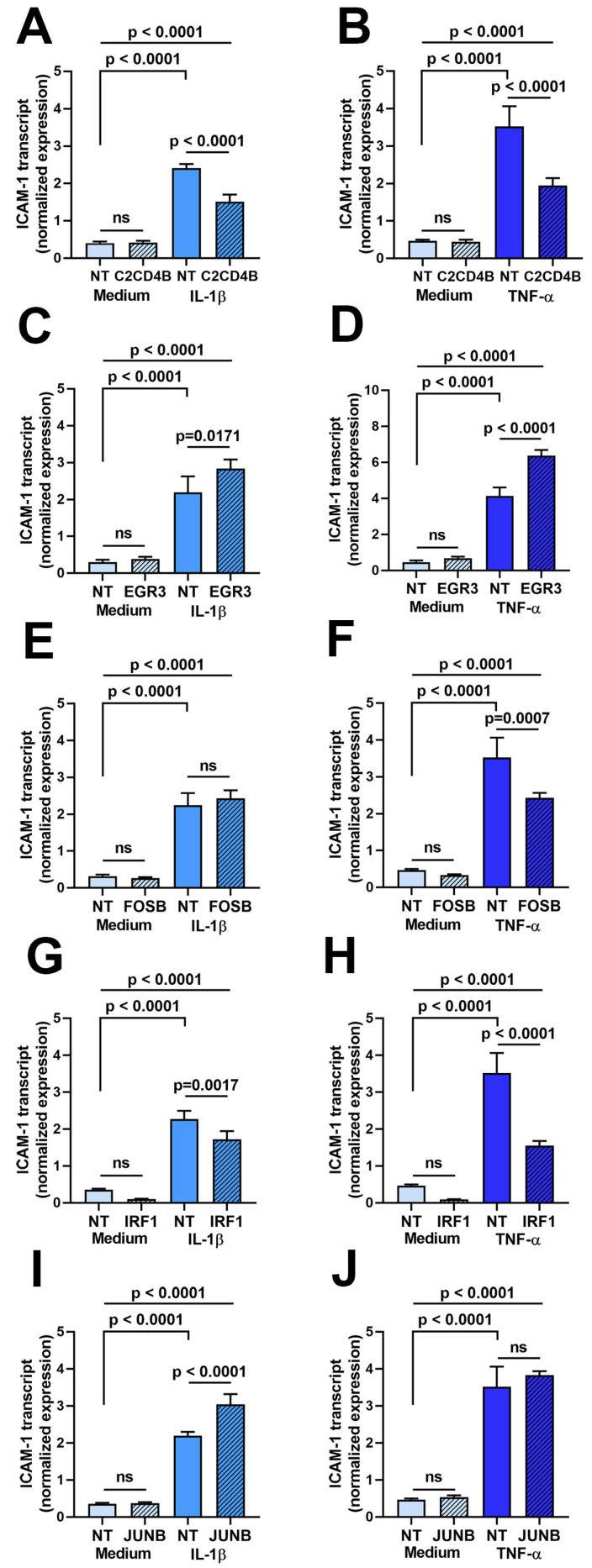
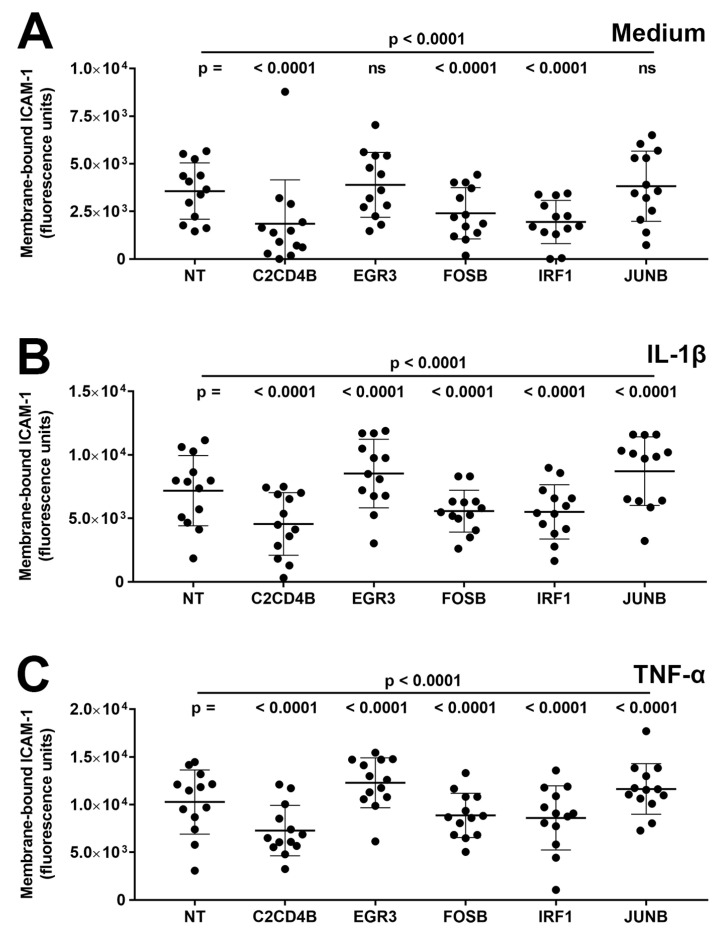
The interaction between leukocytes and cytokine-activated retinal endothelium is an initiating step in non-infectious uveitis involving the posterior eye, mediated by cell adhesion molecules. However, because cell adhesion molecules are required for immune surveillance, therapeutic interventions would ideally be employed indirectly. Using 28 primary human retinal endothelial cell isolates, this study sought to identify transcription factor targets for reducing levels of the key retinal endothelial cell adhesion molecule, intercellular adhesion molecule (ICAM)-1, and limiting leukocyte binding to the retinal endothelium. Five candidate transcription factors-C2CD4B, EGR3, FOSB, IRF1, and JUNB-were identified by differential expression analysis of a transcriptome generated from IL-1β- or TNF-α-stimulated human retinal endothelial cells, interpreted in the context of the published literature. Further filtering involved molecular studies: of the five candidates, C2CD4B and IRF1 consistently demonstrated extended induction in IL-1β- or TNF-α-activated retinal endothelial cells and demonstrated a significant decrease in both ICAM-1 transcript and ICAM-1 membrane-bound protein expression by cytokine-activated retinal endothelial cells following treatment with small interfering RNA. RNA interference of C2CD4B or IRF1 significantly reduced leukocyte binding in a majority of human retinal endothelial cell isolates stimulated by IL-1β or TNF-α. Our observations suggest that the transcription factors C2CD4B and IRF1 may be potential drug targets for limiting leukocyte-retinal endothelial cell interactions in non-infectious uveitis involving the posterior eye.
白细胞与细胞因子激活的视网膜内皮细胞之间的相互作用是涉及眼后段的非传染性葡萄膜炎的起始步骤,这种作用是通过细胞黏附分子介导的。然而,由于细胞黏附分子是免疫监视所必需的,因此理想的治疗干预措施将间接进行。本研究使用 28 个人源原代视网膜内皮细胞分离物,旨在确定降低关键的视网膜内皮细胞黏附分子(细胞间黏附分子 1,ICAM-1)水平并限制白细胞与视网膜内皮细胞结合的转录因子靶标。通过对白细胞介素 1β或肿瘤坏死因子-α刺激的人视网膜内皮细胞生成的转录组进行差异表达分析,确定了五个候选转录因子(C2CD4B、EGR3、FOSB、IRF1 和 JUNB),并结合已发表的文献进行解释。进一步的过滤涉及分子研究:在五个候选者中,C2CD4B 和 IRF1 在白细胞介素 1β或肿瘤坏死因子-α激活的视网膜内皮细胞中始终表现出延长的诱导,并且在用小干扰 RNA 处理后,在由白细胞介素 1β或肿瘤坏死因子-α刺激的大多数人源视网膜内皮细胞分离物中,细胞因子激活的视网膜内皮细胞中 ICAM-1 转录本和 ICAM-1 膜结合蛋白表达均显著降低。C2CD4B 或 IRF1 的 RNA 干扰显著降低了大多数由白细胞介素 1β或肿瘤坏死因子-α刺激的人视网膜内皮细胞分离物中的白细胞结合。我们的观察结果表明,转录因子 C2CD4B 和 IRF1 可能是限制眼后段非传染性葡萄膜炎中白细胞-视网膜内皮细胞相互作用的潜在药物靶点。