Zhejiang Citrus Research Institute, Zhejiang Academy of Agricultural Sciences, Taizhou 318026, China.
School of Food Science, Henan Institute of Science and Technology, Xinxiang 453003, China.
Molecules. 2023 Feb 9;28(4):1681. doi: 10.3390/molecules28041681.
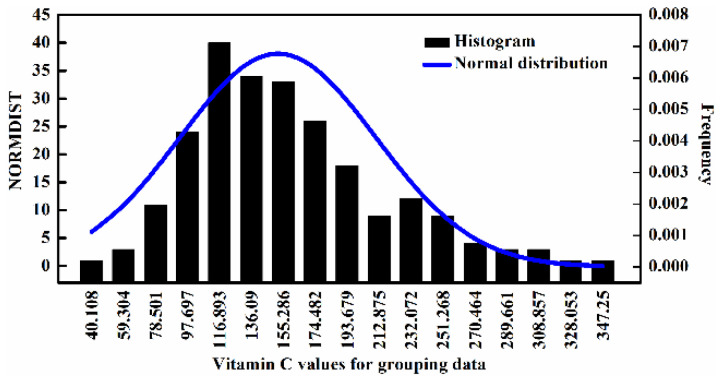
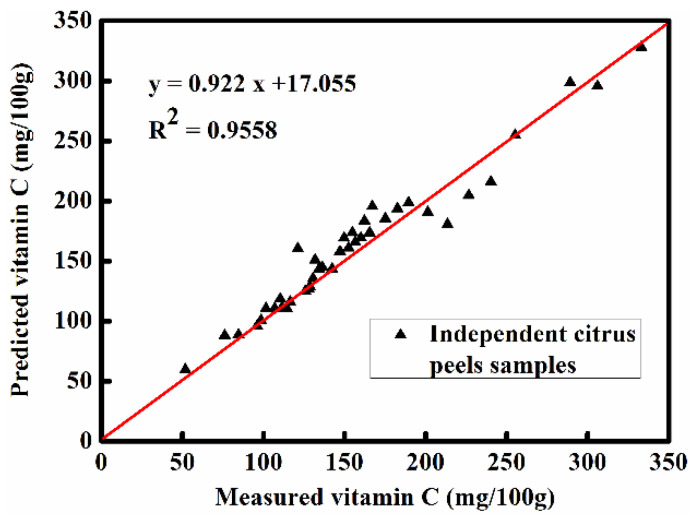
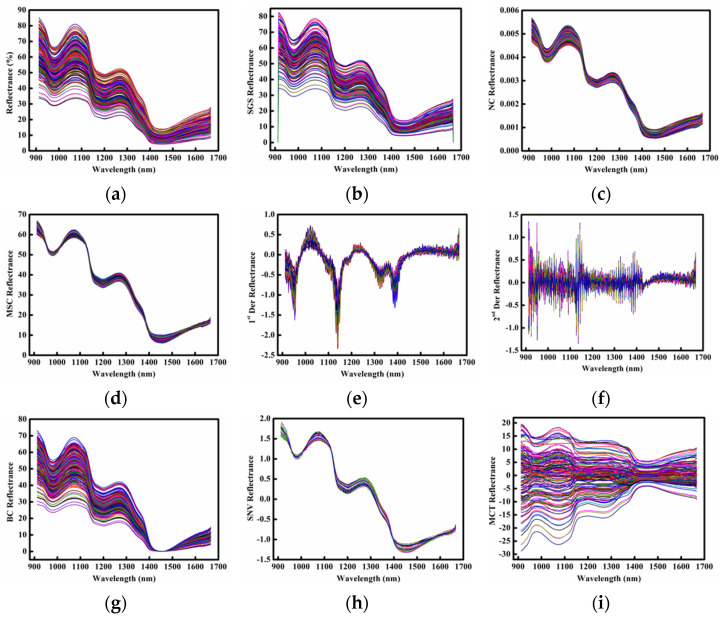
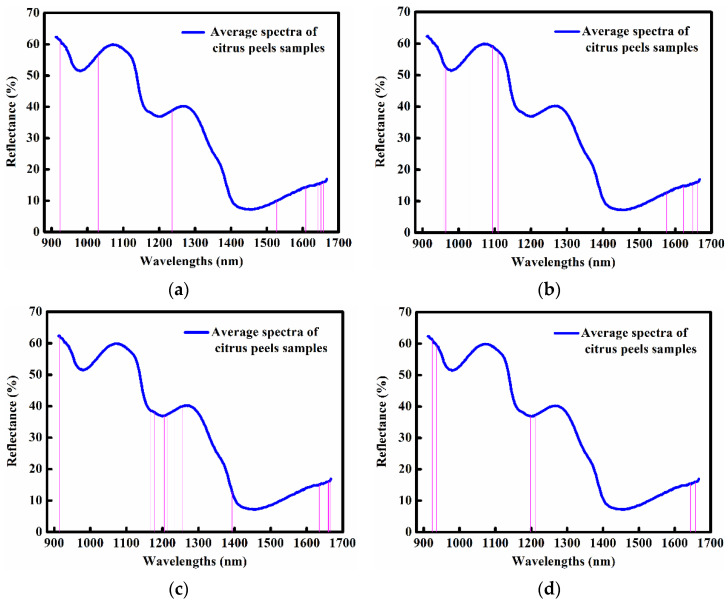
Citrus peels are rich in bioactive compounds such as vitamin C and extraction of vitamin C is a good strategy for citrus peel recycling. It is essential to evaluate the levels of vitamin C in citrus peels before reuse. In this study, a near-infrared (NIR)-based method was proposed to quantify the vitamin C content of citrus peels in a rapid way. The spectra of 249 citrus peels in the 912-1667 nm range were acquired, preprocessed, and then related to measured vitamin C values using the linear partial least squares (PLS) algorithm, indicating that normalization correction (NC) was more suitable for spectral preprocessing and NC-PLS model built with full NC spectra (375 wavelengths) showed a better performance in predicting vitamin C. To accelerate the predictive process, wavelength selection was conducted, and 15 optimal wavelengths were finally selected from NC spectra using the stepwise regression (SR) method, to predict vitamin C using the multiple linear regression (MLR) algorithm. The results showed that SR-NC-MLR model had the best predictive ability with correlation coefficients () of 0.949 and root mean square error (RMSE) of 14.814 mg/100 mg in prediction set, comparable to the NC-PLS model in predicting vitamin C. External validation was implemented using 40 independent citrus peels samples to validate the suitability of the SR-NC-MLR model, obtaining a good correlation (R = 0.9558) between predicted and measured vitamin C contents. In conclusion, it was reasonable and feasible to achieve the rapid estimation of vitamin C in citrus peels using NIR spectra coupled with MLR algorithm.
柑橘皮富含生物活性化合物,如维生素 C,提取维生素 C 是柑橘皮再利用的一个很好的策略。在重复使用之前,评估柑橘皮中维生素 C 的含量是很有必要的。在这项研究中,提出了一种基于近红外(NIR)的方法,用于快速定量柑橘皮中的维生素 C 含量。采集了 249 个柑橘皮的光谱,范围在 912-1667nm 之间,经过预处理后,使用线性偏最小二乘法(PLS)算法将光谱与实测的维生素 C 值相关联,表明归一化校正(NC)更适合光谱预处理,并且使用全 NC 光谱(375 个波长)建立的 NC-PLS 模型在预测维生素 C 方面表现出更好的性能。为了加速预测过程,进行了波长选择,最终使用逐步回归(SR)方法从 NC 光谱中选择了 15 个最佳波长,使用多元线性回归(MLR)算法预测维生素 C。结果表明,SR-NC-MLR 模型具有最佳的预测能力,在预测集的相关系数()为 0.949,均方根误差(RMSE)为 14.814mg/100mg,与 NC-PLS 模型在预测维生素 C 方面相当。使用 40 个独立的柑橘皮样本进行外部验证,验证了 SR-NC-MLR 模型的适用性,预测和实测维生素 C 含量之间具有良好的相关性(R = 0.9558)。总之,使用 NIR 光谱结合 MLR 算法实现对柑橘皮中维生素 C 的快速估算具有合理性和可行性。