Mudigunda Sushma Venkata, Pemmaraju Deepak B, Sankaranarayanan Sri Amruthaa, Rengan Aravind Kumar
Department of Biomedical Sciences, Indian Institute of Technology Hyderabad, Kandi 502284, India.
Department of Pharmacology & Toxicology, National Institute of Pharmaceutical Education & Research (NIPER), Guwahati 781101, India.
Pharmaceutics. 2023 Jan 31;15(2):475. doi: 10.3390/pharmaceutics15020475.
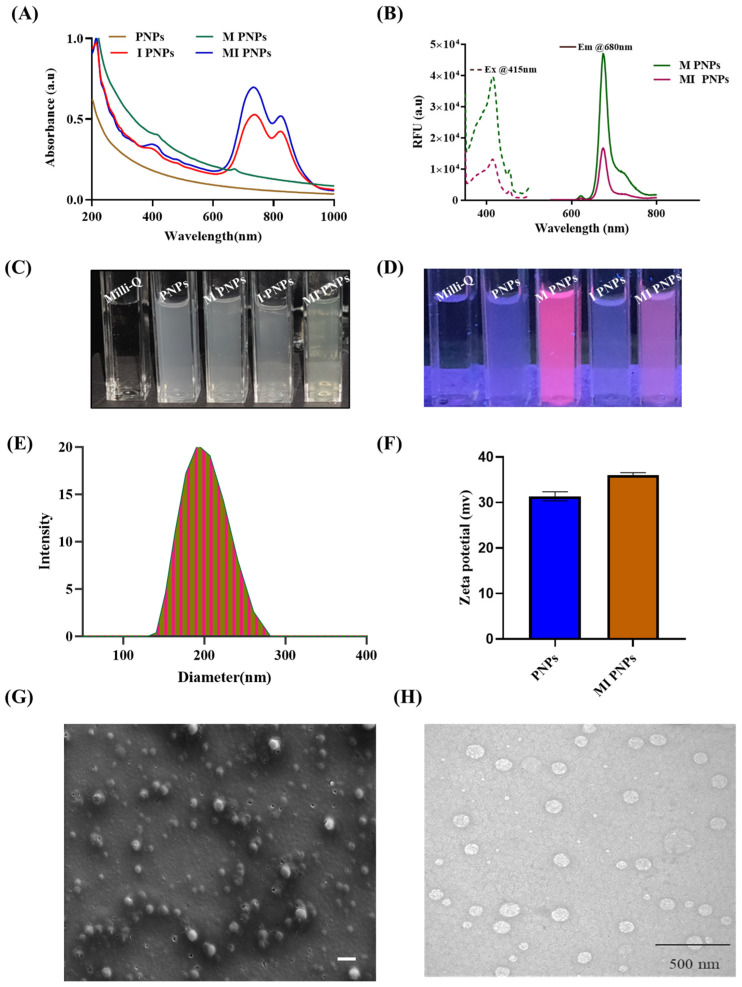
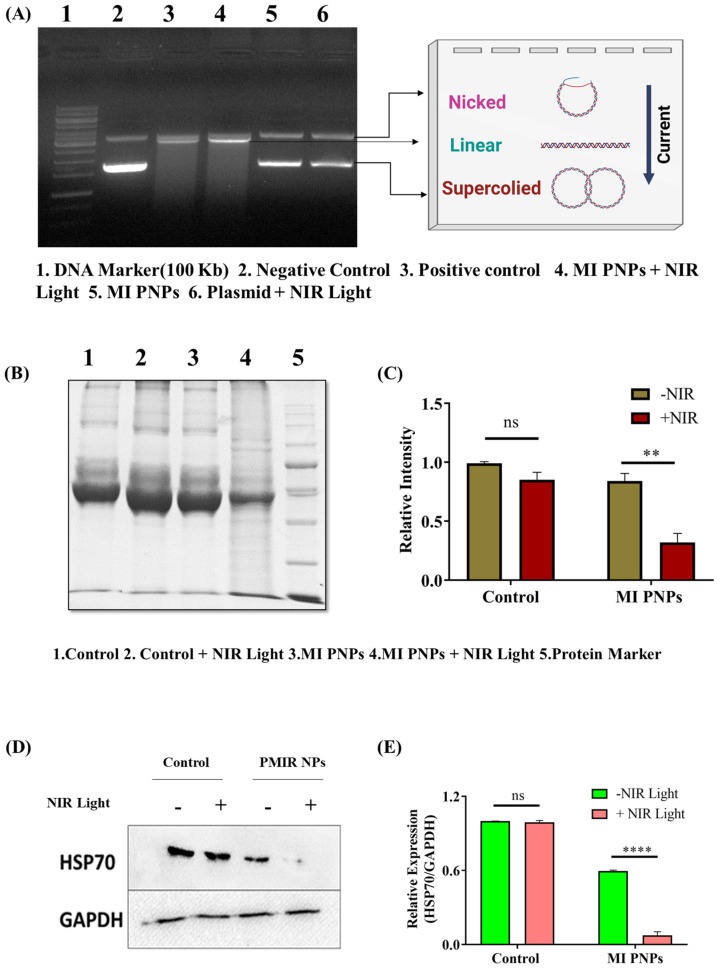
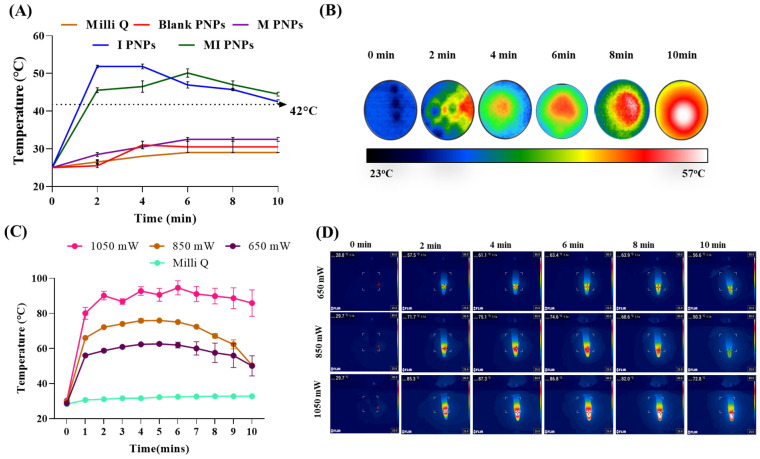
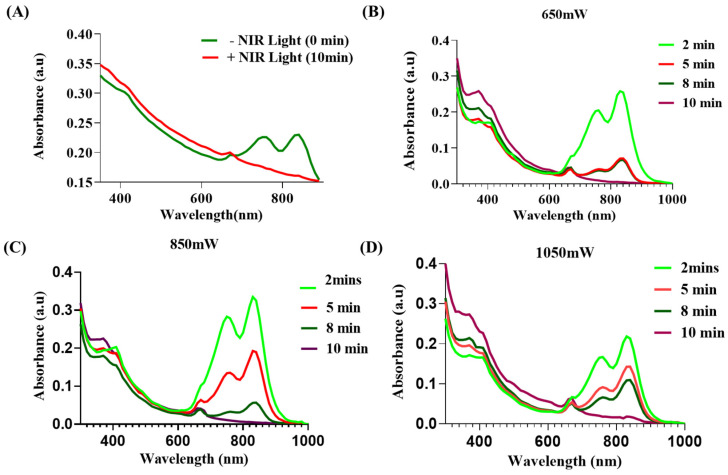
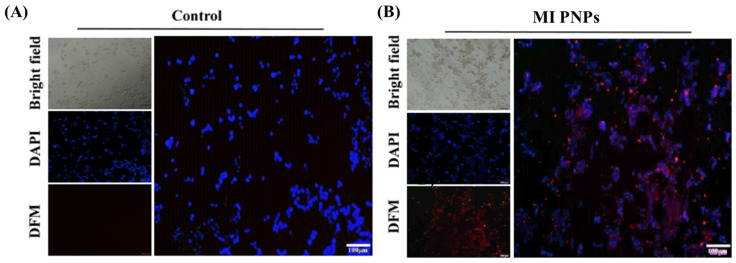
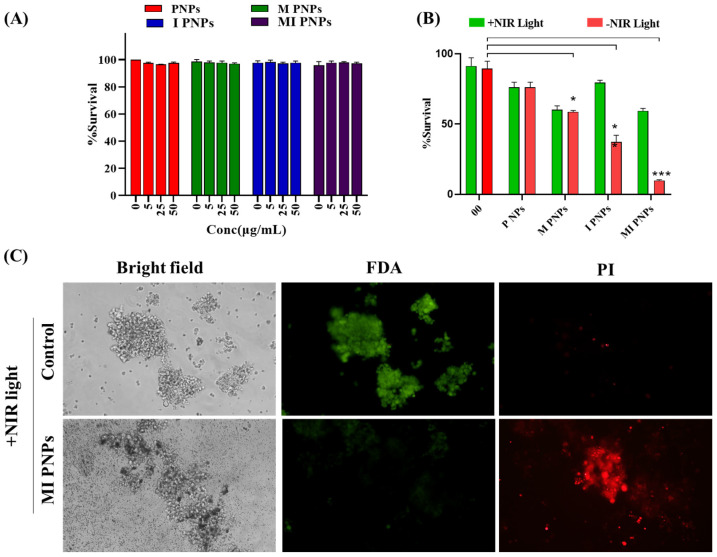
Treatment of retinoblastoma is limited due to its delayed detection and inaccesbility of drugs to reach the retina crossing the blood-retinal barrier. With the advancements in nanotechnology, photothermal therapy (PTT) employing plasmonic nanomaterials and/or NIR dyes have emerged as an affordable alternative owing to the spatial control that is offered by the modality leading to localized and enhanced therapeutic efficacy with minimal invasiveness. However, the modality is limited in its clinical application owing to the increased heat shock resistance of the tumor cells in response to the heat that is generated via PTT. Hence, in this study, we explore the role of novel biomolecular fraction of (DFM) encapsulated within a polymeric nanosystem, for its anti-heat shock protein (HSP) activity. The MO extract was co-encapsulated with NIR sensitizing dye, IR820 into a biodegradable polycaprolactone (PCL) nano-delivery system (PMIR NPs). The photothermal transduction efficacy of PMIR NPs was validated in vitro against retinoblastoma cell lines. The inherent fluorescence of DFM was utilized to evaluate the cellular internalization of the PMIR NPs using fluorescence microscopy and flow cytometry. The overall oxidative protein damage and downregulation of HSP70 expression upon treatment with PMIR NPs and NIR laser irradiation was evaluated using densiometric protein analysis and Western blotting. Overall, the PMIR NPs exhibited excellent anti-cancer activity when combined with PTT with downregulated HSP70 expression against retinoblastoma cells.
视网膜母细胞瘤的治疗因检测延迟以及药物难以穿过血视网膜屏障到达视网膜而受到限制。随着纳米技术的进步,采用等离子体纳米材料和/或近红外染料的光热疗法(PTT)作为一种经济实惠的替代方案出现了,这是由于该方法提供了空间控制,从而实现局部增强治疗效果且侵入性最小。然而,由于肿瘤细胞对PTT产生的热量增加了热休克抗性,该方法在临床应用中受到限制。因此,在本研究中,我们探索了包裹在聚合物纳米系统中的新型生物分子组分(DFM)因其抗热休克蛋白(HSP)活性所起的作用。将MO提取物与近红外敏化染料IR820共包裹到可生物降解的聚己内酯(PCL)纳米递送系统(PMIR NPs)中。在体外针对视网膜母细胞瘤细胞系验证了PMIR NPs的光热转导功效。利用DFM的固有荧光,通过荧光显微镜和流式细胞术评估PMIR NPs的细胞内化情况。使用光密度蛋白分析和蛋白质免疫印迹法评估用PMIR NPs和近红外激光照射处理后总的氧化蛋白损伤以及HSP70表达的下调情况。总体而言,PMIR NPs与PTT联合使用时对视网膜母细胞瘤细胞表现出优异的抗癌活性,且HSP70表达下调。