Jiang Qingqing, Huang Shiyu, Ma Jianrong, Du Yufan, Shi Wenzheng, Wang Mingfu, Wang Xichang, Zhao Yueliang
College of Food Science and Technology, Shanghai Engineering Research Center of Aquatic Product Processing & Preservation, Shanghai Ocean University, Shanghai 201306, China.
Hunan Xiweijia Biotechnology Co. Ltd, Yueyang 414000, China.
Food Chem X. 2023 Jan 25;17:100589. doi: 10.1016/j.fochx.2023.100589. eCollection 2023 Mar 30.
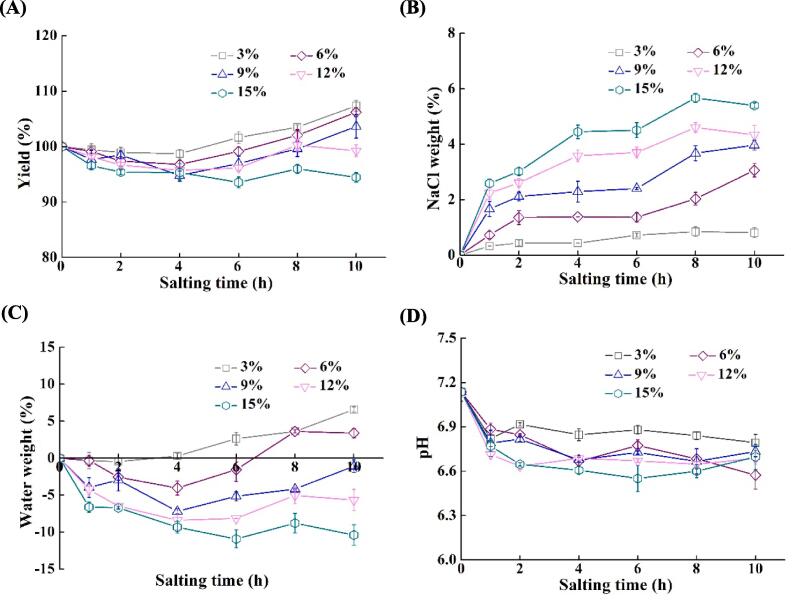
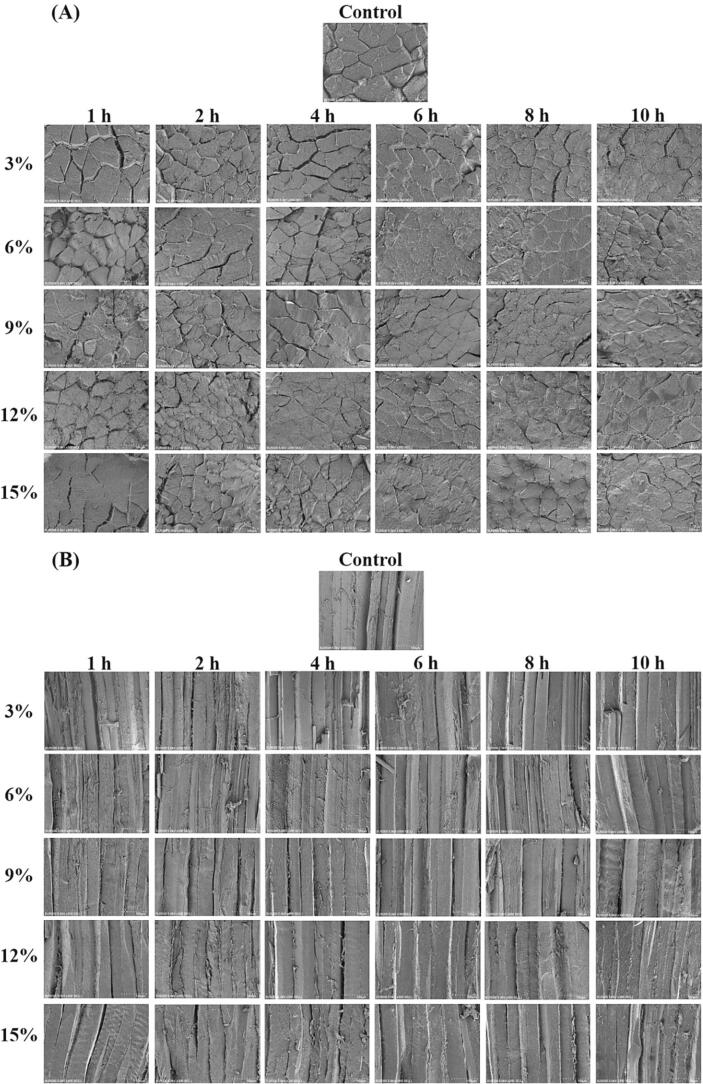
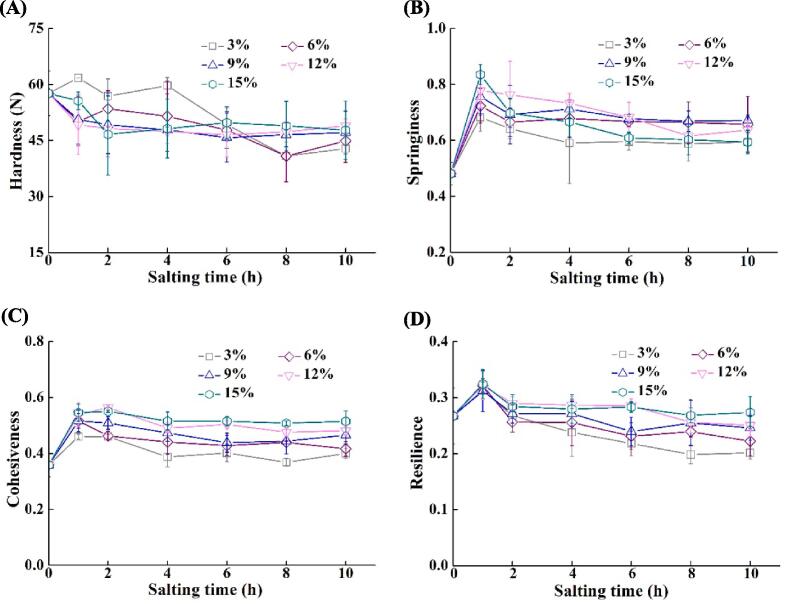
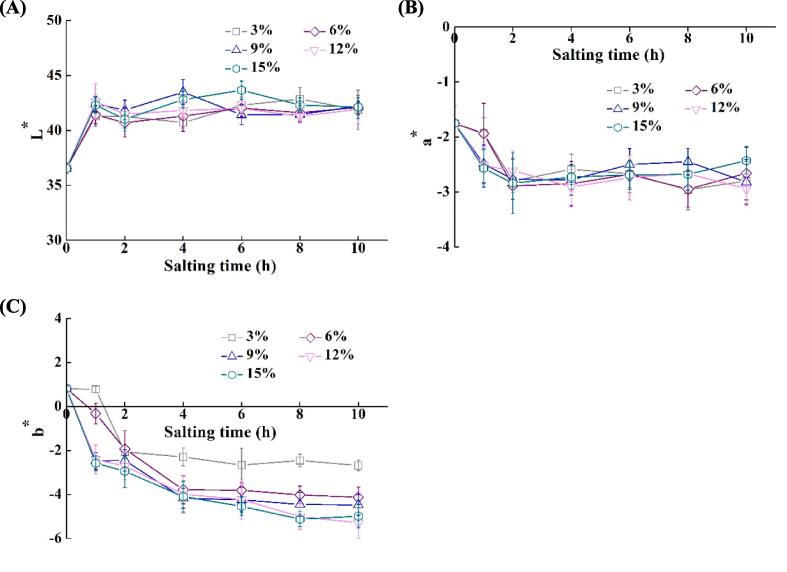
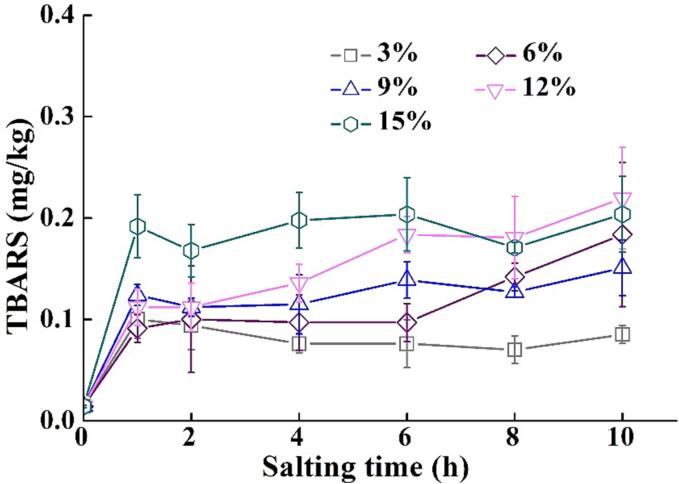
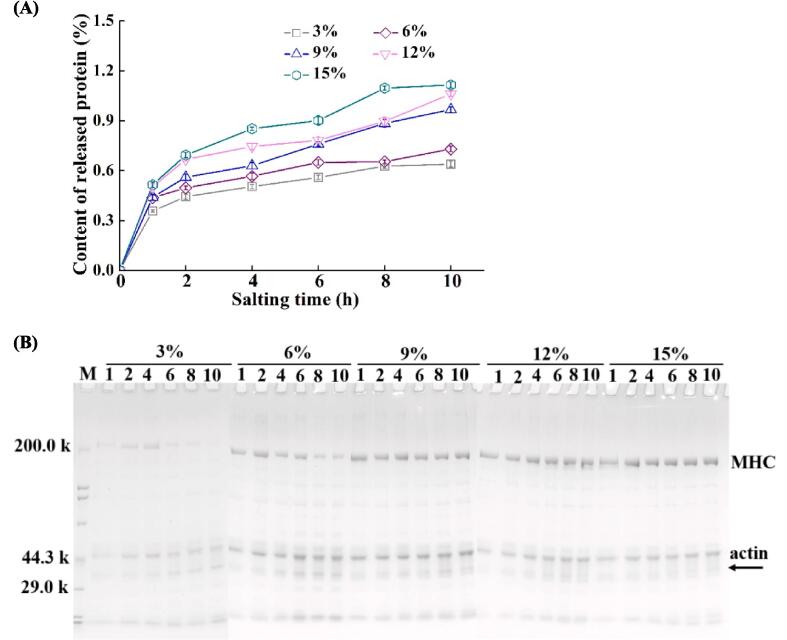
The effects and mechanisms of salting on quality properties of tilapia fillets were investigated in the present study. Salting under high NaCl concentrations (12 % and 15 %) resulted in low water content and decreased yields, due to the salting-out effects and low pH. Water in fillets increased in the later stage of salting in 3 % and 6 % NaCl solutions ( < 0.05). The released proteins accumulated with increasing time ( < 0.05). The TBARS value increased from 0.01 to 0.20 mg/kg after 10 h in 15 % NaCl solution ( < 0.05). The quality changes were mainly correlated to the shrinking or swelling of myofibers, extracellular spaces, and existential state of muscle proteins. In consideration of fish quality and increasing call for low sodium intake, it was recommended to prepare fillets below 9 % NaCl with short times. The finding provided instructions to obtain target quality properties from tilapia by controlling salting conditions.
本研究考察了腌制对罗非鱼鱼片品质特性的影响及其机制。高浓度NaCl(12%和15%)腌制会导致水分含量降低和产量下降,这是由于盐析效应和低pH值所致。在3%和6%的NaCl溶液中腌制后期,鱼片水分增加(<0.05)。释放的蛋白质随时间增加而积累(<0.05)。在15%的NaCl溶液中腌制10小时后,硫代巴比妥酸反应物(TBARS)值从0.01增加到0.20毫克/千克(<0.05)。品质变化主要与肌纤维的收缩或肿胀、细胞外空间以及肌肉蛋白质的存在状态有关。考虑到鱼肉品质以及对低钠摄入的需求增加,建议在短时间内用低于9%的NaCl腌制鱼片。该研究结果为通过控制腌制条件获得具有目标品质特性的罗非鱼提供了指导。