Goodman-Meza David, Slim Said, Angulo Lourdes, Gonzalez-Nieto Pablo, Cambou Mary C, Loera Alejandra, Shoptaw Steve, Arredondo Jaime
Department of Medicine, David Geffen School of Medicine at UCLA, 10833 Le Conte Ave, Los Angeles, CA 90095.
Integración Social Verter, A.C., Calle José Azueta 230, Primera, 21100 Mexicali, B.C., México.
Drug Alcohol Depend Rep. 2021 Dec 23;2:100021. doi: 10.1016/j.dadr.2021.100021. eCollection 2022 Mar.
Drug overdoses are prevalent in low- and middle-income countries but are scarcely reported in the literature. We report on an opioid overdose reversal and naloxone distribution program that was instituted at the first safe consumption site in Latin America.
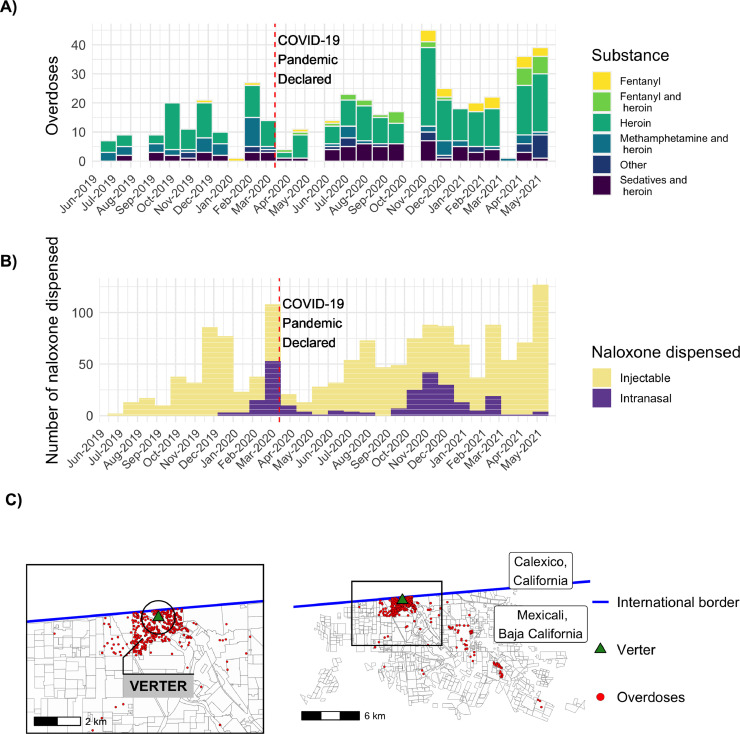
A cross-sectional analysis of witnessed drug overdoses and naloxone distribution between 1 June 2019 and 31 May 2021 in Mexicali, Mexico. Case report forms were entered in an electronic database. Trends in overdose and naloxone distribution were described. Comparisons were made before and after the COVID-19 pandemic was declared in the city. Maps were created to represent the geographic distribution of overdose in the city.
During the study period 1,534 doses of naloxone were distributed throughout the community. In addition, there were 464 overdoses reported during this period, of which 4 were fatal. There was a 30% increase in reported overdoses from the period before the COVID-19 pandemic to the period after the pandemic was declared ( = 0.03). Most common substance reported included heroin (93%), sedatives (21%), methamphetamine (16%) and fentanyl (14%). Naloxone was given in 96% of cases (median 1 dose, IQR 1-2 doses) and emergency services were called in 20% of cases.
An opioid overdose reversal program in Mexicali, Mexico was able to distribute naloxone and register drug overdoses between 2019 and 2021 as a harm reduction strategy. This adds to the growing body of literature on the impact of community-based programs on preventing fatal overdoses and the potential for implementation in low-resource settings.
药物过量在低收入和中等收入国家很普遍,但在文献中鲜有报道。我们报告了在拉丁美洲首个安全注射点实施的阿片类药物过量逆转和纳洛酮分发项目。
对2019年6月1日至2021年5月31日期间在墨西哥墨西卡利目睹的药物过量和纳洛酮分发情况进行横断面分析。病例报告表录入电子数据库。描述了过量用药和纳洛酮分发的趋势。对该市宣布新冠疫情前后的情况进行了比较。绘制地图以展示该市药物过量的地理分布。
在研究期间,共向社区分发了1534剂纳洛酮。此外,在此期间报告了464起药物过量事件,其中4起致命。从新冠疫情宣布前到宣布后,报告的药物过量事件增加了30%(P = 0.03)。报告的最常见物质包括海洛因(93%)、镇静剂(21%)、甲基苯丙胺(16%)和芬太尼(14%)。96%的病例使用了纳洛酮(中位数1剂,四分位间距1 - 2剂),20%的病例呼叫了急救服务。
墨西哥墨西卡利的阿片类药物过量逆转项目在2019年至2021年期间能够分发纳洛酮并记录药物过量事件,作为一种减少伤害的策略。这增加了关于社区项目对预防致命药物过量影响以及在资源匮乏环境中实施潜力的文献。