Medicinal Materials Research Center, Biomedical Research Division, Korea Institute of Science and Technology, Seoul, Korea (the Republic of).
Department of Life Sciences, College of Life Sciences and Biotechnology, Korea University, Seoul, Korea (the Republic of).
J Immunother Cancer. 2023 Feb;11(2). doi: 10.1136/jitc-2022-006130.
Cancer-associated fibroblasts (CAFs) in the tumor microenvironment (TME) contribute to an impaired functionality of natural killer (NK) cells that have emerged as a promising therapeutic modality. The interaction between CAFs and NK cells within the TME exerts major inhibitory effects on immune responses, indicating CAF-targeted therapies as potential targets for effective NK-mediated cancer killing.
To overcome CAF-induced NK dysfunction, we selected an antifibrotic drug, nintedanib, for synergistic therapeutic combination. To evaluate synergistic therapeutic efficacy, we established an in vitro 3D Capan2/patient-derived CAF spheroid model or in vivo mixed Capan2/CAF tumor xenograft model. The molecular mechanism of NK-mediated synergistic therapeutic combination with nintedanib was revealed through in vitro experiments. In vivo therapeutic combination efficacy was subsequently evaluated. Additionally, the expression score of target proteins was measured in patient-derived tumor sections by the immunohistochemical method.
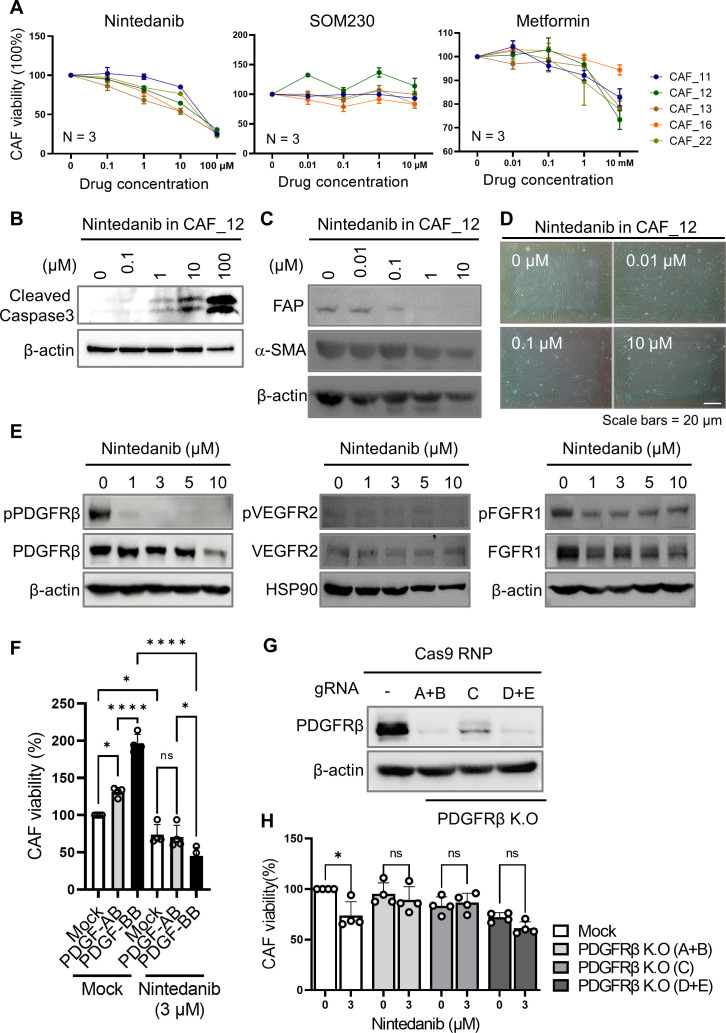
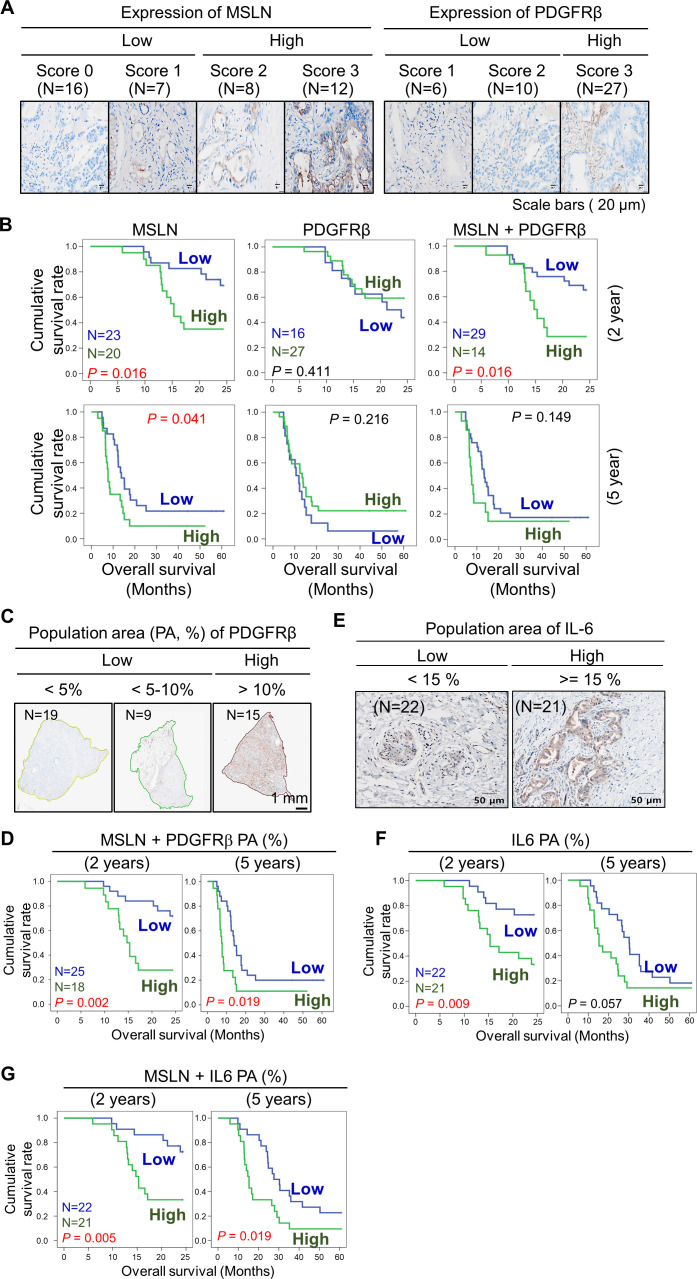
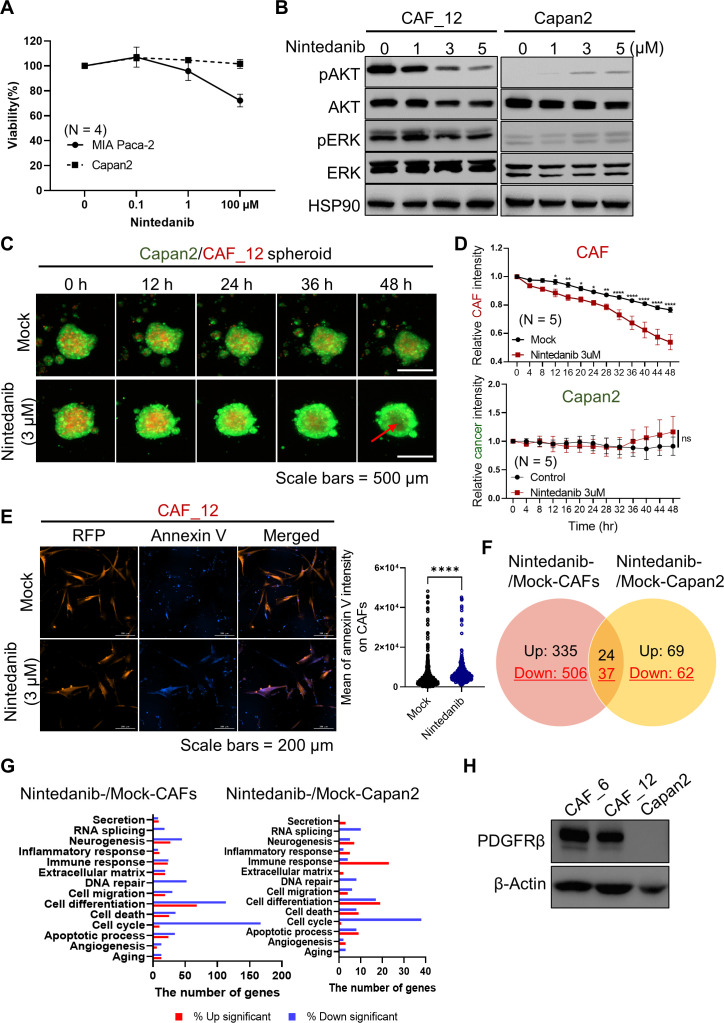
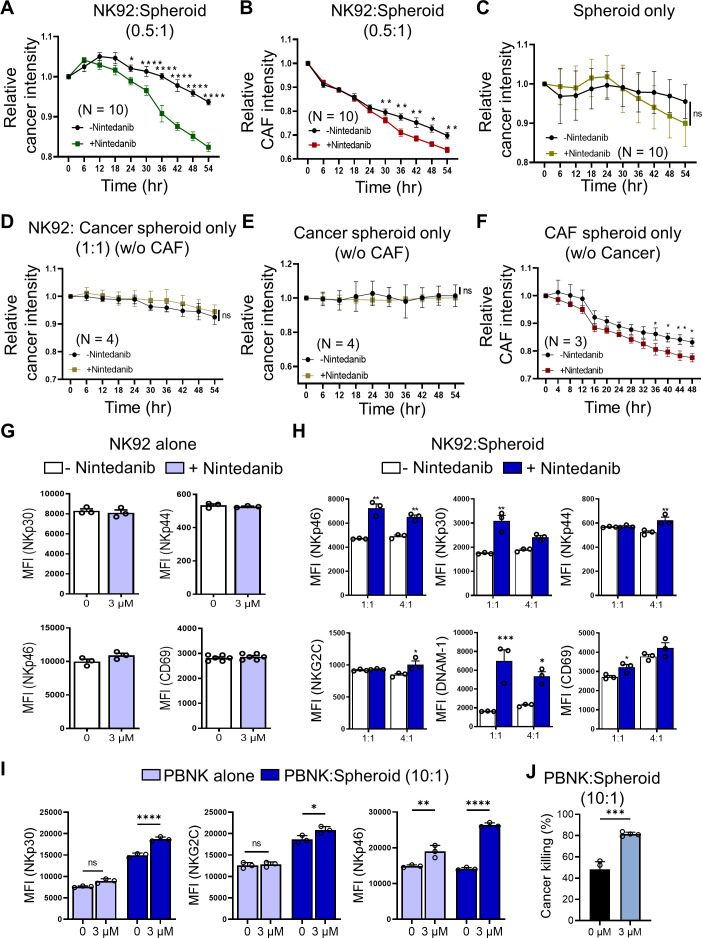
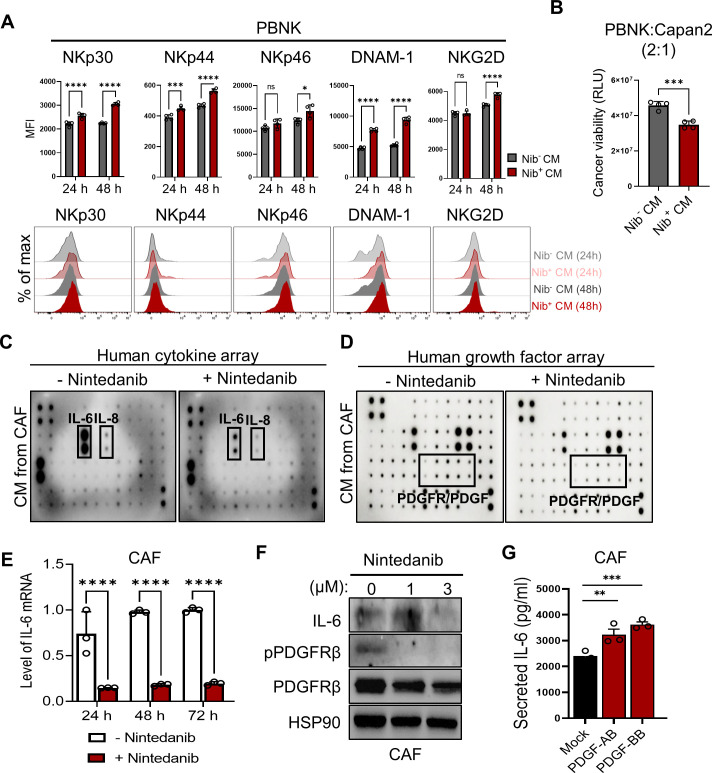
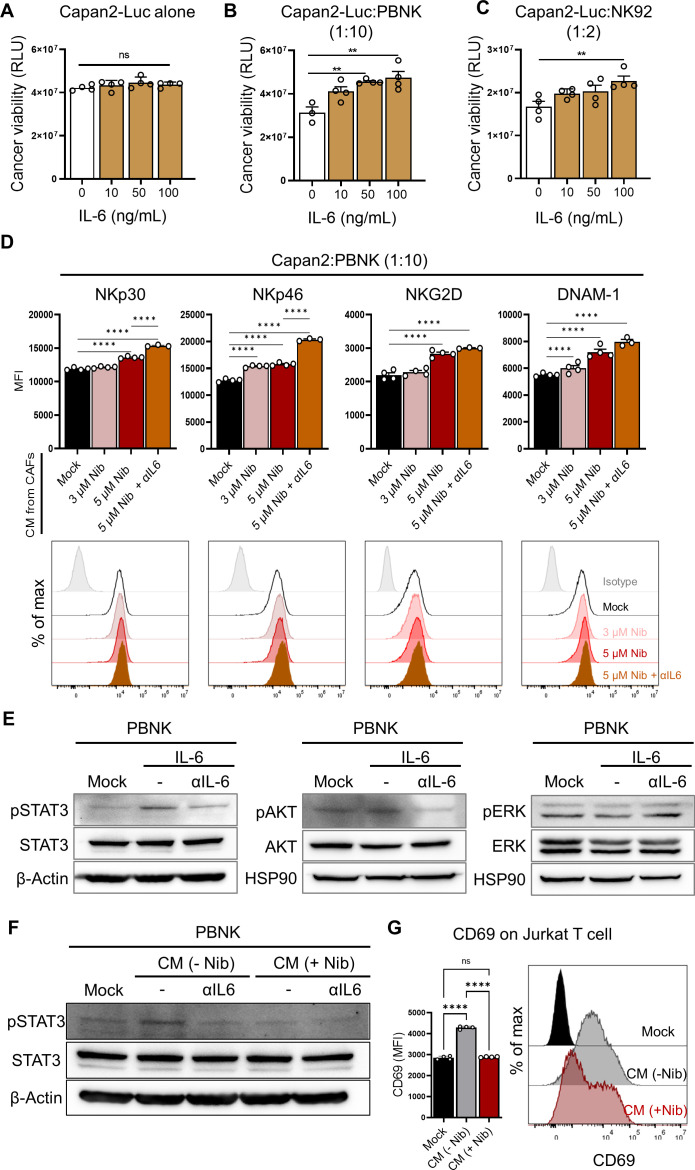
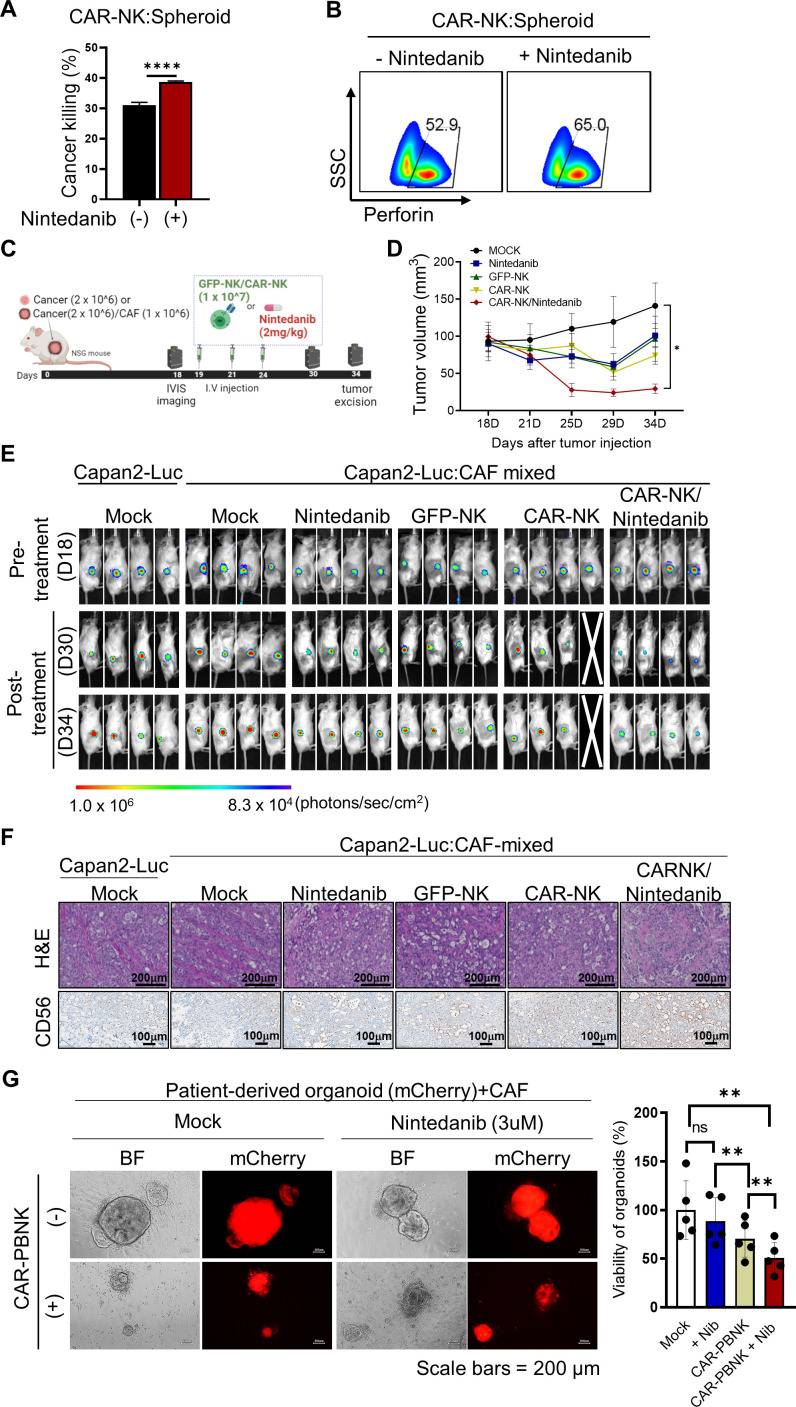
Nintedanib blocked the platelet-derived growth factor receptor β (PDGFRβ) signaling pathway and diminished the activation and growth of CAFs, markedly reducing CAF-secreted IL-6. Moreover, coadministration of nintedanib improved the mesothelin (MSLN) targeting chimeric antigen receptor-NK-mediated tumor killing abilities in CAF/tumor spheroids or a xenograft model. The synergistic combination resulted in intense NK infiltration in vivo. Nintedanib alone exerted no effects, whereas blockade of IL-6 trans-signaling ameliorated the function of NK cells. The combination of the expression of MSLN and the PDGFRβ-CAF population area, a potential prognostic/therapeutic marker, was associated with inferior clinical outcomes.
Our strategy against PDGFRβ-CAF-containing pancreatic cancer allows improvements in the therapy of pancreatic ductal adenocarcinoma.
肿瘤微环境(TME)中的癌症相关成纤维细胞(CAFs)导致自然杀伤(NK)细胞功能受损,而 NK 细胞作为一种很有前途的治疗方式已经出现。TME 中 CAFs 与 NK 细胞之间的相互作用对免疫反应产生主要的抑制作用,表明针对 CAF 的靶向治疗可能是有效 NK 介导的癌症杀伤的潜在靶点。
为了克服 CAF 诱导的 NK 功能障碍,我们选择了一种抗纤维化药物尼达尼布进行协同治疗组合。为了评估协同治疗的疗效,我们建立了体外 3D Capan2/患者来源的 CAF 球体模型或体内混合 Capan2/CAF 肿瘤异种移植模型。通过体外实验揭示了 NK 介导的与尼达尼布协同治疗的分子机制。随后评估了体内治疗组合的疗效。此外,通过免疫组织化学方法测量了患者来源的肿瘤切片中靶蛋白的表达评分。
尼达尼布阻断血小板衍生生长因子受体β(PDGFRβ)信号通路并减弱 CAF 的激活和生长,显著减少 CAF 分泌的 IL-6。此外,尼达尼布与嵌合抗原受体-NK 联合给药改善了 CAF/肿瘤球体或异种移植模型中间皮素(MSLN)靶向嵌合抗原受体-NK 介导的肿瘤杀伤能力。协同组合导致体内 NK 浸润强烈。尼达尼布单独使用没有效果,而阻断 IL-6 转信号可以改善 NK 细胞的功能。MSLN 的表达与 PDGFRβ-CAF 群体面积的组合,这是一个潜在的预后/治疗标志物,与较差的临床结果相关。
我们针对含有 PDGFRβ-CAF 的胰腺癌的策略允许改善胰腺导管腺癌的治疗。