ABL Diagnostics, 57140 Woippy, France.
Advanced Biological Laboratories (ABL), 2550 Luxembourg, Luxembourg.
Viruses. 2023 Feb 19;15(2):571. doi: 10.3390/v15020571.
Drug-resistance mutations were mostly detected using capillary electrophoresis sequencing, which does not detect minor variants with a frequency below 20%. Next-Generation Sequencing (NGS) can now detect additional mutations which can be useful for HIV-1 drug resistance interpretation. The objective of this study was to evaluate the performances of CE-IVD assays for HIV-1 drug-resistance assessment both for target-specific and whole-genome sequencing, using standardized end-to-end solution platforms.
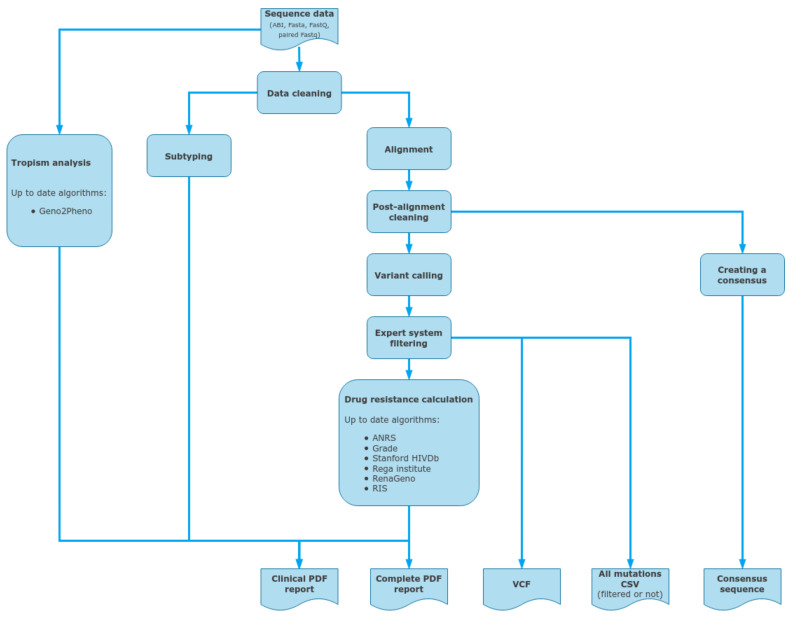
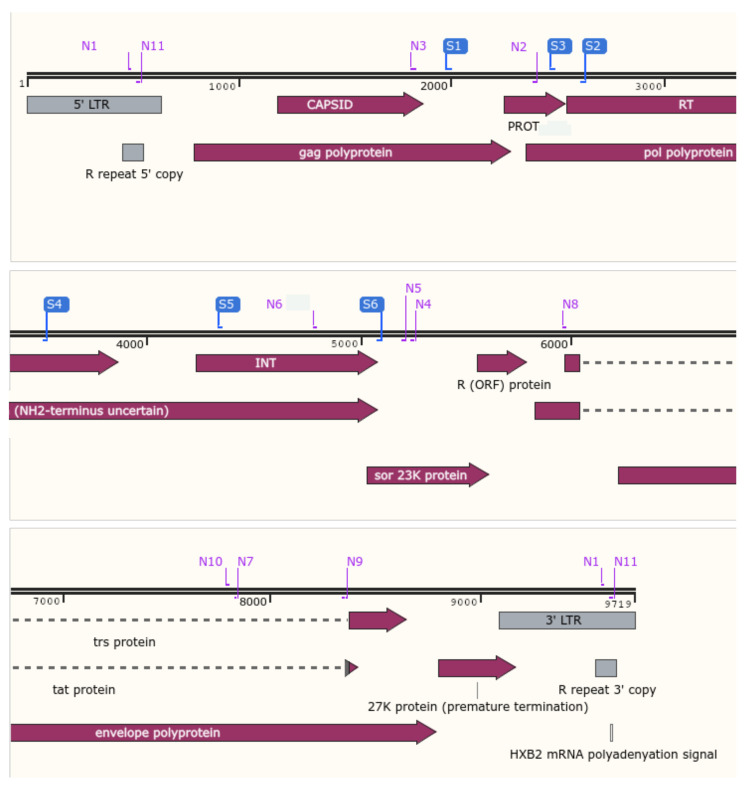
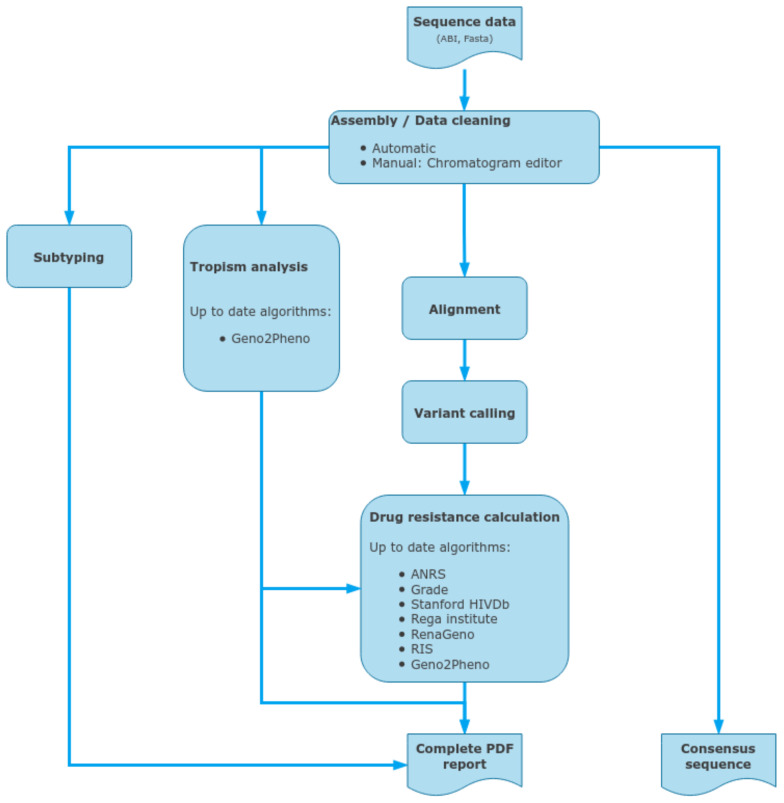
A total of 301 clinical samples were prepared, extracted, and amplified for the three HIV-1 genomic targets, Protease (PR), Reverse Transcriptase (RT), and Integrase (INT), using the CE-IVD DeepChek Assays; and then 19 clinical samples, using the CE-IVD DeepChek HIV Whole Genome Assay, were sequenced on the NGS iSeq100 and MiSeq (Illumina, San Diego, CA, USA). Sequences were compared to those obtained by capillary electrophoresis. Quality control for Molecular Diagnostics (QCMD) samples was added to validate the clinical accuracy of these in vitro diagnostics (IVDs). Nineteen clinical samples were then tested with the same sample collection, handling, and measurement procedure for evaluating the use of NGS for whole-genome HIV-1. Sequencing analyzer outputs were submitted to a downstream CE-IVD standalone software tailored for HIV-1 analysis and interpretation.
The limits of range detection were 1000 to 10 cp/mL for the HIV-1 target-specific sequencing. The median coverage per sample for the three amplicons (PR/RT and INT) was 13,237 reads. High analytical reproducibility and repeatability were evidenced by a positive percent agreement of 100%. Duplicated samples in two distinct NGS runs were 100% homologous. NGS detected all the mutations found by capillary electrophoresis and identified additional resistance variants. A perfect accuracy score with the QCMD panel detection of drug-resistance mutations was obtained.
This study is the first evaluation of the DeepChek Assays for targets specific (PR/RT and INT) and whole genome. A cutoff of 3% allowed for a better characterization of the viral population by identifying additional resistance mutations and improving the HIV-1 drug-resistance interpretation. The use of whole-genome sequencing is an additional and complementary tool to detect mutations in newly infected untreated patients and heavily experienced patients, both with higher HIV-1 viral-load profiles, to offer new insight and treatment strategies, especially using the new HIV-1 capsid/maturation inhibitors and to assess the potential clinical impact of mutations in the HIV-1 genome outside of the usual HIV-1 targets (RT/PR and INT).
耐药突变主要通过毛细管电泳测序检测,该方法无法检测频率低于 20%的次要变异。下一代测序(NGS)现在可以检测到其他突变,这对 HIV-1 耐药性解释很有用。本研究的目的是评估 CE-IVD 检测在目标特异性和全基因组测序中对 HIV-1 耐药性评估的性能,使用标准化的端到端解决方案平台。
共准备了 301 份临床样本,使用 CE-IVD DeepChek 检测对 HIV-1 的三个基因组靶标蛋白酶(PR)、逆转录酶(RT)和整合酶(INT)进行提取和扩增;然后使用 CE-IVD DeepChek HIV 全基因组检测对 19 份临床样本进行测序,测序仪为 NGS iSeq100 和 MiSeq(Illumina,圣地亚哥,CA,美国)。序列与毛细管电泳获得的序列进行比较。质量控制分子诊断(QCMD)样本用于验证这些体外诊断(IVD)的临床准确性。然后,用相同的样本采集、处理和测量程序对 19 份临床样本进行测试,以评估 NGS 在全基因组 HIV-1 中的应用。测序仪输出结果提交给专门为 HIV-1 分析和解释定制的下游 CE-IVD 独立软件。
HIV-1 靶标特异性测序的检测范围下限为 1000 至 10 cp/mL。三个扩增子(PR/RT 和 INT)的中位样本覆盖率为 13,237 个读数。高分析重现性和重复性由阳性符合率 100%证明。在两个不同的 NGS 运行中重复的样本是 100%同源的。NGS 检测到毛细管电泳发现的所有突变,并鉴定了其他耐药变异。与 QCMD 面板检测耐药突变的准确性评分完美。
这是首次对 DeepChek 检测用于特定靶标(PR/RT 和 INT)和全基因组的评估。3%的截止值可以通过识别其他耐药突变来更好地描述病毒群体,从而改善 HIV-1 耐药性解释。全基因组测序是一种额外的补充工具,可用于检测新感染未经治疗的患者和经验丰富的患者中的突变,这两种患者的 HIV-1 病毒载量较高,可提供新的见解和治疗策略,特别是使用新的 HIV-1 衣壳/成熟抑制剂,并评估 HIV-1 基因组中常见 HIV-1 靶标(RT/PR 和 INT)以外的突变的潜在临床影响。