Gao Ke-Jin, Yin Rui-Hua, Wang Yuan, Wang Zheng, Ma Ai-Jun
Department of Neurology, The Affiliated Hospital of Qingdao University, Qingdao University, Qingdao, People's Republic of China.
Institute of Cerebrovascular, The Affiliated Hospital of Qingdao University, Qingdao University, Qingdao, People's Republic of China.
Int J Gen Med. 2023 Feb 21;16:641-655. doi: 10.2147/IJGM.S399338. eCollection 2023.
Cerebral small vessel disease (CSVD) with an insidious onset can cause overall neurological dysfunction and dementia, bringing a massive burden to society. However, the pathogenesis of CSVD is complex and reliable non-invasive biomarkers for diagnosis are still not available at present. Our study aimed to investigate abnormal exosomal miRNA patterns via microarray analysis and identify candidate biomarkers for CSVD.
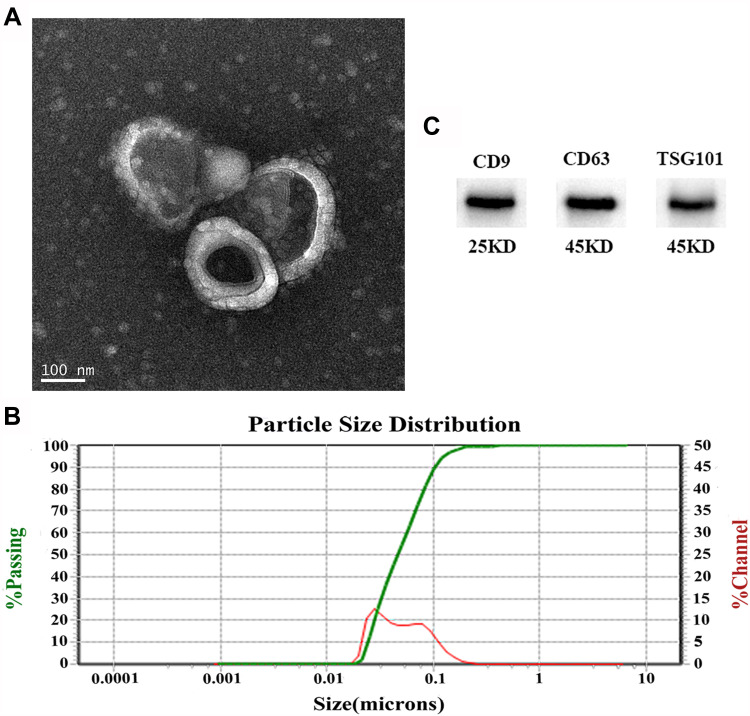
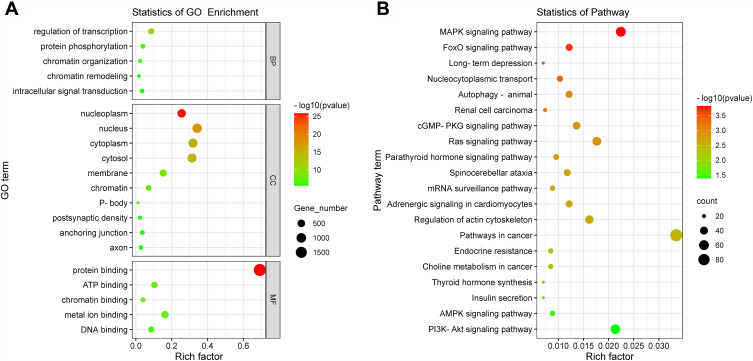
We isolated exosomes from the plasma of all subjects and identified exosomes via currently universally accepted methods. The miRNAs were profiled through microarrays, and then the expression of selected differentially expressed miRNAs was validated through RT-PCR. GO and KEGG analysis predicted possible functions of differentially expressed miRNAs. Receiver operating characteristic (ROC) curve was employed to observe the diagnostic value of selective miRNAs. Finally, the relationship between the expression of miR-320e and the CSVD burden was analyzed.
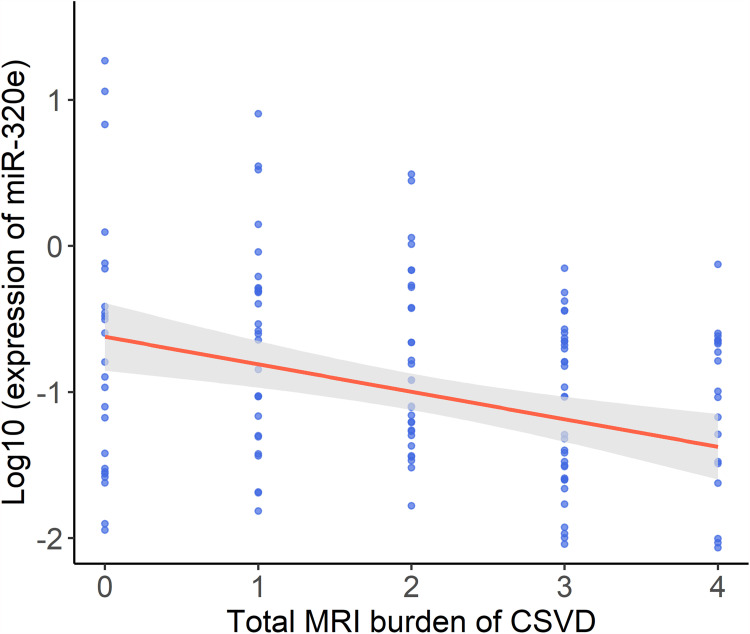
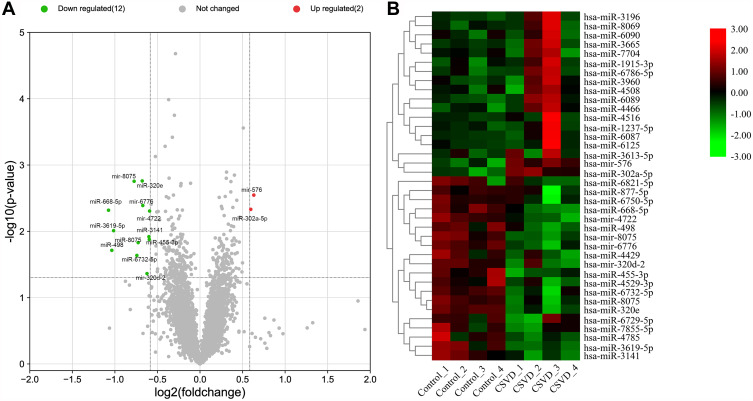
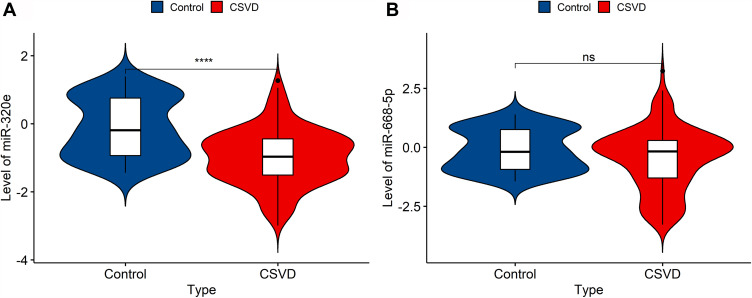
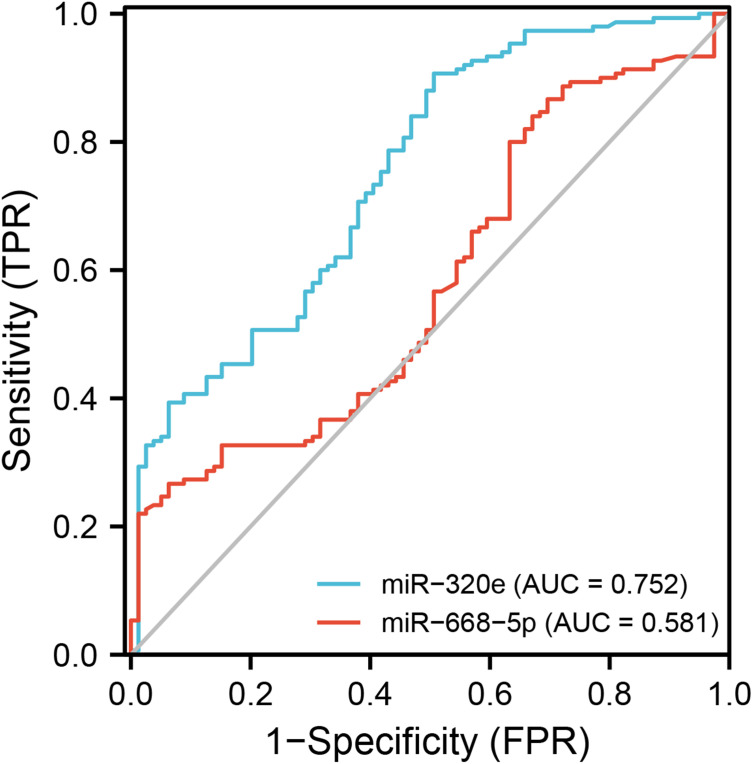
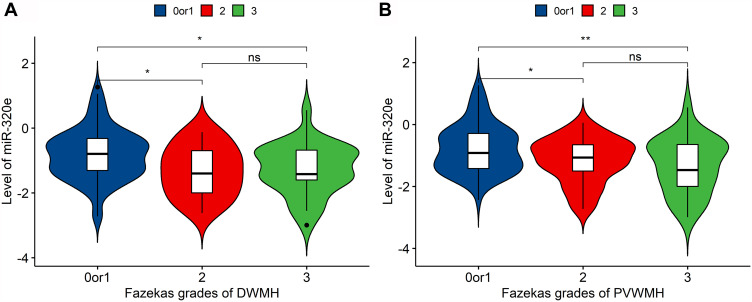
A total of 14 miRNAs displayed differential enrichment levels with |fold change|≥1.5 and p<0.05 through miRNA microarray analysis. The RT-PCR analysis validated that exosomal miR-320e was significantly downregulated in CSVD patients (p<0.0001). ROC curve analysis of exosomal miR-320e showed the area under the curve of 0.752. According to the multivariable analysis, miR-320e was an independent predictor of white matter hyperintensity ([aOR]= 0.452, 95% confidence interval [CI]= 0.258-0.792, p=0.006) and exhibited a negative correlation with the load of periventricular white matter hyperintensities (p=0.0021) and deep white matter hyperintensities (p=0.0018), respectively. In addition, it exhibited a negative correlation with total CSVD burden score (r=-0.276, p=0.001).
In our study, plasma exosomal miR-320e has a certain diagnostic value for CSVD, and a significant correlation with imaging burden of CSVD. Overall, exosomal miR-320e has the potential to be a novel biomarker for CSVD, but further research with a large sample size is necessary to assess its clinical utility.
隐匿性起病的脑小血管病(CSVD)可导致整体神经功能障碍和痴呆,给社会带来巨大负担。然而,CSVD的发病机制复杂,目前仍缺乏可靠的非侵入性诊断生物标志物。我们的研究旨在通过微阵列分析研究外泌体miRNA模式的异常,并确定CSVD的候选生物标志物。
我们从所有受试者的血浆中分离外泌体,并通过目前普遍接受的方法鉴定外泌体。通过微阵列对miRNA进行分析,然后通过RT-PCR验证所选差异表达miRNA的表达。GO和KEGG分析预测差异表达miRNA的可能功能。采用受试者工作特征(ROC)曲线观察选择性miRNA的诊断价值。最后,分析miR-320e的表达与CSVD负担之间的关系。
通过miRNA微阵列分析,共有14种miRNA显示出差异富集水平,|倍数变化|≥1.5且p<0.05。RT-PCR分析验证了CSVD患者中外泌体miR-320e显著下调(p<0.0001)。外泌体miR-320e的ROC曲线分析显示曲线下面积为0.752。根据多变量分析,miR-320e是白质高信号的独立预测因子([调整后比值比]=0.452,95%置信区间[CI]=0.258-0.792,p=0.006),并且分别与脑室周围白质高信号负荷(p=0.0021)和深部白质高信号负荷(p=0.0018)呈负相关。此外,它与CSVD总负担评分呈负相关(r=-0.276,p=0.001)。
在我们的研究中,血浆外泌体miR-320e对CSVD具有一定的诊断价值,并且与CSVD的影像学负担显著相关。总体而言,外泌体miR-320e有潜力成为CSVD的新型生物标志物,但需要进一步的大样本研究来评估其临床应用价值。