Department of TCMs Pharmaceuticals, China Pharmaceutical University, Nanjing, People's Republic of China.
School of Pharmacy, Faculty of Medicine and Health, University of Sydney, Pharmacy and Bank Building A15, Camperdown, Australia.
Int J Nanomedicine. 2023 Feb 23;18:1031-1045. doi: 10.2147/IJN.S395266. eCollection 2023.
Curcumin (CUR) is a functional ingredient from the spice turmeric. It has attracted considerable attention recently, owing to its diverse biological activities. However, curcumin has low water solubility, which limited its applications. Some sugar molecules were found to be able to solubilise poorly water-soluble compounds by forming micelles in aqueous solutions.
To improve the water solubility and oral absorption of CUR, using a non-nutritive natural sweetener, namely, Mogroside V (Mog-V).
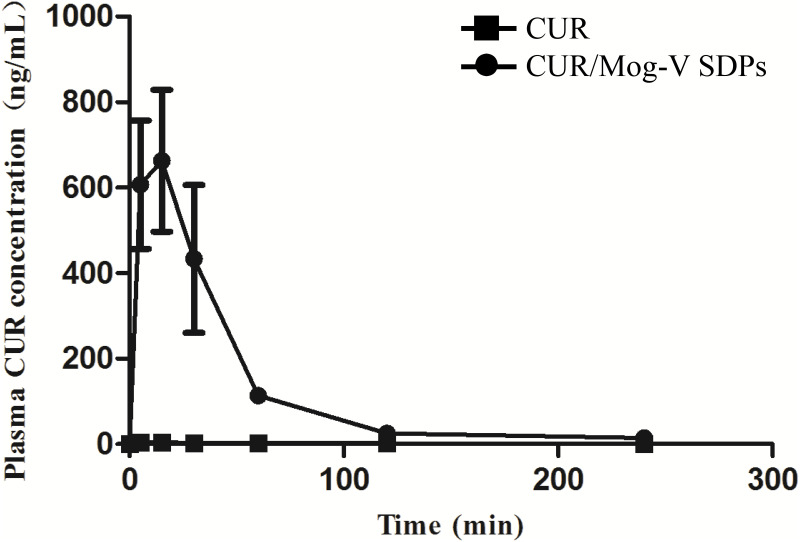
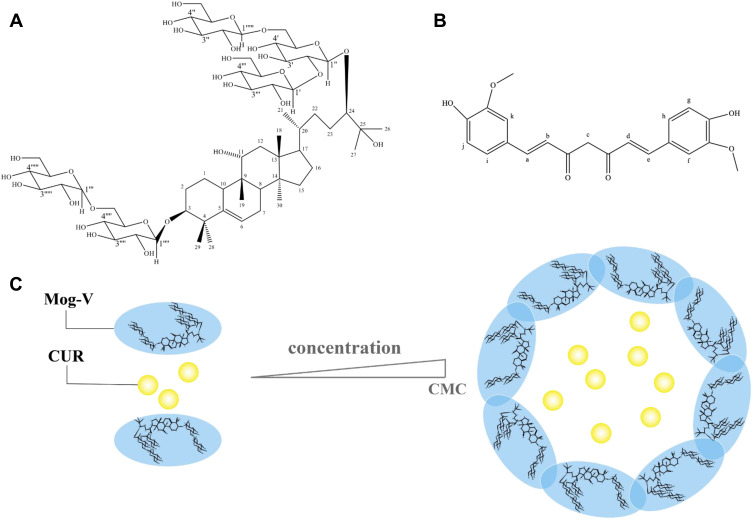
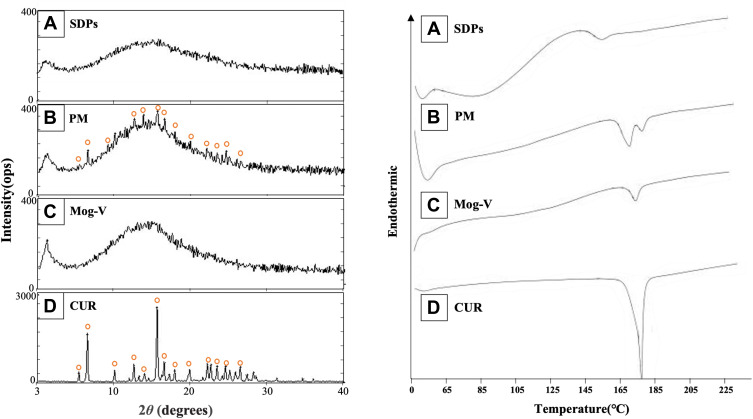
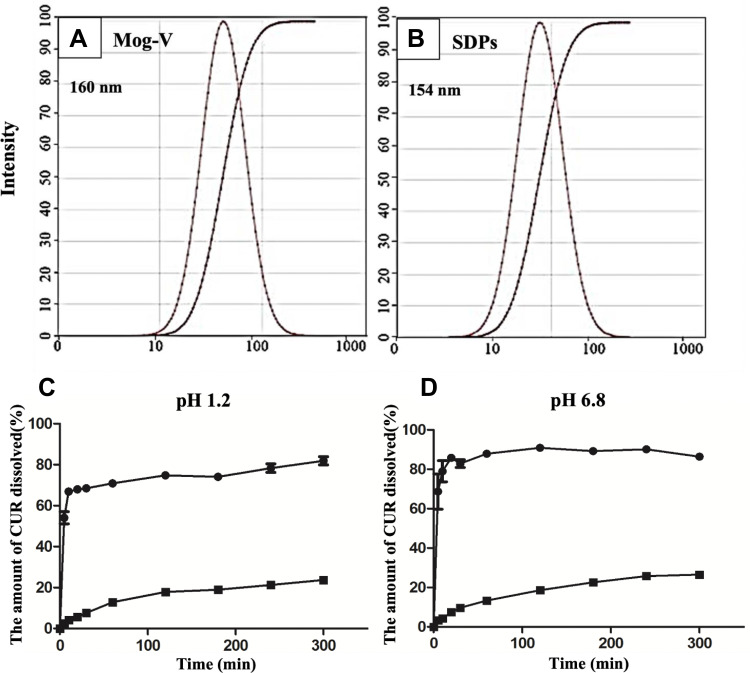
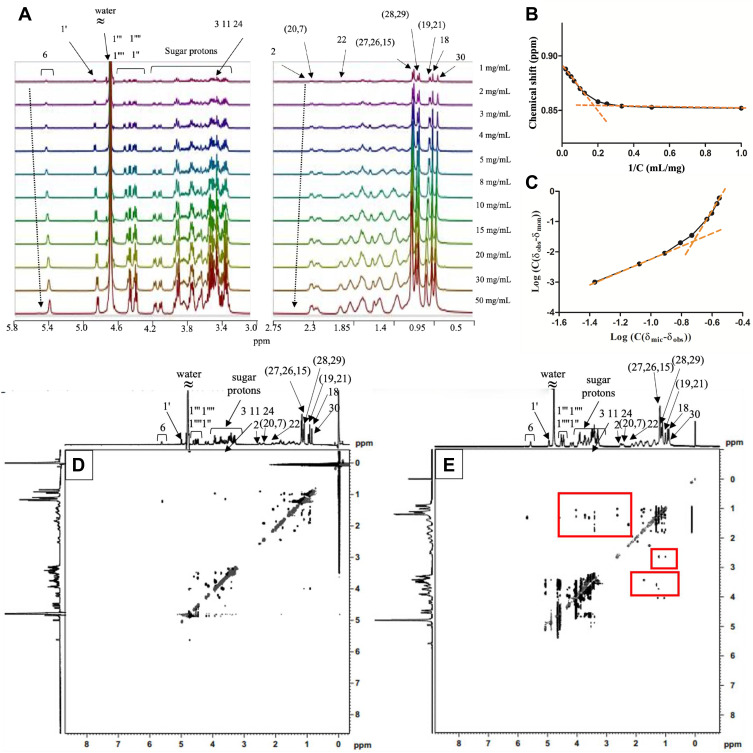
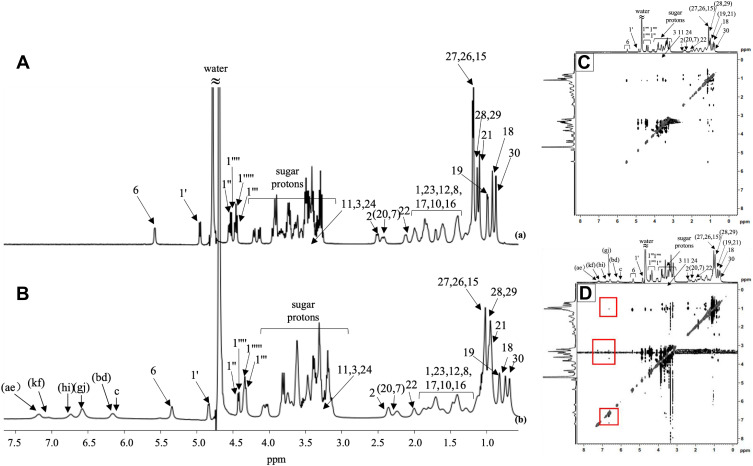
A solid dispersion of CUR in Mog-V was prepared using a solvent evaporation method. The solid dispersion was characterised by using X-ray diffraction and differential scanning calorimetry. The solid dispersion can dissolve in water to form micelles with a diameter of ~160 nm, which were characterised by using dynamic light scattering. To find out the mechanism of solubilisation, the aggregation behaviour of Mog-V molecules in aqueous solution was investigated using nuclear magnetic resonance spectroscopy. Finally, oral absorption of CUR in the solid dispersion was evaluated using a rodent model.
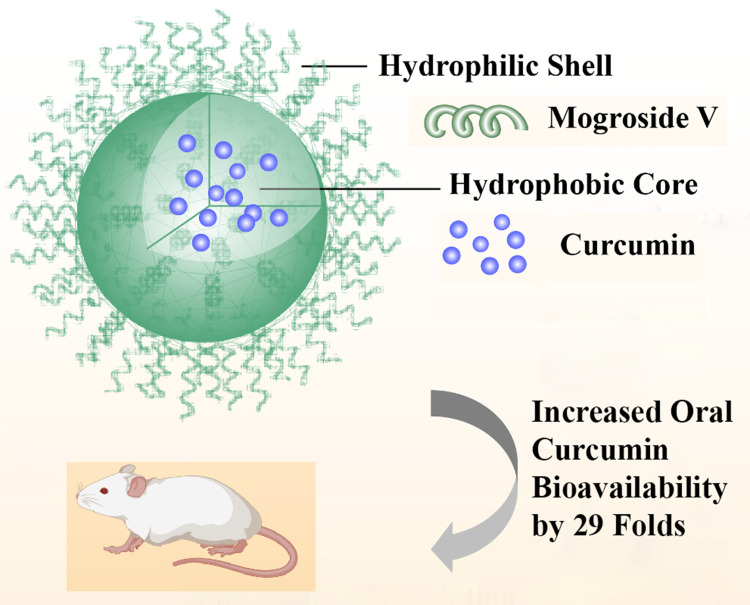
A solid dispersion was formed in a ratio of 1 CUR to 10 Mog-V by weight. Upon dissolution into water, CUR laden micelles formed via self-assembly of Mog-V molecules, which increased the solubility of CUR by nearly 6000 times compared with pure CUR crystals. In rats, the solid dispersion increased the oral absorption of CUR by 29 folds, compared with CUR crystals. In terms of solubilisation mechanism, it was found that Mog-V self-assembled into micelles with a core-shell structure and CUR molecules were incorporated into the hydrophobic core of the Mog-V micelles.
Mog-V can form a solid dispersion with CUR. Upon dissolution in water, the Mog-V in the solid dispersion can self-assemble into micelles, which solubilise CUR and increase its oral absorption.
姜黄素(CUR)是来自香料姜黄的一种功能性成分。由于其多种生物活性,它最近引起了相当大的关注。然而,姜黄素的水溶性低,这限制了它的应用。一些糖分子被发现能够通过在水溶液中形成胶束来溶解水溶性差的化合物。
为了提高 CUR 的水溶性和口服吸收,使用一种非营养性天然甜味剂,即罗汉果苷 V(Mog-V)。
采用溶剂蒸发法制备 CUR 与 Mog-V 的固体分散体。用 X 射线衍射和差示扫描量热法对固体分散体进行了表征。固体分散体在水中溶解形成直径约为 160nm 的胶束,通过动态光散射进行了表征。为了找出增溶的机制,使用核磁共振波谱法研究了 Mog-V 分子在水溶液中的聚集行为。最后,使用啮齿动物模型评价了固体分散体中 CUR 的口服吸收。
以 1CUR 比 10Mog-V 的重量比形成了固体分散体。溶解在水中后,Mog-V 分子通过自组装形成 CUR 载药胶束,使 CUR 的溶解度比纯 CUR 晶体增加了近 6000 倍。在大鼠中,与 CUR 晶体相比,固体分散体使 CUR 的口服吸收增加了 29 倍。就增溶机制而言,发现 Mog-V 自组装成具有核壳结构的胶束,CUR 分子被包裹在 Mog-V 胶束的疏水性核心内。
Mog-V 可以与 CUR 形成固体分散体。在水中溶解后,固体分散体中的 Mog-V 可以自组装成胶束,溶解 CUR 并增加其口服吸收。