State Key Laboratory of Cellular Stress Biology, School of Pharmaceutical Sciences, Xiamen University, Xiang'an South Road, Xiamen, Fujian, 361102, China.
Fujian Provincial Key Laboratory of Innovative Drug Target Research, School of Pharmaceutical Sciences, Xiamen University, Xiang'an South Road, Xiamen, Fujian, 361102, China.
Cell Mol Immunol. 2023 Apr;20(4):351-364. doi: 10.1038/s41423-023-00985-3. Epub 2023 Mar 2.
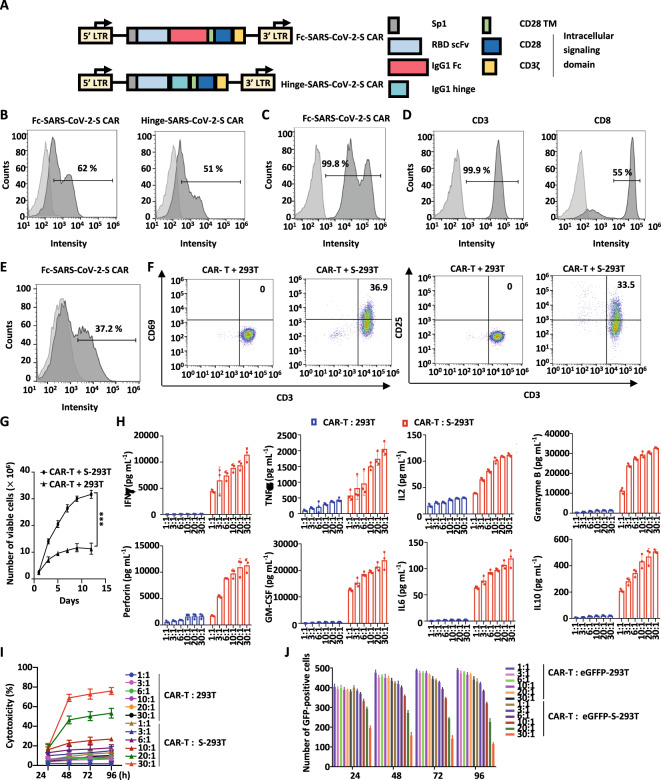
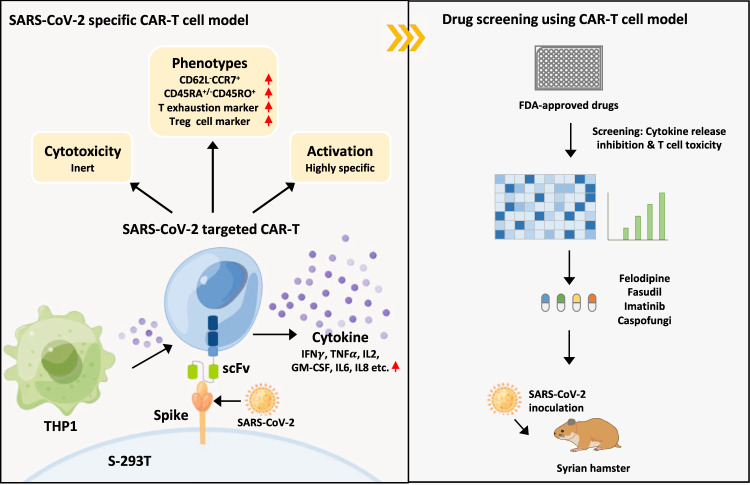
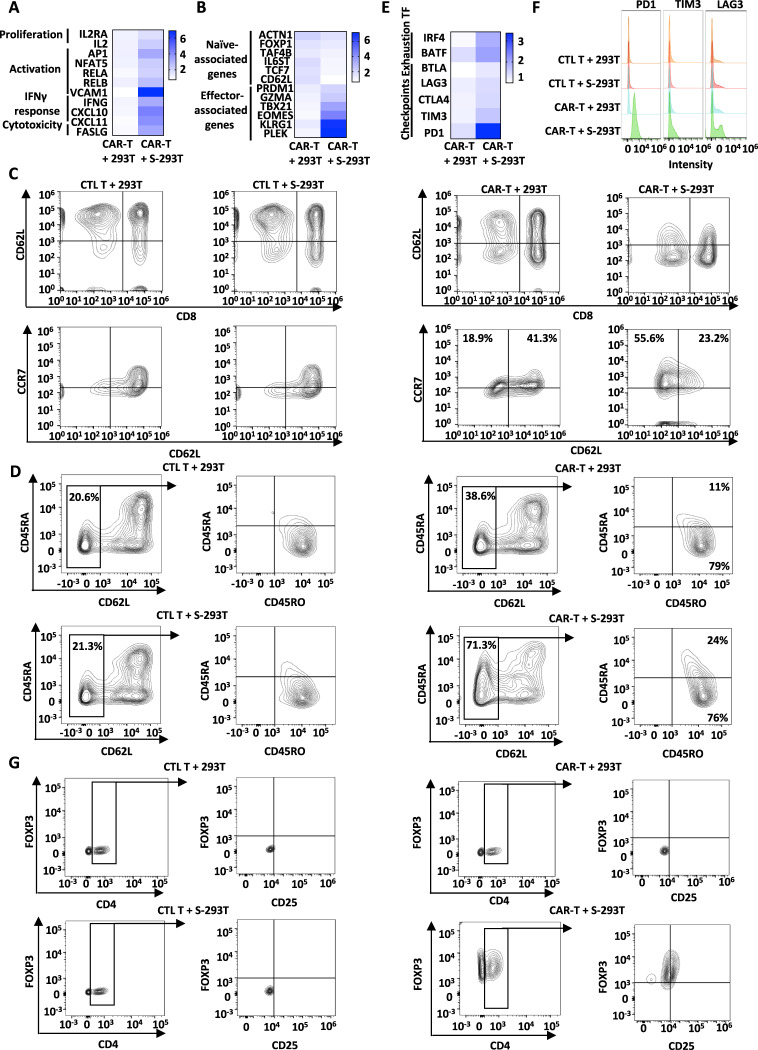
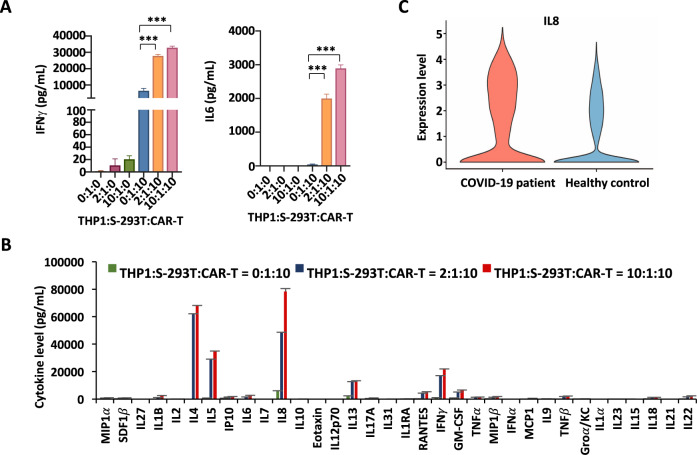
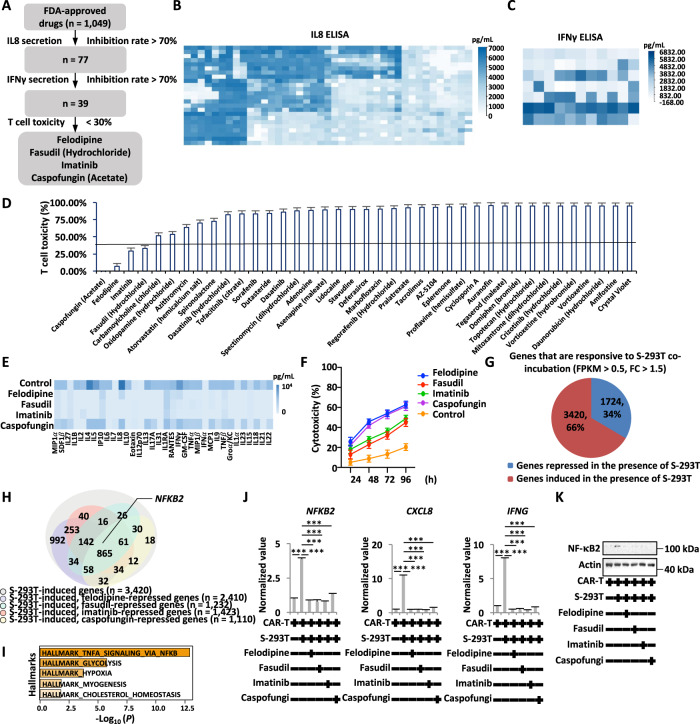
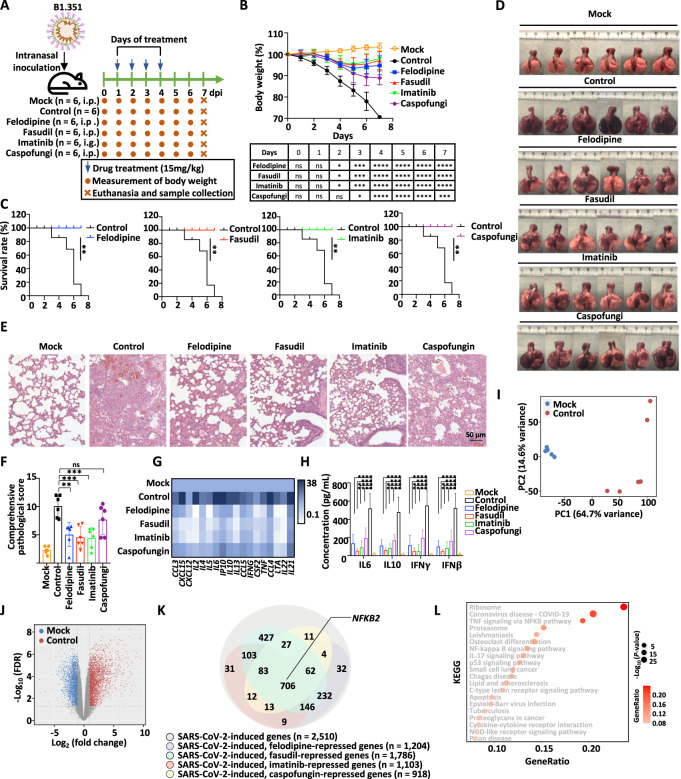
Severe acute respiratory syndrome coronavirus 2 (SARS-CoV-2)-induced cytokine storm is closely associated with coronavirus disease 2019 (COVID-19) severity and lethality. However, drugs that are effective against inflammation to treat lethal COVID-19 are still urgently needed. Here, we constructed a SARS-CoV-2 spike protein-specific CAR, and human T cells infected with this CAR (SARS-CoV-2-S CAR-T) and stimulated with spike protein mimicked the T-cell responses seen in COVID-19 patients, causing cytokine storm and displaying a distinct memory, exhausted, and regulatory T-cell phenotype. THP1 remarkably augmented cytokine release in SARS-CoV-2-S CAR-T cells when they were in coculture. Based on this "two-cell" (CAR-T and THP1 cells) model, we screened an FDA-approved drug library and found that felodipine, fasudil, imatinib, and caspofungin were effective in suppressing the release of cytokines, which was likely due to their ability to suppress the NF-κB pathway in vitro. Felodipine, fasudil, imatinib, and caspofungin were further demonstrated, although to different extents, to attenuate lethal inflammation, ameliorate severe pneumonia, and prevent mortality in a SARS-CoV-2-infected Syrian hamster model, which were also linked to their suppressive role in inflammation. In summary, we established a SARS-CoV-2-specific CAR-T-cell model that can be utilized as a tool for anti-inflammatory drug screening in a fast and high-throughput manner. The drugs identified herein have great potential for early treatment to prevent COVID-19 patients from cytokine storm-induced lethality in the clinic because they are safe, inexpensive, and easily accessible for immediate use in most countries.
严重急性呼吸综合征冠状病毒 2(SARS-CoV-2)诱导的细胞因子风暴与 2019 年冠状病毒病(COVID-19)的严重程度和致死率密切相关。然而,仍然迫切需要针对炎症有效的药物来治疗致命的 COVID-19。在这里,我们构建了一种 SARS-CoV-2 刺突蛋白特异性嵌合抗原受体(CAR),并用该 CAR 感染人 T 细胞(SARS-CoV-2-S CAR-T),并用刺突蛋白刺激,模拟了 COVID-19 患者中的 T 细胞反应,引起细胞因子风暴,并表现出明显的记忆、耗竭和调节性 T 细胞表型。当 SARS-CoV-2-S CAR-T 细胞与 THP1 共培养时,THP1 显著增强了细胞因子的释放。基于这种“两细胞”(CAR-T 和 THP1 细胞)模型,我们筛选了一个 FDA 批准的药物库,发现非洛地平、法舒地尔、伊马替尼和卡泊芬净可有效抑制细胞因子的释放,这可能是由于它们在体外抑制 NF-κB 通路的能力。非洛地平、法舒地尔、伊马替尼和卡泊芬净在一定程度上进一步被证明可减轻致命性炎症、改善严重肺炎,并预防 SARS-CoV-2 感染的叙利亚仓鼠模型中的死亡率,这也与它们在炎症中的抑制作用有关。总之,我们建立了一种 SARS-CoV-2 特异性 CAR-T 细胞模型,可作为一种快速、高通量的抗炎药物筛选工具。本文鉴定的药物具有很大的潜力,可用于早期治疗,以防止 COVID-19 患者因细胞因子风暴引起的致命性炎症,因为它们在大多数国家都是安全、廉价且易于获得的,可以立即使用。