Rai Bhavana, Naylor Paige, Sanchez Monica Siqueiros, Wintermark Max, Raman Mira, Jo Booil, Reiss Allan, Green Tamar
Stanford University School of Medicine.
Stanford University.
Res Sq. 2023 Feb 21:rs.3.rs-2580911. doi: 10.21203/rs.3.rs-2580911/v1.
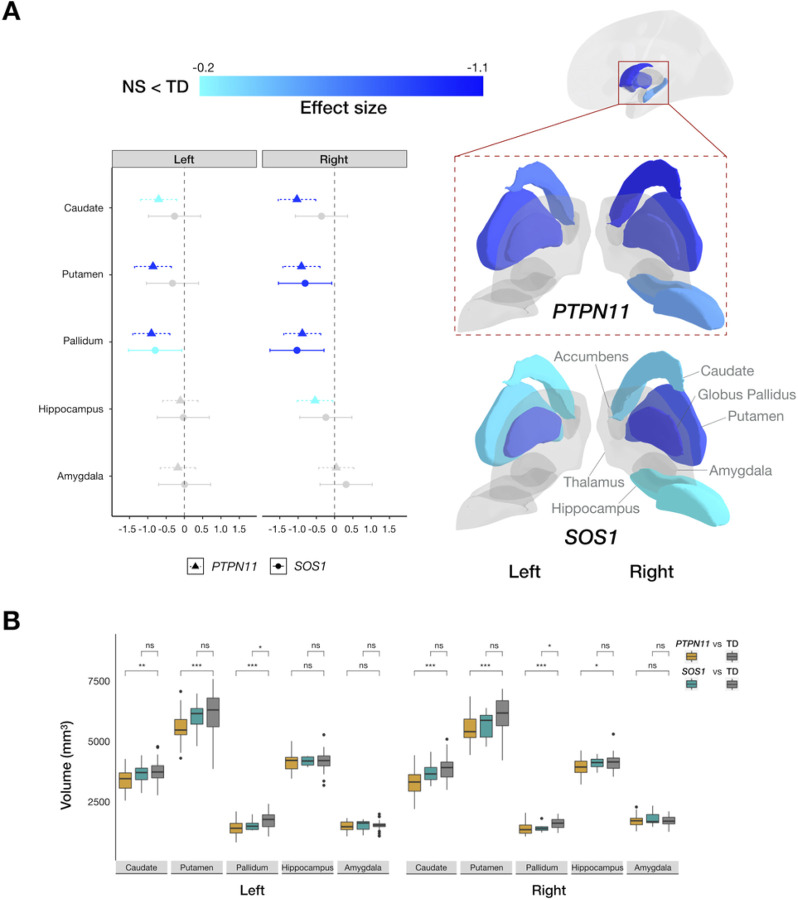
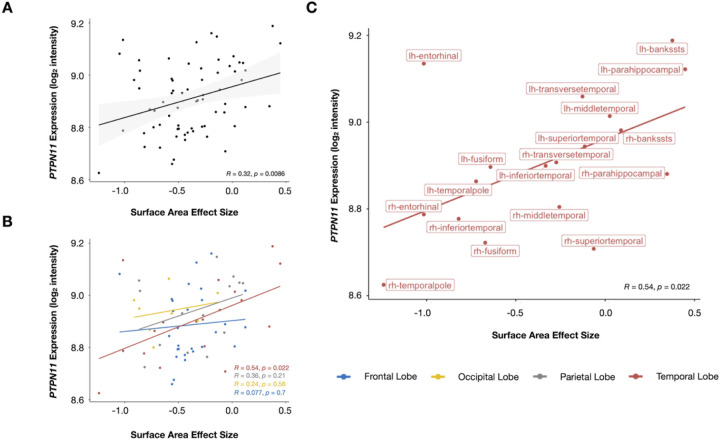
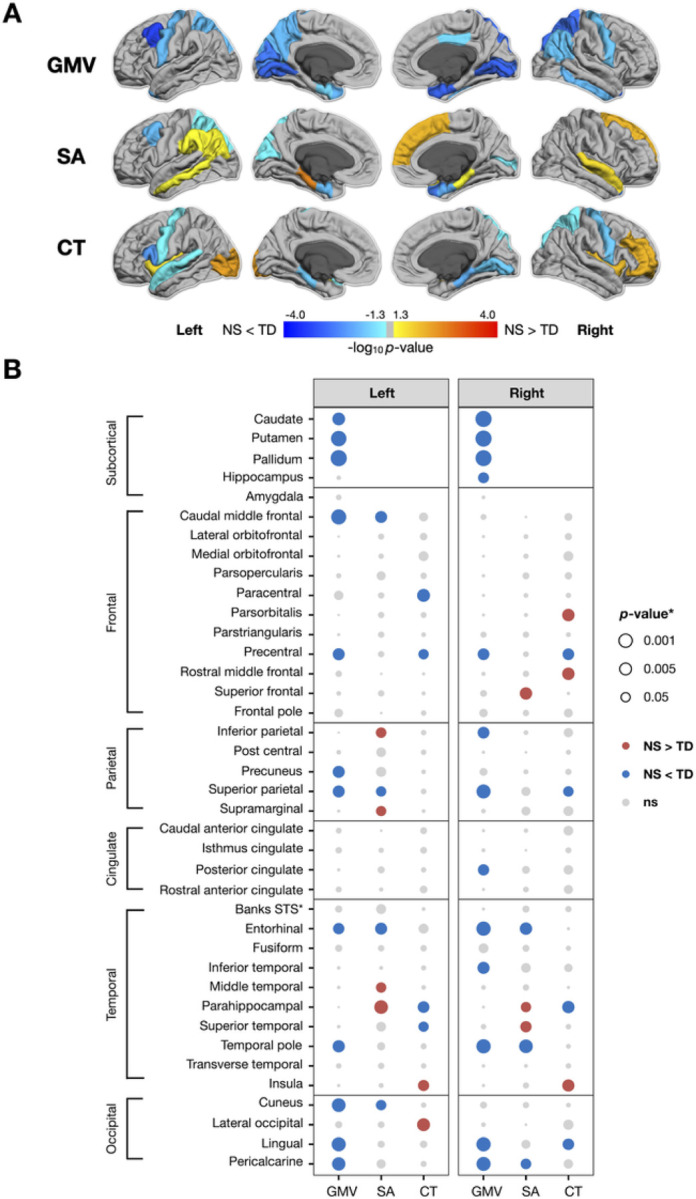
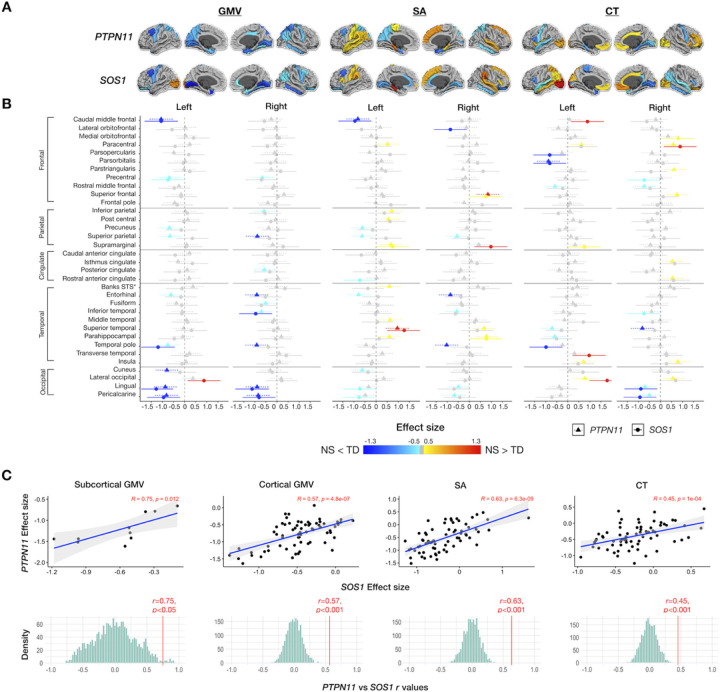
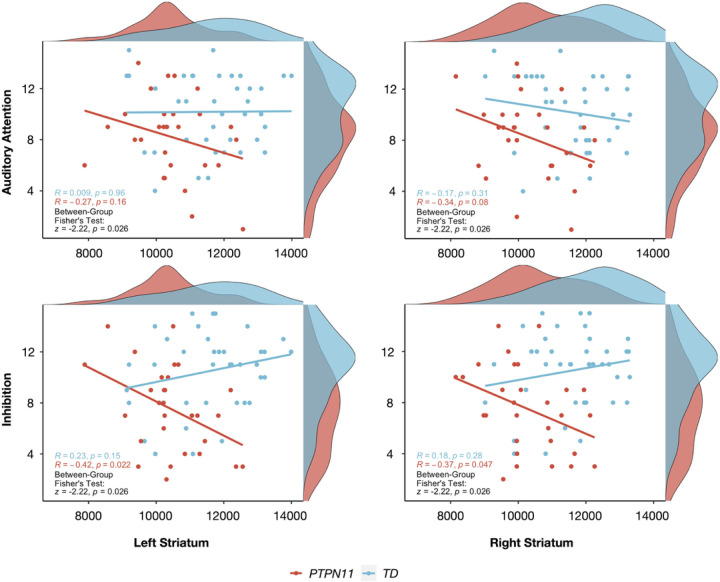
The RASopathies are genetic syndromes associated with pathogenic variants causing dysregulation of the Ras/mitogen-activated protein kinase (Ras-MAPK) pathway, essential for brain development, and increased risk for neurodevelopmental disorders. Yet, the effects of most pathogenic variants on the human brain are unknown. We examined: 1. How Ras-MAPK activating variants of / protein-coding genes affect brain anatomy. 2. The relationship between gene expression levels and brain anatomy, and 3. The relevance of subcortical anatomy to attention and memory skills affected in the RASopathies. We collected structural brain MRI and cognitive-behavioral data from 40 pre-pubertal children with Noonan syndrome (NS), caused by ( = 30) or ( = 10) variants (age 8.53 ± 2.15, 25 females), and compared them to 40 age- and sex-matched typically developing controls (9.24 ± 1.62, 27 females). We identified widespread effects of NS on cortical and subcortical volumes and on determinants of cortical gray matter volume, surface area (SA) and cortical thickness (CT). In NS, we observed smaller volumes of bilateral striatum, precentral gyri, and primary visual area ( 's<-0.8), and extensive effects on SA ( 's>|0.8|) and CT ( 's>|0.5|) relative to controls. Further, SA effects were associated with increasing gene expression, most prominently in the temporal lobe. Lastly, variants disrupted normative relationships between the striatum and inhibition functioning. We provide evidence for effects of Ras-MAPK pathogenic variants on striatal and cortical anatomy as well as links between gene expression and cortical SA increases, and striatal volume and inhibition skills. These findings provide essential translational information on the Ras-MAPK pathway's effect on human brain development and function.
RAS病是与致病变异相关的遗传综合征,这些变异导致Ras/丝裂原活化蛋白激酶(Ras-MAPK)信号通路失调,该通路对大脑发育至关重要,并增加了神经发育障碍的风险。然而,大多数致病变异对人类大脑的影响尚不清楚。我们研究了:1. 基因编码基因的Ras-MAPK激活变异如何影响脑解剖结构。2. 基因表达水平与脑解剖结构之间的关系,以及3. 皮质下解剖结构与RAS病中受影响的注意力和记忆技能的相关性。我们收集了40名青春期前患有努南综合征(NS)儿童的脑部结构MRI和认知行为数据,这些儿童由 变异(n = 30)或 变异(n = 10)引起(年龄8.53 ± 2.15岁,25名女性),并将他们与40名年龄和性别匹配的正常发育对照儿童(9.24 ± 1.62岁,27名女性)进行比较。我们发现NS对皮质和皮质下体积以及皮质灰质体积、表面积(SA)和皮质厚度(CT)的决定因素有广泛影响。在NS中,我们观察到双侧纹状体、中央前回和初级视觉区的体积较小(z值< -0.8),相对于对照组,对SA(z值> |0.8|)和CT(z值> |0.5|)有广泛影响。此外,SA的影响与基因表达增加有关,最显著的是在颞叶。最后, 变异破坏了纹状体与抑制功能之间的正常关系。我们提供了证据,证明Ras-MAPK致病变异对纹状体和皮质解剖结构有影响,以及基因表达与皮质SA增加、纹状体体积和抑制技能之间的联系。这些发现提供了关于Ras-MAPK信号通路对人类大脑发育和功能影响的重要转化信息。