Groborz Katarzyna M, Kalinka Małgorzata, Grzymska Justyna, Kołt Sonia, Snipas Scott J, Poręba Marcin
Department of Chemical Biology and Bioimaging, Wroclaw University of Science and Technology Wyb. Wyspiańskiego 27 50-370 Wroclaw Poland
Genetech Inc. 1 DNA Way South San Francisco CA 94080 USA.
Chem Sci. 2023 Jan 3;14(9):2289-2302. doi: 10.1039/d2sc05827h. eCollection 2023 Mar 1.
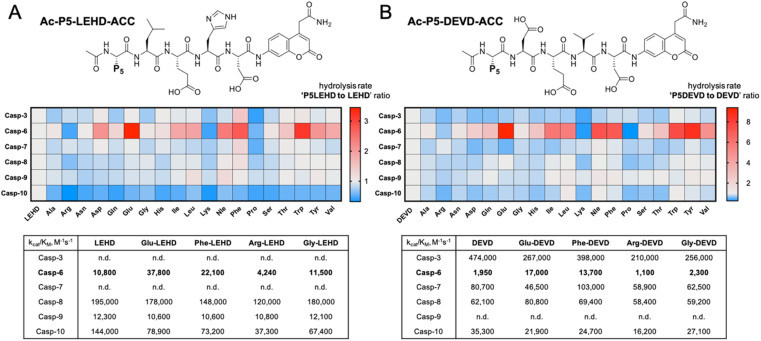
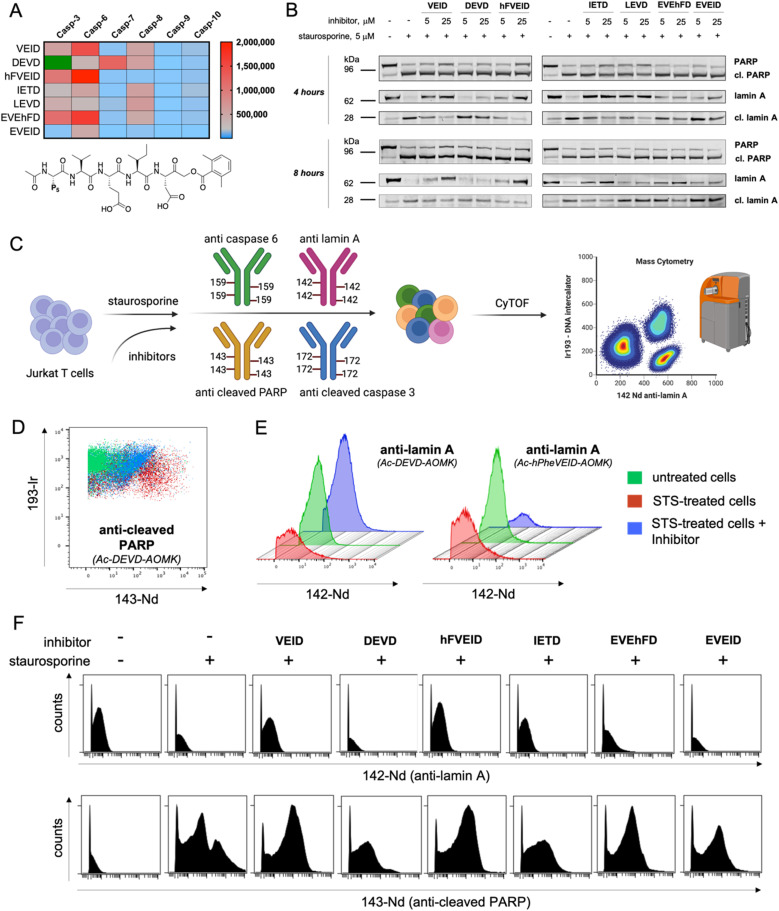
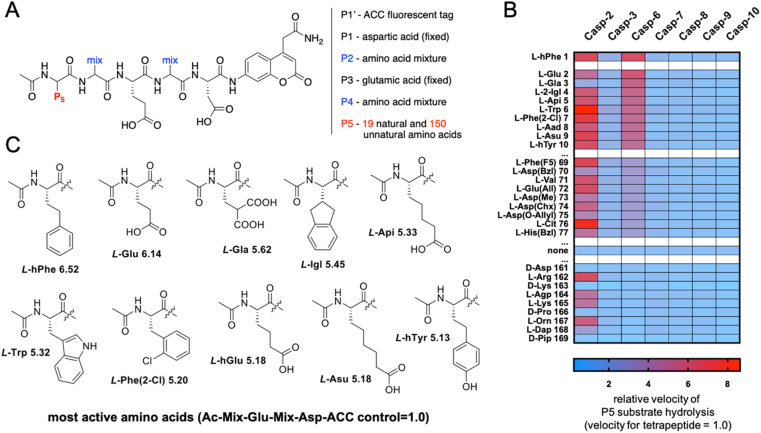
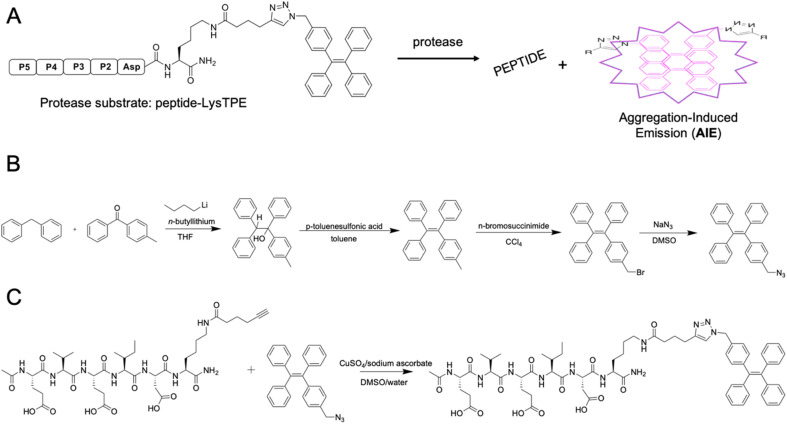
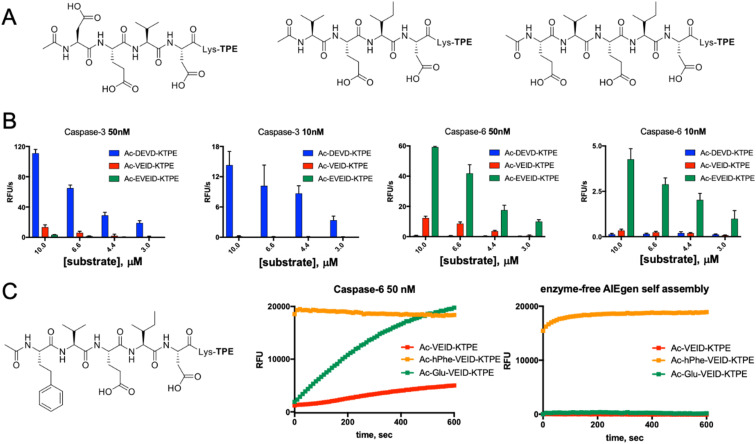
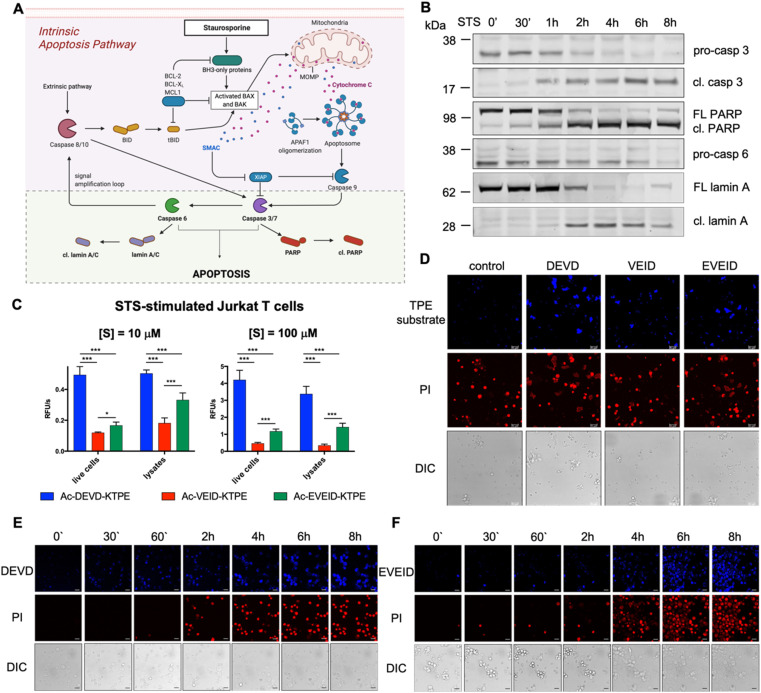
Activated effector caspases 3, 6 and 7 are responsible for cleaving a number of target substrates, leading to the ultimate destruction of cells apoptosis. The functions of caspases 3 and 7 in apoptosis execution have been widely studied over the years with multiple chemical probes for both of these enzymes. In contrast, caspase 6 seems to be largely neglected when compared to the heavily studied caspases 3 and 7. Therefore, the development of new small-molecule reagents for the selective detection and visualization of caspase 6 activity can improve our understanding of molecular circuits of apoptosis and shed new light on how they intertwine with other types of programmed cell death. In this study, we profiled caspase 6 substrate specificity at the P5 position and discovered that, similar to caspase 2, caspase 6 prefers pentapeptide substrates over tetrapeptides. Based on these data, we developed a set of chemical reagents for caspase 6 investigation, including coumarin-based fluorescent substrates, irreversible inhibitors and selective aggregation-induced emission luminogens (AIEgens). We showed that AIEgens are able to distinguish between caspase 3 and caspase 6 . Finally, we validated the efficiency and selectivity of the synthesized reagents by monitoring lamin A and PARP cleavage mass cytometry and western blot analysis. We propose that our reagents may provide new research prospects for single-cell monitoring of caspase 6 activity to reveal its function in programmed cell death pathways.
活化的效应半胱天冬酶3、6和7负责切割多种靶底物,导致细胞凋亡的最终破坏。多年来,通过针对这两种酶的多种化学探针,对半胱天冬酶3和7在凋亡执行中的功能进行了广泛研究。相比之下,与被大量研究的半胱天冬酶3和7相比,半胱天冬酶6似乎在很大程度上被忽视了。因此,开发用于选择性检测和可视化半胱天冬酶6活性的新型小分子试剂,可以增进我们对凋亡分子回路的理解,并为它们如何与其他类型的程序性细胞死亡相互交织提供新的线索。在本研究中,我们分析了半胱天冬酶6在P5位置的底物特异性,发现与半胱天冬酶2类似,半胱天冬酶6更喜欢五肽底物而非四肽底物。基于这些数据,我们开发了一套用于研究半胱天冬酶6的化学试剂,包括基于香豆素的荧光底物、不可逆抑制剂和选择性聚集诱导发光剂(AIEgens)。我们表明,AIEgens能够区分半胱天冬酶3和半胱天冬酶6。最后,我们通过监测层粘连蛋白A和PARP的切割,利用质谱流式细胞术和蛋白质印迹分析验证了合成试剂的效率和选择性。我们认为,我们的试剂可能为单细胞监测半胱天冬酶6活性以揭示其在程序性细胞死亡途径中的功能提供新的研究前景。