Bhattacharya Sankha, Parihar Vipan Kumar, Prajapati Bhupendra G
Department of Pharmaceutics, School of Pharmacy & Technology Management, SVKM'S NMIMS Deemed-to-be University, Shirpur, Maharashtra, India.
Department of Regulatory Toxicology, National Institute of Pharmaceutical Education and Research (NIPER), Industrial Area, Hajipur, Bihar, India.
Front Oncol. 2023 Feb 15;13:1125857. doi: 10.3389/fonc.2023.1125857. eCollection 2023.
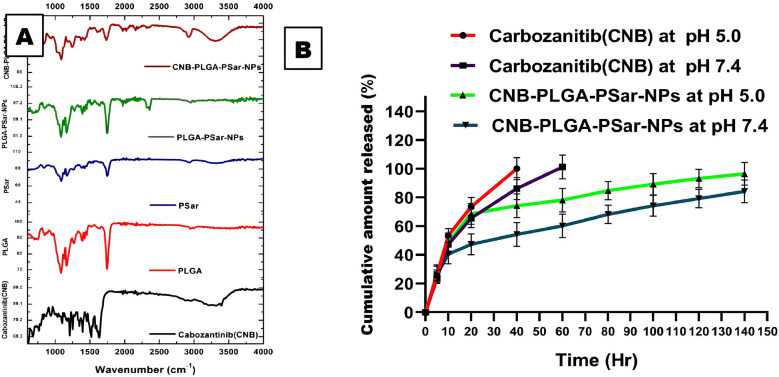
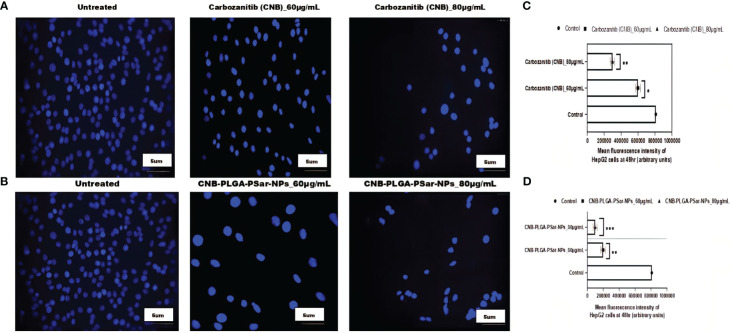
The study aimed to develop a nano-based drug delivery system for the treatment of hepatocellular carcinoma (HCC), a type of liver cancer that accounts for 90% of all liver malignancies. The study focused on the use of cabozantinib (CNB), a potent multikinase inhibitor that targets the VEGF receptor 2, as the chemotherapeutic drug. We developed CNB-loaded nanoparticles made from Poly D, L-lactic-co-glycolic acid, and Polysarcosine (CNB-PLGA-PSar-NPs) for use in human HepG2 cell lines.
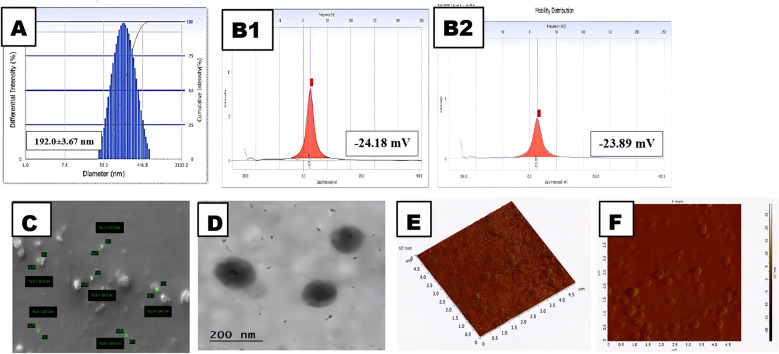
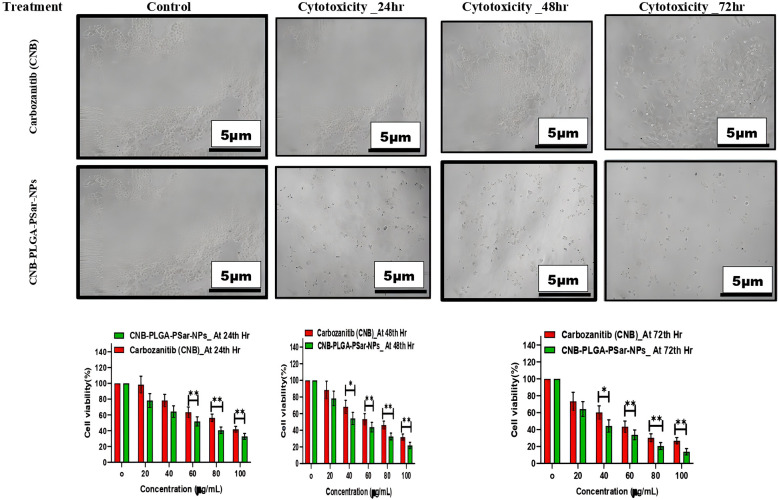
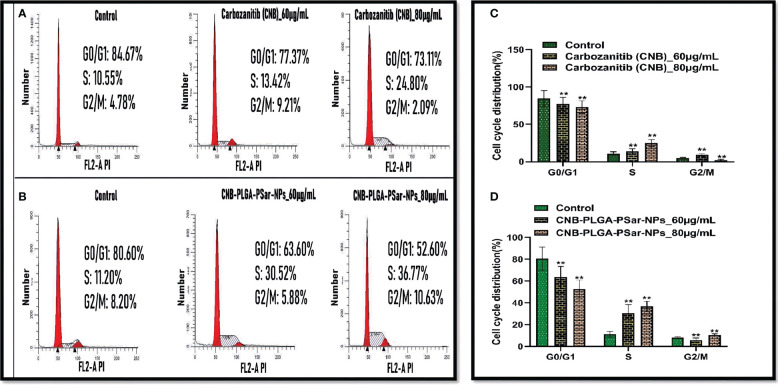
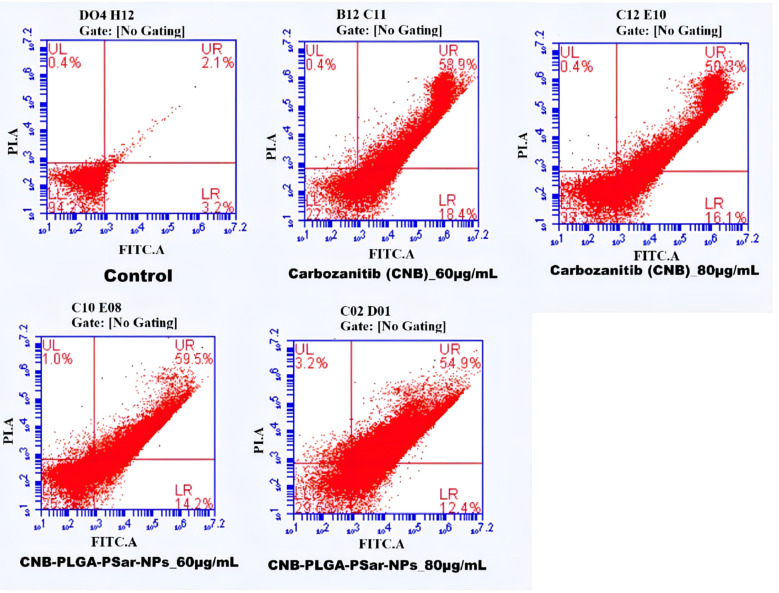
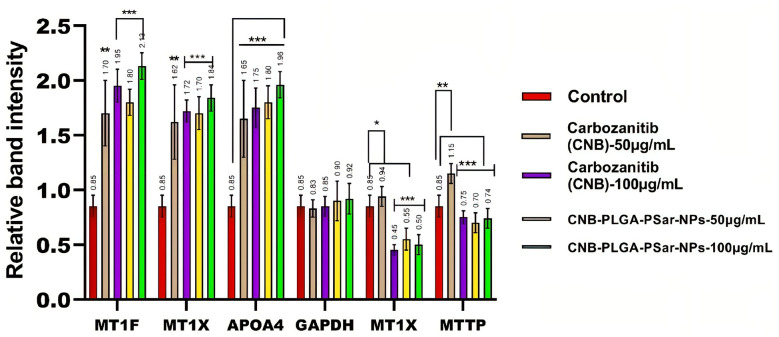
By O/W solvent evaporation method, the polymeric nanoparticles were prepared. The various techniques, such as photon correlation spectroscopy, scanning electron microscopy, and transmission electron microscopy were used, to determine the formulation's particle size, zeta potential, and morphology. SYBR Green/ROX qPCR Master Mix and RT-PCR equipment used to measure liver cancer cell line and tissue mRNA expression and MTT assay to test HepG2 cell cytotoxicity. Cell cycle arrest analysis, annexin V assay, and ZE5 Cell Analyzer apoptosis assay were also performed.
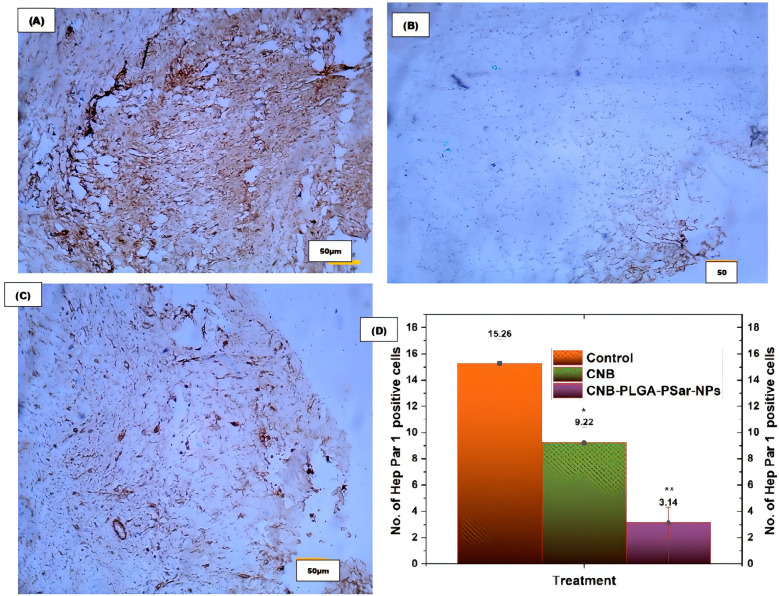
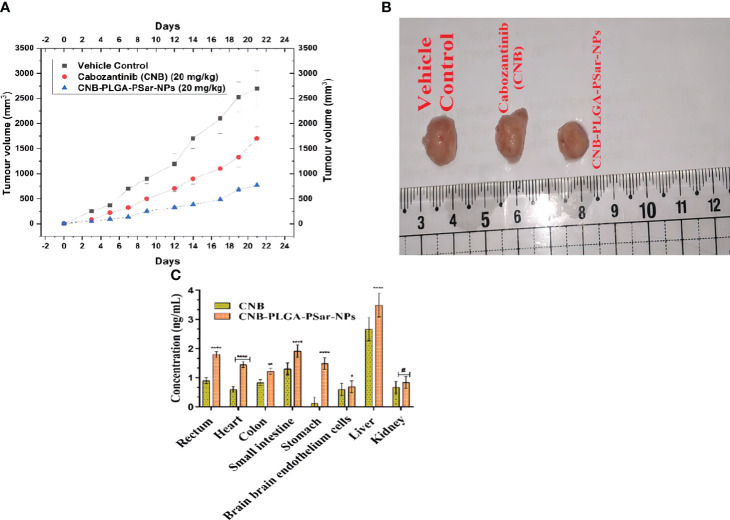
The results of the study showed that the particle diameters were 192.0 ± 3.67 nm with 0.128 PDI and -24.18 ± 3.34 mV zeta potential. The antiproliferative and proapoptotic effects of CNB-PLGA-PSar-NPs were evaluated using MTT and flow cytometry (FCM). The IC50 value of CNB-PLGA-PSar-NPs was 45.67 µg/mL, 34.73 µg/mL, and 21.56 µg/mL for 24, 48, and 72 h, respectively. The study also found that 11.20% and 36.77% of CNB-PLGA-PSar-NPs-treated cells were apoptotic at 60 µg/mL and 80 µg/mL, respectively, suggesting that the nanoparticles were effective in inducing apoptosis in the cancer cells. It can also conclude that, CNB-PLGA-PSar-NPs inhibit human HepG2 hepatocellular carcinoma cells and kill them by upregulating the tumour suppressor genes MT1F, MT1X, and downregulating MTTP, APOA4. Further in vivo antitumor activity was well reported in SCID female mice.
Overall, this study suggests that the CNB-PLGA-PSar-NPs are a promising drug delivery system for the treatment of HCC, and further research is needed to investigate their potential in clinical treatment.
本研究旨在开发一种基于纳米的药物递送系统,用于治疗肝细胞癌(HCC),这是一种占所有肝脏恶性肿瘤90%的肝癌类型。该研究聚焦于使用卡博替尼(CNB),一种靶向血管内皮生长因子受体2的强效多激酶抑制剂,作为化疗药物。我们制备了由聚D,L-乳酸-乙醇酸共聚物和聚肌氨酸制成的负载CNB的纳米颗粒(CNB-PLGA-PSar-NPs),用于人肝癌HepG2细胞系。
通过油包水溶剂蒸发法制备聚合物纳米颗粒。使用多种技术,如光子相关光谱、扫描电子显微镜和透射电子显微镜,来确定制剂的粒径、zeta电位和形态。使用SYBR Green/ROX qPCR预混液和RT-PCR设备测量肝癌细胞系和组织的mRNA表达,并通过MTT法检测HepG2细胞的细胞毒性。还进行了细胞周期阻滞分析、膜联蛋白V测定和ZE5细胞分析仪凋亡测定。
研究结果表明,粒径为192.0±3.67 nm,多分散指数为0.128,zeta电位为-24.18±3.34 mV。使用MTT法和流式细胞术(FCM)评估了CNB-PLGA-PSar-NPs的抗增殖和促凋亡作用。CNB-PLGA-PSar-NPs在24、48和72小时的IC50值分别为45.67μg/mL、34.73μg/mL和21.56μg/mL。该研究还发现,在60μg/mL和80μg/mL时,分别有11.20%和36.77%的经CNB-PLGA-PSar-NPs处理的细胞发生凋亡,这表明纳米颗粒在诱导癌细胞凋亡方面是有效的。还可以得出结论,CNB-PLGA-PSar-NPs通过上调肿瘤抑制基因MT1F、MT1X并下调MTTP、APOA4来抑制人HepG2肝癌细胞并杀死它们。在SCID雌性小鼠中也有关于其进一步体内抗肿瘤活性的良好报道。
总体而言,本研究表明CNB-PLGA-PSar-NPs是一种有前景的用于治疗HCC的药物递送系统,需要进一步研究来探究其在临床治疗中的潜力。