Petito Giuseppe, Giacco Antonia, Cioffi Federica, Mazzoli Arianna, Magnacca Nunzia, Iossa Susanna, Goglia Fernando, Senese Rosalba, Lanni Antonia
Department of Environmental, Biological and Pharmaceutical Sciences and Technologies, University of Campania "L. Vanvitelli", Caserta, Italy.
Department of Sciences and Technologies, University of Sannio, Benevento, Italy.
Front Cell Dev Biol. 2023 Feb 16;11:1101844. doi: 10.3389/fcell.2023.1101844. eCollection 2023.
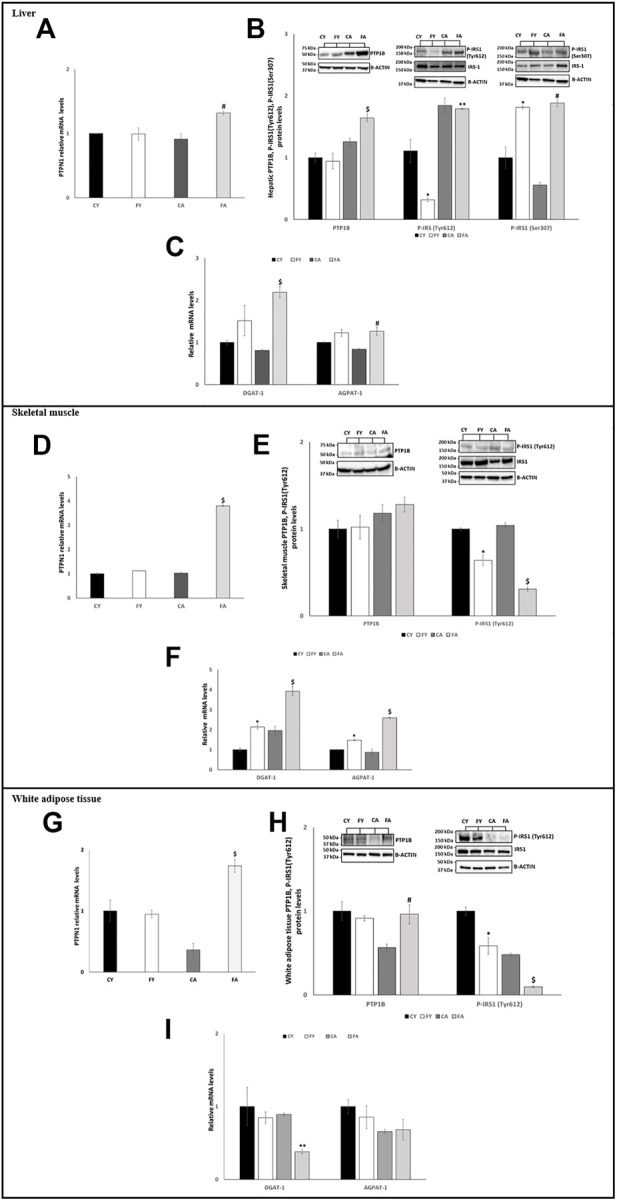
Dietary high fructose (HFrD) is known as a metabolic disruptor contributing to the development of obesity, diabetes, and dyslipidemia. Children are more sensitive to sugar than adults due to the distinct metabolic profile, therefore it is especially relevant to study the metabolic alterations induced by HFrD and the mechanisms underlying such changes in animal models of different ages. Emerging research suggests the fundamental role of epigenetic factors such as microRNAs (miRNAs) in metabolic tissue injury. In this perspective, the aim of the present study was to investigate the involvement of miR-122-5p, miR-34a-5p, and miR-125b-5p examining the effects induced by fructose overconsumption and to evaluate whether a differential miRNA regulation exists between young and adult animals. We used young rats (30 days) and adult rats (90 days) fed on HFrD for a short period (2 weeks) as animal models. The results indicate that both young and adult rats fed on HFrD exhibit an increase in systemic oxidative stress, the establishment of an inflammatory state, and metabolic perturbations involving the relevant miRNAs and their axes. In the skeletal muscle of adult rats, HFrD impair insulin sensitivity and triglyceride accumulation affecting the miR-122-5p/PTP1B/P-IRS-1(Tyr612) axis. In liver and skeletal muscle, HFrD acts on miR-34a-5p/SIRT-1: AMPK pathway resulting in a decrease of fat oxidation and an increase in fat synthesis. In addition, liver and skeletal muscle of young and adult rats exhibit an imbalance in antioxidant enzyme. Finally, HFrD modulates miR-125b-5p expression levels in liver and white adipose tissue determining modifications in lipogenesis. Therefore, miRNA modulation displays a specific tissue trend indicative of a regulatory network that contributes in targeting genes of various pathways, subsequently yielding extensive effects on cell metabolism.
饮食中的高果糖(HFrD)是一种代谢干扰物,会导致肥胖、糖尿病和血脂异常。由于代谢特征不同,儿童对糖比成人更敏感,因此在不同年龄的动物模型中研究HFrD诱导的代谢改变及其潜在机制尤为重要。新兴研究表明,诸如微小RNA(miRNA)等表观遗传因素在代谢组织损伤中起重要作用。从这个角度来看,本研究的目的是通过研究果糖过量摄入所诱导的影响,来探究miR-122-5p、miR-34a-5p和miR-125b-5p的作用,并评估幼年和成年动物之间是否存在不同的miRNA调控。我们使用短期(2周)喂食HFrD的幼年大鼠(30天)和成年大鼠(90天)作为动物模型。结果表明,喂食HFrD的幼年和成年大鼠均表现出全身氧化应激增加、炎症状态的建立以及涉及相关miRNA及其轴的代谢紊乱。在成年大鼠的骨骼肌中,HFrD损害胰岛素敏感性和甘油三酯积累,影响miR-122-5p/PTP1B/P-IRS-1(Tyr612)轴。在肝脏和骨骼肌中,HFrD作用于miR-34a-5p/SIRT-1:AMPK途径,导致脂肪氧化减少和脂肪合成增加。此外,幼年和成年大鼠的肝脏和骨骼肌抗氧化酶失衡。最后,HFrD调节肝脏和白色脂肪组织中miR-125b-5p的表达水平,从而决定脂肪生成的改变。因此,miRNA调节呈现出特定的组织趋势,表明存在一个调控网络,该网络有助于靶向各种途径的基因,进而对细胞代谢产生广泛影响。