Department of Clinical Laboratory Medicine, Nagoya City University Hospital, Nagoya, Japan.
Department of Gastroenterology and Hepatology, Faculty of Life Sciences, Kumamoto University, Kumamoto, Japan.
Clin Mol Hepatol. 2023 Oct;29(4):851-868. doi: 10.3350/cmh.2022.0434. Epub 2023 Mar 9.
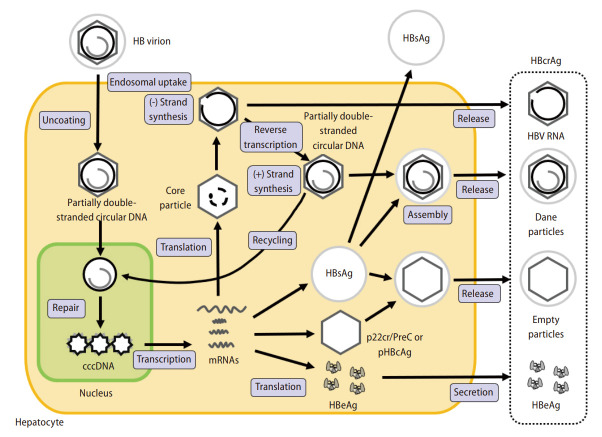
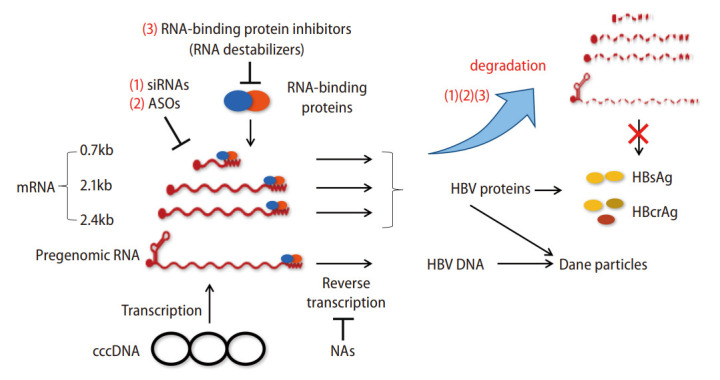
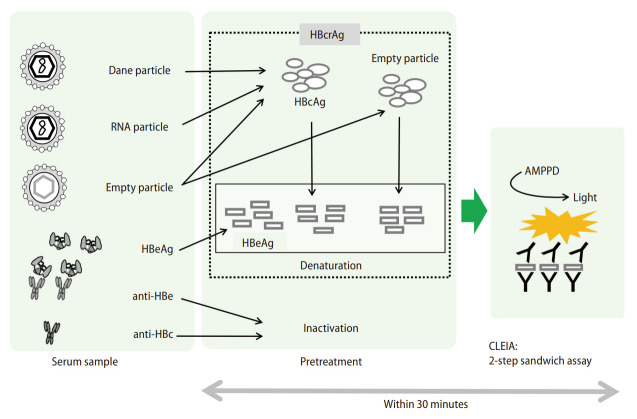
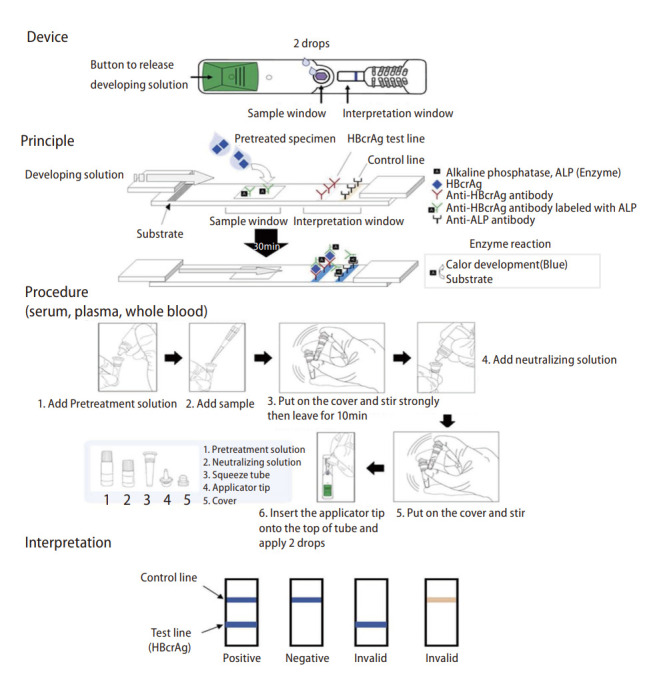
The current requirement for biomarkers to detect hepatitis B virus (HBV) infection is polarized. One is a fully-automated and highly sensitive measurement system; the other is a simple system for point-of-care testing (POCT) in resource-limited areas. Hepatitis B core-related antigen (HBcrAg) reflects intrahepatic covalently closed circular DNA and serum HBV DNA. Even in patients with undetectable serum HBV DNA or HBsAg loss, HBcrAg may remain detectable. Decreased HBcrAg levels are associated with reduction of the occurrence of hepatocellular carcinoma (HCC) in chronic hepatitis B. Recently, a fully-automated, novel high-sensitivity HBcrAg assay (iTACT-HBcrAg, cut-off value: 2.1 logIU/mL) has been developed. This attractive assay has been released in Japan very recently. iTACT-HBcrAg can be useful for monitoring HBV reactivation and prediction of HCC occurrence, as an alternative to HBV DNA. Moreover, monitoring HBcrAg may be suitable for determining the therapeutic effectiveness of approved drugs and novel drugs under development. Presently, international guidelines recommend anti-HBV prophylaxis for pregnant women with high viral loads to prevent mother-to-child transmission of HBV. However, >95% of HBV-infected individuals live in countries where HBV DNA quantification is not available. Worldwide elimination of HBV needs the scaling-up of examination and medication services in resource-limited areas. Based on this situation, a rapid and easy HBcrAg assay as a POCT is valuable. This review provides the latest information regarding the clinical use of a new surrogate marker, HBcrAg, in HBV management, based on iTACT-HBcrAg or POCT, and introduces novel agents targeting HBV RNA/protein.
目前,用于检测乙型肝炎病毒 (HBV) 感染的生物标志物需求存在两极分化。一种是全自动、高灵敏度的测量系统;另一种是资源有限地区即时检测 (POCT) 的简单系统。乙型肝炎核心相关抗原 (HBcrAg) 反映了肝内共价闭合环状 DNA 和血清 HBV DNA。即使在血清 HBV DNA 或 HBsAg 丢失不可检测的患者中,HBcrAg 仍可能被检测到。HBcrAg 水平降低与慢性乙型肝炎中肝细胞癌 (HCC) 发生减少相关。最近,一种全自动、新型高灵敏度 HBcrAg 检测方法(iTACT-HBcrAg,检测限:2.1 logIU/mL)已经开发出来。这种具有吸引力的检测方法最近在日本发布。iTACT-HBcrAg 可用于监测 HBV 再激活和 HCC 发生的预测,作为 HBV DNA 的替代物。此外,监测 HBcrAg 可能适合确定已批准药物和正在开发的新药的治疗效果。目前,国际指南建议对病毒载量高的孕妇进行抗 HBV 预防,以防止 HBV 母婴传播。然而,超过 95%的 HBV 感染者生活在无法进行 HBV DNA 定量的国家。在全球范围内消除 HBV 需要在资源有限的地区扩大检查和药物服务。基于这种情况,一种快速、简便的 HBcrAg POCT 作为替代物具有重要价值。本综述基于 iTACT-HBcrAg 或 POCT,提供了新的替代标志物 HBcrAg 在 HBV 管理中的最新临床应用信息,并介绍了针对 HBV RNA/蛋白的新型药物。