Medicinal Materials Research Center, Biomedical Research Division, Korea Institute of Science and Technology, Seoul, 02792, Republic of Korea.
Department of Pharmacy, College of Pharmacy, Kyung Hee University, Seoul, 02447, Republic of Korea.
J Nanobiotechnology. 2023 Mar 9;21(1):82. doi: 10.1186/s12951-023-01824-3.
Glycol chitosan nanoparticles (CNPs) have emerged as an effective drug delivery system for cancer diagnosis and treatment. Although they have great biocompatibility owing to biodegradable chemical structure and low immunogenicity, sufficient information on in vivo toxicity to understand the potential risks depending on the repeated high-dose have not been adequately studied. Herein, we report the results of in vivo toxicity evaluation for CNPs focused on the number and dose of administration in healthy mice to provide a toxicological guideline for a better clinical application of CNPs.
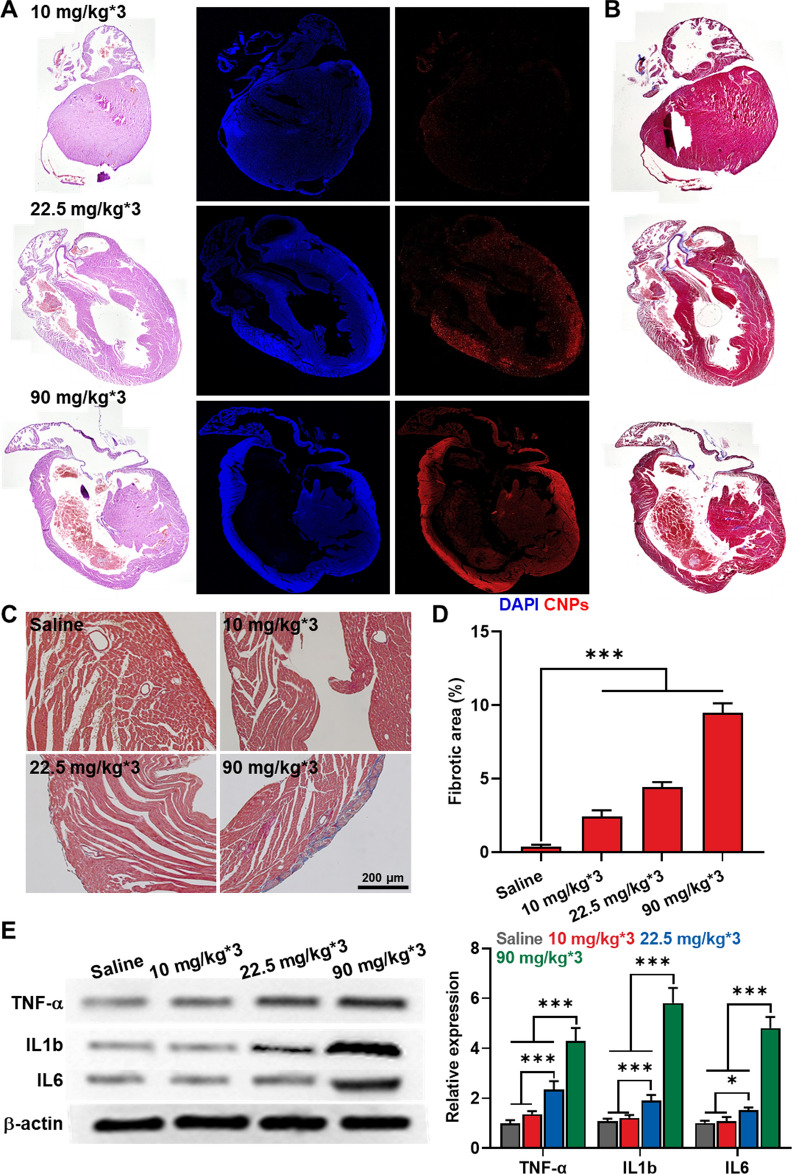
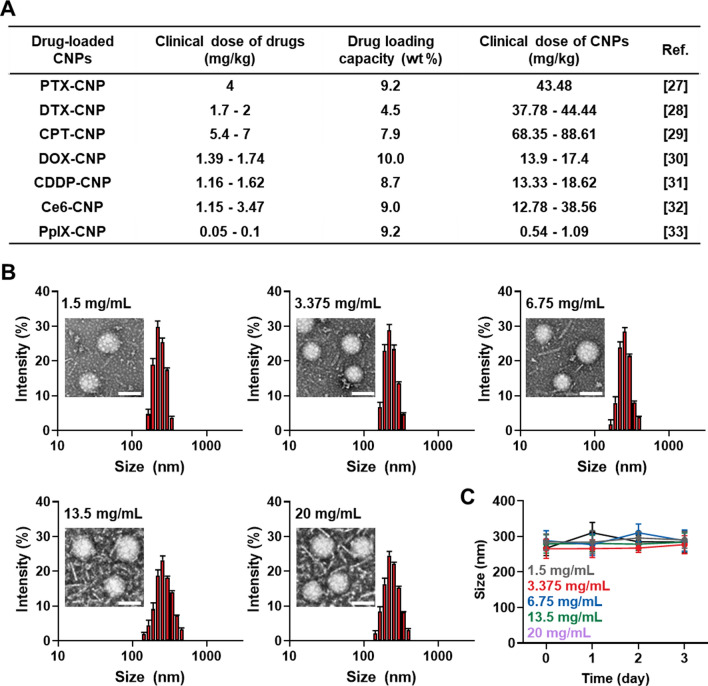
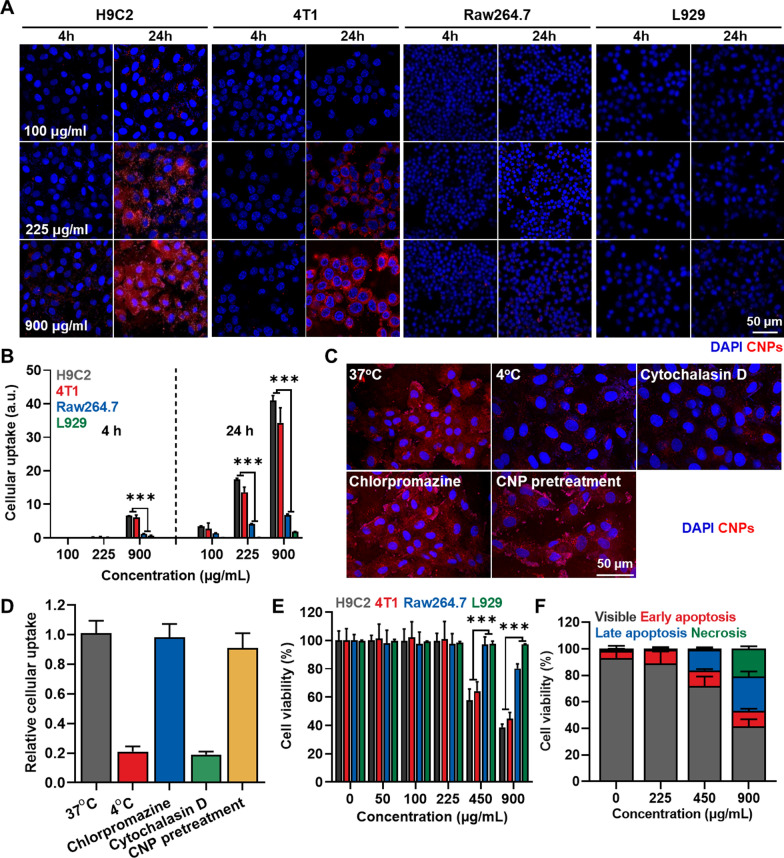
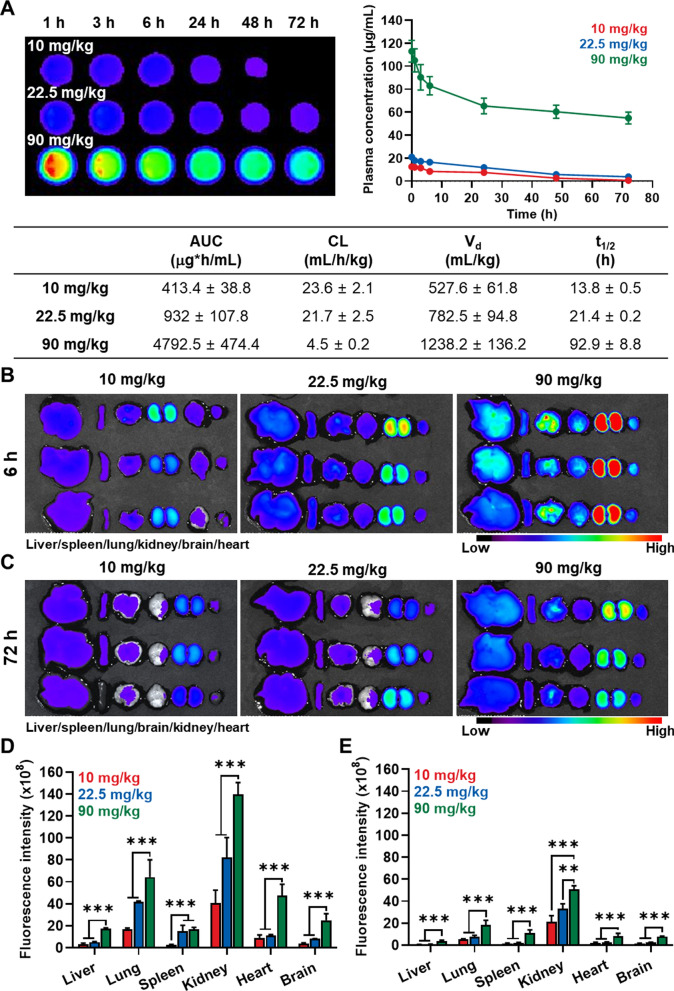
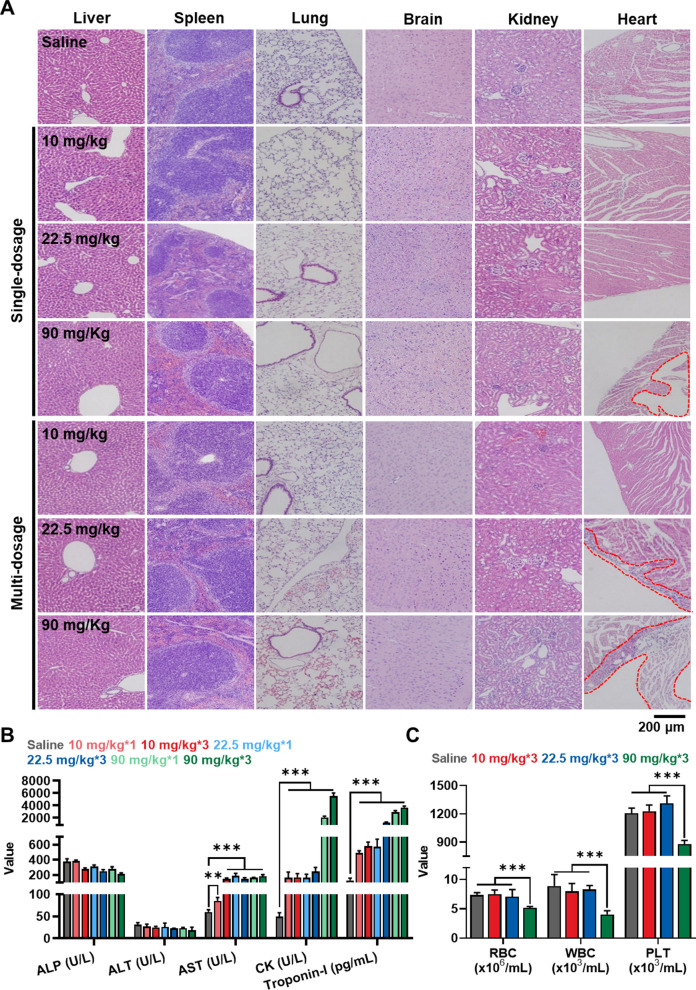
The CNPs were prepared by conjugating hydrophilic glycol chitosan with hydrophobic 5β-cholanic acid and the amphiphilic glycol chitosan-5β-cholanic acid formed self-assembled nanoparticles with its concentration-dependent homogeneous size distributions (265.36-288.3 nm) in aqueous condition. In cell cultured system, they showed significantly high cellular uptake in breast cancer cells (4T1) and cardiomyocytes (H9C2) than in fibroblasts (L929) and macrophages (Raw264.7) in a dose- and time-dependent manners, resulting in severe necrotic cell death in H9C2 at a clinically relevant highly concentrated condition. In particular, when the high-dose (90 mg/kg) of CNPs were intravenously injected into the healthy mice, considerable amount was non-specifically accumulated in major organs (liver, lung, spleen, kidney and heart) after 6 h of injection and sustainably retained for 72 h. Finally, repeated high-dose of CNPs (90 mg/kg, three times) induced severe cardiotoxicity accompanying inflammatory responses, tissue damages, fibrotic changes and organ dysfunction.
This study demonstrates that repeated high-dose CNPs induce severe cardiotoxicity in vivo. Through the series of toxicological assessments in the healthy mice, this study provides a toxicological guideline that may expedite the application of CNPs in the clinical settings.
糖基壳聚糖纳米粒(CNPs)已成为癌症诊断和治疗的有效药物传递系统。尽管由于其可生物降解的化学结构和低免疫原性,它们具有很好的生物相容性,但对于重复高剂量下的体内毒性的充分信息,以了解潜在风险的了解还不够充分。在此,我们报告了针对健康小鼠中 CNPs 的体内毒性评估结果,重点关注给药次数和剂量,以为 CNPs 的更好临床应用提供毒理学指南。
CNPs 是通过将亲水性的糖基壳聚糖与疏水性的 5β-胆酸偶联制备的,形成的两亲性糖基壳聚糖-5β-胆酸在其浓度依赖性均一的尺寸分布(265.36-288.3nm)下自组装成纳米粒。在细胞培养体系中,它们在乳腺癌细胞(4T1)和心肌细胞(H9C2)中的细胞摄取量显著高于成纤维细胞(L929)和巨噬细胞(Raw264.7),并且在临床相关的高浓度条件下导致 H9C2 严重的坏死性细胞死亡。特别是,当高剂量(90mg/kg)的 CNPs 静脉注射到健康小鼠中时,在注射后 6h 内大量非特异性地积聚在主要器官(肝、肺、脾、肾和心脏)中,并可持续保留 72h。最后,重复高剂量的 CNPs(90mg/kg,三次)导致严重的心脏毒性,伴有炎症反应、组织损伤、纤维化变化和器官功能障碍。
本研究表明,重复高剂量的 CNPs 会在体内引起严重的心脏毒性。通过对健康小鼠的一系列毒理学评估,本研究提供了一个毒理学指南,可能会加速 CNPs 在临床环境中的应用。