University of Western Ontario & Canadian Rivers Institute, 1156 Richmond Street, London, Ontario N6A 3K8, Canada.
Ecohydrology Research Group and The Water Institute, University of Waterloo, 200 University Avenue West, Waterloo, Ontario N2L 3G1, Canada.
Environ Sci Technol. 2023 Mar 21;57(11):4643-4655. doi: 10.1021/acs.est.2c06285. Epub 2023 Mar 10.
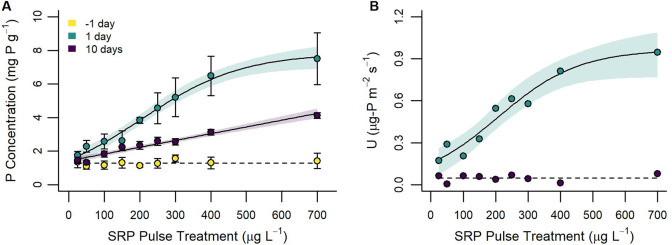
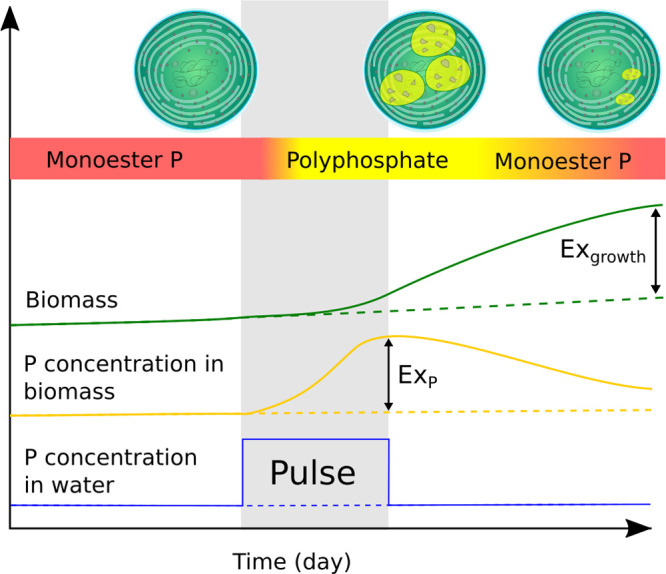
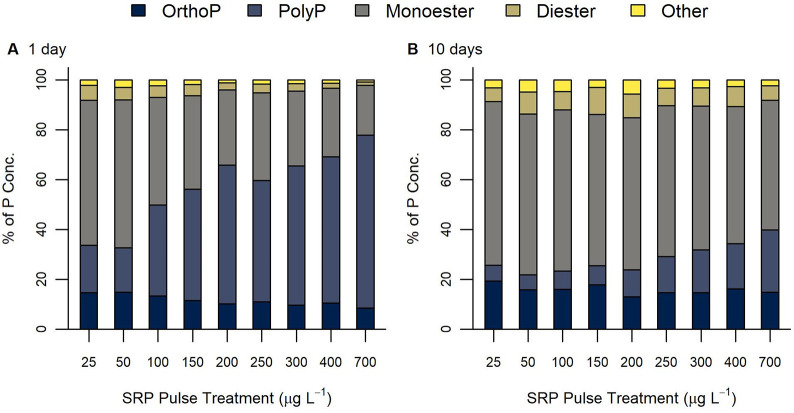
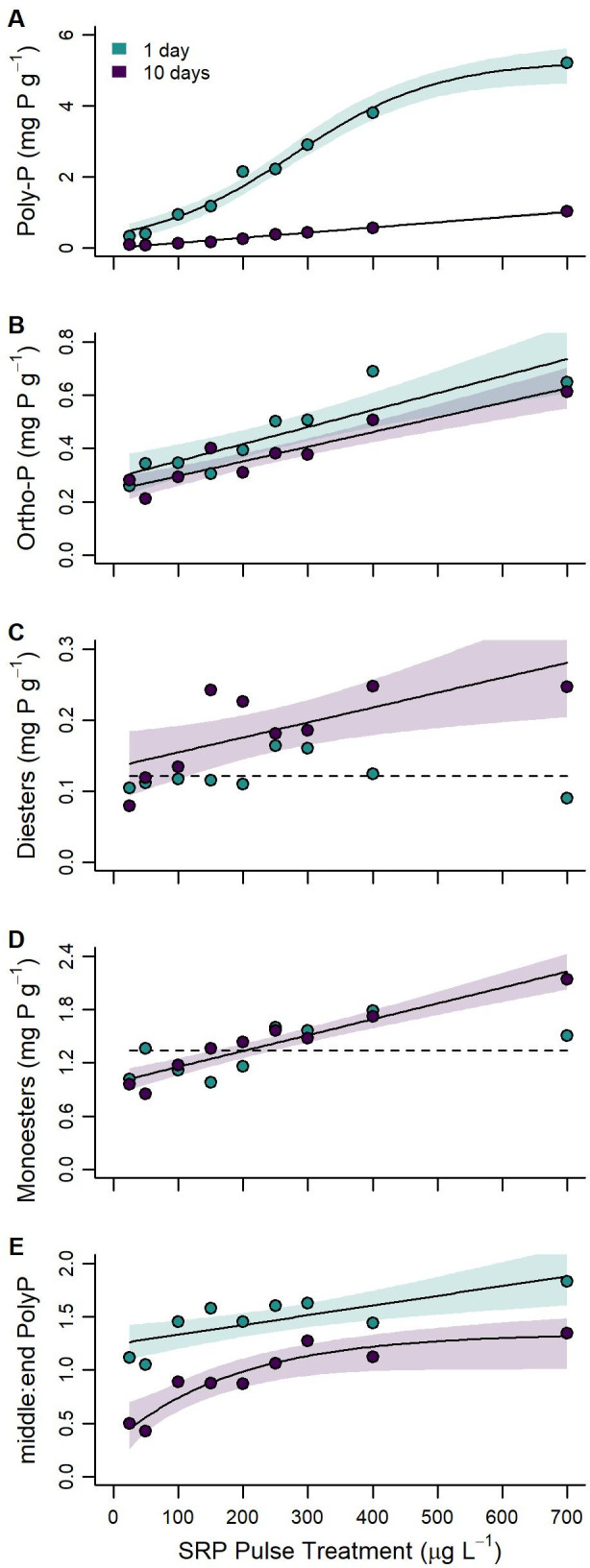
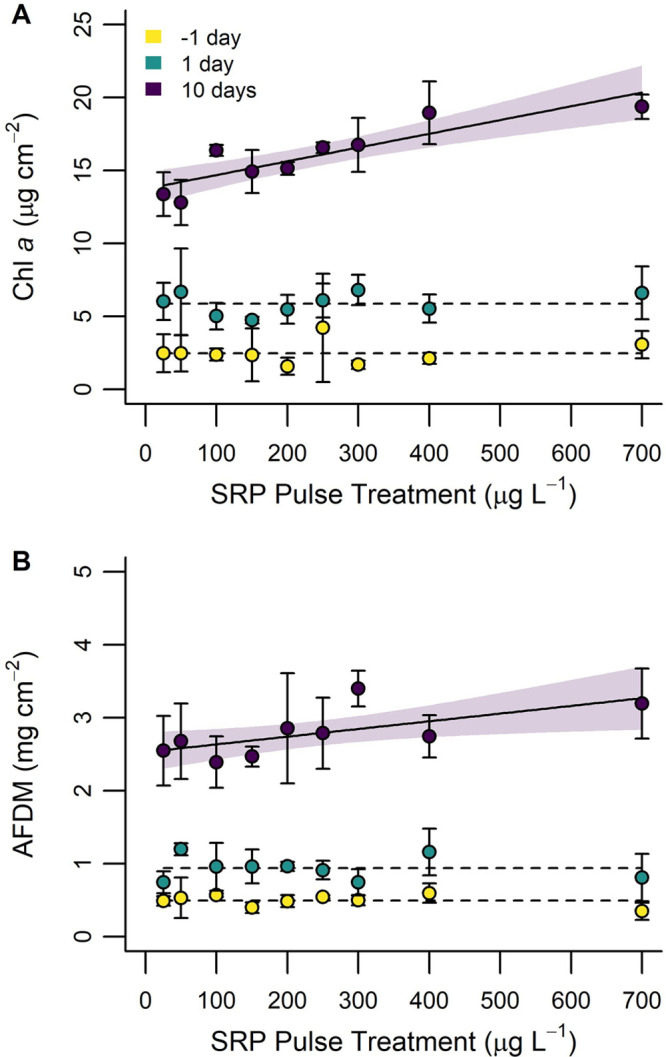
Effective modeling and management of phosphorus (P) losses from landscapes to receiving waterbodies requires an adequate understanding of P retention and remobilization along the terrestrial-aquatic continuum. Within aquatic ecosystems, the stream periphyton can transiently store bioavailable P through uptake and incorporation into biomass during subscouring and baseflow conditions. However, the capacity of stream periphyton to respond to dynamic P concentrations, which are ubiquitous in streams, is largely unknown. Our study used artificial streams to impose short periods (48 h) of high SRP concentration on stream periphyton acclimated to P scarcity. We examined periphyton P content and speciation through nuclear magnetic resonance spectroscopy to elucidate the intracellular storage and transformation of P taken up across a gradient of transiently elevated SRP availabilities. Our study demonstrates that the stream periphyton not only takes up significant quantities of P following a 48-h high P pulse but also sustains supplemental growth over extended periods of time (10 days), following the reestablishment of P scarcity by efficiently assimilating P stored as polyphosphates into functional biomass (i.e., phospho-monoesters and phospho-diesters). Although P uptake and intracellular storage approached an upper limit across the experimentally imposed SRP pulse gradient, our findings demonstrate the previously underappreciated extent to which the periphyton can modulate the timing and magnitude of P delivery from streams. Further elucidating these intricacies in the transient storage potential of periphyton highlights opportunities to enhance the predictive capacity of watershed nutrient models and potentially improve watershed P management.
要有效对景观向受纳水体的磷(P)流失进行建模和管理,就需要充分了解陆地-水域连续体中 P 的保留和再移动。在水生生态系统中,溪流周丛生物可以通过在冲刷和基流条件下吸收和将生物可利用的 P 纳入生物量,暂时储存可利用的 P。然而,溪流周丛生物对普遍存在于溪流中的动态 P 浓度的响应能力在很大程度上是未知的。我们的研究使用人工溪流在适应 P 匮乏的溪流周丛生物上施加短期(48 小时)高 SRP 浓度。我们通过核磁共振波谱法检查周丛生物 P 含量和形态,以阐明在瞬态升高的 SRP 可利用性梯度上吸收的 P 的细胞内储存和转化。我们的研究表明,溪流周丛生物不仅在 48 小时的高 P 脉冲后吸收了大量的 P,而且在 P 匮乏重新建立后,通过将多磷酸盐有效地同化到功能生物量中(即磷酸单酯和磷酸二酯),还能维持长时间的补充生长(10 天)。尽管 P 的吸收和细胞内储存达到了实验施加的 SRP 脉冲梯度的上限,但我们的研究结果表明,周丛生物在调节 P 从溪流中释放的时间和幅度方面的作用,此前被低估了。进一步阐明周丛生物的这种瞬态储存潜力的复杂性,为提高流域养分模型的预测能力和潜在改善流域 P 管理提供了机会。