Kamel Maryam, Moustafa Ibrahim M, Kim Meeyoung, Oakley Paul A, Harrison Deed E
Department of Physiotherapy, College of Health Sciences, University of Sharjah, Sharjah 27272, United Arab Emirates.
Neuromusculoskeletal Rehabilitation Research Group, Research Institute of Medical and Health Sciences, University of Sharjah, Sharjah 27272, United Arab Emirates.
J Clin Med. 2023 Feb 23;12(5):1780. doi: 10.3390/jcm12051780.
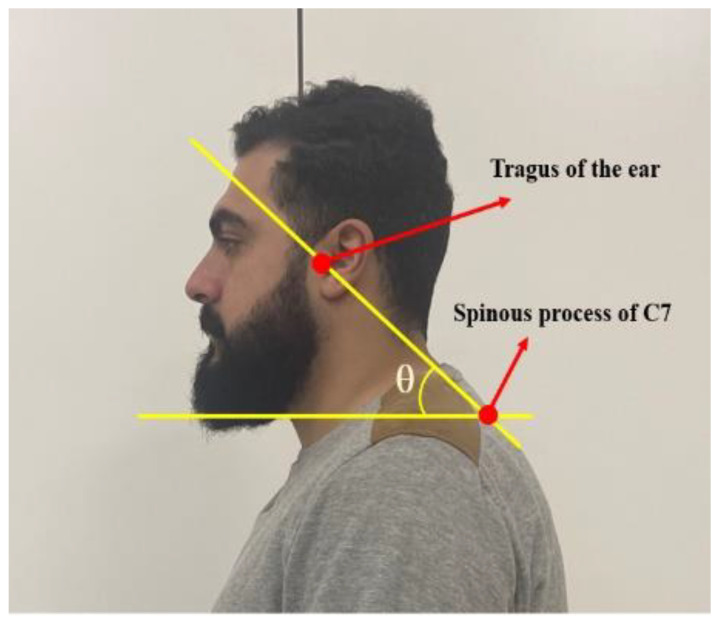
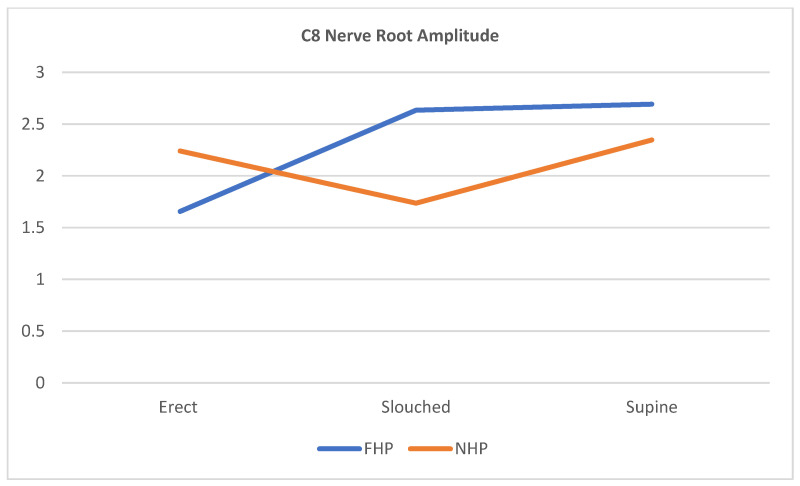
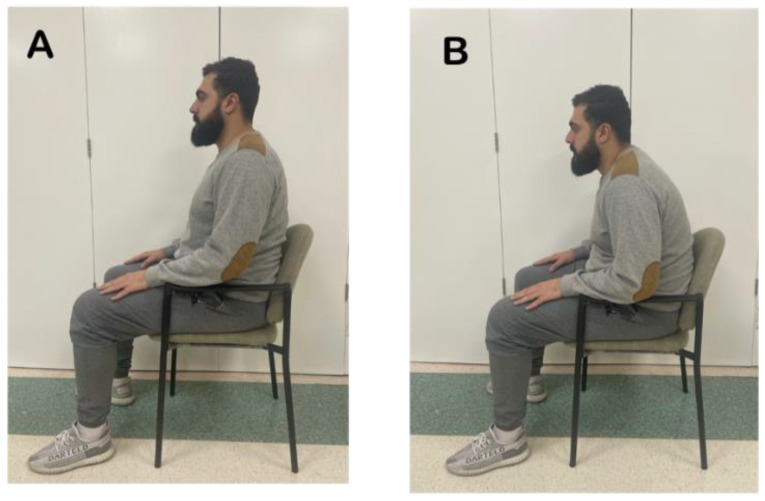
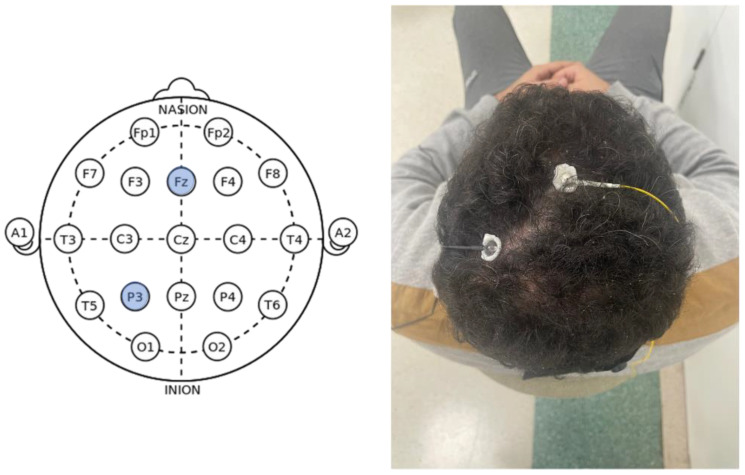
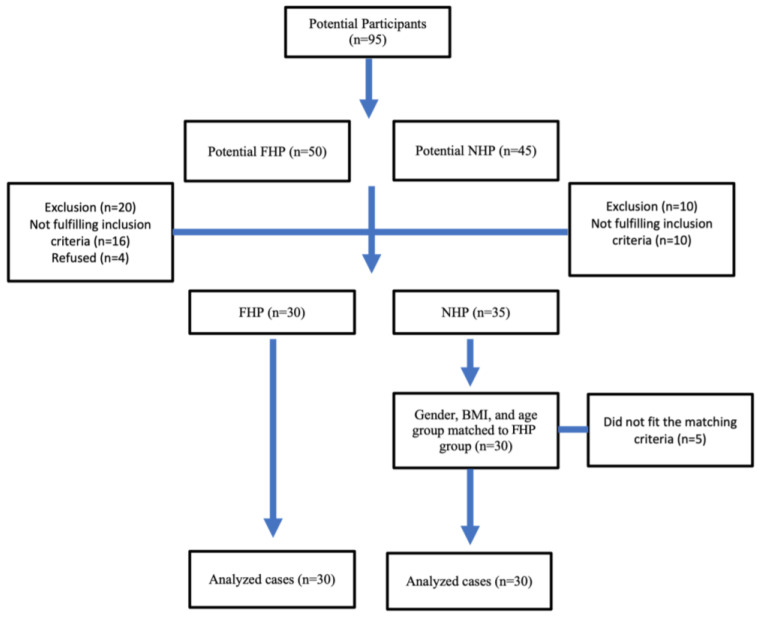
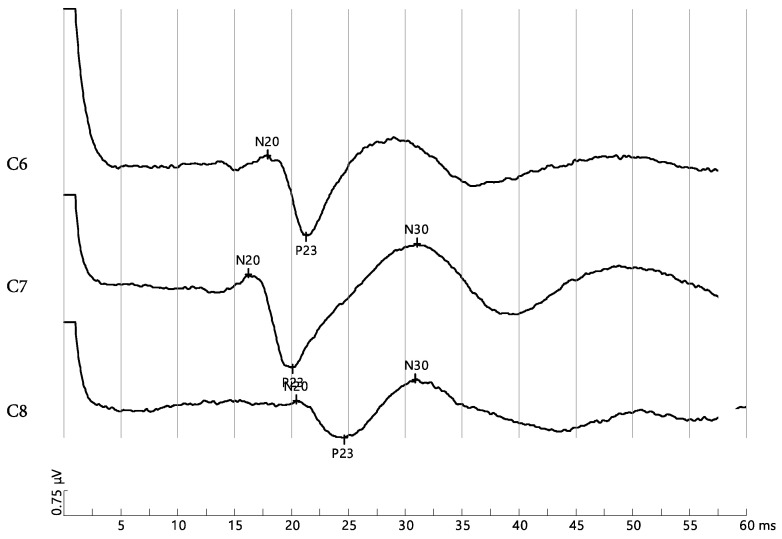
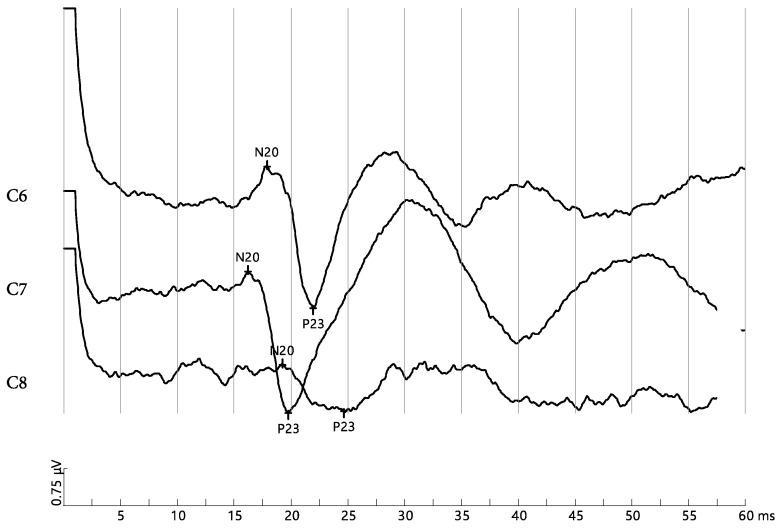
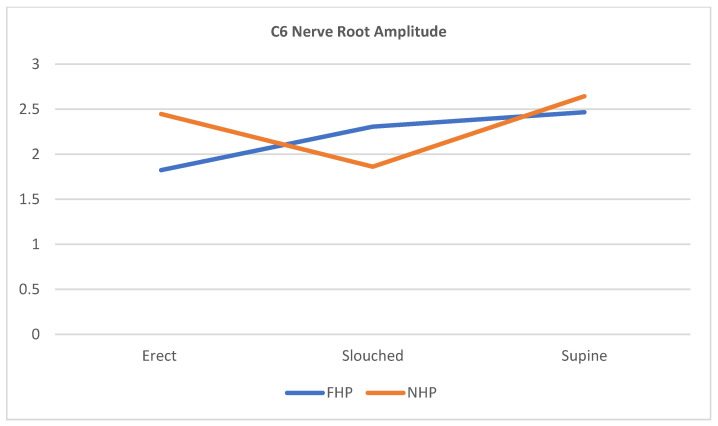
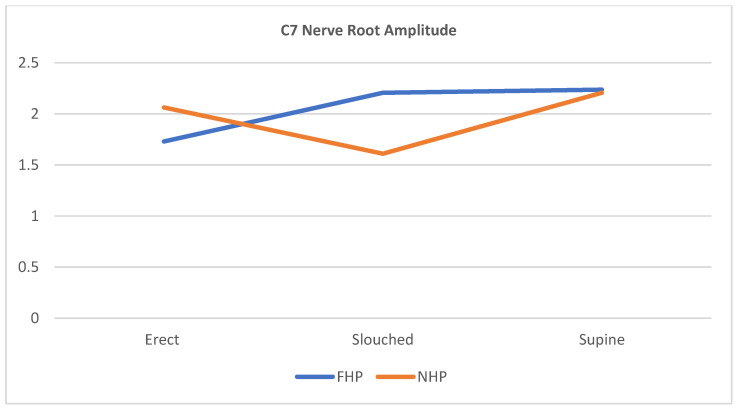
The current study aimed to determine whether participants with and without forward head posture (FHP) would respond differently in cervical nerve root function to various sitting positions. We measured peak-to-peak dermatomal somatosensory-evoked potentials (DSSEPs) in 30 participants with FHP and in 30 participants matched for age, sex, and body mass index (BMI) with normal head posture (NHP), defined as having a craniovertebral angle (CVA) >55°. Additional inclusion criteria for recruitment were individuals between the ages of 18 and 28 who were in good health and had no musculoskeletal pain. All 60 participants underwent C6, C7, and C8 DSSEPs evaluation. The measurements were taken in three positions: erect sitting, slouched sitting, and supine. We identified statistically significant differences in the cervical nerve root function in all postures between the NHP and FHP groups ( < 0.001), indicating that the FHP and NHP reacted differently in different positions. No significant differences between groups for the DSSEPs were identified for the supine position ( > 0.05), in contrast to the erect and slouched sitting positions, which showed a significant difference in nerve root function between the NHP and FHP ( < 0.001). The NHP group results were consistent with the prior literature and had the greatest DSSEP peaks when in the upright position. However, the participants in the FHP group demonstrated the largest peak-to-peak amplitude of DSSEPs while in the slouched position as opposed to an erect position. The optimal sitting posture for cervical nerve root function may be dependent upon the underlying CVA of a person, however, further research is needed to corroborate these findings.
本研究旨在确定有无头部前倾姿势(FHP)的参与者在不同坐姿下颈神经根功能的反应是否存在差异。我们测量了30名有FHP的参与者以及30名年龄、性别和体重指数(BMI)相匹配且头部姿势正常(NHP)(定义为颅椎角(CVA)>55°)的参与者的峰峰值皮节体感诱发电位(DSSEPs)。招募的其他纳入标准为年龄在18至28岁之间、身体健康且无肌肉骨骼疼痛的个体。所有60名参与者均接受了C6、C7和C8的DSSEPs评估。测量在三个姿势下进行:直立坐姿、弯腰坐姿和仰卧位。我们发现NHP组和FHP组在所有姿势下的颈神经根功能存在统计学显著差异(<0.001),表明FHP和NHP在不同姿势下反应不同。与直立和弯腰坐姿不同,仰卧位时两组DSSEPs未发现显著差异(>0.05),直立和弯腰坐姿时NHP组和FHP组的神经根功能存在显著差异(<0.001)。NHP组的结果与先前文献一致,直立位时DSSEP峰值最大。然而,FHP组的参与者在弯腰姿势而非直立姿势时DSSEPs的峰峰值幅度最大。颈神经根功能的最佳坐姿可能取决于个体潜在的CVA,然而,需要进一步研究来证实这些发现。