• 文献检索
  • 文档翻译
  • 深度研究
  • 学术资讯
  • Suppr Zotero 插件Zotero 插件
  • 邀请有礼
  • 套餐&价格
  • 历史记录
应用&插件
Suppr Zotero 插件Zotero 插件浏览器插件Mac 客户端Windows 客户端微信小程序
定价
高级版会员购买积分包购买API积分包
服务
文献检索文档翻译深度研究API 文档MCP 服务
关于我们
关于 Suppr公司介绍联系我们用户协议隐私条款
关注我们

Suppr 超能文献

核心技术专利:CN118964589B侵权必究
粤ICP备2023148730 号-1Suppr @ 2026

文献检索

告别复杂PubMed语法,用中文像聊天一样搜索,搜遍4000万医学文献。AI智能推荐,让科研检索更轻松。

立即免费搜索

文件翻译

保留排版,准确专业,支持PDF/Word/PPT等文件格式,支持 12+语言互译。

免费翻译文档

深度研究

AI帮你快速写综述,25分钟生成高质量综述,智能提取关键信息,辅助科研写作。

立即免费体验

低交通量道路的可持续二元混合——基于可靠性的设计方法与碳足迹分析

Sustainable Binary Blending for Low-Volume Roads-Reliability-Based Design Approach and Carbon Footprint Analysis.

作者信息

Amulya Gudla, Moghal Arif Ali Baig, Almajed Abdullah

机构信息

Department of Civil Engineering, National Institute of Technology Warangal, Warangal 506004, India.

Department of Civil Engineering, College of Engineering, King Saud University, P.O. Box 800, Riyadh 11421, Saudi Arabia.

出版信息

Materials (Basel). 2023 Mar 2;16(5):2065. doi: 10.3390/ma16052065.

DOI:10.3390/ma16052065
PMID:36903183
原文链接:https://pmc.ncbi.nlm.nih.gov/articles/PMC10003833/
Abstract

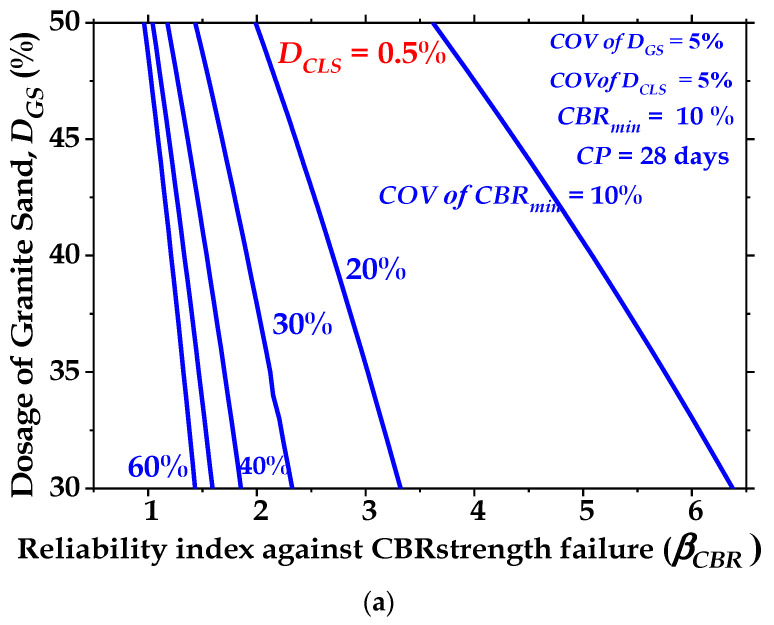
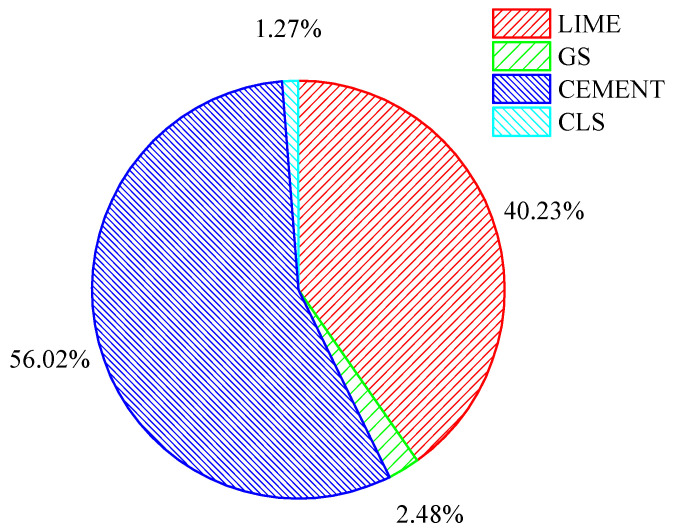
The utilization of industrial by-products as stabilizers is gaining attention from the sustainability perspective. Along these lines, granite sand (GS) and calcium lignosulfonate (CLS) are used as alternatives to traditional stabilizers for cohesive soil (clay). The unsoaked California Bearing Ratio (CBR) was taken as a performance indicator (as a subgrade material for low-volume roads). A series of tests were performed by varying the dosages of GS (30%, 40%, and 50%) and CLS (0.5%, 1%, 1.5%, and 2%) for different curing periods (0, 7, and 28 days). This study revealed that the optimal dosages of granite sand (GS) are 35%, 34%, 33%, and 32% for dosages of calcium lignosulfonate (CLS) of 0.5%, 1.0%, 1.5%, and 2.0%, respectively. These values are needed to maintain a reliability index greater than or equal to 3.0 when the coefficient of variation (COV) of the minimum specified value of the CBR is 20% for a 28-day curing period. The proposed RBDO (reliability-based design optimization) presents an optimal design methodology for designing low-volume roads when GS and CLS are blended for clay soils. The optimal mix, i.e., 70% clay blended with 30% GS and 0.5% CLS (exhibiting the highest CBR value) is considered an appropriate dosage for the pavement subgrade material. Carbon footprint analysis (CFA) was performed on a typical pavement section according to Indian Road Congress recommendations. It is observed that the use of GS and CLS as stabilizers of clay reduces the carbon energy by 97.52% and 98.53% over the traditional stabilizers lime and cement at 6% and 4% dosages, respectively.

摘要

从可持续发展的角度来看,利用工业副产品作为稳定剂正受到关注。基于此,花岗岩砂(GS)和木质素磺酸钙(CLS)被用作粘性土(粘土)传统稳定剂的替代品。未浸泡的加州承载比(CBR)被用作性能指标(作为低交通量道路的路基材料)。通过改变GS(30%、40%和50%)和CLS(0.5%、1%、1.5%和2%)的剂量,针对不同养护期(0、7和28天)进行了一系列试验。本研究表明,对于木质素磺酸钙(CLS)剂量分别为0.5%、1.0%、1.5%和2.0%时,花岗岩砂(GS)的最佳剂量分别为35%、34%、33%和32%。当CBR最小规定值的变异系数(COV)为20%且养护期为28天时,需要这些值来维持可靠性指标大于或等于3.0。所提出的基于可靠性的设计优化(RBDO)为GS和CLS混合用于粘土时设计低交通量道路提供了一种优化设计方法。最佳混合料,即70%粘土与30% GS和0.5% CLS混合(表现出最高的CBR值)被认为是路面路基材料的合适剂量。根据印度公路大会的建议,对一个典型路面路段进行了碳足迹分析(CFA)。可以观察到,使用GS和CLS作为粘土稳定剂时,与分别以6%和4%剂量使用的传统稳定剂石灰和水泥相比,碳能源分别减少了97.52%和98.53%。
https://cdn.ncbi.nlm.nih.gov/pmc/blobs/8d4e/10003833/386ca3d31fda/materials-16-02065-g020.jpg
https://cdn.ncbi.nlm.nih.gov/pmc/blobs/8d4e/10003833/23e56ac8826e/materials-16-02065-g001.jpg
https://cdn.ncbi.nlm.nih.gov/pmc/blobs/8d4e/10003833/e0c8b6de7fed/materials-16-02065-g002.jpg
https://cdn.ncbi.nlm.nih.gov/pmc/blobs/8d4e/10003833/7a712f701250/materials-16-02065-g003.jpg
https://cdn.ncbi.nlm.nih.gov/pmc/blobs/8d4e/10003833/d80f7bf90afc/materials-16-02065-g004.jpg
https://cdn.ncbi.nlm.nih.gov/pmc/blobs/8d4e/10003833/1c2236388672/materials-16-02065-g005.jpg
https://cdn.ncbi.nlm.nih.gov/pmc/blobs/8d4e/10003833/d31e2cd04e9d/materials-16-02065-g006.jpg
https://cdn.ncbi.nlm.nih.gov/pmc/blobs/8d4e/10003833/ef049db4af22/materials-16-02065-g007.jpg
https://cdn.ncbi.nlm.nih.gov/pmc/blobs/8d4e/10003833/1ff134ca2e82/materials-16-02065-g008.jpg
https://cdn.ncbi.nlm.nih.gov/pmc/blobs/8d4e/10003833/616afc9bb14d/materials-16-02065-g009.jpg
https://cdn.ncbi.nlm.nih.gov/pmc/blobs/8d4e/10003833/3676c2dd9ced/materials-16-02065-g010.jpg
https://cdn.ncbi.nlm.nih.gov/pmc/blobs/8d4e/10003833/aaa54ecbdeab/materials-16-02065-g011.jpg
https://cdn.ncbi.nlm.nih.gov/pmc/blobs/8d4e/10003833/3f6fbeffe917/materials-16-02065-g012.jpg
https://cdn.ncbi.nlm.nih.gov/pmc/blobs/8d4e/10003833/da52ba95f781/materials-16-02065-g013.jpg
https://cdn.ncbi.nlm.nih.gov/pmc/blobs/8d4e/10003833/eadf644685d3/materials-16-02065-g014.jpg
https://cdn.ncbi.nlm.nih.gov/pmc/blobs/8d4e/10003833/2b0fa0be6497/materials-16-02065-g015.jpg
https://cdn.ncbi.nlm.nih.gov/pmc/blobs/8d4e/10003833/04e75791ab94/materials-16-02065-g016.jpg
https://cdn.ncbi.nlm.nih.gov/pmc/blobs/8d4e/10003833/620baf6355f2/materials-16-02065-g017a.jpg
https://cdn.ncbi.nlm.nih.gov/pmc/blobs/8d4e/10003833/da89f9c56df2/materials-16-02065-g018.jpg
https://cdn.ncbi.nlm.nih.gov/pmc/blobs/8d4e/10003833/0f869c4e0071/materials-16-02065-g019.jpg
https://cdn.ncbi.nlm.nih.gov/pmc/blobs/8d4e/10003833/386ca3d31fda/materials-16-02065-g020.jpg
https://cdn.ncbi.nlm.nih.gov/pmc/blobs/8d4e/10003833/23e56ac8826e/materials-16-02065-g001.jpg
https://cdn.ncbi.nlm.nih.gov/pmc/blobs/8d4e/10003833/e0c8b6de7fed/materials-16-02065-g002.jpg
https://cdn.ncbi.nlm.nih.gov/pmc/blobs/8d4e/10003833/7a712f701250/materials-16-02065-g003.jpg
https://cdn.ncbi.nlm.nih.gov/pmc/blobs/8d4e/10003833/d80f7bf90afc/materials-16-02065-g004.jpg
https://cdn.ncbi.nlm.nih.gov/pmc/blobs/8d4e/10003833/1c2236388672/materials-16-02065-g005.jpg
https://cdn.ncbi.nlm.nih.gov/pmc/blobs/8d4e/10003833/d31e2cd04e9d/materials-16-02065-g006.jpg
https://cdn.ncbi.nlm.nih.gov/pmc/blobs/8d4e/10003833/ef049db4af22/materials-16-02065-g007.jpg
https://cdn.ncbi.nlm.nih.gov/pmc/blobs/8d4e/10003833/1ff134ca2e82/materials-16-02065-g008.jpg
https://cdn.ncbi.nlm.nih.gov/pmc/blobs/8d4e/10003833/616afc9bb14d/materials-16-02065-g009.jpg
https://cdn.ncbi.nlm.nih.gov/pmc/blobs/8d4e/10003833/3676c2dd9ced/materials-16-02065-g010.jpg
https://cdn.ncbi.nlm.nih.gov/pmc/blobs/8d4e/10003833/aaa54ecbdeab/materials-16-02065-g011.jpg
https://cdn.ncbi.nlm.nih.gov/pmc/blobs/8d4e/10003833/3f6fbeffe917/materials-16-02065-g012.jpg
https://cdn.ncbi.nlm.nih.gov/pmc/blobs/8d4e/10003833/da52ba95f781/materials-16-02065-g013.jpg
https://cdn.ncbi.nlm.nih.gov/pmc/blobs/8d4e/10003833/eadf644685d3/materials-16-02065-g014.jpg
https://cdn.ncbi.nlm.nih.gov/pmc/blobs/8d4e/10003833/2b0fa0be6497/materials-16-02065-g015.jpg
https://cdn.ncbi.nlm.nih.gov/pmc/blobs/8d4e/10003833/04e75791ab94/materials-16-02065-g016.jpg
https://cdn.ncbi.nlm.nih.gov/pmc/blobs/8d4e/10003833/620baf6355f2/materials-16-02065-g017a.jpg
https://cdn.ncbi.nlm.nih.gov/pmc/blobs/8d4e/10003833/da89f9c56df2/materials-16-02065-g018.jpg
https://cdn.ncbi.nlm.nih.gov/pmc/blobs/8d4e/10003833/0f869c4e0071/materials-16-02065-g019.jpg
https://cdn.ncbi.nlm.nih.gov/pmc/blobs/8d4e/10003833/386ca3d31fda/materials-16-02065-g020.jpg

相似文献

1
Sustainable Binary Blending for Low-Volume Roads-Reliability-Based Design Approach and Carbon Footprint Analysis.低交通量道路的可持续二元混合——基于可靠性的设计方法与碳足迹分析
Materials (Basel). 2023 Mar 2;16(5):2065. doi: 10.3390/ma16052065.
2
Road Pavement Thickness and Construction Depth Optimization Using Treated and Untreated Artificially-Synthesized Expansive Road Subgrade Materials with Varying Plasticity Index.使用具有不同塑性指数的经处理和未经处理的人工合成膨胀性道路路基材料优化道路路面厚度和施工深度
Materials (Basel). 2022 Apr 9;15(8):2773. doi: 10.3390/ma15082773.
3
Freeze-Dried β-Glucan and Poly-γ-glutamic Acid: An Efficient Stabilizer to Strengthen Subgrades of Low Compressible Fine-Grained Soils with Varying Curing Periods.冻干β-葡聚糖和聚γ-谷氨酸:一种有效的稳定剂,用于增强不同养护期的低压缩性细粒土路基。
Polymers (Basel). 2024 Jun 3;16(11):1586. doi: 10.3390/polym16111586.
4
Hydrophobic Effect of Soil Stabilization for a Sustainable Subgrade Soil Improvement.用于可持续路基土壤改良的土壤稳定疏水性效应
Materials (Basel). 2022 Apr 24;15(9):3087. doi: 10.3390/ma15093087.
5
Wet-Dry Cycles and Microstructural Characteristics of Expansive Subgrade Treated with Sustainable Cementitious Waste Materials.可持续胶凝废料处理膨胀土路基的干湿循环与微观结构特征
Materials (Basel). 2023 Apr 15;16(8):3124. doi: 10.3390/ma16083124.
6
Reusing COVID-19 disposable nitrile gloves to improve the mechanical properties of expansive clay subgrade: An innovative medical waste solution.重复使用新冠疫情一次性丁腈手套以改善膨胀土路基的力学性能:一种创新的医疗废物解决方案。
J Clean Prod. 2022 Nov 15;375:134086. doi: 10.1016/j.jclepro.2022.134086. Epub 2022 Sep 19.
7
The experimental procedures of sand and lime as base soil stabilization materials on the modified proctor values for flexible pavement construction.将沙子和石灰作为基层土壤稳定材料用于柔性路面施工时对修正普氏击实值的试验程序。
MethodsX. 2023 Nov 3;11:102473. doi: 10.1016/j.mex.2023.102473. eCollection 2023 Dec.
8
Experimental study on potential suitability of natural lime and waste ceramic dust in modifying properties of highly plastic clay.天然石灰与废陶瓷粉尘对高塑性黏土改性潜力适用性的试验研究
Heliyon. 2022 Oct 10;8(10):e10993. doi: 10.1016/j.heliyon.2022.e10993. eCollection 2022 Oct.
9
Analysis of the Mechanical Properties of a Stabilized Subgrade Type Soil under a Sustainable Approach for Construction.可持续建设方法下稳定路基土的力学性能分析
Materials (Basel). 2023 Sep 25;16(19):6395. doi: 10.3390/ma16196395.
10
Improving Weak Subgrade Soil Using Different Additives.使用不同添加剂改良软弱地基土
Materials (Basel). 2022 Jun 24;15(13):4462. doi: 10.3390/ma15134462.

引用本文的文献

1
Target reliability-based design optimization studies on cohesive soil amended with chitosan and casein for liner applications.基于目标可靠性的壳聚糖和酪蛋白改良粘性土用于衬垫的设计优化研究。
Sci Rep. 2024 Jun 20;14(1):14202. doi: 10.1038/s41598-024-64408-7.

本文引用的文献

1
Stabilization of heavy metal-contaminated soils by biochar: Challenges and recommendations.生物炭稳定重金属污染土壤:挑战与建议。
Sci Total Environ. 2020 Aug 10;729:139060. doi: 10.1016/j.scitotenv.2020.139060. Epub 2020 Apr 30.
2
Investigating the effect of lignosulfonate on erosion rate of the embankments constructed with clayey sand.研究木质素磺酸盐对用黏质砂土修筑的路堤侵蚀速率的影响。
ScientificWorldJournal. 2013 Dec 29;2013:587462. doi: 10.1155/2013/587462. eCollection 2013.