Zhang Yu, Ji Yundong, Cao Dongfeng, Zhang Hongyuan, Chen Hongda, Hu Haixiao
Foshan Xianhu Laboratory of the Advanced Energy Science and Technology Guangdong Laboratory, Foshan 528000, China.
State Key Laboratory of Advanced Technology for Materials Synthesis and Processing, Wuhan University of Technology, Wuhan 430070, China.
Polymers (Basel). 2023 Mar 2;15(5):1266. doi: 10.3390/polym15051266.
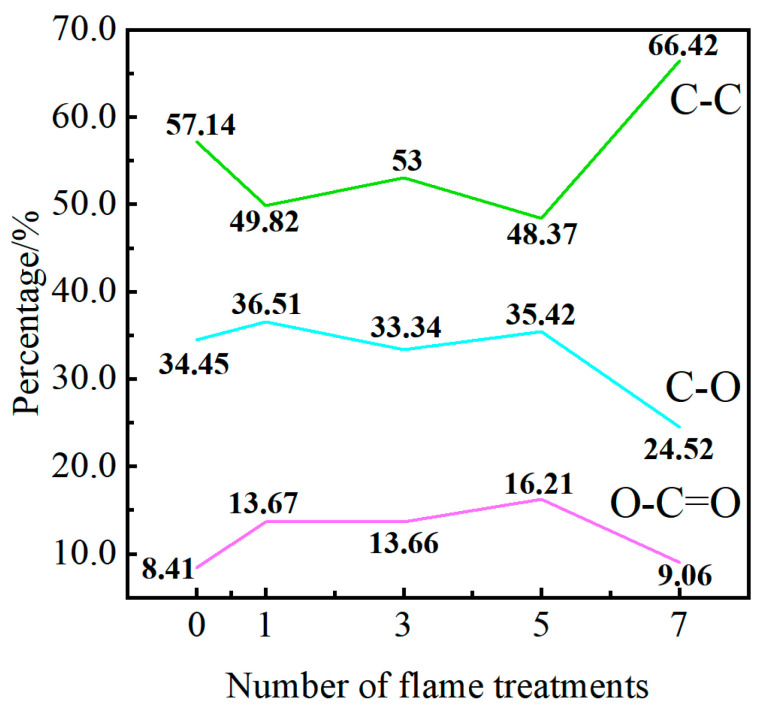
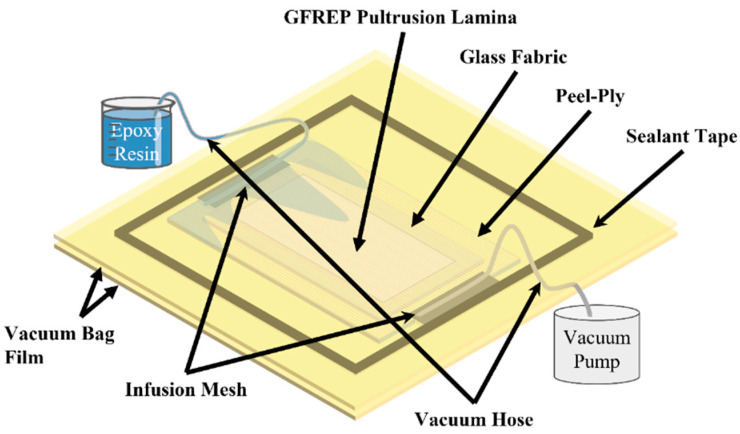
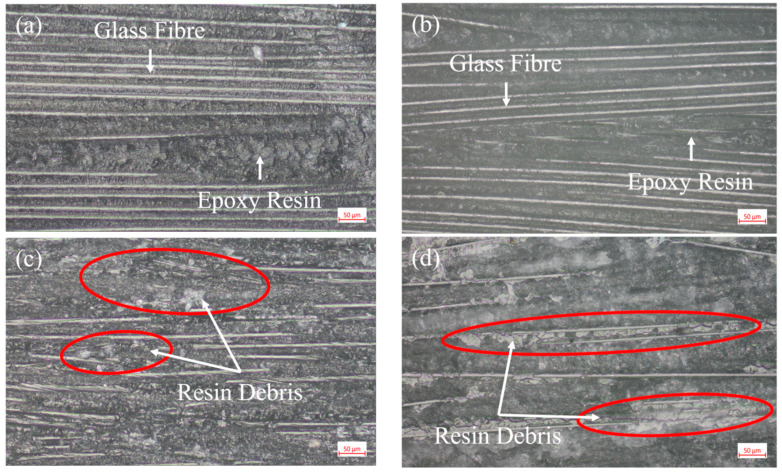
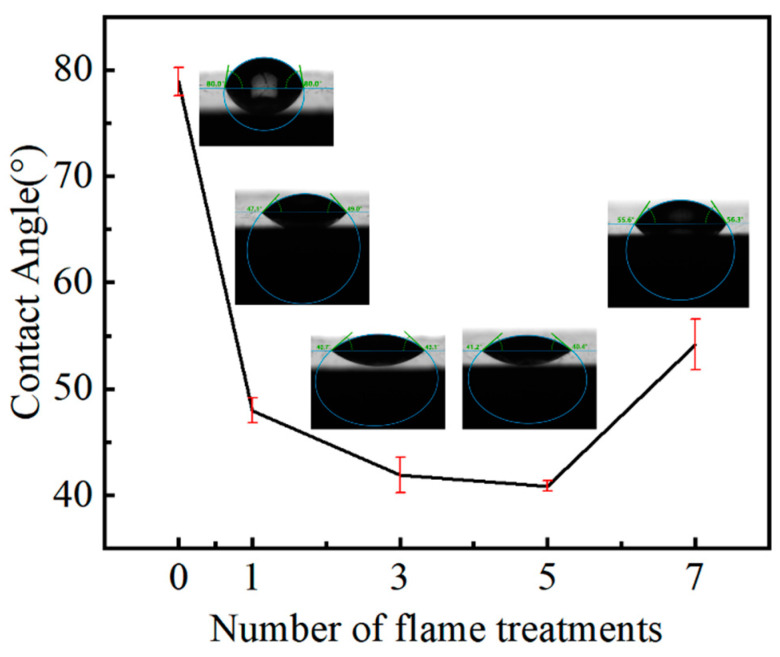
This paper presents an easy and low-cost flame treatment method to improve the bonding performance of GF/EP (Glass Fiber-Reinforced Epoxy) pultrusion plates, which are using widely for large size wind blades. In order to explore the effect of flame treatment on the bonding performance of the precast GF/EP pultruded sheet vs. the infusion plate, the GF/EP pultruded sheets were treated with different flame treatment cycles and were embedded in the fiber fabrics during the vacuum-assisted resin infusion process (VARI). The bonding shear strengths were measured by tensile shear tests. It is found that after 1, 3, 5, and 7 flame treatments, the tensile shear strength between the GF/EP pultrusion plate and infusion plate increased by 8.0%, 13.3%, 22.44%, and -2.1%, respectively. This indicates that the maximum tensile shear strength can be obtained after five times of flame treatment. In addition, DCB and ENF tests were also adopted to characterize the fracture toughness of the bonding interface with the optimal flame treatment. It is found that the optimal treatment gives increments of 21.84% and 78.36% for G I C and G II C, respectively. Finally, the surficial topography of the flame-treated GF/EP pultruded sheets were characterized by optical microscopy, SEM, contact angle test, FTIR, and XPS. The results show that flame treatment plays an impact on the interfacial performance through the combination of physical meshing locking and chemical bonding mechanism. Proper flame treatment would remove the weak boundary layer and mold release agent on the surface of the GF/EP pultruded sheet, etch the bonding surface and improve the oxygen-containing polar groups, such as C-O and O-C=O, to improve the surface roughness and surface tension coefficient of pultruded sheet to enhance the bonding performance. Excessive flame treatment destroys the integrity of epoxy matrix on bonding surface which results into the exposure of the glass fiber, and the carbonization of release agent and resin on the surface loosen the surficial structure, which reduces the bonding properties.
本文提出了一种简便且低成本的火焰处理方法,以提高玻璃纤维增强环氧树脂(GF/EP)拉挤板的粘结性能,该拉挤板广泛应用于大型风力叶片。为了探究火焰处理对预制GF/EP拉挤板与灌注板粘结性能的影响,对GF/EP拉挤板进行了不同次数的火焰处理,并在真空辅助树脂灌注工艺(VARI)过程中将其嵌入纤维织物中。通过拉伸剪切试验测量粘结剪切强度。结果发现,经过1次、3次、5次和7次火焰处理后,GF/EP拉挤板与灌注板之间的拉伸剪切强度分别提高了8.0%、13.3%、22.44%和-2.1%。这表明经过5次火焰处理可获得最大拉伸剪切强度。此外,还采用了双悬臂梁(DCB)试验和端部切口弯曲(ENF)试验来表征经过最佳火焰处理的粘结界面的断裂韧性。结果发现,最佳处理使I型断裂韧性(G I C)和II型断裂韧性(G II C)分别提高了21.84%和78.36%。最后,通过光学显微镜、扫描电子显微镜(SEM)、接触角测试、傅里叶变换红外光谱(FTIR)和X射线光电子能谱(XPS)对经过火焰处理的GF/EP拉挤板的表面形貌进行了表征。结果表明,火焰处理通过物理啮合锁定和化学键合机制的结合对界面性能产生影响。适当的火焰处理会去除GF/EP拉挤板表面的弱界面层和脱模剂,蚀刻粘结表面并增加含氧化合物极性基团,如C-O和O-C=O,以提高拉挤板的表面粗糙度和表面张力系数,从而增强粘结性能。过度的火焰处理会破坏粘结表面环氧基体的完整性,导致玻璃纤维暴露,表面脱模剂和树脂碳化使表面结构疏松,从而降低粘结性能。