Luigi Lorenzini, Silvia Ingala, Viktor Wottschel, Wink Alle Meije, Mutsaerts Henk Jmm, Sven Haller, Kaj Blennow, O'Brien John T, Giovanni Frisoni B, Gael Chételat, Pierre Payoux, Pablo Martinez-Lage, Adam Waldman, Joanna Wardlaw, Craig Ritchie, Gispert Juan Domingo, Visser Pieter Jelle, Philip Scheltens, Frederik Barkhof, Tijms Betty M
Dept. of Radiology and Nuclear Medicine, Amsterdam University Medical Centre, Amsterdam Neuroscience, Amsterdam, the Netherlands.
Ghent Institute for Functional and Metabolic Imaging (GIfMI), Ghent University, Ghent, Belgium.
Aging Brain. 2022 Oct 23;2:100054. doi: 10.1016/j.nbas.2022.100054. eCollection 2022.
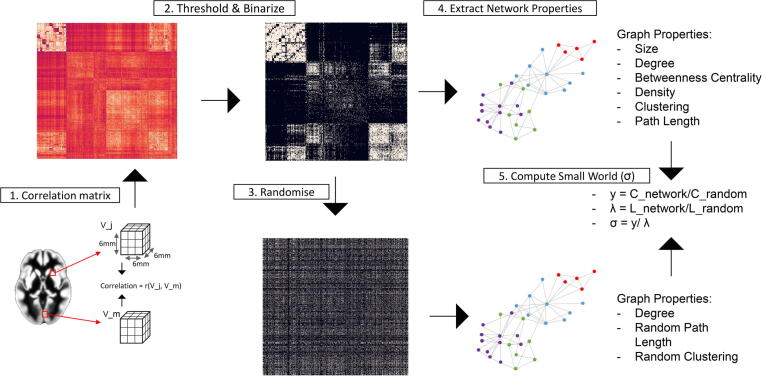
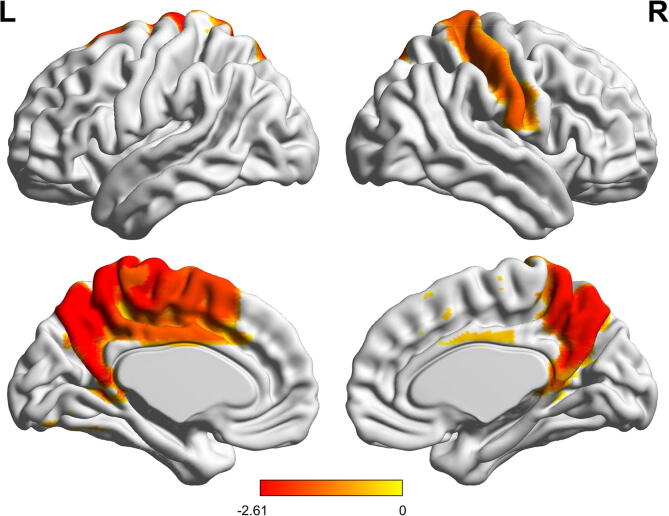
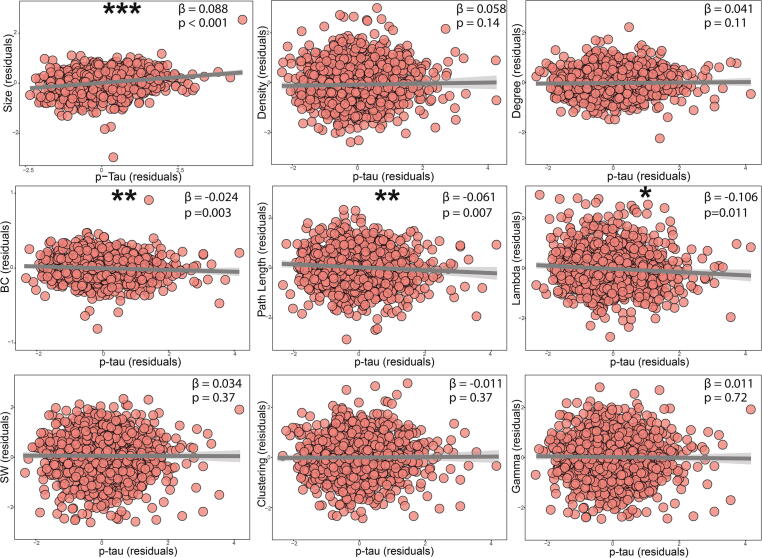
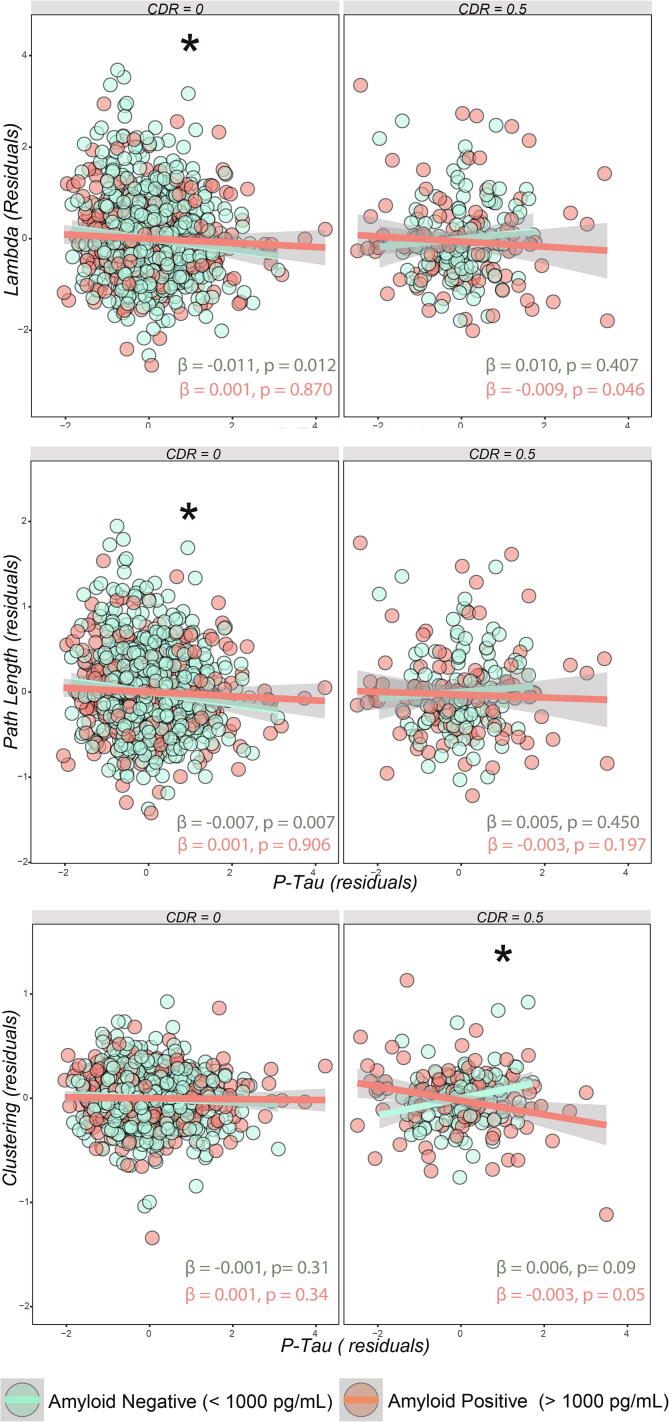
Gray matter networks are altered with amyloid accumulation in the earliest stage of AD, and are associated with decline throughout the AD spectrum. It remains unclear to what extent gray matter network abnormalities are associated with hyperphosphorylated-tau (p-tau). We studied the relationship of cerebrospinal fluid (CSF) p-tau181 with gray matter networks in non-demented participants from the European Prevention of Alzheimer's Dementia (EPAD) cohort, and studied dependencies on amyloid and cognitive status. Gray matter networks were extracted from baseline structural 3D T1w MRI. P-tau181 and abeta were measured with the Roche cobas Elecsys System. We studied the associations of CSF biomarkers levels with several network's graph properties. We further studied whether the relationships of p-tau 181 and network measures were dependent on amyloid status and cognitive stage (CDR). We repeated these analyses for network properties at a regional level, where we averaged local network values across cubes within each of 116 areas as defined by the automated anatomical labeling (AAL) atlas. Amyloid positivity was associated with higher network size and betweenness centrality, and lower gamma, clustering and small-world coefficients. Higher CSF p-tau 181 levels were related to lower betweenness centrality, path length and lambda coefficients (all p < 0.01). Three-way interactions between p-tau181, amyloid status and CDR were found for path length, lambda and clustering (all p < 0.05): Cognitively unimpaired amyloid-negative participants showed lower path length and lambda values with higher CSF p-tau181 levels. Amyloid-positive participants with impaired cognition demonstrated lower clustering coefficients in association to higher CSF p-tau181 levels. Our results suggest that alterations in gray matter network clustering coefficient is an early and specific event in AD.
在阿尔茨海默病(AD)的最早阶段,灰质网络会随着淀粉样蛋白的积累而发生改变,并与整个AD谱系中的衰退相关。目前尚不清楚灰质网络异常与过度磷酸化tau蛋白(p-tau)的关联程度。我们研究了来自欧洲预防阿尔茨海默病痴呆(EPAD)队列的非痴呆参与者脑脊液(CSF)中p-tau181与灰质网络的关系,并研究了其对淀粉样蛋白和认知状态的依赖性。从基线结构3D T1w MRI中提取灰质网络。使用罗氏cobas Elecsys系统测量p-tau181和β淀粉样蛋白。我们研究了脑脊液生物标志物水平与几个网络的图属性之间的关联。我们进一步研究了p-tau 181与网络测量值之间的关系是否依赖于淀粉样蛋白状态和认知阶段(CDR)。我们对区域水平的网络属性重复了这些分析,在该水平上,我们对由自动解剖标记(AAL)图谱定义的116个区域内每个立方体的局部网络值进行了平均。淀粉样蛋白阳性与更大的网络规模和中介中心性相关,而与更低的γ、聚类和小世界系数相关。更高的脑脊液p-tau 181水平与更低的中介中心性、路径长度和λ系数相关(所有p<0.01)。在路径长度、λ和聚类方面发现了p-tau181、淀粉样蛋白状态和CDR之间的三向相互作用(所有p<0.05):认知未受损的淀粉样蛋白阴性参与者在脑脊液p-tau181水平较高时表现出更低的路径长度和λ值。认知受损的淀粉样蛋白阳性参与者在脑脊液p-tau181水平较高时表现出更低的聚类系数。我们的结果表明,灰质网络聚类系数的改变是AD中的一个早期且特定的事件。