Webster Jessica L, Goldstein Neal D, Rowland Jennifer R, Tuite Catherine M, Siegel Scott D
Drexel University Dornsife School of Public Health.
Christiana Care Health System.
Res Sq. 2023 Feb 28:rs.3.rs-2600236. doi: 10.21203/rs.3.rs-2600236/v1.
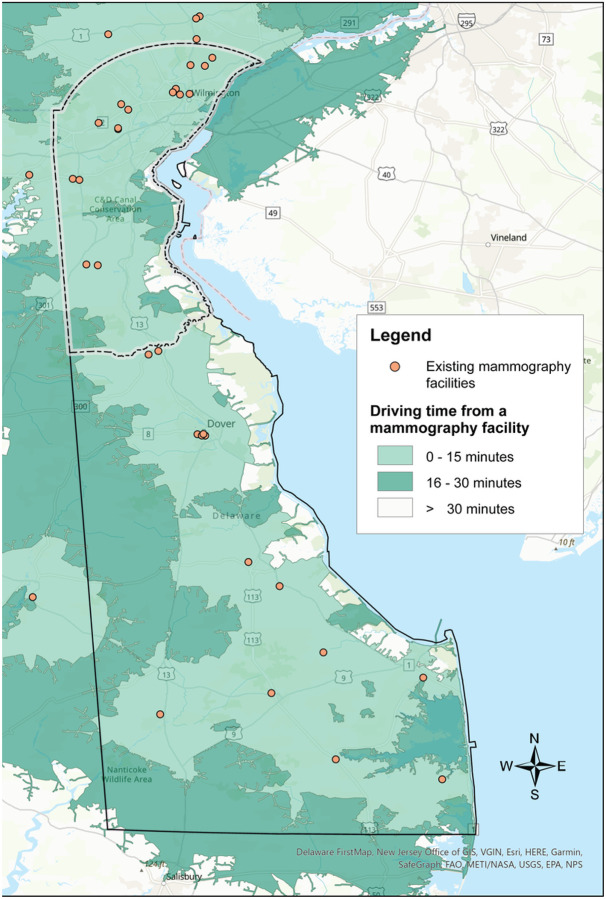
Despite a 40% reduction in breast cancer mortality over the last 30 years, not all groups have benefited equally from these gains. A consistent link between later stage of diagnosis and disparities in breast cancer mortality has been observed by race, socioeconomic status, and rurality. Therefore, ensuring equitable geographic access to screening mammography represents an important priority for reducing breast cancer disparities. This study conducted a catchment and location-allocation analysis of mammography access in Delaware, a state that is representative of the US in terms of race and urban-rural characteristics and experiences an elevated burden from breast cancer.
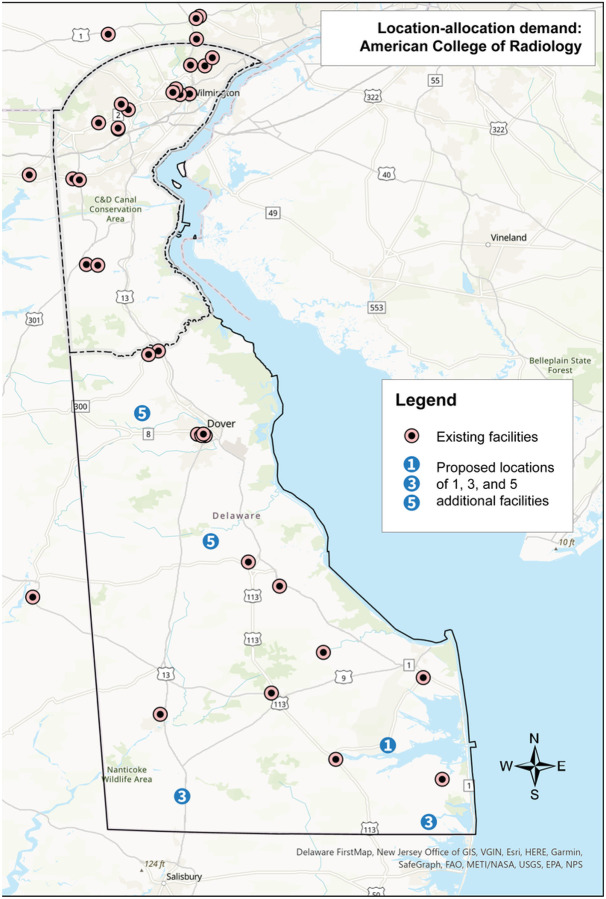
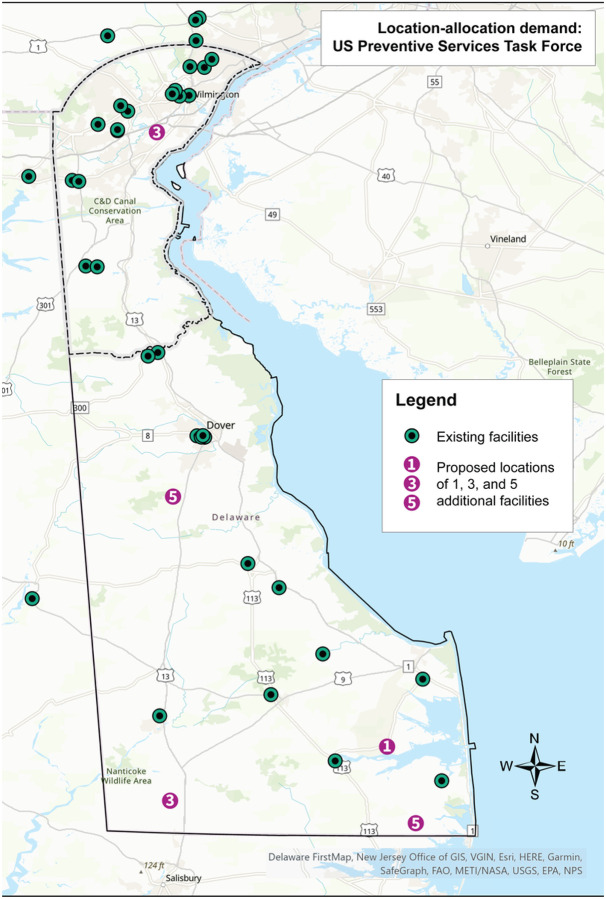
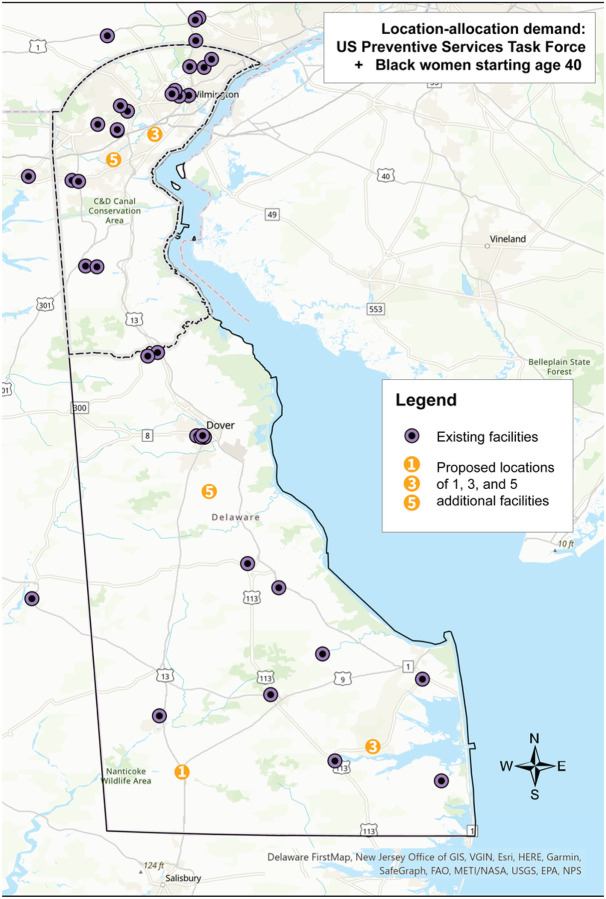
A catchment analysis using the ArcGIS Pro Service Area analytic tool characterized the geographic distribution of mammography sites and Breast Imaging Centers of Excellence (BICOEs). Poisson regression analyses identified census tract-level correlates of access. Next, the ArcGIS Pro Location-Allocation analytic tool identified candidate locations for the placement of additional mammography sites in Delaware according to several sets of breast cancer screening guidelines.
The catchment analysis showed that for each standard deviation increase in the number of Black women in a census tract, there were 64% (95% CI, 0.18-0.66) fewer mammography units and 85% (95% CI, 0.04-0.48) fewer BICOEs. The more rural counties in the state accounted for 41 % of the population but only 22% of the BICOEs. The results of the location-allocation analysis depended on which set of screening guidelines were adopted, which included increasing mammography sites in communities with a greater proportion of younger Black women and in rural areas.
The results of this study illustrate how catchment and location-allocation analytic tools can be leveraged to guide the equitable selection of new mammography facility locations as part of a larger strategy to close breast cancer disparities.
尽管在过去30年中乳腺癌死亡率降低了40%,但并非所有群体都能平等地从这些成果中受益。在种族、社会经济地位和农村地区等方面,已观察到诊断晚期与乳腺癌死亡率差异之间存在持续关联。因此,确保在地理上公平获得乳腺钼靶筛查是减少乳腺癌差异的一项重要优先事项。本研究对特拉华州的乳腺钼靶检查可及性进行了集水区和位置分配分析,该州在种族和城乡特征方面代表美国,且乳腺癌负担较重。
使用ArcGIS Pro服务区分析工具进行集水区分析,以表征乳腺钼靶检查站点和卓越乳腺影像中心(BICOE)的地理分布。泊松回归分析确定了普查区层面可及性的相关因素。接下来,ArcGIS Pro位置分配分析工具根据几套乳腺癌筛查指南确定了在特拉华州增设乳腺钼靶检查站点的候选位置。
集水区分析表明,普查区黑人女性数量每增加一个标准差,乳腺钼靶检查单位减少64%(95%CI,0.18 - 0.66),BICOE减少85%(95%CI,0.04 - 0.48)。该州农村地区较多的县占人口的41%,但仅占BICOE的22%。位置分配分析的结果取决于采用哪一套筛查指南,其中包括在年轻黑人女性比例较高的社区和农村地区增加乳腺钼靶检查站点。
本研究结果说明了如何利用集水区和位置分配分析工具来指导公平选择新的乳腺钼靶检查设施位置,作为缩小乳腺癌差异的更大战略的一部分。