
杜仲中槲皮素在椎间盘退变(IDD)中的功能及作用机制的药理网络分析
Pharmacological network analysis of the functions and mechanism of kaempferol from Du Zhong in intervertebral disc degeneration (IDD).
作者信息
Wang Xiaobin, Tan Yanlin, Liu Fusheng, Wang Jingyu, Liu Fubin, Zhang Qianshi, Li Jing
机构信息
Department of Spine Surgery, Spinal Deformity Center, The Second Xiangya Hospital of Central South University, Changsha, Hunan, 410011, China.
PET/CT Center, The Second Xiangya Hospital of Central South University, Changsha, Hunan, 410011, China.
出版信息
J Orthop Translat. 2023 Mar 3;39:135-146. doi: 10.1016/j.jot.2023.01.002. eCollection 2023 Mar.
BACKGROUND
Senescence and apoptosis of the nucleus pulposus cells (NPCs) are essential components of the intervertebral disc degeneration (IDD) process. Senescence and anti-apoptosis treatments could be effective ways to delay or even stop disc degeneration. IDD has been treated with Oliver (Du Zhong, DZ) and its active ingredients. However, the roles and mechanisms of DZ in NPC apoptosis and senescence remain unclear.
METHODS
Traditional Chinese Medicine Systems Pharmacology (TCMSP) database was used to select the main active ingredients of DZ with the threshold of oral bioavailability (OB) ≥ 30% and drug-likeness (DL) ≥ 0.2. GSE34095 contained expression profile of degenerative intervertebral disc tissues and non-degenerative intervertebral disc tissues were downloaded for different expression genes analysis. The disease targets genes of IDD were retrieved from GeneCards. The online tool Metascape was used for functional enrichment annotation analysis. The specific effects of the ingredient on IL-1β treated NPC cell proliferation, cell senescence, reactive oxygen species (ROS) accumulation and cell apoptosis were determined by CCK-8, SA-β-gal staining, flowcytometry and western blot assays.
RESULTS
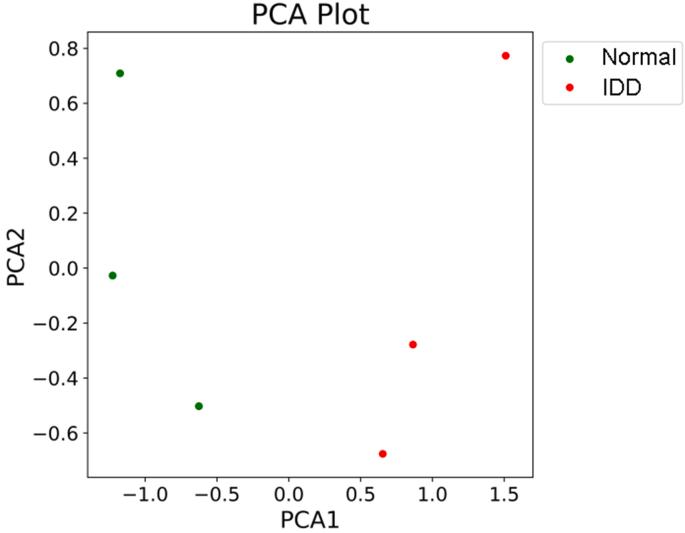
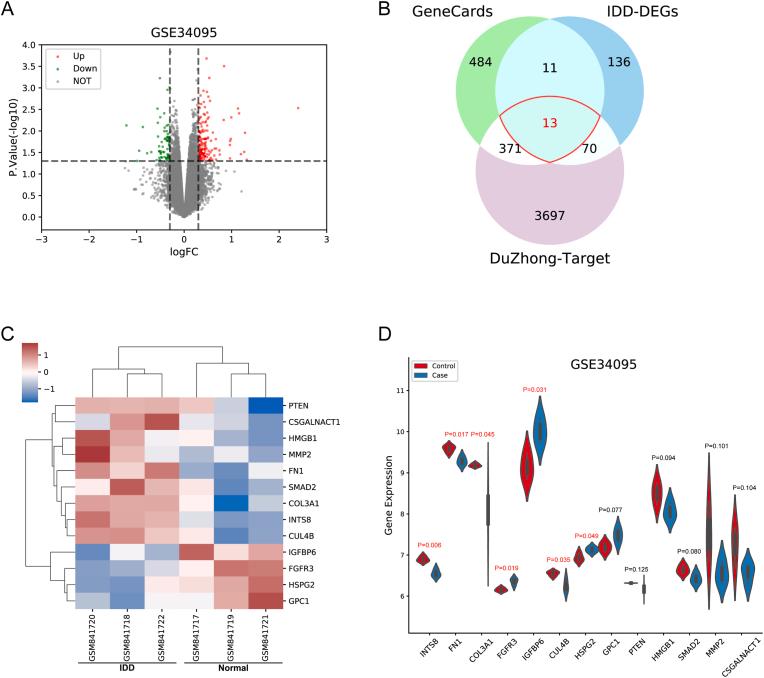
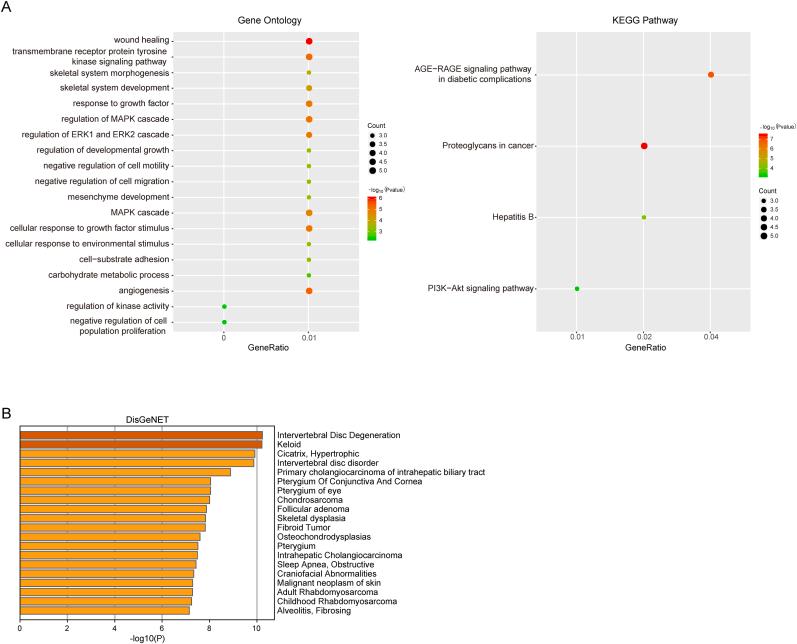
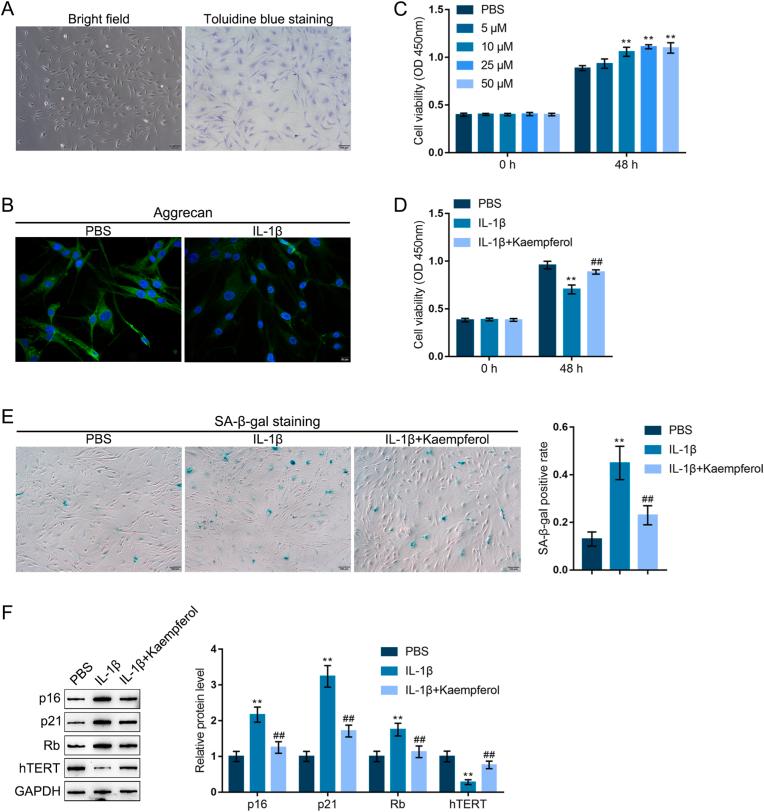
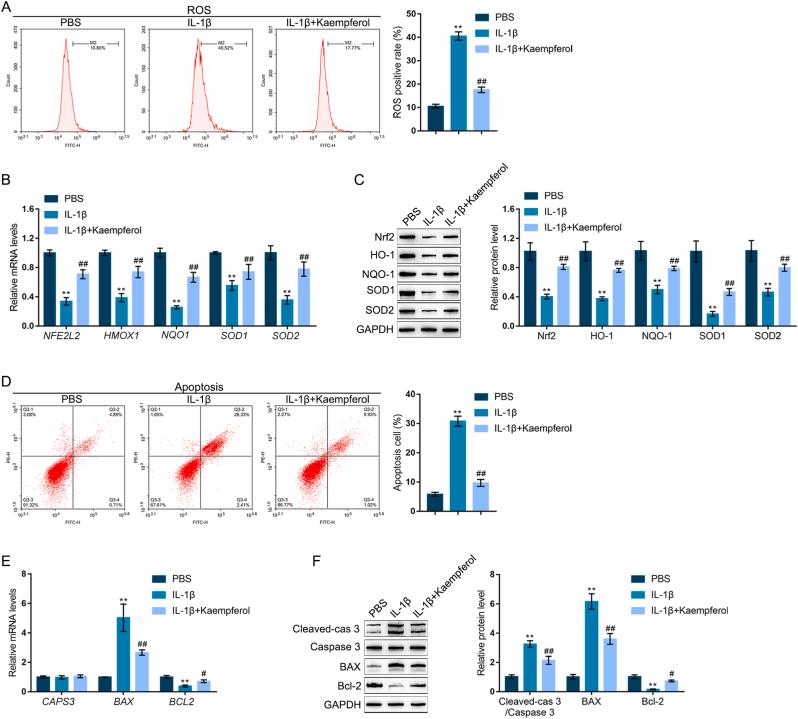
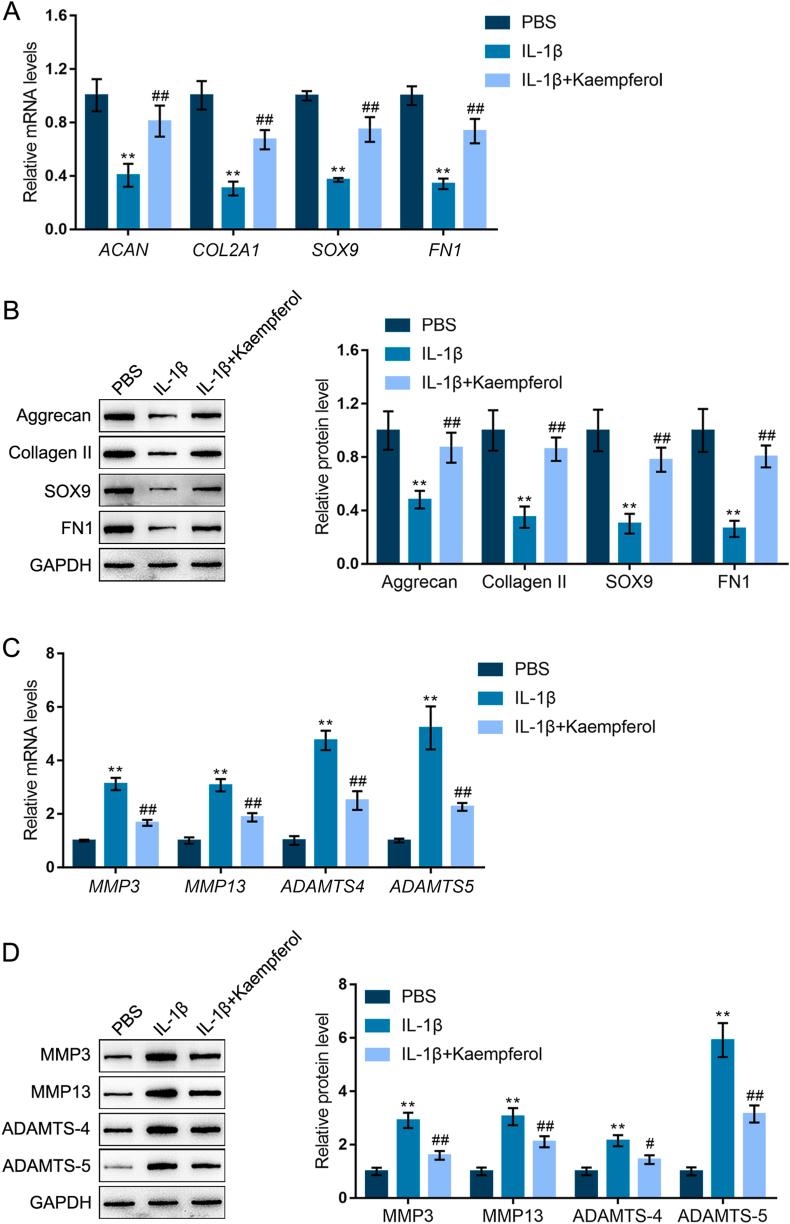
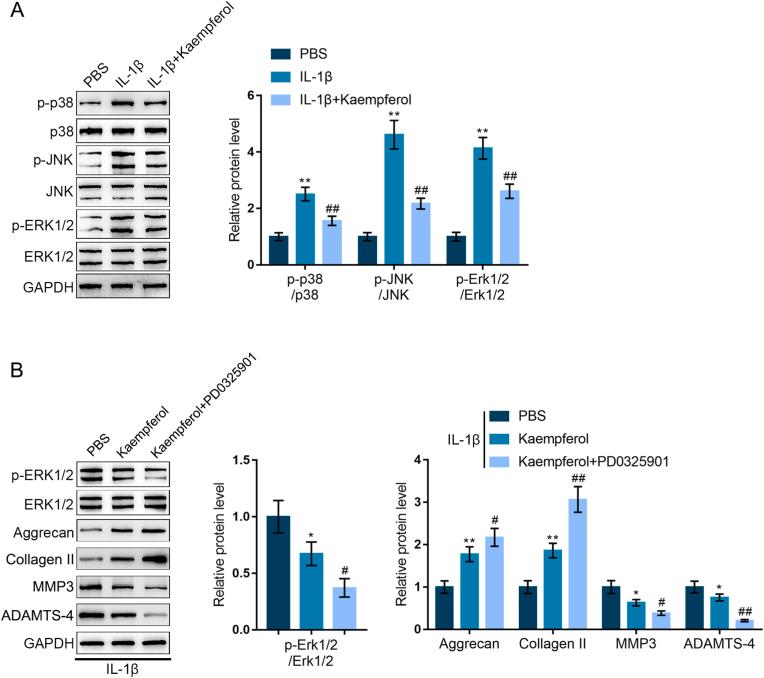
A total of 8 active compounds of DZ were found to meet the threshold of OB ≥ 30% and DL ≥ 0.2 with 4151 drug targets. After the intersection of 879 IDD disease targets obtained from GeneCards and 230 DEGs obtained from the IDD-related GSE dataset, a total of 13 hub genes overlapped. According to functional enrichment annotation analysis by Metascape, these genes showed to be dramatically enriched in AGE-RAGE signaling, proteoglycans in cancer, wound healing, transmembrane receptor protein tyrosine kinase signaling, MAPK cascades, ERK1/2 cascades, PI3K/Akt signaling pathway, skeletal system, etc. Disease association analysis by DisGeNET indicated that these genes were significantly associated with IDD, intervertebral disc disease, skeletal dysplasia, and other diseases. Active ingredients-targets-signaling pathway networks were constructed by Cytoscape, and kaempferol was identified as the hub active compound of DZ. In the IL-1β-induced IDD model, kaempferol treatment significantly improved IL-1β-induced NPC cell viability suppression and senescence. In addition, kaempferol treatment significantly attenuated IL-1β-induced ROS accumulation and apoptosis. Furthermore, kaempferol treatment partially eliminated IL-1β-induced decreases in aggrecan, collagen II, SOX9, and FN1 levels and increases in MMP3, MMP13, ADAMTS-4, and ADAMTS-5. Moreover, kaempferol treatment significantly relieved the promotive effects of IL-1β stimulation upon p38, JNK, and ERK1/2 phosphorylation. ERK1/2 inhibitor PD0325901 further enhanced the effect of kaempferol on the inhibition of ERK1/2 phosphorylation, downregulation of MMP3 and ADAMTS-4 expression, and upregulation of aggrecan and collagen II expressions.
CONCLUSION
Kaempferol has been regarded as the major active compound of DZ, protecting NPCs from IL-1β-induced damages through promoting cell viability, inhibiting cell senescence and apoptosis, increasing ECM production, and decreasing ECM degradation. MAPK signaling pathway may be involved.
THE TRANSLATIONAL POTEINTIAL OF THIS ARTICLE
This study provides experimental data support for the pharmacological effects of kaempferol in treating IDD, and lays a solid experimental foundation for its future clinical application in IDD treatment.
背景
髓核细胞(NPCs)的衰老和凋亡是椎间盘退变(IDD)过程的重要组成部分。衰老和抗凋亡治疗可能是延缓甚至阻止椎间盘退变的有效方法。已有研究使用杜仲(DZ)及其活性成分治疗IDD。然而,DZ在NPC凋亡和衰老中的作用及机制仍不清楚。
方法
利用中药系统药理学(TCMSP)数据库,以口服生物利用度(OB)≥30%和类药性(DL)≥0.2为阈值筛选DZ的主要活性成分。下载GSE34095中退变椎间盘组织和非退变椎间盘组织的表达谱进行差异表达基因分析。从GeneCards检索IDD的疾病靶基因。使用在线工具Metascape进行功能富集注释分析。通过CCK-8、SA-β-gal染色、流式细胞术和蛋白质印迹分析确定该成分对IL-1β处理的NPC细胞增殖、细胞衰老、活性氧(ROS)积累和细胞凋亡的具体影响。
结果
共发现8种DZ活性化合物符合OB≥30%和DL≥0.2的阈值,共有4151个药物靶点。在从GeneCards获得的879个IDD疾病靶点与从IDD相关GSE数据集中获得的230个差异表达基因(DEGs)进行交集后,共有13个枢纽基因重叠。根据Metascape的功能富集注释分析,这些基因在AGE-RAGE信号通路、癌症中的蛋白聚糖、伤口愈合、跨膜受体蛋白酪氨酸激酶信号通路、MAPK级联、ERK1/2级联、PI3K/Akt信号通路、骨骼系统等中显著富集。通过DisGeNET进行的疾病关联分析表明,这些基因与IDD、椎间盘疾病、骨骼发育异常等疾病显著相关。利用Cytoscape构建活性成分-靶点-信号通路网络,鉴定出槲皮素是DZ的枢纽活性化合物。在IL-1β诱导的IDD模型中,槲皮素处理显著改善了IL-1β诱导的NPC细胞活力抑制和衰老。此外,槲皮素处理显著减轻了IL-1β诱导的ROS积累和凋亡。此外,槲皮素处理部分消除了IL-1β诱导的聚集蛋白聚糖、胶原蛋白II、SOX9和FN1水平的降低以及MMP3、MMP13、ADAMTS-4和ADAMTS-5的增加。此外,槲皮素处理显著缓解了IL-1β刺激对p38、JNK和ERK1/2磷酸化的促进作用。ERK1/2抑制剂PD0325901进一步增强了槲皮素对ERK1/2磷酸化的抑制作用、MMP3和ADAMTS-4表达的下调以及聚集蛋白聚糖和胶原蛋白II表达的上调。
结论
槲皮素被认为是DZ的主要活性化合物,通过促进细胞活力、抑制细胞衰老和凋亡、增加细胞外基质(ECM)产生以及减少ECM降解来保护NPC免受IL-1β诱导的损伤。MAPK信号通路可能参与其中。
本文的转化潜力
本研究为槲皮素治疗IDD的药理作用提供了实验数据支持,为其未来在IDD治疗中的临床应用奠定了坚实的实验基础。

 Zotero 插件