Bao Junping, Qian Zhanyang, Liu Lei, Hong Xin, Che Hui, Wu Xiaotao
Spine Center, The Affiliated Zhongda Hospital of Southeast University, Nanjing, China.
School of Medicine, Southeast University, Nanjing, China.
Front Cell Dev Biol. 2021 Jun 7;9:675486. doi: 10.3389/fcell.2021.675486. eCollection 2021.
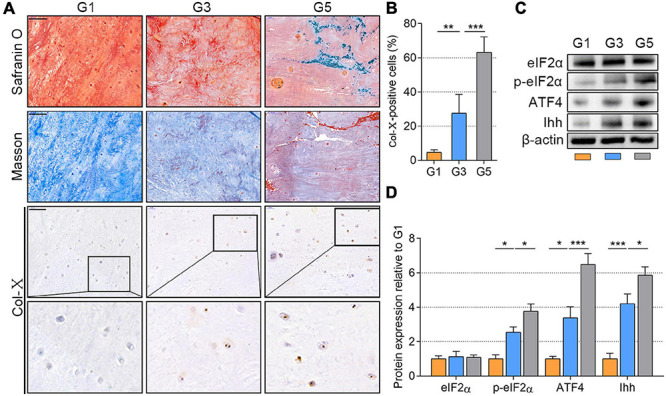
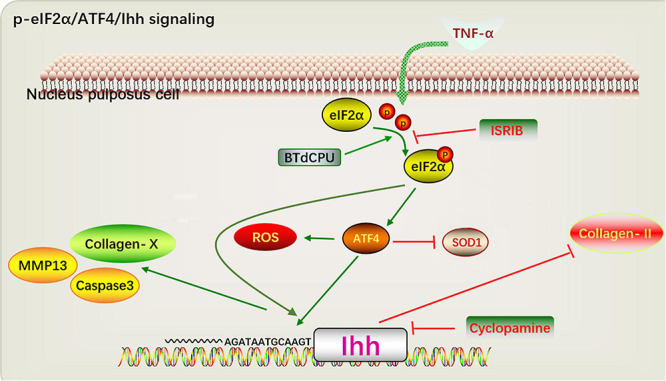
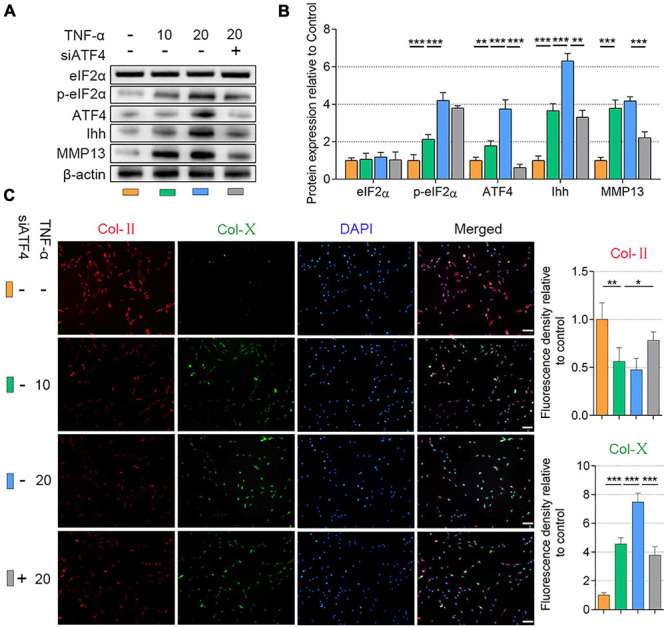
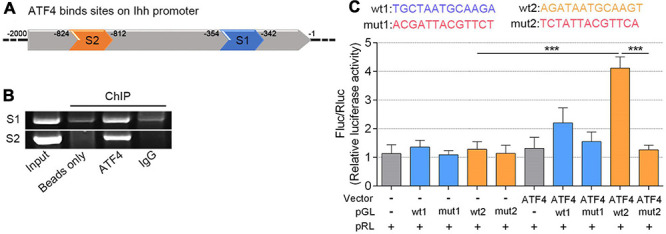
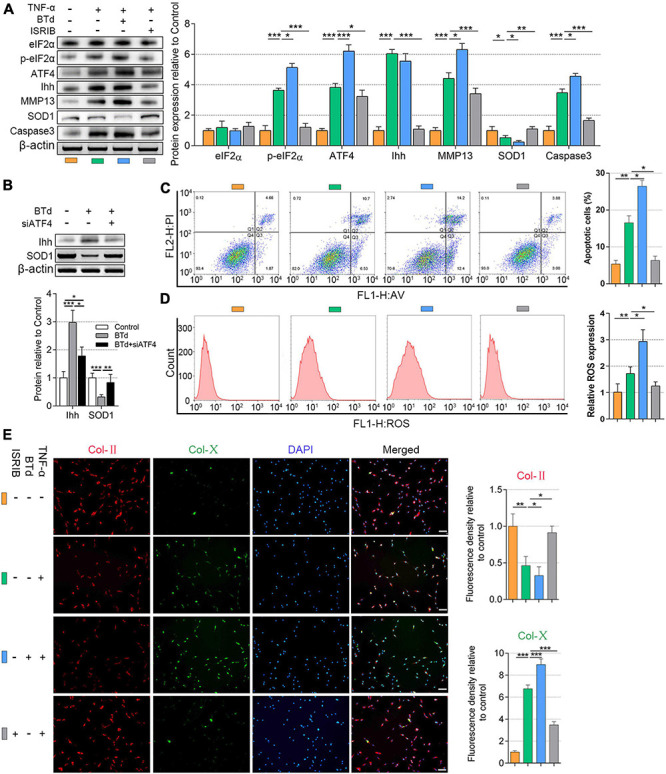
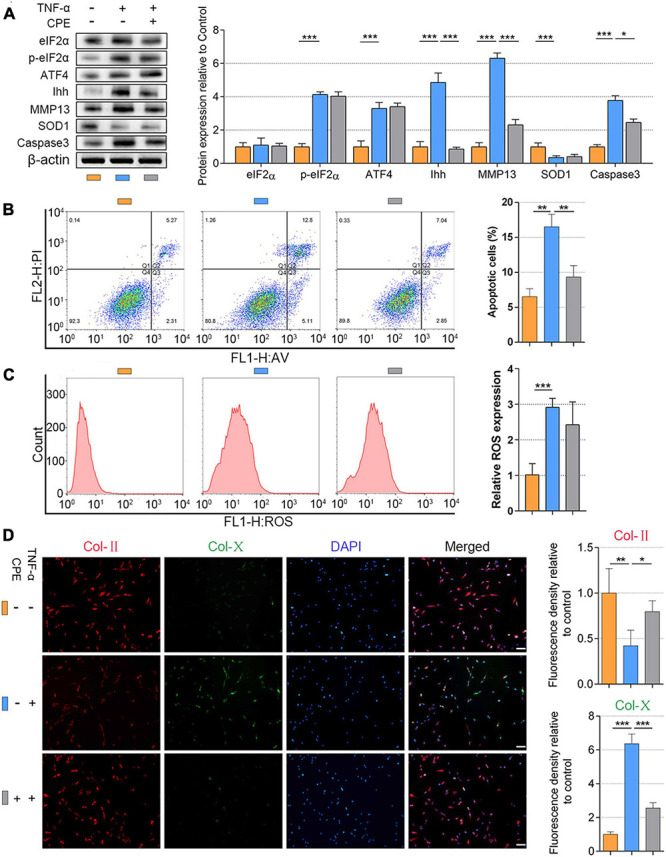
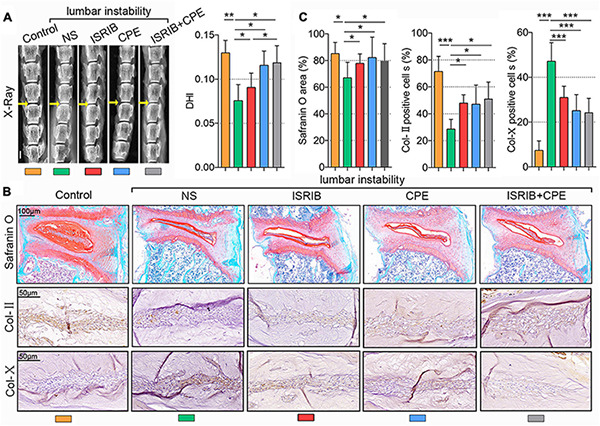
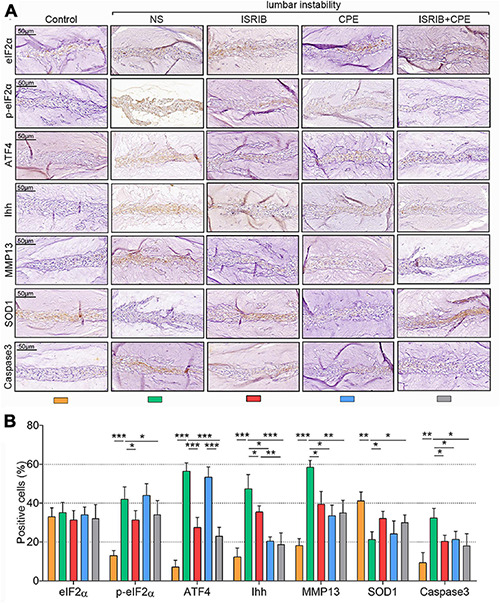
Excessive reactive oxygen species (ROS) and apoptosis in nucleus pulposus (NP) cells accelerate the process of intervertebral disc degeneration (IDD). Here, we integrated pathological samples and and framework to investigate the impact of phosphorylation of eukaryotic initiation factor-2α (eIF2α)/activating transcription factor 4 (ATF4)/Indian hedgehog (Ihh) signaling in the IDD. From the specimen analysis of the IDD patients, we found phosphorylated eIF2α (p-eIF2α), ATF4 and Ihh protein levels were positively related while the NP tissue went degenerative. , tumor necrosis factor (TNF)-α caused the NP cell degeneration and induced a cascade of upregulation of p-eIF2α, ATF4, and Ihh. Interestingly, ATF4 could enhance Ihh expression through binding its promoter region, and silencing of ATF4 decreased Ihh and protected the NP cells from degeneration. Moreover, ISRIB inhibited the p-eIF2α, which resulted in a suppression of ATF4/Ihh, and alleviated the TNF-α-induced ROS production and apoptosis of NP cells. On the contrary, further activating p-eIF2α aggravated the NP cell degeneration, with amplification of ATF4/Ihh and a higher level of ROS and apoptosis. Additionally, applying cyclopamine (CPE) to suppress Ihh was efficient to prevent NP cell apoptosis but did not decrease the ROS level. In an instability-induced IDD model in mice, ISRIB suppressed p-eIF2α/ATF4/Ihh and prevented IDD via protecting the anti-oxidative enzymes and decreased the NP cell apoptosis. CPE prevented NP cell apoptosis but did not affect anti-oxidative enzyme expression. Taken together, p-eIF2α/ATF4/Ihh signaling involves the ROS level and apoptosis in NP cells, the pharmacological disruption of which may provide promising methods in preventing IDD.
髓核(NP)细胞中过量的活性氧(ROS)和凋亡加速了椎间盘退变(IDD)的进程。在此,我们整合病理样本和[具体内容缺失]框架,以研究真核起始因子2α(eIF2α)/激活转录因子4(ATF4)/印度刺猬因子(Ihh)信号通路磷酸化在IDD中的作用。通过对IDD患者的标本分析,我们发现随着NP组织退变,磷酸化eIF2α(p-eIF2α)、ATF4和Ihh蛋白水平呈正相关。此外,肿瘤坏死因子(TNF)-α导致NP细胞退变,并诱导p-eIF2α、ATF4和Ihh的一系列上调。有趣的是,ATF4可通过结合其启动子区域增强Ihh表达,沉默ATF4可降低Ihh水平并保护NP细胞免于退变。此外,ISRIB抑制p-eIF2α,导致ATF4/Ihh受到抑制,并减轻了TNF-α诱导的NP细胞ROS产生和凋亡。相反,进一步激活p-eIF2α会加重NP细胞退变,使ATF4/Ihh扩增,ROS水平和凋亡程度更高。此外,应用环杷明(CPE)抑制Ihh可有效预防NP细胞凋亡,但不会降低ROS水平。在小鼠不稳定诱导的IDD模型中,ISRIB抑制p-eIF2α/ATF4/Ihh,并通过保护抗氧化酶来预防IDD,减少NP细胞凋亡。CPE可预防NP细胞凋亡,但不影响抗氧化酶表达。综上所述,p-eIF2α/ATF4/Ihh信号通路涉及NP细胞中的ROS水平和凋亡,对其进行药理学干预可能为预防IDD提供有前景的方法。