Bauer Christoph, Dori Yoav, Scala Mario, Tulzer Andreas, Tulzer Gerald
Department of Paediatric Cardiology, Kepler University Hospital GmbH, Linz, Austria.
Johannes Kepler University Linz, Linz, Austria.
Front Pediatr. 2023 Feb 24;11:1058567. doi: 10.3389/fped.2023.1058567. eCollection 2023.
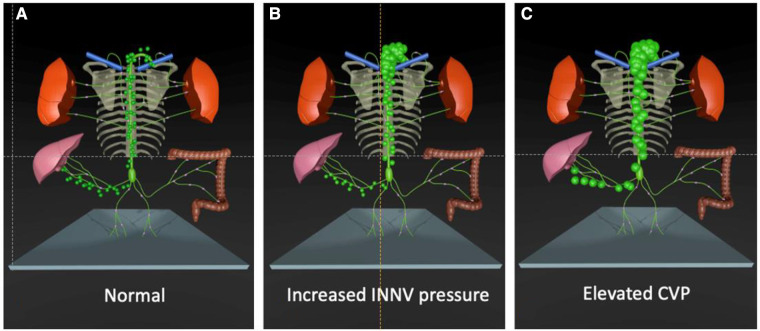
Children with hypoplastic left heart syndrome share unique hemodynamic features that alter lymphatic integrity at all stages of palliation. Lymphatic congestion is almost universal in this patient group to some extent. It may lead to reversal of lymphatic flow, the development of abnormal lymphatic channels and ultimately decompression and loss of protein rich lymphatic fluid into extra lymphatic compartments in prone individuals. Some of the most devastating complications that are associated with single ventricle physiology, notably plastic bronchitis and protein losing enteropathy, have now been proven to be lymphatic in origin. Based on the new pathophysiologic concept new diagnostic and therapeutic strategies have recently been developed. Dynamic contrast magnetic resonance lymphangiography is now mainstay in diagnosis of lymphatic insufficiency and allows a thorough assessment of anatomy and function of the main lymphatic compartments through intranodal, intrahepatic and intramesenteric lymphatic imaging. Contrast enhanced ultrasound can evaluate thoracic duct patency and conventional fluoroscopic lymphangiography has been refined for evaluation of patients where magnetic resonance imaging cannot be performed. Novel lymphatic interventional techniques, such as thoracic duct embolization, selective lymphatic duct embolization and liver lymphatic embolization allow to seal abnormal lymphatic networks minimally invasive and have shown to resolve symptoms. Innominate vein turn-down procedures, whether surgical or interventional, have been designed to reduce lymphatic afterload and increase systemic preload effectively in the failing Fontan circulation. Outflow obstruction can now be managed with new microsurgical techniques that create lympho-venous anastomosis. Short term results for all of these new approaches are overall promising but evidence is sparse and long-term outcome still has to be defined. This review article aims to summarize current concepts of lymphatic flow disorders in single ventricle patients, discuss new emerging diagnostic and therapeutic strategies and point out lacks in evidence and needs for further research on this rapidly growing topic.
患有左心发育不全综合征的儿童具有独特的血流动力学特征,这些特征在姑息治疗的各个阶段都会改变淋巴系统的完整性。在这一患者群体中,淋巴系统充血在某种程度上几乎普遍存在。这可能导致淋巴液逆流、异常淋巴管的形成,并最终导致易患个体的富含蛋白质的淋巴液减压并流失到淋巴外间隙。现在已经证实,一些与单心室生理相关的最具破坏性的并发症,尤其是塑形支气管炎和蛋白丢失性肠病,其根源是淋巴系统问题。基于新的病理生理概念,最近已经开发出了新的诊断和治疗策略。动态对比磁共振淋巴造影现在是诊断淋巴功能不全的主要手段,通过淋巴结内、肝内和肠系膜内淋巴成像,可以全面评估主要淋巴腔室的解剖结构和功能。超声造影可以评估胸导管的通畅情况,传统的荧光透视淋巴造影已得到改进,用于评估无法进行磁共振成像的患者。新型淋巴介入技术,如胸导管栓塞、选择性淋巴管栓塞和肝淋巴管栓塞,可以微创封堵异常淋巴网络,并已显示出能缓解症状。无名静脉折返手术,无论是手术还是介入方式,都旨在减少淋巴后负荷,并在衰竭的Fontan循环中有效增加体循环前负荷。现在可以用新的显微外科技术来处理流出道梗阻,这些技术可以建立淋巴静脉吻合。所有这些新方法的短期结果总体上很有希望,但证据稀少,长期结果仍有待确定。这篇综述文章旨在总结单心室患者淋巴液流动障碍的当前概念,讨论新出现的诊断和治疗策略,并指出在这个快速发展的主题上证据的不足和进一步研究的需求。