Cedars-Sinai Medical Center, Smidt Heart Institute, Los Angeles, CA, USA.
Sackler Faculty of Medicine, Tel-Aviv University, Tel-Aviv, Israel.
Int J Clin Pract. 2023 Mar 6;2023:1977911. doi: 10.1155/2023/1977911. eCollection 2023.
Limited data exist regarding the association between the quality of life (QoL) and clinical outcomes following transcatheter mitral valve repair (TMVr). We aimed to evaluate the prognostic significance of QoL assessment following TMVr and to characterize those who had procedural success, yet reported a low Kansas City Cardiomyopathy Questionnaire (KCCQ-12) score.
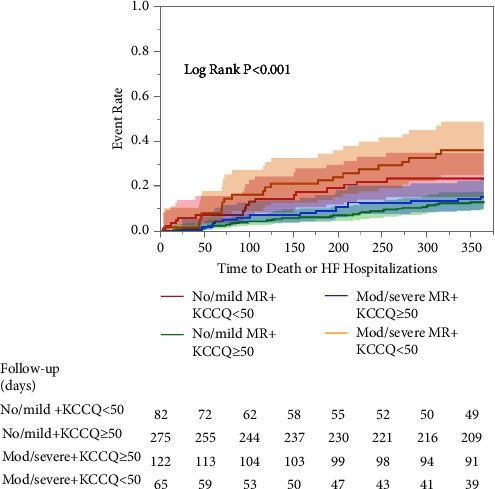
We reported the experience of Cedars-Sinai Medical Center patients between 2013 and 2020. Patients were allocated into four groups according to the 30-day KCCQ: <25, 25-49, 50-74, and ≥75. Primary outcome included 1-year all-cause death or heart failure (HF) hospitalizations. We also examined the association between QoL and the primary outcome in those with procedural success.
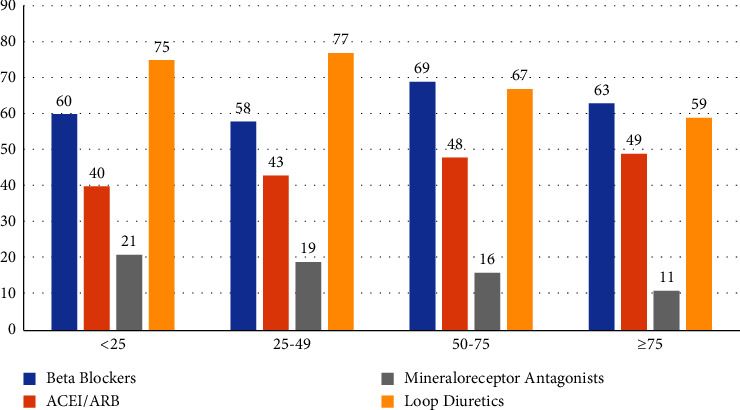
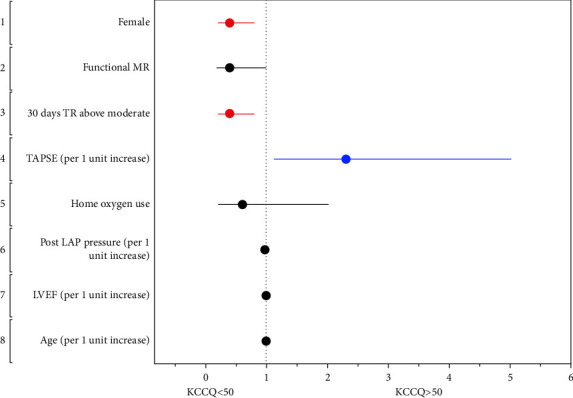
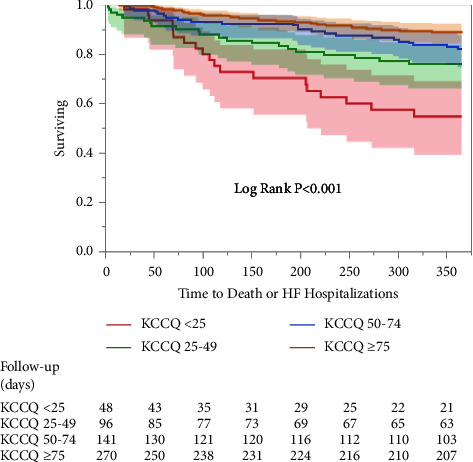
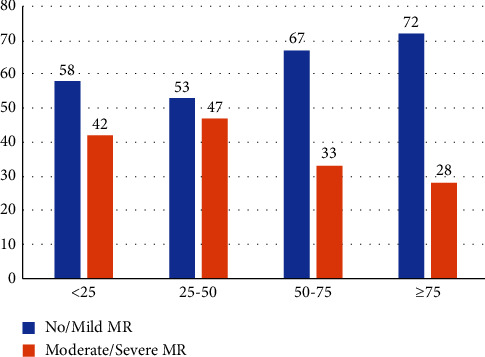
A total of 555 patients were included in our analysis, median follow-up of 650 days (IQR 243-1113). The lower KCCQ groups had a higher prevalence of functional mitral regurgitation (65%, 60%, 56%, and 43%, = 0.001), as well as a higher Society of Thoracic Surgeon (STS) score. These groups had a significantly higher occurrence of 1-year all-cause death or HF hospitalizations in a stepwise fashion (40%, 22%, 16%, and 10%, < 0.001). Multivariable Cox regression analysis revealed 30-day KCCQ as the strongest predictor of the 1-year primary outcome (HR 0.98, 95%CI (0.97-0.99), = 0.006). Approximately a quarter of patients with procedural success had a low KCCQ score. These patients had a higher rate of the combined 1-year outcome regardless of procedural success or failure.
QoL following TMVr is a powerful prognostic factor. KCCQ assessment is an important indicator for identifying patients prone to adverse outcomes even after procedural success.
关于经导管二尖瓣修复术(TMVr)后生活质量(QoL)与临床结局之间的关系,相关数据有限。我们旨在评估 TMVr 后 QoL 评估的预后意义,并对那些手术成功但报告堪萨斯城心肌病问卷(KCCQ-12)评分较低的患者进行特征描述。
我们报告了 Cedars-Sinai 医疗中心患者在 2013 年至 2020 年间的经验。根据 30 天 KCCQ,患者被分为四组:<25、25-49、50-74 和≥75。主要结局包括 1 年全因死亡或心力衰竭(HF)住院。我们还检查了在手术成功患者中 QoL 与主要结局之间的关联。
共纳入 555 例患者进行分析,中位随访时间为 650 天(IQR 243-1113)。较低的 KCCQ 组功能性二尖瓣反流(65%、60%、56%和 43%, = 0.001)和 STS 评分较高的比例也更高。这些组在逐步方式下 1 年全因死亡或 HF 住院的发生率显著更高(40%、22%、16%和 10%, < 0.001)。多变量 Cox 回归分析显示,30 天 KCCQ 是 1 年主要结局的最强预测因素(HR 0.98,95%CI(0.97-0.99), = 0.006)。大约四分之一手术成功的患者 KCCQ 评分较低。无论手术成功与否,这些患者 1 年联合结局的发生率都较高。
TMVr 后的 QoL 是一个强大的预后因素。KCCQ 评估是识别即使在手术成功后仍易发生不良结局的患者的重要指标。