Mathematics and Computer Science, Mount Allison University, Sackville, NB, Canada.
Health Canada, Ottawa, ON, Canada.
Bull Math Biol. 2023 Mar 17;85(5):32. doi: 10.1007/s11538-023-01130-x.
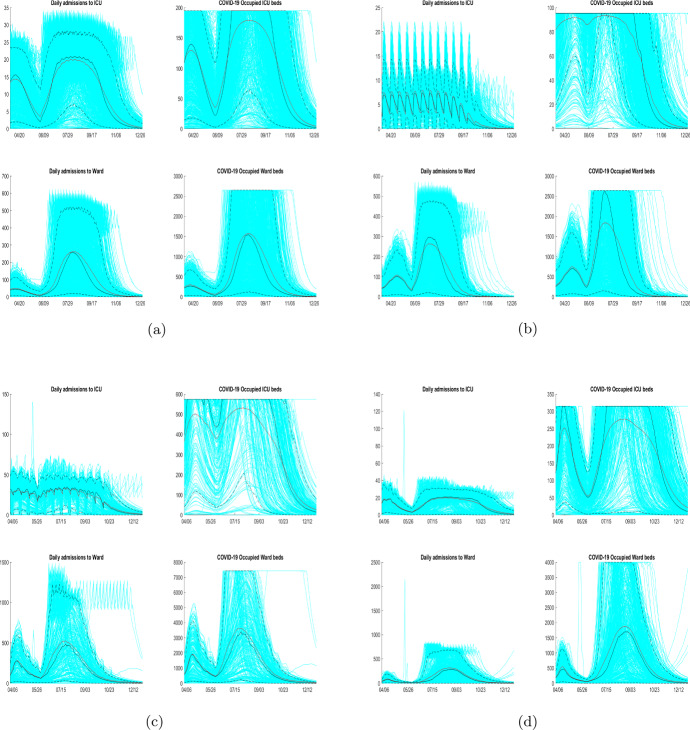
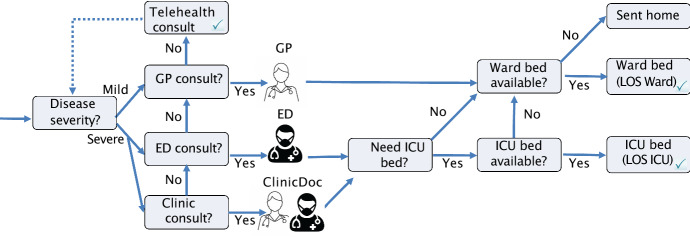
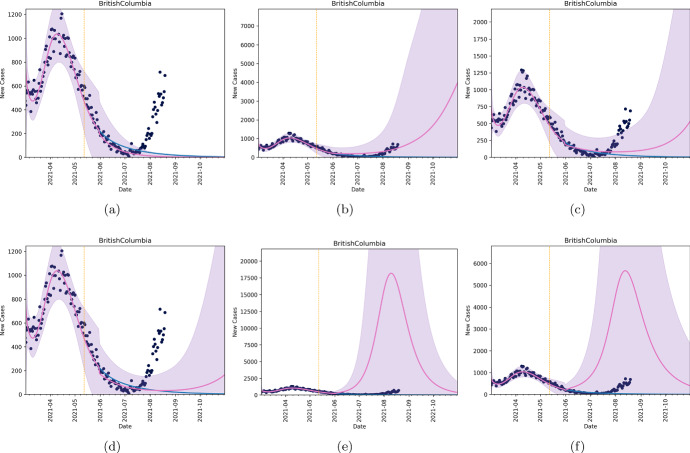
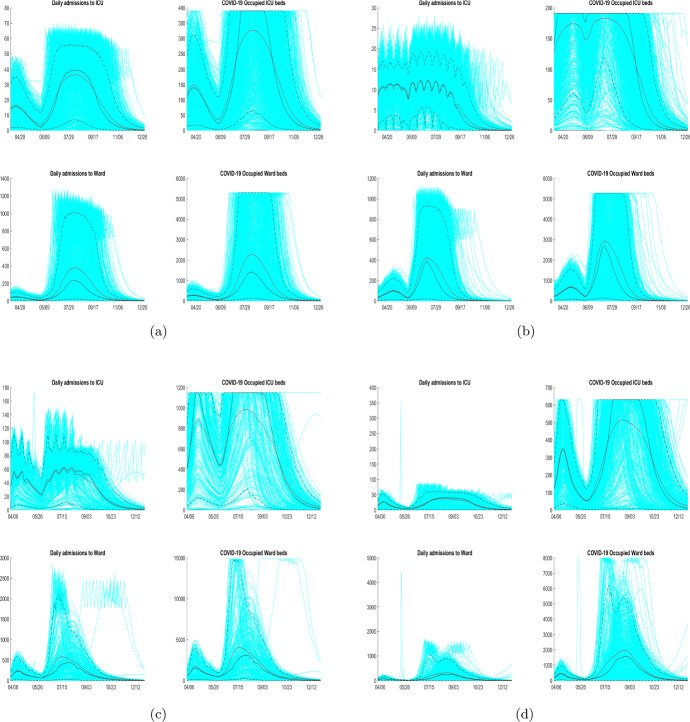
One of the driving concerns during any epidemic is the strain on the healthcare system. As we have seen many times over the globe with the COVID-19 pandemic, hospitals and ICUs can quickly become overwhelmed by cases. While strict periods of public health mitigation have certainly helped decrease incidence and thus healthcare demand, vaccination is the only clear long-term solution. In this paper, we develop a two-module model to forecast the effects of relaxation of non-pharmaceutical intervention and vaccine uptake on daily incidence, and the cascade effects on healthcare demand. The first module is a simple epidemiological model which incorporates non-pharmaceutical intervention, the relaxation of such measures and vaccination campaigns to predict caseloads into the Fall of 2021. This module is then fed into a healthcare module which can forecast the number of doctor visits, the number of occupied hospital beds, number of occupied ICU beds and any excess demand of these. From this module, we can also estimate the length of stay of individuals in ICU. For model verification and forecasting, we use the four most populous Canadian provinces as a case study.
在任何疫情期间,人们最关心的问题之一是医疗系统的压力。正如我们在全球范围内多次看到的 COVID-19 大流行那样,医院和 ICU 很快就会因病例而不堪重负。虽然严格的公共卫生缓解措施肯定有助于降低发病率,从而减少医疗需求,但疫苗接种是唯一明确的长期解决方案。在本文中,我们开发了一个两模块模型,以预测非药物干预和疫苗接种率的放松对每日发病率的影响,以及对医疗需求的级联效应。第一个模块是一个简单的流行病学模型,其中包括非药物干预、这些措施的放松以及疫苗接种运动,以预测 2021 年秋季的病例数。然后,该模块被输入到一个医疗保健模块中,该模块可以预测医生就诊次数、占用医院床位数量、占用 ICU 床位数量以及这些数量的任何超额需求。从该模块中,我们还可以估计 ICU 中个体的住院时间。为了进行模型验证和预测,我们以加拿大四个人口最多的省份作为案例研究。