Ren Jinhua, Lin QiaoXian, Chen Qi, Xu Jingjing, Chen Dabin, Chen Renli, Lin Kangni, Zhu Haojie, Ye Chenjing, Luo Xiaofeng, Chen Shaozhen, Kong Hui, Lin Qiong, Li Nan, Lin Xu, Chen Zhizhe, Hu Jianda, Yang Ting
Department of Hematology, Fujian Institute of Hematology, Fujian Provincial Key Laboratory of Hematology, Fujian Medical University Union Hospital, 29 Xinquan Road, 350001, Fuzhou, Fujian, P. R. China.
Department of Hematology, The First Affiliated Hospital of Fujian Medical University, 20 Cha Zhong Road, 350005, Fuzhou, Fujian, P. R. China.
iScience. 2023 Feb 28;26(3):106290. doi: 10.1016/j.isci.2023.106290. eCollection 2023 Mar 17.
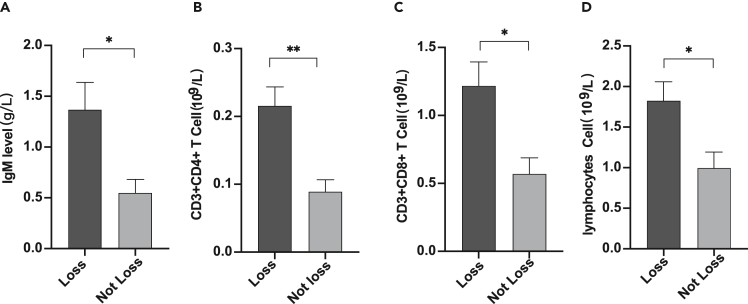
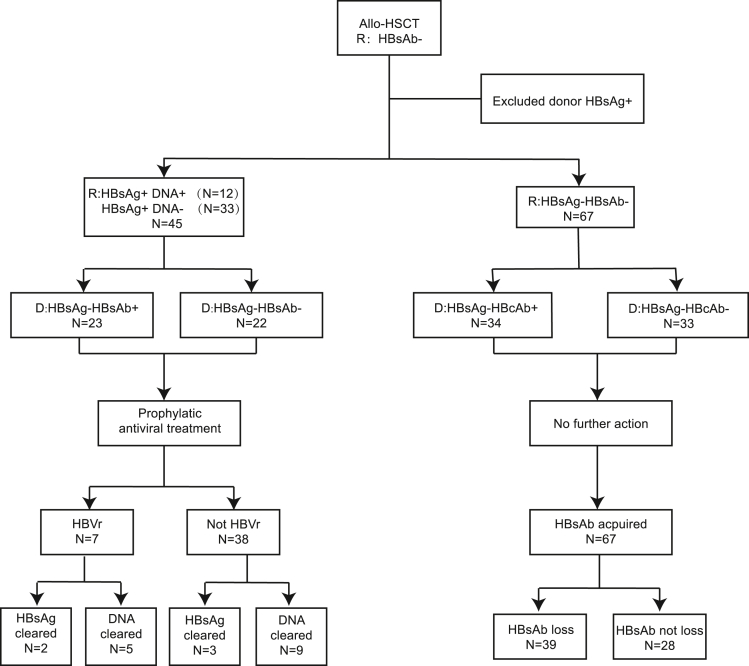
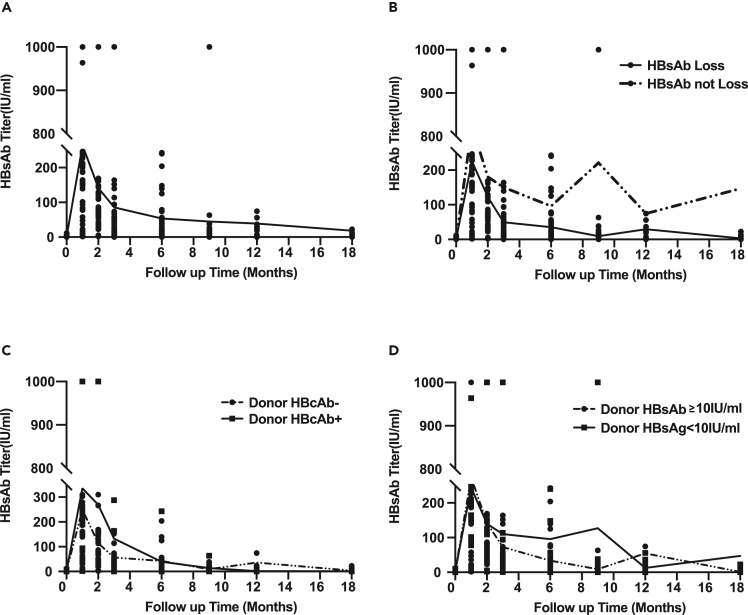
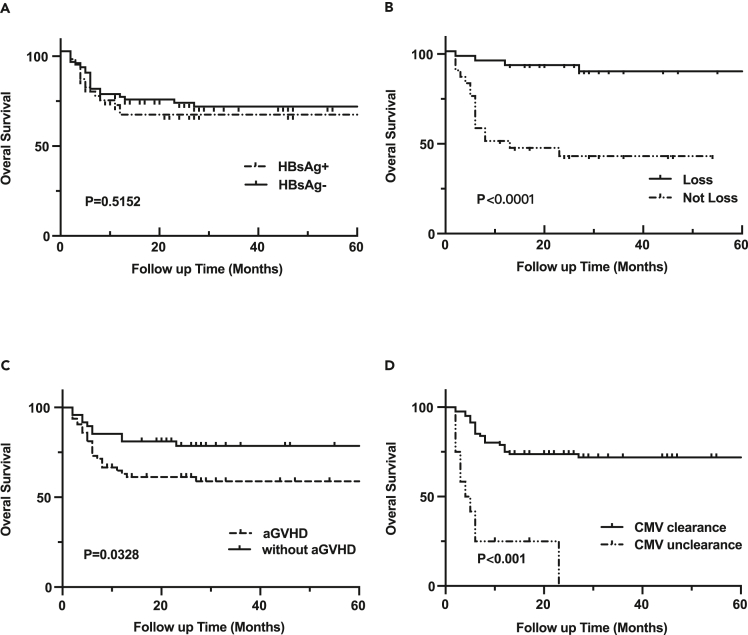
Adoptive transfer of hepatitis B virus (HBV) immunity may occur following allogeneic hematopoietic stem cell transplantation (allo-HSCT). Here, we investigated the adoptive transfer of HBV immunity in 112 patients without HBV surface antibody (HBsAb) (HBsAb-) at the time of their first allo-HSCT. After allo-HSCT, HBV-DNA(87.5%) and HBsAg(11.1%%)cleared in HBsAg+ patients. All HBsAg- patients acquired HBsAb immediately. Nevertheless, HBsAb titers subsequently declined, and 39/67 (58.2%) patients lost HBsAb during follow-up. The 5-year overall survival (OS) was better in patients who lost HBsAb. Multivariate analysis showed that the independent risk factors for OS were lack of cytomegalovirus (CMV) clearance, acute graft-versus-host disease (aGVHD), and no HBsAb loss. Overall, adoptive immune transfer offers anti-HBV protection to patients without HBsAb, as they acquire HBsAb and clear HBV-DNA and HBsAg, while HBsAb loss after allo-HSCT predicts better survival.
同种异体造血干细胞移植(allo-HSCT)后可能会发生乙型肝炎病毒(HBV)免疫力的过继转移。在此,我们调查了112例首次allo-HSCT时无HBV表面抗体(HBsAb)(HBsAb-)患者的HBV免疫力过继转移情况。allo-HSCT后,HBsAg阳性患者的HBV-DNA(87.5%)和HBsAg(11.1%)清除。所有HBsAg阴性患者立即获得了HBsAb。然而,HBsAb滴度随后下降,39/67(58.2%)的患者在随访期间失去了HBsAb。失去HBsAb的患者5年总生存率(OS)更好。多因素分析显示,OS的独立危险因素是巨细胞病毒(CMV)未清除、急性移植物抗宿主病(aGVHD)和未失去HBsAb。总体而言,过继免疫转移为无HBsAb的患者提供了抗HBV保护,因为他们获得了HBsAb并清除了HBV-DNA和HBsAg,而allo-HSCT后HBsAb的丧失预示着更好的生存。